

Image: NTSB
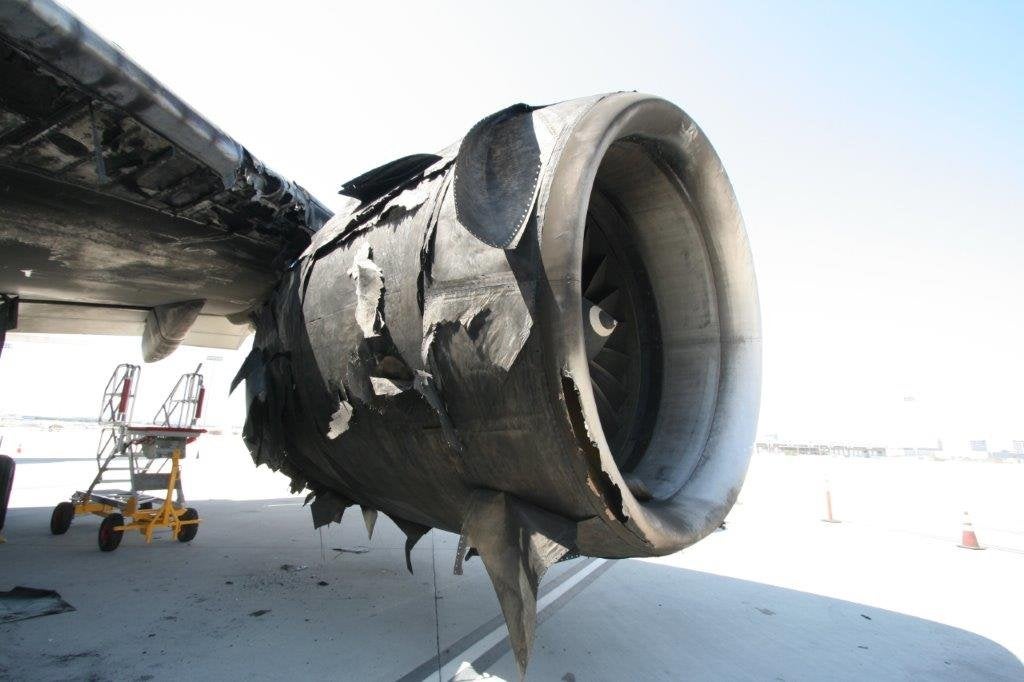
The 2015 engine fire on a British Airways 777 was caused by a fatigue crack and the resultant uncontained engine fire, according to the NTSB final report issued on Wednesday. The crack was found in an area of one of the aircraft’s GE GE90-85BG11 engines that was not required to be inspected at the time. The cause of the crack couldn’t be determined and GE implemented new inspection procedures after the accident.
The engine failure occurred on the takeoff roll as the aircraft was departing from McCarran International Airport (LAS) for London. The captain aborted the takeoff and the 157 passengers and 13 crew members used the emergency slides to evacuate. One serious and nineteen minor injuries were reported.
The NTSB investigation uncovered some issues with the flight crew’s checklist use during the evacuation, noting that the unaffected right engine was allowed to run for 43 seconds after the order was given to evacuate on that side of the airplane. According to the report, “Because the captain did not follow standard procedures, his call for the evacuation checklist and the shutdown of the right engine were delayed.”
As related safety recommendations, the NSTB referenced two previously issued recommendations stemming from an American Airlines engine failure and fire in 2016. Safety Recommendations A-18-6 and A-18-10 call for separate checklists for engine fires on the ground and in the air and the development of “procedures for an engine fire on the ground to expeditiously address the fire hazard without unnecessarily delaying an evacuation.”