
































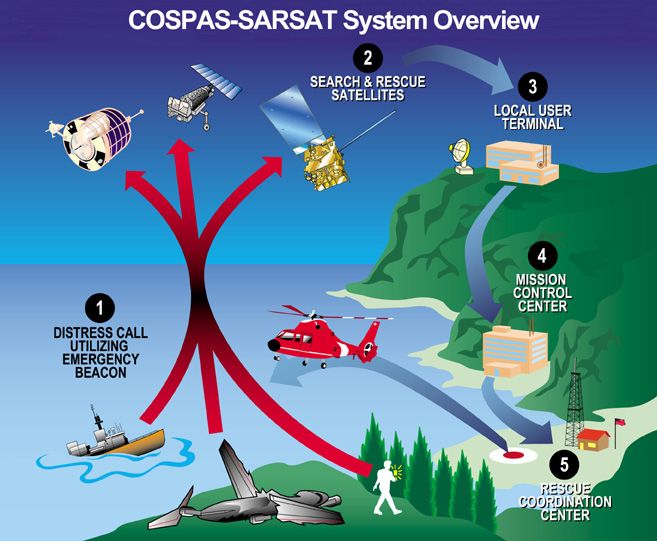
Recent crashes in Alaska have illustrated the limits of current search-and-rescue technology that depends on ELT signals, according to a story in Monday’s Alaska Dispatch. The Otter that crashed last month, killing former Alaska Sen. Ted Stevens and four others, carried a new-generation 406 MHz emergency locator transmitter, but the force of the crash separated the unit from its antenna cable. As a result, according to the Dispatch, satellites were unable to detect the signal. The Dispatch also reported that another airplane that has been missing since Aug. 21 in the same region of Alaska where Stevens crashed is equipped with an older 121.5 transponder, and no signal at all has been detected. Some pilots told the Dispatch they depend on non-approved supplemental gear such as personal locator beacons, Spot messenger units, and Spider Tracks tracking systems, which use GPS technology and communications satellites, to supplement their FAA-required ELTs.
AVweb‘s Mary Grady spoke with Master Sgt. Sal Provenzano at Alaska’s Rescue Co-ordination Center, to learn more about how first responders deal with the limitations of the current technology and to discuss the pros and cons of supplemental gear, in this week’s podcast. AVweb‘s Editor-in-Chief Russ Niles argues in this week’s AVweb Insider blog that it’s time to ditch ELTs and move on.
Related Content: