





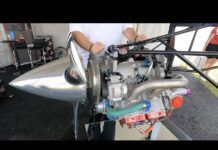




















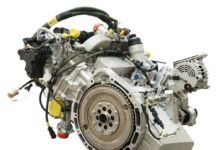



Give the board at Thielert credit for one thing-theyre not footdraggers. Late last week, the board wasted no time in moving the company into bankruptcy proceedings in the wake of an investigation into financial anomalies surrounding the companys initial public offering in 2005 and the subsequent tanking of the stock. German securities regulators and law enforcement officials are looking into allegations that Thielert based its financials on doctored accounts receivable data. That was apparently enough to scare away potential investors so the board apparently saw no point in delaying the inevitable.Not to put too delicate a point on this, but this is now a hell of mess-for the diesel engine segment in general, for Diamond and for Cessna and especially for owners of 400 or more diesel-powered Twin Stars, not to mention several hundred single-engine Stars and conversions of Skyhawks. Diamond is a standup company, so I dont expect it to shirk its duty to support owners comprising something north of $200 million worth of airplanes. If I were Diamond, Id take a page from the Johnson & Johnson Tylenol scare of 1982, which remains a case study in crisis management. And that means getting the information out quickly, honestly and without obfuscation of any kind. Furthermore, I would have the list of diesel owners on an e-mail loop with frequent updates, starting today. (If youre a DA42 or diesel owner, let me know when the note from Diamond arrives. Contact [email protected].)Expect to hear soothing reports that Thielert will continue operations normally, delivering engines and parts. We will see, but I find it difficult to understand how a company that was getting hammered for poor aftermarket support when it was solvent is somehow going to do better while insolvent and in the jaws of a liquidity crisis. Even the lapdog aviation press ought to raise an eyebrow at that claim.Cutting through the fog here, the principle issue at hand is whether the Centurion diesel line is technically and economically viable. We dont have enough information to know that yet. I have interviewed and surveyed many owners flying these engines and have discovered a number of complaints, mostly related to reliability, less to do with performance. Thats not to say all operators are displeased with the Thielert engines for some are clearly thrilled with it. But many have had sour experiences, with weeks of being down for lack of parts and service. There have been reports of cylinder head cracking, unexplained stoppages, unrealistic labor allowances to change engines and parts and short TBO/TBR cycle times.These complaints dont necessarily mean the engine line itself is doomed. This is new technology and its unrealistic to expect no teething pains. According to Thielert, many of the initial models faults-the Centurion 1.7-have been corrected in the follow-on variant, the 2.0. Although Thielert has been cagey about the details, we can only hope the 2.0 engine will have a better service history. DA42 owners are counting on this.But even if the 2.0 does just a little better, theres always the chance that it wont be enough. The critical thing we need to know about this engines economics is what we dont know. What is the warranty payout ratio? At best, the profit margin on engines isnt generous and if the thing is still too tender to perform reliably enough to keep owners from requiring large doses of expensive warranty support, the economic model for it may be a perennial loser. The test of this will be when potential investors begin sniffing around the company and get a look at the warranty numbers during due diligence-assuming that Thielert has reasonably accurate data on this.Manufactured products have to find a sweet spot between the cost of producing them-how much is invested in quality manufacturing and quality control-and how many products come back needing replacement or repair. There’s some profit built in there, too, and it can be eroded by higher-than-expected warranty incidence. Its quite possible that the Centurion line just isnt robust enough to find the sweet spot at a price customers are willing to pay for it. If thats true-if its even possible to determine that at this point-investors wont find any value in Thielert and its future will be grim.But remember what diesels are about-its fuel availability first, economy second. At current fuel prices, the Thielert engines are economically competitive with Lycoming IO-360s over the life of the engines. That’s true because even though the Centurion costs twice as much as the Lycoming, its life cycle fuel costs offset the difference, and then some.But if the Centurions have been selling at a price too low to support their warranty load, it may prove that diesels need a higher life cycle cost to survive in the market. So what is the cost Delta over gas engines? Is it 25 percent? Or 50 percent? It may very well be and buyers may still choose to pay it. Jet A remains-and will remain-the worlds commodity aviation fuel. If you cant get avgas, a Jet A piston engine may be attractive at a much higher price than a gasoline engine because thats the only way youll be able to fly.Stay tuned. It’s gonna get interesting.
Featured Video

FAA Fit? Wingman Med Backstops
Being properly prepared for your medical can save months of frustration.