





















Airline passengers often complain about the debilitating effects of the dry atmosphere in aircraft cabins. Some also express concern that reduced airflow and increased recirculation of cabin air can increase the likelihood that infectious diseases are transmitted. And the same is true for flight and cabin crews. In fact, maintaining a dry atmosphere in the aircraft cabin is critical to the continued safe operation of the airplane. Further, eliminating moisture helps to minimize the transmission of disease.
Not A New Problem
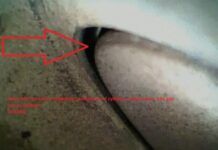
For over 40 years aircraft manufacturers have been trying to deal with problems stemming from water condensation inside the cabin. Air conditioning is provided by engine bleed air that is drawn from the engines, cooled, dehumidified and passed into the pressurized envelope. At cruise altitude the skin of the aircraft cools rapidly. Insulation blankets prevent the transference of these cool temperatures into the cabin; however, small gaps in the blankets inevitably develop and some cabin air always manages to come in contact with the cold aircraft skin. Despite the fact that most of the water is removed from the air before it is passed into the cabin for air conditioning, passenger respiration adds moisture. The moist air that comes into contact with the cold aircraft skin then condenses and forms a layer of frost. When the aircraft descends, the skin temperature increases and the frost layer melts rapidly. The hull is designed for this water to drain overboard; however, if gaps in the insulation blankets are large enough, some water may drip into the cabin interior or infiltrate into the blankets themselves.
Boeing has conducted extensive studies of various types of aircraft used by different operators and found the rate of condensation that occurs depends not only on cabin humidity levels, but on buoyancy rates. Buoyancy effect, or stack rate pressure differential, is the difference in relative pressure between areas behind and in front of insulation blankets. This pressure is slightly negative near the ceiling of the cabin and slightly positive near the floor. As a result, most frost forms near the crown of the cabin.
Other factors that generally increase condensation rates are load factor (more people equals more respiratory moisture), high airplane utilization rates (resulting in more time the aircraft structure is subjected to cold ambient temperatures), low cruise mach numbers (less ram rise), and relatively low cabin airflow rates and altitude (higher altitudes usually mean lower ambient temperatures.) Interestingly, outside atmospheric humidity levels seem to have little influence on this phenomenon. Therefore, some of the most severe moisture problems occur on aircraft with high-density seating, high load factors and high utilization rates.
Adverse Effects Of Cabin Moisture
Insulation blankets that cover the aircraft structure are typically fiberglass batting covered with waterproof, nonmetallic Mylar. Generally, water drains over the Mylar surface in a fashion similar to how rain drains over roof shingles. Ideally, this moisture drains into bilge areas of the fuselage and then is vented overboard. However, if there are gaps between blankets, or if some blanket surface damage has occurred, water may drip into the cabin or accumulate in the insulation blanket itself. If some of the accumulated water drips on passengers, this is often a source of complaint; however, if sensitive electrical equipment is exposed to dripping water, more serious repercussions can and will occur. Wet-arcing has been cited as the cause of various operators’ electrical problems. On one 737-300 that Boeing studied, the difference in weight between its existing insulation blankets and a set of new, drier ones was found to be approximately 80 pounds. These older, waterlogged blankets can increase operating costs due to added weight, reduce the blankets’ insulating properties and create a breeding ground for bacteria and fungi. Accumulated water can also exacerbate corrosion and decrease the service life of the airframe.
In the past, some maintenance technicians have wrung out insulation blankets in order to drain accumulated water; however, this remedy causes irreparable damage to the fiberglass material and further decreases the blankets’ effectiveness. Damaged blankets with accumulated water need to be replaced with serviceable units.
Remedies
It is virtually impossible to eliminate moisture from aircraft cabins. However, based on extensive studies and testing, Boeing has determined that a number of maintenance and procedural steps can be taken to reduce potential damaging effects from cabin moisture. Boeing suggests that the best way to minimize condensation is to eliminate holes in insulation blankets, overlap them during installation and reduce gaps between blankets and aircraft structure. Unrestricted flow channels for water to drain should be assured and plastic bilge trays added in the lower section of the fuselage to prevent insulation blankets from coming into contact with draining water. Addition of a ventilation system that directs a small portion of cabin supply air to the crown space of the fuselage is beneficial in reducing condensation and drying wet blankets. However, this is not the case in aircraft equipped with overhead re-circulation fans as part of the air conditioning system. Nomex-based felt can be added to the upper surfaces of stowage bins and other ceiling areas to absorb water before it enters the cabin. Water evaporation from Nomex felt panels occurs whenever there is active airflow in the cabin.
Boeing also concluded that one seemingly obvious solution of applying an adhesive insulation material to the interior surface of the airframe would not only be weight restrictive, but would also prevent adequate inspection of metal surfaces for corrosion and fatigue failure.
Qantas used to have a cockpit humidifier on their 747 Classics that was turned on and off by the flight engineer when passing through 10,000 feet on ascent and descent. When operating with Qantas, I routinely witnessed condensation rates in the cockpit that resulted in water dripping from metal frames around cockpit windows during descent. Often it was necessary to place towels on the glare-shield or around the front windows in order to prevent water dripping on pilots’ legs and/or instruments. Now I fly with “another airline” and cockpit humidifiers are not included in its 747 Classics’ air conditioning systems. I haven’t noticed any significant difference in how I feel after a long flight without a cockpit humidifier. Therefore, I wonder whether humidifying cockpit air is worth the potential trouble dripping water could cause. It would be interesting to know if electrical failure rates and corrosion problems have been greater in Qantas airplanes versus other operators, such as this “other airline.”
What’s This Mean To Passengers And Us?
It is easy to understand how passengers wonder why they sometimes get rained on during descent while the atmosphere in the cabin generally has humidity levels below those found in the desert. As a consequence, many passengers and crew members complain about stagnant air, incessant thirst and physical discomforts, such as red and itchy eyes.
“Will I catch the flu?” they sometimes ask after witnessing a nearby passenger sneezing.
“What was that funny smell in the cabin during take-off?”
“It’s too cold … too hot … too stuffy.”
(They think they have it bad? This is our office!)
In reality, however, passenger questions such as these are reasonable and deserve an honest answer.
One fact has remained constant over my career: After a long flight, I feel badly no matter what I do. However, there a number of steps that can be taken to ensure that both crew and passengers feel as well as one can in these circumstances. I have found that the effects of jet lag are less debilitating when I drink a sufficient amount of fluids during a flight, do not drink excessive amounts of a diuretic — such as coffee — and regularly dampen my nasal passages with water. For the latter, I have found that breathing through a wet towel for a few minutes every hour helps. (Perhaps you have other remedies you could suggest to passengers in order to make them feel more comfortable).
The amount of fluid intake necessary on a long flight depends on each individual; however, one doctor advised me that if you need to urinate every couple of hours, then your body hydration level is probably adequate. Some people also recommend that immersing your body in water, such as a bath or swimming pool, can help in the re-hydrating process after a long flight .
Airborne contaminants in cabin air, such as ozone, burned and unburned combustion hydrocarbons, other gases and toxic particulate aerosols, engine lubricating oil seal leakage, hydraulic fluid leak ingestion and deicing fluid ingestion have attracted much attention over recent years. However, in normal aircraft operations, the air in the cabin is usually as safe, if not safer, than that found in many large cities. One added benefit of in-flight cabin air over city air is that cabin air is completely changed every two to six minutes. However, if a malfunction occurs in an aircraft system and noxious fumes are ingested into the air conditioning airflow, cabin air quality degradation can have severe, adverse effects on passengers and crew — thankfully, these occasions are relatively rare. In these circumstances, quick reactions by pilots and flight engineers to isolate the cause of the contamination are imperative.
Some passengers and travel industry affiliates have also expressed concern about the possibility of spreading infectious diseases in flight, particularly when air conditioning pack operations are reduced and subsequent lower air exchange rates exist. After conducting a study in 1998, the American Medical Association (AMA) concluded that under usual aircraft procedures, cabin air quality does not represent a significant risk for transmission of infectious diseases. Passengers should be reminded that risk of infection is an everyday occurrence, but that this risk is most likely lower on an airplane due to the constant, total exchange of cabin air. I have no empirical evidence to prove my theory; however I think that the risk of infection is probably greater in other public areas, such as elevators, stores and offices — or even airport terminals and waiting areas.
The bottom line is that passengers and crew have to endure an air conditioned aircraft cabin in order to travel from one point to another. Being armed with the facts may assist crew members in allaying passenger fears about detrimental effects of dehydration and contaminants. However, it should also be realized that some people may never be satisfied with rational explanations. Conspiracy theorists are everywhere and paranoia about the water we drink and the air we breathe is rampant. Therefore, for some people, no amount of reassurance will convince them they will not catch the Bubonic plague or shrivel into an unrecognizable mass during the course of their flight.
For this category of person, the alternate actions for crew members might be to use their sense of humor … give them a bottle of water and tell them to hold their breath for the rest of the flight.
