























|
A ghost ship flying across country with a crew evidently disabledor dead — sounds like a script for a bad Hollywood disaster movie. Sadly, however, recentevents have left us wondering how this actually happened. What happened to the Lear 35carrying Payne Stewart and five others? We may never know for sure — those who could havetold us are gone — but we can look at some of the facts of high altitude flight and someof the possibilities. And we can learn.
So, what could have happened to that Lear? Did it have any inherent weaknesses? Werethere procedures that weren’t followed? Again, we may never know, although the NTSB hassome powerful forensic talent and resources. Before we look at the airplane itself, let’slook at the environment it was flying in.
The Environment of Flight
|

I am always amazed when I ask a class of experienced jet pilots undergoing recurrenttraining how many have been through the FAA’s physiological training program. Usually lessthan half will have taken advantage of this valuable opportunity. We spend many hours inour carefully conditioned cockpits, only inches from an environment that is incompatiblewith life. We sit in shirtsleeves, comfortably oblivious to the frigid and rare atmospherethrough which our fragile shell moves. Rarely do we think about the temperature outside orthe time available to react should our carefully maintained environment fail.
Jet aircraft are designed to operate efficiently at high altitudes but the human bodyis not. Humans are land animals, evolved to exist comfortably close to sea level at amaximum speed (and that for only very short sprints) of little more than 15 miles perhour. Anything else is a foreign, and potentially lethal, environment. Any time we operateabove the altitude of acclimatization (the altitude where we normally live), risks exist.No matter how you perceive your performance (and despite all the bravado and tough warstories) the body will still respond to the atmosphere in which it is operating and beaffected by gas concentrations and ambient pressures.
The atmosphere is an envelope of air that surrounds and rotates with the earth to analtitude of about 25,000 miles. This envelope is constantly changing, as each weatherbriefing will reaffirm, and temperatures and pressures fluctuate from day to day and fromregion to region. From a biological point of view, however, the atmosphere can beconsidered a constant in relation to its effect on the human physiology.
Although it is often said that the air is “thin” at altitude and lacks theoxygen necessary to sustain life, the actual composition of the atmosphere remainsconstant throughout the altitude range. The percentage of oxygen in the air is constant at21 percent, but the actual number of oxygen molecules per unit volume of air decreaseswith pressure and consequently with altitude. There will always be a constant 21% oxygenavailable, but it is analogous to the difference between 21% of one dollar and 21% of onecent. The percentage is the same but the value is vastly different. The remaining 79percent of the composition of the atmosphere is principally nitrogen (78%) with carbondioxide (0.3%), inert gases (1%) and water vapor.
Physical Characteristics of the Atmosphere
|

Pressure: Atmospheric pressure is really just the weight of all theair molecules in the atmosphere above the point where the measurement is made. Since thereare fewer molecules in the column above the measurement point at higher altitudes, you cansee that atmospheric pressure decreases with increasing altitude. Since air iscompressible, the atmosphere will be denser near the surface (the bottom of the column)and increases of pressure are greater nearer the surface. Conversely, the pressuredecreases less rapidly the higher in the atmospheric column one rises. The greatestdensity change occurs between sea level and 5,000 feet; therefore, the problems associatedwith pressure and density change must be considered even in pressurized aircraft.
There are a variety of properties of the atmosphere that will change this pressurebesides its weight. Seasonal temperature changes, weather systems, latitude and longitude,and time of day all effect atmospheric pressure. The International Standard Atmosphere(ISA) is a baseline from which to work. We all learned this in private pilot groundschool. This standard establishes a mean atmospheric pressure of 29.92 inches (760 mm) ofmercury at a temperature of 15C (59F) in dry air at sea level. This is also expressedas 14.7 pounds per square inch (PSI) or 1013.2 millibars (MB) at the same temperature.
Temperature: The surface of the earth is warmed by solar radiationthat is then reflected back into the atmosphere. This direct and reflected solar radiationdoes little to heat the atmosphere directly. Instead, the air is heated by the warmth ofthe earth, and consequently the temperature of the atmosphere decreases with increasingaltitude … until the tropopause is reached at about 35,000 feet. After this point thetemperature remains relatively constant. The decrease in temperature, or lapse rate, isfor dry air and is 3.56F (1.98C) per thousand feet of altitude.
Gas Laws
The mixture of gases in the atmosphere is subject to several laws of physics governingthe behavior of gases. An understanding of these laws will help in the understanding ofthe effects of altitude and these gases in the body.
Dalton’s Law tells us that the total pressure of any mixture of gases(with constant temperature and volume) is the sum of the individual pressures (also calledpartial pressure) of each gas in the mixture. Also, partial pressure of each gas isproportional to that gas’s percentage of the total mixture. Because the percentage ofoxygen in the atmosphere remains constant at 21%, Dalton’s Law lets us calculate thepartial pressure of the oxygen in the atmosphere at any altitude.
As we’ll see shortly, the human body is affected by the pressure of the gases in theatmosphere. The partial pressure of oxygen (and to a lesser extent other gases) availablein the surrounding air is important in determining the onset and severity of hypoxia.
Henry’s Law states that the amount of gas dissolved in a solution isproportional to the partial pressure of the gas over the solution. A bottle of carbonatedliquid demonstrates Henry’s Law. When the bottle is uncapped, the carbon dioxide (CO2) inthe mixture will slowly diffuse to the atmosphere until the pressure of CO2 in the liquidequals the pressure of CO2 in the surrounding air. The soda will then be “flat.”A bottle of soda opened in an unpressurized aircraft at 10,000 feet will foam andoverflow. The opposite will happen with soda opened at pressures greater than oneatmosphere. A champagne cork won’t pop in a diving bathysphere pressurized for deep oceanexploration.
Boyle’s Law states that the volume of a gas is inversely proportionalto the pressure on the gas as long as the temperature remains constant. A gas will expandwhen the pressure on it is decreased. This law holds true for all gases, even thosetrapped in body cavities. A volume of gas at sea level pressure will expand toapproximately twice its original volume at 18,000 feet, nearly nine times its originalvolume at 50,000 feet.
Graham’s Law tells us that a gas at higher pressure exerts a forcetoward a region of lower pressure. There’s a permeable or semi-permeable membraneseparating the gases, and gas will diffuse across the membrane from the higher pressure to thelower pressure. This will continue until the pressure of the gas is equal, or nearlyequal, on both sides of the membrane. Graham’s Law is true for all gases and each gas in amixture behaves independently. It’s possible to have two or more gases in a solutiondiffusing in opposite directions across the same membrane and, in fact, this is whathappens to make oxygen transfer possible in the cells and tissues of the human body.
How Does Altitude Affect Your Body?
Okay, so much for the physics lesson. How does this all affect me? When we talk aboutthe effects of altitude upon the human body and altitude sicknesses we tend to think interms of “high altitude” and classify that as somewhere in the flight levels.Not always so. Your body will be adversely affected by prolonged exposure to any altitudeabove that at which you’ve been living. A resident of coastal California will not performnearly as efficiently at any task in Denver, where the ground is a mile high, as will anative Denverite, but most would not consider being on the ground at Denver as being at”high altitude.” Your body and brain, however, will have a different perspectiveon the matter. The discussion that follows applies to all pilots — jet jocks, helicopterpilots, recreational pilots and hang-glider aficionados.
How the Human Body Uses Oxygen
|

Let’s start our discussion of the effects of altitude on our bodies by first discussinghow the body normally acquires, transports and uses oxygen. The importance of all thosegas laws should become clearer. We’re all aware that oxygen is necessary to sustaincombustion or oxidation. It is necessary in the human body for the same reasons — tosupport the oxidation of fuels needed to provide energy for life.
Very little of the oxygen carried by the blood is carried in dissolved form in theplasma. Most of the oxygen — almost 98% — is transported by the hemoglobin molecules inthe red blood cells. The ability of hemoglobin to combine with and transport oxygen isdependent upon the pressure of oxygen in the surrounding environment. Higher pressures ofoxygen enable the hemoglobin to take up larger quantities of oxygen. Lower oxygenpressures will result in an increasing tendency by the hemoglobin to give up oxygen. Thisvariable combining characteristic is what allows the blood to acquire oxygen in the lungsand transport it to the tissues where it is used in metabolism. This characteristic of thehemoglobin also results in what is known as the oxygendissociation curve (see graph below). While we’ve seen that oxygen pressure decreasesa bit less than linearly with altitude, the ability of the hemoglobin to hold oxygenfollows a much different curve. There is a big change for the worse in the hemoglobin’sability to combine with oxygen that occurs in the low twenties.
|

Air entering the lungs at sea level enters at a pressure of 760 mm Hg. This results ina partial pressure of oxygen in sea level air of about 160 mm Hg. (that’s about 21% of 760mm). The blood flowing through the lungs isn’t exposed to atmospheric air though. Bloodcomes in contact with alveolar air — the air mixture contained in the tiny air sacks ofthe lungs — which is only 14% oxygen. (This is because of the addition of water vapor tothe air you breath in plus the carbon dioxide that has diffused from the blood returningfrom the tissues.) The partial pressure of oxygen in alveolar air is about 14% of 760 mmHg or 106.4 mm Hg. Carbon dioxide, which is 5.5% of alveolar air (as contrasted to lessthan 1% in the atmosphere) exerts a pressure of 41.8 mm Hg.
The hemoglobin in the blood returning from the tissues carries oxygen at a pressure ofabout 40 mm Hg. Graham’s Law governs the diffusion of oxygen from the higher pressure ofthe alveolar air to the blood and the diffusion of carbon dioxide from the blood to thealveolar sacks. The opposite transfer takes place when the oxygen rich blood reaches thetissues which carry oxygen at an average pressure of 20 mm Hg. This lower pressure willallow the hemoglobin to release oxygen which will then diffuse into the tissues. At thesame time, carbon dioxide is diffusing from the tissues into the blood. (An averagepressure for CO in the tissues is 50 mm Hg.; however, this is dependent upon the activitylevel of the tissue.) Getting hypoxic yet from all this high altitude discussion??
|

In a normal, healthy individual, sea level pressure is sufficient to cause the bloodleaving the lungs to be almost totally (97%) saturated with oxygen. At 10,000 feet thesaturation has dropped to almost 90% — still sufficient for nearly all usual lifefunctions. An oxygen saturation of 93% is considered by medical folks to be the low limitof normal functioning. On top of Pike’s Peak (about 14,500 feet and 438 mm Hg atmosphericpressure) the oxygen saturation has dropped to about 80%. Many people, if left in thisrarefied air for some period, will develop mountain or altitude sickness: vertigo, nausea,weakness, hyperpnea (increased breathing), incoordination, slowed thinking, dimmed visionand increased heart rate. At 25,000 feet the oxygen saturation is only 55% andconsciousness is lost. (Note that the partial pressure of oxygen in alveolar air at 25,000feet is 14% of 281.8 mm Hg or 39.5 mm Hg — slightly less than that normally found invenous blood returning from the tissues. Which way do you think the oxygen will diffuse ataltitudes above 25,000 feet?)
Nowadays, altitude-savvy pilots are starting to carry a tiny instrument called a
Types of Hypoxia
The effects of hypoxia upon flying skills and the symptoms of its onset are the same nomatter what the cause of the hypoxia. It is useful, however, to look at some varyingcauses of this condition so we can be alert to its poossible onset when of one or more ofthese factors is present.
Hypoxic hypoxia is also referred to by aviators as “altitudehypoxia.” This is the hypoxia that results when there is a lack of available oxygenor partial pressure of oxygen in the breathing air. This is the type hypoxia experiencedwhen flying in an unpressurized cabin or when flying at altitude in a jet with a cabinpressurized to a cabin altitude above 5000 feet. Although strictly speaking, we aresomewhat hypoxic when operating even a few hundred feet above the altitude ofacclimatization, this becomes most evident when flying unpressurized aircraft. In reality,the symptoms of hypoxic hypoxia do not, in the absence of other contributing factors,become significant until about 5000 feet.
|

Hypoxic hypoxia occurs because there is a smaller and smaller pressure differentialbetween the pressure of oxygen in the inspired air in the lungs and the pressure of theoxygen in the blood and tissues. Remember that the combining power of hemoglobin andoxygen is influenced by this pressure differential. The greater the differential, the moreefficient the hemoglobin becomes. As this pressure differential lessens, it becomes harderand harder for the hemoglobin to pick up and transport the oxygen.
Hypemic hypoxia (also calle anemic hypoxia) occurs whenever theblood’s ability to carry oxygen is reduced although there is sufficient oxygen at asufficient pressure in the inspired air. There are a variety of conditions that can causethis to happen.
Any condition that would cause a reduction in the number of healthy, functioning redblood cells (anemia or reduced production of red blood cells, blood loss, deformed bloodcells, disease, etc.) will impair the blood’s ability to supply the tissues with oxygen.Remember the old advertisements warning about “iron poor blood?” Iron is thefunctional part of the hemoglobin molecule and it is the iron which renders the hemoglobinabsolutely indispensable for life. In addition to a reduction in the number of red bloodcells available, anything that would interfere with the ability of hemoglobin to transportoxygen or anything that would displace the oxygen that is bound to the hemoglobin willaffect the oxygen available to the cells.
The most common impairment to oxygen transport by the hemoglobin is carbon monoxide.Carbon monoxide combines with hemoglobin 200-300 times more readily than does oxygen andonce bound is extremely hard to eliminate. Smokers will find that the carbon monoxidebound to their hemoglobin will lower their altitude for onset of hypoxic symptoms by2000-3000 feet. This effect is not limited to smokers, however. Anyone exposed to a smokyatmosphere will suffer somewhat. (Remember this next time you volunteer to go along as adesignated driver for a group of drinkers. Just sitting in that smoky bar for severalhours is going to affect your performance the next day, even without alcohol and fatigue!)Other chemicals, among them sulfa drugs and nitrites (found in food preservatives) canhave an adverse effect on the ability of hemoglobin to combine with and transport oxygen.
Histotoxic hypoxia is a disruption of cellular respiration. There maywell be sufficient oxygen of sufficient pressure in the inspired air to fully saturate theblood and hemoglobin, but the cells expecting and needing the oxygen are unable to use itdue to the presence or absorption of cell toxins. The most common toxin found at thecellular level that can cause this effect is alcohol. Although other toxins, notablycyanide and some narcotics, also can cause this disruption of cellular respiration,alcohol is by far the most common culprit.
Now, we are all aware of the hazards associated with alcohol and flying and I’m notsuggesting that any true professional would knowingly violate these rules and guidelines.Many pilots, however, may be impaired by alcohol at the cellular level and not be aware ofthe problem — or its cause. Remember the iron poor blood mentioned earlier? Be cautiousof the “tonics” or “elixirs” offered as remedies. Carefully read thelabels on any over-the-counter medications or nutritional supplements you propose toingest. Although many more manufacturers are eliminating or reducing the alcohol contentof the liquid medications, you may be surprised at the percentage of alcohol some stillcontain. One popular vitamin supplement for “iron poor blood” contains 12%alcohol!
The Effects of Hypoxia at Various Altitudes
|

Hypoxia is an insidious and progressive condition and is almost undetectable by the pilot.You should always be aware that without supplemental oxygen at sufficient pressure youwill gradually and progressively lapse into incompetence while maintaining an absolutelyeuphoric faith in your own ability.
As blood saturation of oxygen drops there is a steady disruption of life functions.From a blood saturation of 93%, considered the low limit of normal functioning, wherevisual problems begin to occur, there is a rapid deterioration into unconsciousness withdecreasing saturation.
Keep in mind, as mentioned earlier, that although the partial pressure of oxygen in theatmosphere decreases somewhat less than linearly with increasing altitude, thehemoglobin’s ability to combine with this oxygen follows a much different and more deadlycurve. This property of hemoglobin bears heavily on oxygen requirements at altitude. Let’slook at some common hypoxic effects an average, healthy individual can expect withincreasing altitudes.
5000 feet. This is considered by most to be a “low”altitude. The retina of the eye is more demanding of oxygen than any other organ of thebody — even the brain itself which demands 30% of the supply. At this “low”altitude this extension of the brain will begin to suffer degradations in function whichwill be most noticeable at this point in night vision.
Instruments and maps are more easily misread during night flight at this altitude andground features and lights are more easily misinterpreted. It is always an eye-openingshock to my students when I bring them in over the Mojave Desert after a long flight at acabin altitude of 8000 feet. After having them note the discernible features on the darkdesert floor, I have them breath 100% oxygen for a few minutes. Without exception, all areshocked and amazed to note the features that “jump” out of the blackness after alittle O2. Most have heard of this little demonstration before it actually takes place,but none are totally prepared for its dramatic effect. This level of hypoxia is extremelyinsidious because most pilots feel they are functioning at peak efficiency at this point.Extra vigilance is necessary to prevent missing critical fixes on charts or misreadinginstruments.
10,000 feet. Night vision is now degraded by 15-25 percent. Theblood saturation has dropped to 90 percent and your brain is receiving the absoluteminimum supply of oxygen. This is the absolute highest altitude at which you should haveany trust at all in your own performance although your judgment is already severelycompromised.Euphoria will prevent true self-assessment of your abilities. Physicalhypoxic symptoms such as tingling and headache may not become apparent for four hours ormore at this altitude, although judgment has long gone by the wayside. Above 10,000 feetblood oxygen saturation and performance degrade steeply.
14,000 feet. Blood oxygen saturation is down to a dangerous85%. You will be increasingly disabled at this altitude. Vision will dim. You willexperience serious degradation of judgment, memory and thought. The impairment of judgmentwill leave you feeling just fine and confident in your performance, however. If hypoxia isnot recognized and corrected at this stage of impairment, it is unlikely that it will berecognized. You are in serious danger.
16,000 feet. Only 2,000 feet higher than the last assessment,but you will behave as though you had ingested a full load of gin and tonics. Your bloodoxygen saturation will have dropped to 79 percent and you will be seriously disabled. Youwill be euphoric, belligerent, disoriented or perhaps all three. You will be irrational,unreliable and dangerous. If you are alone, your chances of survival are decreasingrapidly.
18,000 feet. At this altitude you are incapable of any usefulfunction although you may still feel great! Blood saturation has fallen to 71 percent andyour brain is suffering. You will pass out in about 30 minutes.
20,000 feet. If you have not already collapsed, it will not belong now. Five to 15 minutes is about the time of useful consciousness at this altitudeand prolonged exposure can result in death. Blood saturation has dropped to 71%.
25,000 feet. Forget it! Blood saturation has now dropped tolethal levels. Time of useful consciousness is three to six minutes with death followingnot long after that. Above this altitude, suffering a rapid decompression may also resultin a condition divers know as the bends and various other pressure related maladies.Remember, this is only HALF as high as some modern civilian aircraft are certifiedto fly!
What Determines Your Response to Hypoxia?
It is impossible to tell exactly when hypoxic reactions will begin to affect you.Individual reactions to hypoxia vary greatly not only among people, but in the same personon a day to day basis due to differences in body chemistry, general health and diet. Someof the determining factors are somewhat under the pilot’s control and some are dictated bythe flying environment itself.
Absolute Altitude. This is the easy one. The severity of hypoxia willdepend directly upon the absolute altitude of the environment you’re in. This may be theaircraft altitude in an unpressurized cabin or the cabin altitude in pressurized craft. Asthe altitude of the environment climbs and the partial pressure of the oxygen in thatatmosphere drops, the risk of hypoxia rises. Acclimatization (to normal living altitudes)can help only to a limited extent. The Denver folks may have an advantage up to about15,000 feet, but after that everyone is more or less equal — equally impaired. Thisfactor is usually somewhat controlled by the pilot; however, mountains or weather can causea climb to a previously unplanned altitude. This is of little consequence in a pressurizedaircraft.
Acclimatization. One question I am often asked concerns the permanentresidents in the Andes above 17,000 feet. How do these people remain conscious, much lessdo work? The answer is acclimatization. The Peruvians who live in these villages haveextremely high red corpuscle counts and so have much more hemoglobin with which totransport oxygen. These residents also have much larger pulmonary ventilation volumes andincreased cardiac output. Some acclimatization shown by this population is reversible –they will be lost with acclimatization to a lower altitude and consequently a higheratmospheric pressure. Other of their adaptations, however, seem to be permanentevolutionary responses to life at lowered atmospheric pressures, are not lost withresidence at lower altitudes and are passed on genetically to subsequent generations.
The native Denverites we spoke of earlier will have more tolerance to altitude andbecome hypoxic later and at a higher altitude than coastal pilots because they are alreadypartially acclimated to altitude by virtue of their residence in the Mile High City. Theyare only 5000 feet above their physiologically adapted altitude at 10,000 feet. The LApilots are 10,000 above theirs. (Then again, there are some who claim that those of us inLA are permanently in the ozone, but that is probably the topic of a differentdiscussion.)
Rate of Ascent. The quicker you (or your environment) climb, the morerapid the onset of hypoxic symptoms. The climbers who ascend Mt. Everest are well aware ofthis phenomenon. They spend several weeks in their climb, stopping at several intermediatealtitudes to acclimate. An explosive decompression in an aircraft with the resultant rapidclimb of the cabin altitude can reduce the time of useful consciousness to one-third to one-half ofthat normally expected. A rapid ascent can cause the symptoms of hypoxia to quicklyaccumulate and incapacitate a pilot before awareness of the encroaching disability dawnson the dimming consciousness.
Duration of Exposure. Staying at 8,000 feet for several hours (notuncommon in a jet at flight level cruising altitudes) can cause the same symptoms andincapacitation as staying at a higher altitude for a shorter duration. The symptoms ofhypoxia are cumulative and time related, but there is no reliable means to predict theexact relationship or effect. The only certainty is that the higher the altitude theshorter the time of exposure before symptoms begin to occur. This, too, will vary on anindividual basis.
Physical Activity. Any physical activity will obviously cause the bodyto demand more oxygen for normal functioning. The muscles will rob the brain of themarginal amounts of oxygen available in the blood and the time of onset of hypoxicsymptoms will be shortened.Although not much physical activity is expended bypilots, the extra amount required to fly in turbulence or with a failed autopilot candramatically reduce the already minimal oxygen supply to the brain and the retinas of theeyes. This factor is usually not under the pilot’s control.
Temperature. The temperature in the cabin has a great affect on anindividual’s tolerance for and response to hypoxia. Either extreme — the cold of acockpit at altitude at night with a failed heating system or the greenhouse environmentof a poorly air conditioned pressurized aircraft at high noon — will cause the body toexpend energy in an attempt to maintain its core temperature within acceptable limits.This expended energy is just another form of increased physical activity and will decreasea pilot’s tolerance to hypoxic conditions.
Self-Imposed Factors. Pilots vary widely in their susceptibility tooxygen deficiency and the same person will show variances from day to day. This isprimarily due to many factors influencing susceptibility to hypoxia which are under directcontrol of the pilot. It is the pilot’s responsibility to avoid these factors as much aspossible. Your tolerance of oxygen deficiency will be reduced by any one or more of thefollowing factors. The affect of combining these factors cannot be accurately assessed.
- Fatigue. Fatigue is both a exacerbating factor of and a symptom of hypoxia. A mentally or physically fatigued pilot will have less tolerance for hypoxia and its associated decrements in performance and perception because the fatigue will already have degraded performance, perhaps to unacceptable levels. Hypoxia will deepen the fatigue and the cycle continues on a downward spiral of increasing fatigue and degradation of performance. Also, there is a chance that the pilot will not attribute increasing fatigue to the effects of hypoxia and will not take prompt corrective actions.
- Alcohol. This cellular toxin is a risk factor even after the blood alcohol level has returned to zero. Of course, as we noted above, any alcohol in the blood or cells will hamper their ability to take up and utilize oxygen. One ounce of alcohol in the blood will raise the body’s perceived altitude by 2,000 feet. However, the aftereffects of the alcohol can be just as debilitating. The fatigue caused by the disturbance of normal sleep cycles by alcohol will diminish tolerance to hypoxia as discussed above. Additionally, the depressant effect of this drug will remain after the toxin is cleared from the blood. This will cloud the pilot’s judgment and delay the recognition of the problem.
- Carbon Monoxide. Again, it is important to remember that carbon monoxide (CO) will combine with hemoglobin in the red blood cells 200-300 times more readily than will oxygen. Once bound it is almost impossible to rid the red blood cells of their cargo of this toxin — in fact, most carbon monoxide remains bound to the red cells until the cells die and are scavenged by the liver. Of course, the major source of carbon monoxide in the blood stream is cigarette smoke — either your own or second hand smoke from other smokers in the vicinity.
Probably no other self-imposed risk factor is as deadly — or as controllable — as isthe CO level in the blood. Smoking a pack of cigarettes in the 24 hours preceding a flightcan saturate as much as 8-10 percent of the available hemoglobin. This will raise thebody’s perceived altitude by as much as 5,000 feet! You can be effectively in Denver onthe ground at LAX. You will suffer the effects of hypoxia at sea level. An 8,000 footcabin of a jet cruising in the flight levels is going to be just the same as cruisingunpressurized at 13,000 feet. Is it any wonder that most accidents happen in the landingphase? One wonders how much hypoxia contributes to the accident rate yet is rarely listedas a cause — especially in modern jet transports.
Cabin Decompression — Explosive and Otherwise
Our fragile cocoon — those sheets of aluminum and plexiglass that give us the falsesense of security as we cruise in shirtsleeves at FL 430 — can fail us. It is not athought that most pilots choose to dwell on, but the possibility is certainly there.Although structural failure like the one experienced by the Aloha Airlines 737 wouldcertainly cause a sudden and explosive decompression, a more likely cause would be thefailure of a door seal or a cracked cabin window or pressure bulkhead. Explosivedecompression and emergency descent drills are practiced at least once a year by all jetpilots during recurrent training and I am often amazed at the casual attitude showntowards these emergency situations. The actuality will not bear any resemblance to theneat and orderly drill accomplished in training.
An actual decompression will first of all be accompanied by a good deal of noise as thehigher pressure air in the cabin rushes out until the cabin pressure, and consequently thecabin altitude, equals the ambient pressure outside the aircraft. This may be preceded bya loud popping sound — the sound of a champagne cork magnified 100 times. Dust and debriswill be picked up and rush toward the opening where the pressurized air is rushing out ofthe cabin. Smaller items may be sucked outside the aircraft. A fog will form in the cabinsince the warmer air in the cabin is capable of carrying more moisture than the cold airoutside the aircraft. As the cabin temperature and pressure drop the moisture willcondense forming a wet, cold fog. A significant temperature change will occur — theambient temperature at FL 430 is -67 F. Confusion will reign. And these are only theeffects on the atmosphere inside the craft — what of the effects on the humans?
First of all, there is a distinction between rapid and explosive decompressions. Anydecompression that takes place in less than one-half second is considered to be anexplosive decompression. This type of decompression occurs primarily in smaller-bodiedaircraft and, thankfully, is not common since it can be rapidly fatal. Human lungs usuallyrequire about 0.2 seconds to release their air. Any decompression happening in less thanthis short amount of time can result in rapid lung decompression and rupture or severedamage. The only emergency procedure available for dealing with this type decompression isto immediately get on oxygen and get the aircraft to a lower altitude as quickly aspossible.
A rapid decompression is one that occurs in more than one-half second, but less thanabout ten seconds. This is the type decompression experienced in larger-bodied aircraftand is the more common of the two. There is not the high potential for lung damage in thistype decompression, however, the noise, confusion, debris and fogging will all be presentin varying degrees of severity. Rapid donning of oxygen and descent is still necessary,but other emergency measures may also be available to deal with the situation and lessenthe impact of the decompression.
Subtle decompression is also a danger in pressurized aircraft. A gradual loss of cabinpressure (or, more commonly, improper setting of the cabin altitude controls) and anslowly rising cabin altitude may not be recognized by the crew in time to deal with theemergency effectively. In all jet aircraft certified to transport category standards, FAR25.841 requires “Warning indication at the pilot or flight engineer station toindicate when the safe or preset pressure differential and cabin pressure altitude limitsare exceeded. … and an aural or visual signal (in addition to cabin altitude indicatingmeans) meets the warning requirement for cabin pressure altitude limits if it warns theflight crew when the cabin pressure altitude exceeds 10,000 feet.” In addition, theseaircraft are required to have means to limit the cabin altitude to no more than 15,000feet in the case of a failure of components in the pressurization system. This cabinaltitude limitation, however, does not refer to structural failures, but only to thecomponents of the pressurization system itself.
Time of Useful Consciosness. The time of useful consciousness is thetime your brain is awake enough to be useful and make decisions. This varies from almostindefinite at 10,000 to 9 to 12 seconds above 40,000 feet. An explosive or rapiddecompression will cut this time in half due to the startle factor and the acceleratedrate at which an adrenaline soaked body burns oxygen.
How Does Decompression Affect the Body?
Of course, the most serious effect of decompression is the resultant hypoxia and moreor less rapid loss of effective consciousness. The most noticeable immediate effect ofrapid cabin decompression will be the sudden rush of air from the lungs. As noted above,this can be a near fatal experience in explosive decompressions in small aircraft. Itwill, however, happen. I’ve had pilots tell me they would be able to hold their breath andprevent this effect. That won’t happen. First of all, the surprise of the event willoverride any defensive measure you may have thought you could put into place. Secondly,the rapid change in pressure differential will make it impossible to hold your breath.(Remember, we can be talking about a pressure differential of 8.8 PSI. Let’s put thesepressure differentials into perspective. A differential of 8.8 PSI is 1267 pounds persquare foot. The pressure differential between the bottom and the top of the wing of apopular corporate jet is less than 1/3 PSI — and that supports the weight of theaircraft!)
Trapped Gases. Boyle’s Law, as you will remember, states that thevolume of any gas is directly proportional to the pressure exerted on that gas. In otherwords, as the pressure drops, the gas expands. Any gas trapped in the human body willexpand with a drop in the pressure surrounding the body. This can occur in various placesin the body causing varying degrees of discomfort or pain.
Ear Blocks. The trapped gas disorder almost everyone who has everflown is familiar with is one affecting the ears — actually the middle ear. Usually,trapped gas in this area is a problem on descents, but discomfort and pain can be presentduring rapid decompressions. Normally the eustachian tube connecting the middle ear to thenasal passages acts to equalize the pressure between the outer ear and the middle ear.(These two areas are separated by the eardrum) Any pressure differential between these twoareas will cause the ear drum to bulge and the compromised flexibility of the ear drumwill affect hearing.
Swelling of the eustachian tube, common with “head colds,” will preventnormal equalization of pressure between the outer and middle ear. Since the nasal end ofthe eustachian tube acts a somewhat of a one-way valve allowing air to pass out of themiddle ear, this problem is more common on descent than on ascent or rapid decompressions,but can happen, especially in the presence of severe swelling of the mucus membraneslining these passages. Since the greatest change in air density occurs between sea leveland 5,000 feet, these problems will be more severe with rapid pressure changes at thesealtitudes than in the rarer air of the flight levels.
Sinus Block. Sinus block can be more severe than blockage of theeustachian tube leading to the middle ear because the passages between the sinuses and thenasal cavity are much smaller than the eustachian tube. This problem can be equally severeduring ascent descent. With a rapid decompression and any inflammation of the sinuspassages at all, severe, almost incapacitating pain may be felt. Some have described thispain as feeling as though a nail was being driven into the cheekbone. The only reliefavailable is descent to a higher ambient air pressure to relieve the pressure differentialbetween the sinus cavity and the ambient air.
Dental Problems. Although dental problems associated with rapiddecompression are not as common as ear and sinus blocks, they can occur. Any abscess orinfection in the gums or around the roots of teeth will cause pain upon ascent and a rapiddecompression can cause disabling pain. Only return to a higher ambient pressure willbring relief and dental care should be sought as soon as possible.
Teeth that have been improperly filled cause problems with altitude or rapiddecompressions. The higher pressure under the filling will cause excruciating pain and inrare instances can cause the tooth to explode. An exploding tooth would be distracting,not to mention the pain associated with the failure.
Intestinal Problems. Intestinal problems associated with rapiddecompression range from merely embarrassing to totally incapacitating. There is normallyabout one quart of free air in the intestinal tract. This is air that is swallowed andgases that are produced by digestive processes and fermentation. Diet variations canincrease or decrease this average volume. This air, too, will obey Boyle’s Law andincrease in volume with the decreasing ambient air pressure. That quart of air, at sealevel, will expand to more than nine quarts at 43,000 feet. That greatly expanded volumeof air can cause severe intestinal cramping and pain or it can be simply a discomfort.Much depends on the fatigue level, apprehension and general physical condition. Theexpanding gases will attempt to escape through both ends of the gastrointestinal tract.
Evolved Gas Disorders. The bends is a common term usually associatedwith scuba and other kinds of divers. It is, however only one of several kinds of evolvedgas disorders. These are medical conditions, also called decompression sickness or DCS,associated with the release of dissolved gases into the body. If you will recall Henry’sLaw you will remember that the amount of gas dissolved in a solution is directlyproportional to the pressure of the gas over the solution. This is the effect observedwhen the top is removed from a carbonated beverage. The release of pressure over thesolution allows the carbon dioxide to bubble out of solution.
The human body contains a great deal of nitrogen (an inert gas comprising 78% of theatmosphere) dissolved in the blood and other body tissues. This nitrogen has beenintroduced into solution at sea level, or near to sea level, atmospheric pressure. Anypressure above this will allow the nitrogen to come out of solution. Flight in anunpressurized aircraft or a pressurized aircraft with a cabin altitude above sea levelwill allow the nitrogen and other inert gases to come out of solution in small bubbles.
Evolved gas affects the human body in a variety of ways, none of them good:
- Circulatory System. The formation of gas bubbles in the circulatory system is perhaps the potentially most serious of the evolved gas disorders. The gas bubbles, properly called aeroembolisms, first block the smallest capillaries, but as the bubbles become larger, larger and larger vessels become involved. Blockage of blood vessels in the heart, lungs, or brain can be rapidly disabling, even fatal. Damage to body organs will very with extent and duration of blockage.
- Chest and Lungs. Gas bubbles in the chest (thorax) area and vessels of the lungs cause a condition and symptoms known as the chokes. These symptoms begin with a burning pain in the central area of the chest which progresses to a stabbing pain and is worsened by deep breathing. An almost uncontrollable cough will be unproductive and continued time at altitude will bring on feelings of suffocation and typical signs of cyanosis. The lips, ear lobes and fingernails turn blue and tingle. At this point, if an immediate descent to a higher ambient pressure is not made, collapse and death are possible.
- Muscles and Bones. Nitrogen bubbles forming in the fluid filling the joint spaces, especially the larger joints of the shoulders, elbows and knees cause varying amounts of pain ranging from an annoying ache to severe and incapacitating pain. This is the same affliction suffered by divers ascending too rapidly from deep dives. Popularly called the bends, this condition will become steadily worse until equilibrium is reached between the pressure of gases dissolved in the blood and the ambient pressure. Again, the only cure for this affliction is descent into an area of higher ambient pressure. Subsequent exposures to lower ambient pressure than the body is acclimated for will tend to cause recurring pain in the same joint spaces first affected.
- Nervous System. Evolved gas disorders affecting the nervous system range from the mildly annoying tingling, itching or cold and warm feelings caused by bubbles of nitrogen formed around the nerve tracts in the skin to the life-threatening air embolism in the brain. Peripheral nerve involvement rarely causes permanent damage; however, the symptoms are almost identical to those presented by hypoxia and hyperventilation. Central nervous system (brain and spinal cord) involvement are much more serious. Early symptoms of nitrogen bubble formation in these areas are usually visual disturbances such as the appearance of flashing or flickering lights, headaches and confusion. More severe and potentially life threatening symptoms can include partial or total body paralysis, loss of hearing or speech, and unconsciousness. The appearance of any of these symptoms heralds a medical emergency and descent to a higher ambient pressure and immediate medical intervention are necessary to preclude permanent disability or death.
What Happened to the Lear 35?
 Nowthat we’ve seen what the effects of oxygen deprivation can be, we’re left to wonder whathappened on that Lear. Many theories have been advanced — some logical, some not sological. (I haven’t heard anything from the conspiracy theorists yet, but I’m sure it’scoming. That along with the “Dakota Triangle” stories.) It’s almost a certaintythat the crew was incapacitated, and that probably due to hypoxia. But what got them tothat point?
CO in the Cabin Air — Many have asked about the possibility of carbonmonoxide contamination of the cabin air. Not likely. Jets don’t used combustion heaters ormuffler shrouds to heat the cabin air. Pressurization and cabin heat are accomplished withbleed air from the compressor stages of the engine. In the Lear, most compressor bleed airis taken from the low-pressure (LP) stages of the compressor. In high demand situations,high-pressure (HP) compressor air can be used. The air from both of these compressorstages comes in the front of the engine and is compressed by the axial stages of the LPand the centrifugal HP compressors. It is then bled off and routed to the air conditioningcircuits to heat, cool and pressurize the cabin. This air is not in contact with theproducts of combustion further aft in the engine.
Explosive or Rapid Decompression — This seems to be the most likelyscenario. Cabin altitude warnings and multiple checklist items should have alerted thecrew to any slowly evolving cabin pressure anomalies long before the situation becamelethal. Whatever happened, happened quickly since there doesn’t seem there was anyattempt to begin an emergency descent. The immediate action items in an explosive or rapiddecompression are getting on oxygen and getting the airplane down. This is one of the twotimes you have to be in a hurry in a jet. (The other is thrust reverser deployment, butthat’s a different accident.) You have to keep breathing and you have to get that airplanedown. Those are your only chances of survival. We know that at least one of those tasks –the descent — was not carried out. But what about the oxygen? Why didn’t they remain alertlong enough to descend? There are several areas to be explored here:
- Oxygen Equipment.
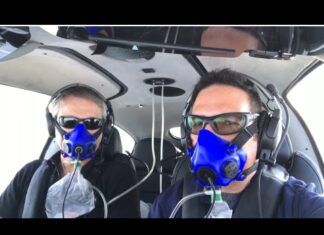
 First of all, how familiar was the crew with the oxygen donning/emergency descent procedures? Did they go to a simulator training organization, or was all their training done in-house? During my tenure with FlightSafety, I conducted hundreds of explosive decompression drills in the Citation Simulator. Many crews wanted to forgo the actual donning of the oxygen masks — they were afraid of catching the flu or a cold from the previous crew. We provided alcohol wipes and the crews were required to don the masks. You WILL do what you have practiced and in an actual emergency, you MUST get the mask on quickly. There was a direct relationship between the number of times a crew had been through this drill and the speed with which they donned the mask. Even without the pain and confusion that would reign in an actual emergency, many crews took an unacceptably long time to get the masks on and get breathing.
 - Oxygen Regs.
 FAR 135.89 requires that one pilot have the mask on and in use above 25,000 unless the airplane is equipped with quick-donning masks. In any case, above 35,000 one pilot must be on oxygen at all times. This FAR probably gets violated more than any other for many reasons. Oxygen masks are bulky and uncomfortable to wear and the oxygen dries out the mouth and nasal passages. It’s also difficult to explain to passengers in a small cabin like a Lear or Citation. Many pilots ignore both these requirements. Perhaps that will change. Had one pilot been using oxygen, perhaps this accident would not have happened.
 - Interior Preflight. Let’s back that oxygen use up a bit to the interior preflight. Checklists in pressurized airplanes require that you check the fit, connections and flow on crew oxygen masks. The reading on the oxygen pressure gage in many airplanes — the Lear included — only tells you there is pressure in the bottle, not that it is getting to the crew masks. The masks should be fitted, adjusted and checked for flow at 100%. This should involve taking several breaths from the mask while it’s tightly fitted to the face. One quick puff won’t assure you that you have actual flow and not just residual line pressure. Some, but not all, oxygen masks have flow indicators that turn green with adequate oxygen flow to the masks and red in the absence of flow.
- Exterior Preflight.
 Let’s back the oxygen use up one more step to the exterior preflight. In Lear 35/36 airplanes, there is an oxygen bottle supply valve on or near the oxygen bottle (which can be in the nose or in the tail, and is not accessible in flight). This valve is counter-intuitive in its operation and OFF appears to be ON. It’s vital, as you can see, to insure that this valve is open and that oxygen can be supplied to the cabin. Was the crew familiar with this idiosyncrasy? Did the preflight include making sure this vital supply line was open? Not enough can be said for thorough familiarity with the equipment of the day! Of course, if this item was skipped or misread it should have been caught on a thorough cockpit interior preflight.

|


Crew Training and Experience — How much time did this crew have inLear 30-series aircraft? I’m not questioning anyone’s ability here, but when the chips aredown, familiarity with equipment and the ease of performance that comes with repeateddrills on emergency procedures cannot be overlooked. Learning psychologists tell us thatyou can learn enough in a short course of instruction to score 100% on a test but if youdo not constantly reinforce that learning with practice, most of it will be lost within amatter of weeks. The rate at which knowledge can be retrieved in an emergency is almostdirectly related to how often and how recently the required skill has been exercised.
How standardized was the crew and how well did they work together? It was a joy to beable to put crew members who had never before met together in a cockpit and see themfunction as a well-oiled machine because their training had been standardized. Theairlines learned this lesson long ago. Crew coordination and crew resource managementtraining is sometime given short-shrift in favor of “more fun” flying training.Again, I’m not pointing any fingers, just pointing out possibilities.
What We Know … and What We Don’t Know
There was an apparent decompression of the aircraft. We know this because the militaryplanes reported the frosted windows in the Lear. This would have been from the higherhumidity in the cabin air before the decompression.
We know that the crew was incapacitated almost immediately because they did not takethe proper action to remedy the situation — descend. We don’t know why. Did they not gettheir masks on in time or did the masks not provide the oxygen they were expecting?
We may never know the exact progression of events that lead to the loss of this flight.The cockpit voice recorder almost certainly contains nothing but the last 30 minutes ofwind noise.
We do know what we must do to forestall similar tragedies, however. What can we learn?High altitude flight is not to be taken lightly. Emergency drills need to be done often tobe of any benefit. Equipment familiarity and training are invaluable. The gift of flightis indeed mystical and wonderful, but terribly intolerant of any weakness or lack ofpreparation.