






















The genesis of E-Ox occurred several years ago when I stopped by the White Mountain Products Group booth at AOPA Expo in Atlantic City to look at a miniature emergency oxygen system they’d introduced. To be honest, my first reaction was skepticism. To begin with, I was a little put off by the melodramatic name they’d given to the product: “Breath of Life.” More important, I had a tough time believing that the little 12-ounce palm-sized disposable oxygen cylinders it used — reminiscent of the disposable carbon dioxide cartridges used in some beverage dispensers and wine bottle cork removers — could hold enough aviator’s breathing oxygen to be useful.
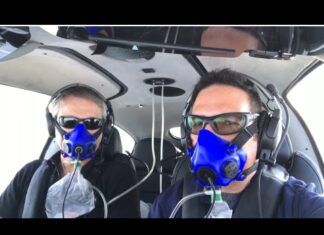
Original 18-liter “Breath of Life” system
(about $150) is no longer available.
A four-outlet portable oxygen system (about $900).
New E-Ox system (about $200)
comes in 36 and 113-liter models.Yet I was intrigued with White Mountain’s concept. As a physician and aviation medical examiner, I have long had an intense interest in pilot hypoxia. After decades of flying and working with other pilots, I’ve gradually become convinced that hypoxic impairment is a factor in a lot more aviation accidents than the FAA or NTSB is willing to acknowledge. My experiments using pulse oximetry to measure the precise oxygen needs of the body at altitude have shown me that the FAA’s requirement for pilots to use supplemental oxygen when flying unpressurized above 14,000 feet — or above 12,500 feet for more than 30 minutes — is completely inadequate to prevent sensory and cognitive impairment, not to mention serious fatigue. That goes double when flying at night. (For a superb discussion of high-altitude physiology and hypoxia, see Linda Pendleton’s article “When Humans Fly High.“)
In short, I’ve come to believe that pilots should be using O2 a lot more often than they do.
Turbocharged and pressurized aircraft typically have factory-installed oxygen systems, but the vast majority of GA aircraft are not so equipped. Portable oxygen systems are available from a number of companies, such as Aerox, SkyOx and Nelson, and most of them are excellent. But at $600 to $900, these systems cost more than most pilots are willing to shell out unless they do a lot of high-altitude flying.
The bottom line is that the majority of GA pilots who fly normally-aspirated piston airplanes do so without any supplemental oxygen whatsoever. When they fly at altitudes above 5,000 to 10,000 feet (depending on the individual), they do so with some significant degree of hypoxic impairment. They can’t think or see as clearly or make decisions as well as they should, and they get tired more quickly than they should. On those occasions where weather and/or terrain force them up above 12,500 feet, they also may be violating the FARs … but frankly that’s not my concern because I’m a doc, not a cop.
As a doc, I wish all airplanes (not just turbocharged and pressurized ones) had built-in oxygen systems. I wish oxygen refills were so cheap and easy to obtain that pilots could top off their oxygen as easily as their fuel tanks. I wish pilots felt as comfortable and casual about using supplemental oxygen in flight when they get tired or headachy as they do about sipping a Coke or a cup of coffee. I wish they’d stop believing that O2 is unnecessary at or below 12,500 feet just because the FAA doesn’t mandate its use.


“Breath of Life”
All these thoughts were going through my mind as I returned to the White Mountain Products booth the next day to take another look at their “Breath of Life” (BoL) emergency oxygen system. Priced around $150, small enough to carry around in any flight bag or briefcase, and using little pre-filled disposable oxygen cylinders that eliminate the bother of oxygen refills, I wondered whether BoL could fill the bill for GA pilots who fly aircraft without built-in oxygen systems and can’t justify the expense or hassle of a portable oxygen system. Might this be the answer to making supplemental oxygen use so simple and painless that pilots would use it when appropriate without hesitation? The concept was starting to intrigue me.
But I kept returning to the threshold question: Can a pocket-sized 12-ounce cylinder hold enough oxygen to be worthwhile?
At first glance, the answer seemed to be no. According to White Mountain, each disposable Breath of Life cylinder contained 18 liters of aviator’s breathing oxygen. From my medical training, I knew that a normal adult male typically takes 12 breaths a minute with a volume of about one-half liter per breath. That’s a total of six liters per minute, which suggested that a Breath of Life cylinder would be empty in just three minutes.
Then I realized that this calculation was based on two unreasonable assumptions: that the pilot would be breathing normally (i.e., rapid, shallow breaths), and that the pilot would be breathing 100% oxygen. I say unreasonable because normal breathing is extremely wasteful of oxygen (see Mike Busch’s article “Respiration: What Pilots Need To Know“), and because breathing 100% oxygen is extreme overkill at altitudes below FL250 or so.
Taking a fresh look at the matter, I considered that the normal flow rate of built-in altitude-compensated oxygen systems is about one liter/minute per 10,000 feet of altitude. Using this figure, it seemed to me that a single BoL cylinder ought to last about 18 minutes at 10,000 feet, or 9 minutes at 20,000 feet. That was reasonably consistent with White Mountain’s claim that each cylinder provides an 8- to 12-minute supply.
Conserving cannula.On the other hand, I knew that even those flow rates for built-in oxygen systems were predicated on the immensely inefficient use of oxygen provided by a constant-flow rebreather-mask system, and that they could be reduced by approximately two-thirds by using a conserving nasal cannula instead of a mask. The conserving cannula accomplishes this magic in two ways: It stops the flow of oxygen during exhalation, and it concentrates the oxygen flow at the very beginning of the inhalation cycle where it does the most good. (As Mike Busch’s article explains, the last part of each inhaled breath never reaches the lungs, so oxygenating it is a total waste.)
Since the BoL oxygen flow is controlled by a trigger-operated valve, it seemed to me that it should be possible to achieve these same kinds of efficiencies by releasing the trigger prior to the end of each inspiration, and to leave the flow shut off during each expiration. Additional efficiencies could be achieved by breathing more deeply and less frequently than normal, just as divers and mountain climbers are taught to do. Using these methods, it seemed to me that it should be possible to make an 18-liter Breath of Life cylinder last a good hour or so at 10,000 feet, and perhaps half that at 20,000 feet. Maybe longer.

My in-flight tests
While these mental exercises were interesting, I knew that the only really meaningful data would come from testing the Breath of Life system in actual flight conditions, while using a pulse oximeter to determine exactly how much oxygen is enough to keep the pilot in the safety zone. I spent several hours doing exactly that, experimenting with different ways of breathing while using the system. The results were fascinating, and some were a little surprising.
NOTE: In case you’ve never used a pulse oximeter in flight, a few words may be in order here. By allowing you to monitor your blood oxygen saturation (%SpO2), the pulse oximeter enables you to administer precisely the amount of supplemental oxygen you need (and no more), often allowing you to stretch your oxygen supply considerably. Ideally, the use of supplemental oxygen should bring oxygen saturation up to the saturation level you normally have at your home elevation. However, this would require a substantial oxygen flow rate and shorten the duration of your oxygen system considerably. Therefore, here are my recommendations for using supplemental oxygen in-flight by reference to a pulse oximeter:
- If your saturation level drops to 5 percentage points below your normal home saturation level, you should use supplemental oxygen to keep it from dropping further.
- If your oxygen saturation drops to 10 percentage points below your normal home saturation level, you must use supplemental oxygen to raise your saturation to within 5 points of your normal home saturation level.
Flying at 12,500 feet without supplemental oxygen and breathing normally, my blood oxygen saturation dropped into the mid-80s, compared to a normal 98% reading on the ground. That’s definitely well into the impairment zone. I found that by consciously slowing and deepening my breathing (still without supplemental oxygen), I could bring the pulse oximeter reading up to 88% to 90%, which is back in the safety zone (just barely). On the other hand, breathing like that required total concentration. The moment I had to talk to ATC, look at a chart, or change heading or altitude, my breathing reverted back to its normal rapid/shallow pattern, and the oximeter reading dropped back into the red.
Next, I experimented with the BoL, trying various methods of using it: continuous, intermittent, mask, cannula, etc. Not surprisingly, the most convenient method was to hook the BoL to a cannula and adjust the oxygen flow to the minimum required to maintain a pulse oximeter reading of 90% or so … but this continuous-flow method was definitely not the most efficient way to stretch the oxygen supply.
The best way to do that, it turned out, was to use the BoL with its nasal mask to take one or two deep breaths of pure O2, holding it in like a pot smoker to provide time for as much blood as possible to be oxygenated. (Humor me … I’m a child of the 60s!) Within about 15 seconds after doing so, the pulse oximeter reading would shoot up to 98% or more, then gradually ebb back toward 90% over a period of minutes, at which point it was time to take another “hit” from the BoL cylinder and start the cycle over again. Using this intermittent deep breathing technique together with oximeter monitoring, I found it possible to keep my “O2 sat” in the safety range with remarkably little oxygen consumption, stretching the endurance of that little 12-ounce oxygen cylinder to several hours.

AOPA’s test results
As I was doing these experiments, I was unaware that Peter A. Bedell, technical editor of AOPA Pilot magazine, was conducting his own evaluation of the BoL system. Peter published his results in the January 2000 issue of the magazine (page 127), and his conclusions were strikingly similar to mine. Here in part is what Peter wrote:
We brought the pulse oximeter and emergency oxygen kit along on a 4.5-hour nonstop cross-country flight at a VFR cruising altitude of 9,500 feet. On the ground, our tester registered a 99-percent saturation level with a pulse of 64. More than an hour into the en route portion of the trip at 9,500 feet msl on this relaxing VFR night flight, our subject scored an 88- to 90-percent saturation level with a pulse of 100. After a deep breath from the Breath of Life oxygen bottle, the saturation level quickly returned to 99 percent. After 3.5 to 5 minutes, the saturation level would trickle back down to 90 percent, where he would take another hit to keep saturation levels above 90 percent. For the next three hours, we repeated this cycle until the canister ran out a few minutes before the planned descent into the destination airport. Our subject was a 29-year-old male in good physical condition. Those who are elderly, overweight, smokers, or are in generally poor health could expect worse results, but as always it depends on the individual.
Goodbye BoL…
As a result of these tests, I became enthusiastic about the idea of an inexpensive, miniature, personal, take-with-you-anywhere emergency oxygen system like BoL. I contacted White Mountain Products and signed Aeromedix up as a distributor for BoL. But it didn’t take long to discover that there was a serious fundamental problem with the BoL concept: The U.S. government didn’t exactly share my enthusiasm.
Turns out that oxygen is classified as a Class 2 Hazardous Material, and federal hazmat regulations prohibit the shipment of filled oxygen cylinders by air — even if they’re tiny palm-sized 18-liter cylinders. Since the essence of the BoL system was its pre-filled, disposable cylinders — and since the cylinders could not be refilled in the field — these hazmat regs presented a huge problem. Shipment of BoL systems and refills had to be done strictly via ground transportation, which essentially ruled out all international sales and severely limited domestic sales. If you needed some refills and wanted them via FedEx or UPS Blue, you were out of luck. In fact, even if you were willing to wait for them to be delivered via truck, UPS slapped on a $20 hazmat fee to the normal shipping charges. Not a good situation.
After a few “interesting” meetings with federal hazmat investigators, Aeromedix decided to drop the BoL product from its catalog. Not long after that, White Mountain Products turned off its Web site, disconnected its phone, and vanished.
 Available in 36- and 113-liter capacities. The smaller system weighs less than two pounds; the larger one less than three.
|


…and hello E-Ox
Despite the BoL hazmat debacle, I remained intrigued with the potential for a small, low-cost personal emergency oxygen system. So I challenged my staff at Aeromedix to see if we could put together such a system ourselves. I explained to them that what we needed was a miniature personal emergency oxygen system similar to the BoL system, but that it had to be easily field-refillable, which meant it had to have an industry-standard CGA-540 filler valve and an oxygen pressure gauge. It also had to be built from top-quality medical-grade components that would stand up to long use and numerous refillings. And it had to comply with federal regulations, and preferably be FDA-approved so that it could be used for medical as well as aviation use. Could something like this be developed to sell at a reasonably inexpensive price — say $200? A year, many phone calls, and several prototypes later, the E-Ox system was born.
The system is a marvel of miniaturization and quality. It’s available in two sizes: an extremely compact 36-liter model that weighs less than two pounds and is only nine inches tall (small enough to fit in a woman’s pocketbook), and also a higher-duration 113-liter model. Each features an FDA-approved 2,000-PSI oxygen cylinder, a fixed-flow regulator that delivers 2.0 liters per minute, a shutoff valve, a calibrated oxygen pressure gauge, and a standard CGA-540 filler valve that enables the E-Ox to be easily refilled anywhere oxygen is sold (FBOs, welding and industrial gas suppliers, medical suppliers, etc.) Each system also comes with a clear plastic oxygen mask (with strap and nose clip), a length of tubing to connect the mask to the cylinder/regulator, and optionally an “Oxymizer” conserving cannula that can stretch the duration of the system by up to four times. (See table below.) Extra tanks, extra masks, standard and conserving cannulas are available as optional accessories.
The E-Ox system is normally supplied empty in order to avoid running afoul of hazmat regulations. You can also order it pre-filled with aviator’s breathing oxygen, but pre-filled systems may be shipped only via truck, only within the continental U.S. (48 states), and involve an additional $20 hazmat charge levied by United Parcel Service. For all these reasons, we generally recommend that you order the system empty and get it filled locally.
Here are the specs for the two E-Ox models:
| Model | Oxygen Capacity | Cyl. Dia. | Overall Height (Note 1) | Weight | Maximum Operating Pressure | Duration, Continuous w/Mask (Note 2) | Duration, Continuous w/Oxymizer (Note 2) | Duration, Intermittent (Note 3) |
|---|---|---|---|---|---|---|---|---|
| E-Ox System 36 | 36 liters | 2.5″ | 9.1″ | 1.75 lb. | 2,000 psi | 18 min | 1.2 hours | 4.5 hours |
| E-Ox System 113 | 113 liters | 3.2″ | 12.5″ | 2.75 lb. | 2,000 psi | 56 min | 3.4 hours | 15 hours |
| Note 1: Overall height, including valve and regulator. Note 2: Continuous flow duration based on maximum flow rate of 2 liters/minute. Note 3: Intermittent flow duration based on one 500 ml. bolus delivered every 4 minutes. | ||||||||
Emergency and non-aviation uses
Although my initial interest in this system was as a source of supplemental oxygen while flying at altitude, this is by no means its only use. In fact, one of the niftiest things about the E-Ox system is its versatility. It’s perfect for dealing with in-flight emergencies such as smoke in the cockpit, loss of pressurization or ditching, where it can provide the precious minutes you need to remain conscious while you make your way to safety. In the event of an underwater escape situation, the E-Ox supply tube can be disconnected from the mask and placed in the mouth to provide an underwater oxygen supply.
Since the Learjet accident that killed golfer Payne Stewart, an increasing number of executives who travel on corporate bizjets have taken to carrying these units in their briefcases. Note, however, that current Transportation Security Administration regulations forbid passengers from carrying oxygen on board a commercial airliner unless it is furnished by the airline — empty E-Ox cylinders may be carried in checked baggage, but not full ones. Generally speaking, there’s no such obstacle with private or corporate aircraft.
Uses of personal oxygen systems are by no means limited to aviation. If you ski, climb, hike, or otherwise exert yourself at altitude, supplemental oxygen is the best remedy for fatigue. For example, a number of ski instructors have started recommending the system to students who find themselves easily winded on the slopes. A small personal oxygen system makes it easy to have an oxygen supply with you anywhere and anytime. If you suffer symptoms of altitude sickness (and almost everyone who lives near sea level does from time to time when at higher elevations), having a supply of oxygen at hand can eliminate this concern.
As you might imagine, supplemental oxygen can be invaluable for dealing with a wide range of exigencies: a fire, a boating accident, a medical crisis, etc. Think about it … when the victim of an accident, heart attack or stroke first gets to a paramedic or emergency room physician, what’s the first thing they do? That’s right — they put the patient on supplemental oxygen!
Our E-Ox system is FDA approved for medical use by prescription only. No prescription is required if you buy the system for aviation or emergency use. But all oxygen is the same nowadays — aviator’s breathing oxygen, medical oxygen and welding oxygen all come from the same liquid oxygen source. How you choose to use your personal oxygen system is strictly up to you … and in an emergency, oxygen is oxygen. I can tell you from my point of view as a physician that if the closest oxygen tank was the one on a welding rig, I would use it in a New York minute!
What it is … and what it’s not
In my opinion, the E-Ox system provides an excellent a source of short-duration supplemental oxygen for occasional use when you need to climb to “oxygen altitudes” to avoid high terrain or weather, or when you need to “sharpen up” at night before shooting an approach. Oxygen also can be a lifesaver in a variety of emergency situations, and is useful in lots of non-aviation situations as well.
However, it is not a substitute for a built-in or portable oxygen system. If you regularly fly for long hours at high altitudes in an unpressurized aircraft that doesn’t have a built-in oxygen system, and especially if you carry passengers who also need supplemental oxygen, you really ought to consider buying a good portable system, preferably one with conserving cannulas and vernier flowmeters like the ones available from Aerox, SkyOx and Nelson.
Bottom line: If you’re an “oxygen power-user” who does lots of flight-level flying (particularly with passengers), E-Ox is probably not your answer (except perhaps as an emergency backup). On the other hand, I think it’s an excellent solution for the tens of thousands of GA pilots, both aircraft owners and renters, who really ought to have access to supplemental oxygen from time to time, but just don’t do enough high-altitude flying to justify the expense and hassle of buying, carrying and refilling a full-fledged portable oxygen system. It’s also perfect for those who want a personal take-anywhere oxygen supply for emergencies and various other non-aviation uses. I frequently take my E-Ox system with me in the car and during outdoor activities just to have it available for emergencies.
The E-Ox system is distributed exclusively on my pilot products Web site Aeromedix.com.