
















 I earned my motorcycle endorsement in 1978 aboard a Honda CT 70 Mini Trail. The 72-cc, single-cylinder, 4-stroke engine pumped out 5.0 BHP @ 8,000 RPM through a 3-speed, clutchless gearbox, propelling riders to top speeds of around 40 MPH on 10-inch wheels and a 40-inch wheelbase. It was street-legal, though. The examiner could divine no rule or regulation that prohibited me from using that little hummer to ace the road test.
Since that "checkride," I have exercised my privileges under that endorsement to pilot motorcycles ranging up to a six-cylinder land-rocket that delivered 103 hp to the rear wheel, resulting in 11.55-second quarter-mile times and top speeds well over 100 MPH … and I’ve never been required to confront another DMV examiner.
Over the same time period, I’ve been subjected to more than a few checkrides in airplanes. I earned my Private Pilot certificate in 1979, aboard a Cessna 150. Since then, not counting Biennial Flight Reviews and Instrument Proficiency Checks, I’ve received five "step-up" endorsements from certified flight instructors and been subjected to eight checkrides with FAA examiners or their designees.
So who’s out of line here, the FAA or the DMV? Are the FAA’s additional flight training requirements warranted just because an airplane sports an engine with a few additional cubic inches or motors that raise and lower the flaps and landing gear? You betcha…
 Never has the requirement for specialized training in high-performance aircraft been more appropriate than it is today. When the FAA introduced the requirement for a "high-performance" endorsement, the chosen title was an oxymoron. Virtually all of the slippery planes (e.g., the Bonanzas, Centurions, Comanches and Mooneys) had retractable gear and fell within the definition of "complex." The "high-performance" tag applied to a group of 140-knot cruisers that could carry a load.
Times are changing. A new generation of high-performance aircraft has emerged (e.g., the 310-hp, 190-kt Lancair Columbia 300, the turbocharged 245-kt Lancair Columbia 400, and the 310-hp, 180-kt Cirrus SR22). They taxi on fixed landing gear but are high-performance and complex in every other respect. These are not aircraft that you can master without watching several whole numbers turn over on the Hobbs meter.
Regulations And Guidance
The first step in training to fly high-performance aircraft is to determine what training is (or should be) required. Section 61.31(f) of the FARs mandates merely that, before acting as PIC of an aircraft with an engine of more than 200 horsepower, a pilot must receive and log ground and flight training from a CFI. The CFI must determine that the pilot is proficient to operate a high-performance airplane and enter an endorsement in the pilot’s logbook to that effect. The regulation is silent as to the duration and content of the curriculum.
You can conduct high-performance transition training in a high-performance plane, a flight simulator or a flight-training device that is "representative" of a high-performance airplane. Right. It might be legal to conduct the training in a no-motion flight simulator, but I haven’t met an ATC 610 yet that has control forces that are representative of a forward-CG C206 Stationair in the landing flare.
Before you get your heart set on a 90-minute, high-performance checkout, you also need to consider Advisory Circular 61-9b,"Pilot Transition Courses For Complex Single-Engine And Light Twin-Engine Airplanes." Although Advisory Circulars merely offer guidance, they do clarify what the FAA expects of you. AC 61-9b is a recommended syllabus for a transition course. Although it specifies that it is for transitions to "complex" rather than "high-performance" aircraft, the outline is suitable for either purpose. The Advisory Circular mandates in essence that transitioning pilots demonstrate proficiency in all the in-flight tasks covered by the Private Pilot Practical Test Standards.
Wider Operating Envelopes
The principal factor that distinguishes high-performance planes from primary trainers is their wider weight-and-balance envelopes. Trainers don’t carry much weight and the pilot does not have many options concerning where to place it. One version of the C150 has a standard empty weight of 1,111 pounds and a maximum useful load of 489 pounds. The "as-tested" useful load of virtually all planes in service will be even lower. If you seat a 170-pound pilot next to a 170-pound passenger, you’ll have room for 25 gallons of avgas and a book of matches. The new-generation trainers have similar capacities: the Diamond Katana C1 has a maximum useful load of 487 pounds and a full-fuel payload of 337 pounds.
 Fewer loading options translate to fewer opportunities to screw up. It is practically impossible to load a C150 outside its center-of-gravity (CG) limits if the pilot observes the maximum weight restrictions. To start with, fuel is stored at the same station as the pilot and passenger, so it makes no difference whether weight is added in the form of fuel or passenger payload. The plane starts off at a slightly forward CG at its empty weight. The CG moves aft to the center of the envelope as you add weight to the passenger seats and/or fuel tanks. Adding weight in the baggage compartment will move the CG aft but the limit is 160 pounds. A 95-pound pilot could load the maximum permissible baggage and full long-distance fuel and still be flying within the loading envelope. That’s why it’s hard to convince C150 students that there is a "balance" component to a weight-and-balance check.
Classic "high-performance" aircraft include the venerable Cessna 205/C206 Stationair and the Piper Cherokee Six/Saratoga. (Note that we’re talking about fixed-gear airplanes here; many of these same considerations also apply to the Cessna Centurion, Piper Lance/Saratoga II HP and Bonanza A36.) These are long-cabin airplanes and all have engines producing more than 250 hp. Although they have put on a few pounds over the years, the early versions could carry a whopping 1,500 to 1,800 pounds of useful load at around 140 KTAS. These airborne SUVs were outfitted with two, six or eight seats and large cargo doors for loading passengers and/or bulky cargo.
High-performance aircraft usually have wide loading envelopes to match their extended loading areas, but weight and balance calculations are mandatory, particularly at weights approaching maximum gross. Whereas the C150’s CG range is a maximum of six inches, the PA-32-300’s loading envelope ranges more than 20 inches. However, at weights above 2,400 pounds, the forward limit becomes increasingly restrictive (the forward limit shifts 16 inches aft — from 76 inches to 92 inches). At the 3,400-pound maximum gross takeoff weight, the CG range is a mere 4.5 inches. There is also a zero-fuel-weight restriction which is something that many burgeoning pilots are not used to seeing. A comprehensive high-performance checkout will include flight operations at all extremes of the expanded envelope.
Operations At Forward CGs…
Many high-performance airplanes have empty-weight CGs that are well forward so that the aircraft remains in the envelope as weight as added at the aft stations. Piper accomplished that in the PA-32-300 by moving the engine far enough forward that it’s a long-distance call to reach the line boy on the ramp. They took advantage of the additional space by installing a baggage compartment between the engine and the cockpit. (It gets hot in there, though. It’s a good place to store coffee and cocoa; not so good for beer or disposable diapers.)
 As a consequence of its substantial capacity to carry weight in the rear cabin, the PA-32-300 can easily be loaded with a forward CG. If a pilot were to load 340 pounds in the front two seats and 100 pounds in the forward baggage compartment, the airplane would be within the envelope at its 2,612-pound zero-fuel weight but well forward of the limit with full fuel (3,116 pounds).
Flight in the forward CG range can tax any airplane’s pitch-control capabilities. The horizontal stabilizer (stabilator on the Piper Cherokee Six models) is simply an upside-down airfoil that generates down force to counteract the forward-pitching moment resulting from the CG being forward of the center of lift. Like any other airfoil, the horizontal stabilizer’s ability to generate lift (down force) increases and decreases in proportion to the square of airspeed. Down force also increases in proportion to the angle of attack up to the critical angle of attack whereupon the airfoil stalls and lift (down force in this case) decreases markedly.
In the forward CG range, pitch forces will be higher in all phases of flight. The forward-pitching moment is greater, so the horizontal stabilizer is called upon to generate more offsetting down force.
The greatest risk occurs during the landing phase. As the airspeed slows in the final phases of the landing, the pilot steadily increases back pressure on the controls to increase the horizontal stabilizer’s angle of attack and offset the reduction in down force resulting from the ever-lessening airspeed. While the pilot is slowing for that perfect full-stall landing, the horizontal stabilizer may reach its critical angle of attack before the wing, resulting in a loss of pitch control. And that’s bad.
 Once the process begins, it builds on itself. As the horizontal stabilizer stalls, the airplane pitches forward causing a further increase in the horizontal stabilizer’s angle of attack and a further reduction in down force. The pilot will instinctively pull back on the yoke thereby increasing the angle of attack (and deepening the horizontal stabilizer stall) even further. The end result is a wheelbarrow landing, a collapsed nose gear, a cracked firewall, a prop strike, or some combination thereof.
The first part of the solution is to be aware of the problem. The second part is to know your airplane. In some high-performance airplanes, it may not be prudent to attempt full-stall landings when the plane is loaded in the forward CG range. It is an interesting paradox that, at lighter loads, it may be necessary to carry some additional speed to touchdown in order to maintain elevator control. Many pilots also land with partial flaps (20 degrees) and carry some power in the flare to help keep the nosewheel from touching down first.
…Operations At Aft CG…
Most aircraft with four or more seats and a rear baggage compartment can be loaded aft the rear CG limit. The problems that occur at the rear CG range should be familiar to any pilot who graduated to Cessna Skyhawks or Piper Warriors prior to entering the high-performance arena.
The PA-32-300 and the C206 both shine in this department, at least in terms of the loading that is permissible. A Cherokee Six pilot could load 340 pounds in the front seats, 400 pounds of fishing buddies in the rear (third-row) seats, 100 pounds of gear in the rear baggage compartment and a couple hundred pounds of fuel in the tanks and still be forward of the aft limit at weights up to 3,300 pounds.
Although the aft-CG loading is legal, the aircraft will handle very differently (not unlike an early ’60s land yacht with over-boosted power steering). When an aircraft is loaded in the rear-CG range, the forward-pitching moment is less. So is the elevator down force, which is the source of longitudinal stability. The pitch control forces will be lighter and the airplane will be less stable in pitch resulting in problems with over-rotation on takeoff and/or pilot-induced oscillations upon landing.
…In-Flight Characteristics
High-performance aircraft are heavier and their in-flight handling tends to be, well, heavy. For most maneuvers, acclimation will come with a little hands-on practice. A complete checkout will include some power-off landings. Cut the power in a C152 abeam the numbers and you need to fly a close-in pattern. Cut the power in a flying SUV and you’d better turn for the numbers NOW. Mind the nosewheel when you get there.
Additional Equipment
High-performance aircraft traditionally come equipped with constant-speed propellers and, in many cases, autopilots and electric trim. In the new-generation high-performance planes, not even the sky presents a limit to what’s going to be new.
 In any high-performance checkout, substantial time will be devoted to the constant-speed propeller system. There’s a new knob or lever (the prop control) and a new gage (the manifold pressure, or "MP", gage). The transitioning student must learn to look at the MP gage while changing power settings, to change power settings and propeller settings in the correct order, and to detect and respond to a failure of the system. The main teaching point is that the constant-speed propeller runs on engine oil and that a propeller overspeed probably means there isn’t enough of it. If RPMs go to redline, it’s time to check the other engine gages and start thinking about landing. Oh, and don’t forget the cowl flaps, if the airplane is so equipped.
Likewise, the focus of training in the use of autopilots and electric trim should be dealing with system failures. How can you disable George when he is taking you somewhere you don’t want to go? At the conclusion of transition training, the pilot should know by feel the position and function of every circuit breaker that is pullable.
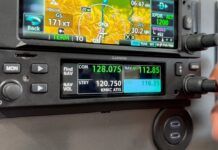
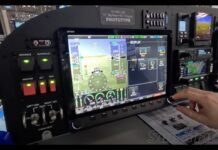
The scope of transition training in the new breed of high-performance aircraft will be make-and-model-specific because of all the systems advances. For example, the Cirrus SR22 comes equipped with all the latest electronic toys, including an ARNAV MFD (Multi-Function Display), dual Garmin GNS 430 IFR-certified GPS/Nav/Com units with color moving maps, a Sandel SN3308 EHSI (which combines the functions of an HSI, an RMI, a full color moving map, a Stormscope display, GPS annunciator and three-light marker beacon indicators), and an S-TEC 55X autopilot.
Anyone who gets lost in this plane needs a course in remedial cartography … or in digesting systems manuals. Befitting its capabilities, the SR22 comes complete with a 326-page Pilot’s Operating Handbook which, in turn, references the separate systems manuals for each of the magic black boxes discussed above.
 The rest of the SR22’s instrumentation is pretty much standard, except for the attitude indicator which is electric, not vacuum-powered, ’cause this ain’t your father’s steam-powered flight control panel. Eliminating the vacuum pump did away with worries over precipitous vacuum system failures, but at the cost of a substantially more complex electrical system in order to provide requisite systems redundancy. We’re talking two alternators, two batteries, two voltage regulators, a master control unit, a main distribution bus, an essential distribution bus, two main busses, two essential busses and two non-essential busses.
In addition to the above you have sidestick controls, a CAPS (ballistic parachute) recovery system, and the latest in automotive-style convenience features (four cup holders). Instructor and student will have plenty to discuss including some non-standard maneuvers (the emergency descent procedure is a turning, forward slip at Vne, 201 KIAS).
AC61-9b specifies that pilots transitioning to high-performance aircraft should be familiar with and demonstrate the use of all radio, navigation, and special equipment installed in the aircraft. If you’re someone who still hasn’t figured out how to set the VCR to record next Sunday’s baseball game, this might not be the plane for you. You might consider something less complex — like a Bonanza.
