


















There is a unique kind of destructive spiral that I’llcall "The Deadly Spiral" (TDS), although it’s often referred to byother names, including Suicide Spiral, Death Spiral, Vicious Spiral, GraveyardSpiral. While pilot disorientation may sometimes be involved, the more commoncause is much simpler, as we’ll see. Although this phenomenon has been with ussince Orville and Wilbur first did their thing, many pilots have a limitedunderstanding of why it occurs, how to avoid it, and how to recover from it.Wolfgang Langweische, author of the classic Stick and Rudder, once saidthat there are only a few dozen men in the whole world who fully understand anairplane’s spiral behavior. While I don’t claim to be one of those, it does seemto me that the time is ripe to discuss the things that are known about thisdeadly occurrence.
To illustrate that TDS can happen even with highly experienced pilots,consider the following two case studies that involved high-time airline crewsflying large transport aircraft:
Case Study A
The airplane involved was a four-engine turboprop in airline cargo service.The only occupants were the captain, co-pilot, flight engineer, and adeadheading pilot in the jump seat. The captain and flight engineer were highlyexperienced and both had many hours in type. The co-pilot was relativelyinexperienced but had received all required training and was certified and fullyqualified.
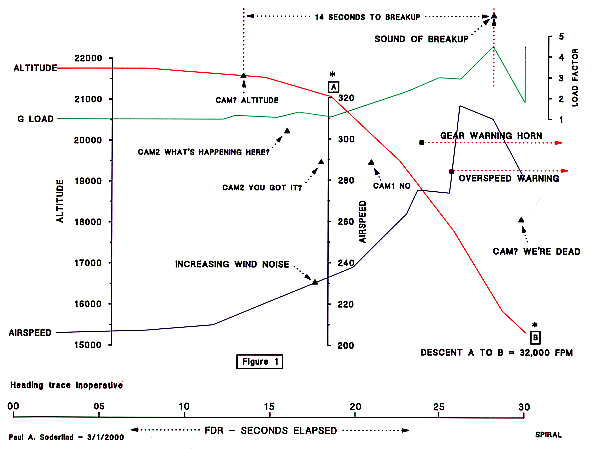
The flight was cruising at 22,000 feet at night, between layers, in smoothair. The co-pilot was doing the flying, navigating, communicating — everything— and the flight engineer was attending to normal duties at his panel. (Thecaptain’s activities are relevant to what happened, and will be discussedshortly.) To appreciate what happened to the flight during the next 30 seconds,look at this plot of data from the flight data recorder (FDR) and cockpit voicerecorder (CVR):
Click for full-size image
Times of significant events (in seconds) are read against the horizontalscale at the bottom. The triangular symbols mark the time of relevant CVRcomments and other key events. The FDR’s heading trace was inoperative.
The flight was entirely normal up to Time 08 (i.e., eight seconds into theplot above), and had been on autopilot in "altitude hold" mode forover 30 minutes. There were some earlier comments on the CVR about a problemwith the co-pilot’s attitude indicator, but after switching its souce to thecaptain’s vertical gyro, operation was normal. Here’s a transcript of the final22 seconds of the CVR:
|
NOTE: In the CVR transcript at left, "CAM" denotes cockpit areamicrophone. "CAM1" is on the left side of the cockpit, while "CAM2" is on the rightside. "CAM?" denotes that the location from which a sound came wasunidentified.
The first anomaly begin at Time 08 when the flight first departed from thealtitude it had held for over 30 minutes, probably when the autopilot wasdisconnected. This wasn’t discovered for some six seconds as noted by the CAM?statement "Altitude" at Time 13.4. 1.9 seconds after the co-pilot said"What’s happening here?" he asks "You got it?" — presumablyasking the captain if he had taken control of the aircraft. The captain’s"No" was without any particular inflection or concern in his voice.
The descent from Time 18 (Point A on the diagram) to Time 30 (Point B)averaged over 32,000 feet per minute, which is consistent with TDScharacteristics.
Most shocking was that it took only 14 seconds to go from normal flight tostructural breakup, in good weather and smooth air, with an experienced crew andno evidence of mechanical failure.
The fact that the co-pilot was the sole pilot flying/navigating/communicatingwas related to the captain’s probable activity during an extended periodpreceding the initial departure from cruise altitude. Specifically, other pilotsthis captain had flown with reported that he had a long-standing habit ofreading what was euphemistically termed "non-operational material"while flying. Indeed, one could hear pages turning on the CVR recording.
The primary cause of this accident was "nobody watching the store,"a factor that has preceded every TDS incident on which relevant data isavailable. Complicating matters was a relatively inexperienced co-pilot gettingno help from either the captain or the flight engineer.
Case Study B
Another classic incident occurred in the earliest years of U.S. airline jetoperations. A four-engine airliner — on a moonless night in smooth air over theocean — got into TDS, diving from 36,000 feet to 6,000 feet before recovering.Recovery load factor exceeded 6g, and despite a wing spar that was permanentlybent, the crew managed to land the aircraft successfully. This near-catastrophestarted while the captain was in the passenger cabin, the co-pilot was doingpaperwork, and the flight engineer and navigator were working behind ananti-glare curtain between themselves and the pilot stations. The captain (inthe passenger cabin) was the first to realize something was amiss. The loss ofcontrol began shortly after the autopilot disconnected unexpectedly.
Another no-one-watching-the-store case.
After a detailed inspection by the manufacturer’s engineers, the airplane wasdeclared structurally safe, and it went on to fly out the rest of its yearswithout serious incident.
Aerodynamic and Control Aspects of TDS
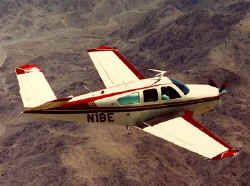 Thebasic problem is an airplane’s spiral mode, which is inherent in the airplane’sshape. Virtually all airplanes have weak spiral stability and "want"to start turning, however slowly. The typical airplane, if left unattended, willsimply not go straight for long. To believe that it will implies that it hasheading stability — i.e., once headed west, it will keep heading west. But itwon’t. There’s no such thing as inherent heading stability.
Assume for the moment that:
the airplane is perfectly shaped
it is perfectly rigged
it is perfectly trimmed for straight-and-level cruise
fuel is perfectly balanced between left and right wings
if multi-engined, power is perfectly balanced between left and right sides
there is not a hint of the slightest wind shear
the air is smoother than a mouse’s tummy
You will never find such perfection in the real world, but let’s pretend it’sall true for purposes of the discussion that follows.
With a perfect airplane in perfect conditions and nobody attending to thecontrols, one could conceivably continue straight and level for several minutes,but more likely the time is measured in seconds. In any case, sooner or later awing will drop — it may be either left or right, the direction being entirelyrandom. When the wing drops, the nose will go down and the airspeed willincrease — just a little if the bank angle is small. But with one wing down,the airplane will start to turn. The higher wing being on the outside of theturn is moving faster than the lower wing, producing more lift, causing bankangle to increase, the nose to drop further, airspeed increase even more … andon and on, the situation feeding on itself … a "vicious spiral" inmore ways that one.
Once the turn starts, one of two things will happen if the turn is notstopped.
Case 1. The Stable SpiralWhen a wing drops, the airplane will begin to turn, the nose will go down and the airspeed will increase. After a relatively short time, airspeed will stop increasing and remain a few knots above the original trim speed, and bank angle will remain constant at 20 to 30 or so. The spiral has reached a stable mode and the airplane will continue in a descending turn as long as altitude remains. Case 2. The Unstable SpiralOnce the turn starts, airspeed and bank angle will continue to increase, a stable state will never be reached, and the spiral ultimately will develop into a near-vertical dive at airspeed and bank angle far beyond all normal limits. Our "perfect" airplane — perfectly rigged, trimmed, etc. — will usually go "all the way" no matter which wing drops initially. (No two airplanes, even if they are of exactly the same type, will react exactly the same.) |
Now so far, we’ve been discussing a "perfect" airplane flying in"perfect" conditions. Neither of these ever occur in the real world,where secondary effects make things worse.
Consider the airplane with only a "bendable" rudder tab adjusted tocounter "torque" in cruise. (Never mind that the turning tendency thatpilots often refer to as "torque" is not torque at all … that’s adiscussion for another time.) Though the tab has been adjusted to offset theleft-turning tendency attributable to "torque," it will do so only forone particular combination of altitude, power, indicated airspeed, etc. With anyother condition, the tab’s anti-turning force will no longer balance the"torque" and a turn will start. The same is true withcockpit-adjustable rudder trim. Anything that unbalances the airplane — a tinyfuel or power imbalance, for example — will require the trim to be readjusted.Such a small imbalance almost always will go unnoticed by the crew until theairplane reacts by starting to turn, at which point the trim is readjusted.
But what if it’s not readjusted? Will the airplane enter a stable spiral oran unstable spiral? Let’s take another look.
 Whenour airplane is cruising serenely along in smooth air, two opposing turningforces are at work — "torque" tending to turn the airplane left, andthe rudder tab tending to turn it right. What happens then depends on which ofthe opposing turning forces is dominant. If, for example, power increases (atemperature decrease can cause that) and if nothing else is changed, theincreased torque becomes dominant and the airplane wants to turn left. But ifpower is reduced, the effect of rudder trim becomes dominant and the airplanewants to turn right. If the right wing drops first, the increased airspeedstrengthens the right-turning effect of the tab and the airplane goes "allthe way." If the left wing drops first, the tab’s right-turning forces willdominate when speed increases, and the airplane will reach the stable mode.
Every airplane has a built-in turning tendency — even brand new ones —usually due to misrig or mistrim in roll or yaw or both. The initial turningtendency is usually small, usually difficult to detect at first, and extremelydifficult to isolate the specific underlying cause. The onset is usuallyinsidious, beginning very slowly, usually with little or no seat-of-the-pantsclues strong enough to alert an inattentive pilot that something’s awry. Anairplane cannot suddenly "snap" into a spiral unless it’s grosslyout-of-trim in the yaw or roll axis. Nevertheless, a well-developed spiral oftendevelops with astonishing rapidity, as we saw in our first case study where ittook only 14 seconds for a large transport aircraft to go from controlled flightto structural breakup.
The only true "cure" for TDS is avoidance, avoidance, avoidance.Someone must be watching continuously what’s going on, and be prepared toinitiate recovery from an incipient spiral without delay.
Recovering from TDS
One widely published recovery procedure involves seven steps, severalof which are either unnecessary or can actually be detrimental. Considering thetime-critical circumstances under which it might be needed, a seven-stepprocedure is far too complicated. There is a better one, and it involves only asingle step:
Level the wings with slow, |
Applying rudder produces yaw, which produces roll, and the airplane willunbank. Relax rudder pressure as the wings approach level, then continue to holdthem level with the rudder only. Keep hands off the yoke or stick. Do not fretthat aileron and rudder are not coordinated in the recovery — coordination isunnecessary.
As the wings begin to unbank, the nose will come up. There is no need toapply back pressure to recover from the dive. The nose will come up by itselfwith no great increase in load factor (i.e., g force). If the airplane was intrim at a reasonable airspeed before the spiral began, it will return to thesame airspeed by itself … provided the pilot doesn’t interfere byapplying pitch inputs!
When the nose comes up, it will momentarily overshoot the original attitude,then pitch down again. This pitch-up-pitch-down cycle will continue, the pitchexcursions decreasing with each cycle (engineers call this a "phugoidoscillation") until the airspeed settles down at or within a few knots ofthe original trim speed. (This assumes, of course, that the airplane was trimmedto a reasonable airspeed before the spiral began, and that the C.G. is withinestablished limits.)
The airplane will "take care of itself" in pitch. It"wants" to seek and hold the airspeed (actually, angle of attack) thatit had been trimmed to. Its natural speed-keeping stability will return it tothat speed. Let it do so on its own.
Every pilot should get an appropriate demonstration from a knowledgeableinstructor that:
the airplane will begin a turn if allowed to fly hands-off
the bank angle and airspeed will increase once the turn starts
the rudder-only, hands-off-the-yoke procedure will work admirably to recover
A Caution to Pilots and Instructors
For a realistic, conservative and safe demonstration, allow the airplane onlyto begin a spiral dive. Don’t let the bank angle increase beyond 25to 30 and don’t let the airspeed get anywhere near redline. Begin at least5,000 feet above the terrain, since the demonstration will take you both belowand above the initial altitude. Do the demonstration in smooth air — othherwiseany gustiness or shear may hide the true effects of the spiral mode. If a spiraldive is allowed to get too steep — meaning with excessive airspeed — therecovery pitch oscillations would be quite large at first, and in the firstpitch-up the airspeed may drop to near the stall. Not to worry, the airplanewill not stall, though you might get a temporary beep or two from the stallwarning system. Excessive airspeed must be avoided, and the demonstrationcan be accomplished effectively without getting to a high airspeed.
As with all simulated emergency procedures, caution is the word.
Summary
An airplane left on its own will sooner or later begin to turn, and airspeed and bank angle will increase. All other factors being reasonably normal, a spiral cannot develop to a dangerous degree suddenly, but it can do so more rapidly than many pilots might imagine … in a matter of seconds.
Avoidance is the best medicine. A dangerous spiral cannot develop if someone is continuously "watching the store." This is the only guaranteed method of TDS avoidance. Do not depend on an "unsupervised" autopilot, since it may disconnect unexpectedly, and the disconnection may go unnoticed until a dangerous spiral has developed.
If a spiral develops, use the single-step recovery procedure: Level the wings with slow, gentle rudder pressure, and keep hands off the controls.
