












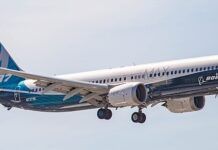

"Wait a minute, Jerry. How do you know that plane wouldn’tfly better if that low wing were up high? I’m telling you,the wing is an important piece of an airplane. Do you reallywant something that important in your basement, or do you wantit safely tucked away in the attic with the heirlooms and familytreasures?"
"There’s no basement. No attic. It’s a wing!I just want it to work. I don’t care where it is."
"Oh, you’d care. You’d care a lot if that lowwing was actually a high wing — just in the wrong place."
"Ah, that’s why I always check. First I ask if thisparticular wing is good enough. If it passes that test, I nextlook inside the plane. If all the seats are on the ceiling, I’mout of there."
High wing or low wing? A century-old question which has founda recurring place in the rainy day hangar schedule of topic dujour. Man’s first leaps off hills were in high wing gliders,mostly because foot-launching a low wing glider required an aileronroll on takeoff. Since ailerons hadn’t been invented yet,most aviators opted to just hang below.
Today, however, thereis a choice. Which configuration a pilot selects might be basedon something as simple as what the local FBO has to offer, orit might be the result of a careful analysis of the pros and consof each. So, let’s see which is better.
First Things First
Pre-flighting the high wing airplane (HWA) has several advantages.Damn, bumped my head! Okay, that’s not one. I can inspectthe landing gear without getting my knees dirty. On the low wingairplane (LWA), to get a really good look at the tire and brakeprobably means doing it on all fours. Humility is generally agood thing, but physically humbling oneself before an oleo deityis a religion I’m not anxious to learn about.
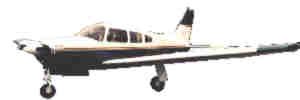 Removing the tie down ropes is an eye level affair in the HWA.This is a significant factor if the previous renter allowed hisenthusiastic young passenger to apply the theory of the-bigger-the-knot-ball-the-stronger-the-security.Untying my LWA, I have the option of quadrapeding my way aroundthe gear or displaying a brief Darwinian insight and temporarilybecoming bipedal for my journey to the other side of the landinggear.
Likewise, taking a fuel sample in an HWA is a fairly gentlemanlyevent. With the fuel tank low points being several feet abovethe ground, this can be accomplished while merely hunching overrather than using the grass stain preventing squat technique ofthe LWA.
Turn on the master, check the fuel gauges, and both needles arepointing left. Of course Mr Previous didn’t refuel; he wastoo busy supervising the tie down. Let’s push it over tothe pump. These angled things between the wing lower surfaceand the fuselage are called struts. Must be because it allowsthe crew to push on them while strutting with dignity over tothe fuel island. Note: Symmetry is important here; a singlepilot pushing a strut is susceptible to deja vu. Sincethis LWA has no tow bar, I have to pull the thing by the proplike a stubborn mule. Of course, if I have a traveling companion,we could each haul a wing tip. Note: Symmetry is important here;a single pilot hauling a wing tip is susceptible to deja vu.
Find the step stool, and place it in front of the HWA’s leadingedge. Climb, remove the fuel filler cap and look in. Can’tsee in. Damn the short step stool. Damn the short-legs DNA.Finger check – gauge was right, it needs gas. Now is when Iusually smile at my traveling companion, hoping to convey thefact that everyone, not just I, looks this awkward refueling anHWA. Attach the grounding strap, and lug the hose over. Climbthe stool with the hose, aim, and squeeze. No point pausing tovisually check the fuel level; I can’t see it anyway. Withthe LWA, it’s a look-down maneuver. No 100LL finger cologne,and Ms Companion can sit on the step stool.
Okay, let’s get aboard. Step over the LWA’s "NOSTEP" flap onto the black stuff. Ouch – shin! There hasgot to be a way to make those trailing edges thicker or at leastsofter. Next time we’ll take the HWA where we can just openthe door and get in. Well, we might have to step ahead of themain gear, but remain behind the strut or the other way around.
Who Cares? Let’s Fly!
I point my HWA into the wind at the hold short. Run-up looksgood. Things have been going smoothly now for almost five minutes.Now, taxi around some more to get that wing out of the way tosee if anyone’s on final. The LWA allows a more suave postrun-up technique: I lean over to take a peek up final, shootmy companion my best lounge singer smile, and call for takeoff.
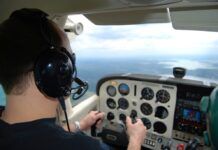
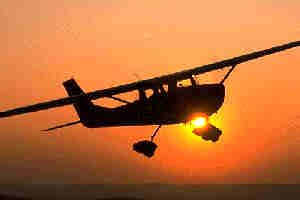 Airborne, that field of view issue is there still. In fact, thisis probably the major determinant of HWA/LWA preference amonggeneral aviation pilots. In the HWA I can fly over my companion’shouse at whatever altitude the FAA says I must have plus 50 feet.She can look virtually straight down at it. Points. Isn’tthis half the fun of flying – to look at things on the ground?The LWA lets its occupants look at the ground, but they eitherhave to look in front of the wing or enjoy steep turns.
Of course, HWA pilots can enjoy steep turns also. That high wing,however, pretty much hides what’s ahead during turns. Obviously,no pilot should begin a turn without first ensuring a clear skyin that direction. Still, being prevented from watching whereI’m going makes me nervous. This is particularly true inthe landing pattern, especially at uncontrolled fields. SomeHWA have skylights which help, but they’re usually too smallor located such that the geometry works only during turns in onedirection.
It seems more people fly during the summer. The LWA’s fieldof view advantage can be a thermal disadvantage. HWA pilots enjoythe shade of the high wing. LWA have more of a greenhouse effect,especially those with bubble canopies.
Gravity is a friend of the engine-fuel relationship in the HWA.It may obviate the requirement for a fuel pump in some planes,and may provide sufficient pressure to get home should the fuelpump fail in others. To make gravity work in the same mannerin the LWA, the pilot must roll upside down. Then the gas ishigher than the (no-longer-running) engine, but then the littlehole it has to go through to get to the engine is higher thanthe gas . . . scratch that idea.
OK, But What About Dihedral?
The dihedral effect is the airplane’s rolling response toa sideslip. "Slipping it in" to steepen a landing approachusually requires cross-controlling the plane (left pedal, rightstick). Right stick is needed to prevent the plane from rollingleft. It wants to roll left because left pedal deflects the ruddertrailing edge left, which causes a left yaw. Holding the pedalmaintains the left yaw, and this means the relative wind is comingfrom somewhere right of the plane’s nose. How far rightis called the sideslip angle. Airplanes with positive dihedraleffect roll away from the sideslip. In this case, the plane hasa right sideslip, wants to roll left, so right stick is neededto prevent the roll.
HWA have an inherent positive dihedral effect contribution fromthe wing-fuselage arrangement. In balanced flight (which meansthere’s no sideslip on the airplane), the air either travelsover the wing upper surface or under its lower surface, parallelto the fuselage in either case. Picture the HWA in a left yaw,so the sideslip is to the right. What happens when all thoseair molecules, which would slide right under the wing lower surface,encounter the fuselage? They pile up in the inside corner formedby the fuselage and lower wing surface and cause a couple of thingsto happen. First, that "piling up" forces a bunch ofair over the wing, increasing the inboard wing section’sangle of attack. That means more lift on the right wing, causingthe plane to roll left The downwind wing-fuselage interface experiencesthe opposite effect. Instead of piling up, the air moleculesare forced to spread out. Air passing across the airplane’snose dives under the wing toward the low pressure on the downwindside of the plane. Since the air is moving downward, the angleof attack of the downwind wing’s inboard section is reducedand so is its lift. Less lift on the left wing creates a tendencyto roll left.
All right, you bleeding shin, grass stained knees LWA pilots,here’s how it works for you – not good. The same pilingup of air molecules that the HWA experienced also occurs duringa sideslip in a LWA, but it occurs on the upper wing surface.In a right sideslip, air dives under the right (upwind) inboardwing section, reducing its lift. Air passing under the nose isswept up and over the inboard section of the downwind (left) wing,increasing its lift. In both cases the change in air directioncauses a right rolling tendency in a right sideslip or a negativedihedral effect.
"Horsepucky! My LWA rolls away from sideslip." Thismay be a true, albeit sanitized, statement. Most LWA have a coupleof degrees of geometric dihedral (wing tip higher than wing root)designed into the airplane. HWA may have some geometric dihedralas well, although usually not as much as their LWA counterparts.Remember, it’s the overall effect that the pilot experiences.He cares which way the plane rolls when in a sideslip, not theindividual contributions of geometric dihedral, wing-fuselageinterface, vertical tail effect, propwash, etc.
What A Drag!
There are some aerodynamic drag differences between HWA and LWA.Interference drag arises whenever two or more objects are closeto each other in an airflow. The total drag can be more or lessthan the sum of the drag of the individual objects. The less-dragcase was used by a close, personal friend to get better gas mileagedriving to Florida. By remaining one car length behind 18 wheelers,the drag on his Vega may have been reduced sufficiently to raisethe miles per gallon to what he would have gotten had all fourcylinders been functioning. (Disclaimer: Don’t try this;he was a professional bad decision maker.)
Regarding airplanes, wherever objects meet, there’s likelyto be a drag increase. Such is the case at the wing – fuselagejunction even in balanced flight. This is because the boundarylayers (air close to the surface) of the wing and fuselage interactand thicken. This interference drag is worst when the two surfacesmeet at acute (less than 90°) angles. Fillets, or roundedinside corners, are often used to minimize the effect.
In the HWA, the interference drag arises from the interactionbetween the boundary layers of the fuselage and lower wing surface.Since the boundary layer on the lower surface is quite thin formost normal flight conditions, the effect is less than for theLWA case. It’s the upper wing surface and fuselage boundarylayers that interact on LWA. The upper surface boundary layeris appreciably thicker, and therefore usually has more interferencedrag associated with its interaction with the fuselage boundarylayer.
Add struts to the HWA, and you’ve created four more interferencedrag possibilities. Of course struts themselves are rarely aerodynamicallyinvisible, except for that pair I seemed to have misplaced.
These comparative arguments assume identical wings and fuselageswith only attach point changes. Clearly, or maybe not so, we’rein the theoretical here. So, attempting to compare boundary layereffects between a Cessna 150 and Piper 140 at the airport nextweekend, assuming it could be done, is really an apples and not-applessituation.
Tradeoffs are abundant. Perhaps the struts enable a weight savingin the wing structure of the HWA which is more beneficial thanthe drag penalty. LWA might have shorter main landing gear, becausethey can protrude straight down from the wing. HWA gear usuallyextend to either side of the fuselage to achieve a reasonablewheel track – that’s extra stuff hanging in the breeze.
The relative position of the wing and horizontal tail is significant.Should it be above the wake of the wing as the airplane approachesstall? Is it better below? Do you want a stall warning thatconsists of natural airframe buffet caused by disturbed air fromthe wing impinging on the tail. Perhaps you are content to relyon that little tab in the wing’s leading edge and the lightor horn it’s supposed to trigger. If the wing position dictatesa horizontal tail at the top of the vertical stabilizer, how muchstronger, and heavier, must the vertical stabilizer be?
Enough! Take Me Home!
Let’s take one more look at salvaging a high final approachby slipping both machines. If the HWA requires a lot of bankangle for the slip, that high wing could obscure the runway. While visual impediments may not be an issue in the slipping LWA,bank angle tolerance may. The LWA which is upset by a gust inroll just prior to touchdown is likely to strike a wing tip ata lesser bank angle than its HWA counterpart.
In order to touch down, both types of airplane must get prettyclose to the ground, and that raises the question of ground effect.Away from the ground a lift-producing wing alters the airflow.The tips generate vortices as higher pressure air under the wingrushes around the tip toward the lower pressure upper surface.There is also an upwash of air approaching the wing’s leadingedge and a downwash or downward flow component imparted to theair leaving the trailing edge. Near the runway the ground inhibitsthe vortices and reduces the downwash angle. The result is lessinduced drag and less AOA required to produce the same lift comparedwith the same flight condition out of ground effect. There areother ground effect consequences, but we’ll stick with thesetwo for this HWA/LWA comparison.
Ground effect generally comes into play about one wingspan abovethe ground. The closer the wing gets to the ground, the moredramatic the effect. Since LWA wings generally get closer tothe runway than HWA wings, the ground effect is more evident inLWA. So, the LWA will experience a larger drag reduction thenits HWA counterpart under the same conditions. This is why LWAhave the reputation for "floating" in the landing flare.The increase in lift for the same AOA can have the effect ofmaking the flight path angle more shallow as the wing gets closerto the ground. This may be one source of the "self-flaring"reputation of some LWA.
Made it down. The only thing standing between the end of therunway and the tie down spot is taxiing through this high crosswind.The HWA probably feels more susceptible to the crosswind thanthe LWA. The dihedral and ground effects are still working althoughwith much reduced consequence. It’s doubtful that the heightof my HWA wing is sufficient to allow a vertical gust to developunder it. Nor is there likely to be a noticeable suction effectunder my LWA wing. Maybe there’s a more persistent rollactivity in the HWA because the center of gravity is higher. Maybe it just seems that way because the wing is always in view,and I notice vertical wing tip motion more. I tend to look overthe LWA wing, so my perception is not influenced visually. Andmaybe a dozen other things, but as long as the wind is withinthe operator’s handbook limit I should be okay.
So…Which Is Better?
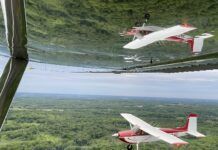
It depends. That’s not the cop-out answer it may seem. While some pilots will always opt for a particular arrangement,others see it as mission dependent. Pipeline patrol might bea good HWA candidate. The pilot’s job is to look at thepipeline, which is generally located below his cruising altitude.The HWA a permits maximum eyeball-on-the-pipe time. Pilots operatingfrom short fields may want to minimize the LWA float. Formationflying might be the kind of situation where an LWA is preferred.Where a typical formation has the wingman looking up, left, andforward at his lead’s airplane, a wing located down, left,and aft seems to be in the correct place.
Die hard HWA advocates offer a couple of additional pieces ofsubstantiation to support their cause. A forced landing on aroad with guard rails or field with scrub bushes might be lessdamaging in an HWA since the wings can pass over these obstructions.Finally, at least one HWA proponent has adamantly stated he’llnot change his mind until he’s shown a successful low-wingbird – real bird . . . with feathers.
Whether the HWA or LWA is better to learn in or teach in remainsa good question. Every instructor and student must weigh thepros and cons. If field of view is a bigger factor for the studentthan ease of cockpit entry, an LWA might provide a more conducivelearning environment. If an instructor has 500 HWA hours andmuch fewer LWA hours, he may be likely to provide better instructionin the HWA.
So, having debated an arbitrary number of contrasts between theHWA and LWA, the following can be concluded. It comes down topersonal preference, and it’s okay if that preference isdriven by emotion, airplane availability, or mission requirements.After all, the Wright brothers couldn’t see eye to eye onthis issue either, and look at how they solved it.
