

















Every year there are accidents that occur whenpilots attempt to land on runways shorter than those they are used to. Thereare several reasons why those accidents happen, but at the top of the listhas to be the pilot’s fear of stalling the airplane before it is in positionfor a safe landing.
That fear often prompts pilots to maintain too high an airspeed during finalapproach, and they wait too long to slow the airplane down, so long, in fact,that sometimes the airplanes float to near the end of the runway. Beforethe pilot recognizes that it is impossible to land on the remaining tarmacit is too late to initiate a safe go- around and the accident is inevitable.
Fear of inadvertently stalling an airplane is not that uncommon amongst pilotswho don’t fly regularly, or those who don’t maintain some semblance of currency.Once a student has the private ticket safely tucked away the only time stallsmay be practiced is during the biennial flight review. And even then theinstructor is likely to cover so many items in a short period of time thatonly cursory attention is given to any one item.
Why do we fear stalls?
What is it about stalls that create problems for pilots? When an airplaneis stalled it begins to fall because it is no longer flying. The sensationsthat accompany the stall and the fall toward the earth are unnatural forhumans. And flight instructors usually so emphasize the perils of stallingto new students that sometimes the seed of fear is planted before the firstflight lesson.
Practicing stalls in turns may have added to the pilot’s discomfort especiallyif the airplane got away and rolled off on one wing. Some airplanes can snapquickly while others are lazy and don’t do much, but some pilots dislikethe feelings associated with stalls so much that they do whatever they thinkis necessary to avoid them. As time goes on their fear of stalls can escalateto the point where those pilots may be dangerous especially during landingand takeoff.
The more knowledge and understanding a pilot has about stalls the less theywill be feared. But it is imperative that pilots practice them on a regularbasis to maintain the currency and familiarity that keeps fear at bay.
Probably the biggest fear that pilots have is getting into a spin as a resultof stalling the airplane. Instructors talk about spin hazards but neverdemonstrate them, so students have no idea what they are and usually don’tknow what to do about them. Fear of the unknown is always the enemy, andwhen pilots have no idea what a spin is or what to do about it should theyget into one they have another reason to fear the stall.
A pilot who refuses to practice stalls, especially in an airplane type thatis new, will never have a good feel for that machine, and landings will sufferas a result. That’s because to make a good landing in most light airplanespilots have to be familiar with the slow flight and stall characteristics.In some circumstances it might not be advantageous to land the airplane ina full stall, but to avoid the stall the pilot must know what to expect fromthe airplane as its speed is reduced above the runway. Those who turn themselvesoff to stalls usually have no idea what to expect and may stall the airplanetoo high off the ground. The resultant touchdown could result in damage tothe aircraft.
But most pilots who are afraid of stalls simply maintain a high airspeedall the way to the runway and land the airplane at speeds well above thestall. That’s fine as long as there is enough runway in front of them, butwhen they attempt to land on a runway that is shorter than what they areused to they run into serious trouble. That’s because they don’t have enoughrunway to allow the airplane to land at a high rate of speed and stop. Oftenunder these circumstances the airplane is intentionally ground looped tokeep it from running into an obstacle as it leaves the runway.
Some pilots attempt to go around after touchdown when they realize they can’tstop without damaging the airplane. They apply full power and because ofthe nose high trim that is applied the airplane pitches up to the normalclimb attitude, or higher. But they completely forget that full flaps aredeployed, and the combination of the high nose attitude the airplane is trimmedfor and full flaps cause the airplane to stall and fall to the ground. Thistype of accident often results in fatalities.
The spin-training controversy
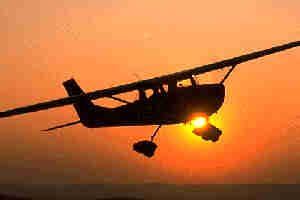 When I was a student pilot my instructor taught me about stalls and gaveme the standard spiel about spins. He cautioned me to be very careful aboutusing the rudder during stall practice. I asked him to show me a spin, andhe told me that the curriculum didn’t call for that.
One day we were going out to the practice area to do some brush up for myprivate check ride when he asked me if I still wanted to see what a spinwas like. I said yes. We climbed to a safe altitude, he stalled the Cessna150, then forced it into a spin to the left with full rudder. I couldn’tbelieve how fast that airplane rotated, and he recovered after a little morethan one turn.
I wanted to try one, but he said no. “We don’t usually do spins in theseairplanes because of the gyro instruments,” was his reply, but I didn’t thinkthat he was being totally honest.
In fact, we have pretty much erased the spin from all training programs exceptthat for the instructor’s rating. And even then the applicant only has toshow the FAA inspector a sign-off demonstrating a knowledge of spins.
So, in a way, we have caused a problem with some pilots because of our constantdrilling on the dangers of stalls and spins, and there are some if the airplaneis allowed to stall inadvertently or too close to the ground. Instructorsmust instill a certain amount of confidence in their students when they teachthem about stalls. All pilots must be confident in their abilities to recognizeand deal with stalls and make practicing them in a safe environment partof their flying routine.
Contributing factors
Many of the pilots who are afraid of the dreaded stall know the early recognitionsigns but are so fearful that they don’t want to get even that close. Youcan’t land a light airplane safely if you don’t slow it down. It would bemuch easier if every landing were exactly the same, but they are not. Windand other conditions can vary in the few minutes it takes to fly the trafficpattern. What worked for one landing might not work for another.
Usually when we think of stalls we think of them in terms of the landingconfiguration, when the airplane is slowed down to the point it simply won’tfly any more. But an airplane can stall at any airspeed and from any attitude.Remember, the stall is a function of the wing’s angle of attack, and if thatangle becomes high enough, no matter what the speed of the airplane, thewing will stop flying. Think of it in terms of the stall/spin accidents thathappen in the traffic pattern every year. Some are caused by the pilot’sallowing the airspeed to deteriorate in straight and level flight to thepoint where flight can no longer be supported, but many are the result ofa stall/spin during turns toward the runway at higher airspeeds. This typeof accident can get even those who dread the stall so much that they tendto fly the entire approach at too high an airspeed.
Crosswind conditions often contribute to these accidents if the wind is blowingthe airplane toward the runway on the downwind leg. That’s because as thepilot turns base leg the airplane is being pushed toward the runway, andwhen he or she recognizes that they simply increase the bank angle in anattempt to steepen the turn to final. As the bank angle increases so doesthe stall speed.
The load factor of an airplane in a 60 degree angle of bank doubles, so theweight of the airplane doubles, as far as the wings are concerned. That equatesto a stall speed that is 41 percent higher than that found in straight andlevel flight. So, if your airplane stalls at 50 miles per hour normally,in a 60 degree angle of bank turn the stall speed will be 70.5 miles perhour. Since 70 miles per hour is a good approach speed in many light aircraft,if the pilot were to bank the airplane excessively in an attempt to turntoward the runway without overshooting it, as might be done when a crosswindis pushing the airplane toward the runway, the airplane could stall whenthe pilot least expects it.
Stalls close to the ground, especially when they are unexpected, usuallyresult in fatal accidents. I remember an instructor who was flying with astudent in a Cessna 150, several years ago, who apparently called for a simulatedengine failure while the airplane was on downwind. The student tightenedthe turn so much in an effort to make the runway that the airplane stalledat low altitude and spun into the ground killing both occupants.
It’s possible that both the student and instructor were so intent on wherethe runway was in relation to the aircraft’s position that neither was payingmuch attention to the airspeed. Even if the airspeed were close to normalfor the approach as the bank angle increased so did the stall speed. Whenthe airplane stalled it was only 200 to 300 feet above the ground, and therewas no time for a recovery to be made. Another potential stall hazard iswhen the pilot increases the angle of bank but does not keep the turncoordinated. When that occurs the wing that stalls first will dictate whichway the airplane will roll. Again, these types of stalls usually occur duringturns to final approach close to the ground when there is little time toeffect a recovery. There are usually two common conditions in evidence whena pilot is afraid of stalls. A lack of confidence in one’s abilities contributesto the fear of stalls, and a deficiency in basic knowledge is another reasonfor the affliction.
Achieving and retaining confidence
Many people who start flight training have a perceived lack of confidencein their ability to fly, and it’s the instructor’s job to overcome it. There’sa difference between someone who doubts his or her ability to fly an airplaneand someone who’s self esteem is so low that professional help is their onlyavenue for building confidence. However, any reason for a lack of confidenceis enough to cause a fear of stalls. To some degree the flight instructoris responsible for the student pilot’s lack of basic knowledge. It’s hisor her job to provide the necessary information to the student, but it’sthe student’s job to learn it. If the student doesn’t take the time to studythe material, whether it is in book form or some other media, he or she willnot have the knowledge that is fundamental to flying an airplane.
Once the private checkride is completed, it is the pilot’s responsibilityto maintain his or her currency at a reasonable level. That’s what fortifiesthe basics and keeps the pilot sharp on the fundamentals that lead to goodflying. Without that currency a fear of stalls and other maneuvers can occur,and when that happens there will be a deterioration in the quality of thepilot’s flying.
So, if you have a fear of stalls don’t wait too long to do something aboutit. Get with a flight instructor and practice them until you are proficientand regain the confidence level you need to go out and do them on your own.There is no reason to stall an airplane so close to the ground that thereis not sufficient time to recover. If you are thoroughly familiar with yourairplane and the way it handles in slow flight you should never have thatproblem.