


















Anarchy In Long Beach?

 It was almost as if someone with an axe to grind with the FAA had scripted it: As agency officials inside the Long Beach Convention Center discussed upheavals within the upper ranks of the FAA, another form of anarchy reigned outside. Instead of musical chairs and the "Washington Shuffle," a small (in comparison to other recent protests in Seattle and Washington, D.C.) group of May Day protesters erupted into violence unrelated to the FAA on the opening day of the jointly sponsored AS3 — Aviation Services & Suppliers Super Show. Some of the 125 of those protesting against the ravages of capitalism — instead of the FAA — threw rocks and bottles at the 200 or so police officers monitoring the event. After allowing the protesters what seemed to some observers to be the polite opportunity to vent their frustrations, even though they were clearly out-manned and out-gunned, the assembled police finally decided enough was enough and fired rubber bullets and beanbags into the crowd. After getting their undivided attention with that tactic, police placed the vast majority of protesters under arrest and carted them away in vans.
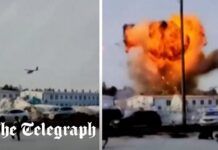
The only real relationship the protest bore to aviation generally or the FAA specifically was represented by a helicopter hovering few hundred feet above the crowded downtown streets to monitor the events.
In all, the episode presented an incongruous atmosphere for the indoors discussions relating to the enhancement of aviation safety. Not that anyone would want to stage such a protest against the FAA, of course. Perish the thought…
 Notwithstanding the "rocky" start, the convention was a huge success for its three co-sponsors: the National Air Transportation Association (NATA), the Professional Aviation Maintenance Association (PAMA), and the National Petroleum Management Association (NPMA). Recent developments at the FAA and in the fractional market made previously scheduled presentations even more timely and topical and, as AVweb reported last year, joint sponsorship of this trade show results in a much better mix of exhibitors and attendees, plus larger crowds and enhanced opportunities to learn more and network within the aviation industry. In all, the event is extremely worthwhile for those in the charter, FBO, aircraft maintenance, and fuel-supply business, with a healthy dose of business-to-business activity thrown in.
Changes Anticipated Within The FAA
Just days after AVweb reported that FAA Flight Standards Director Nicholas Lacey would be reassigned and replaced by Nicholas Sabatini, FAA Assistant Director Quentin Smith led a well-attended discussion encouragingly titled, "What’s Being Done in Washington?" During that event, Mr. Smith confirmed that Mr. Lacey was "asked to step down" and announced ongoing discussions regarding additional changes amongst the more senior FAA officials. What’s the Chinese proverb/curse? Oh yeah: "May you live in interesting times." As AVweb reported, Lacey will be working on NAS Program improvements and international safety initiatives.
 During this seminar, several operators expressed their frustrations over their dealings with the bureaucracy — such complaints are nothing the FAA hasn’t heard before. This time, too, attendees heard pretty much the same answers: Apologetic statements that the agency is doing the best it can in light of budget cuts and personnel shortages. The familiar complaints ranged from a shortage of check airmen used to keep chief pilots current to disparate regulatory treatment between regions, particularly in the logging of second-in-command time in aircraft certified for Part 135 single-pilot operations.
On a more positive note, operators and regulators alike basked in the glow of improved relations within the Dallas Flight Standards District Office (FSDO) region. A year ago, it was reported that tensions between Dallas operators and the Dallas FSDO had deteriorated to the point that some of the operators wanted to move their operating certificates. Following numerous meetings in Washington, D.C., and in Dallas coordinated by NATA and the NBAA, Gerald Shaw, Director of Flight Operations for Million Air-Dallas, now advises that, "Our relationship with the Dallas FSDO has become one in which our company feels great satisfaction and the Dallas FSDO personnel have earned our respect." With this kind of cooperation in one FSDO region, can the rest of the country be far behind? Probably.
Fly United: A New 800-pound Gorilla?
 One of the more interesting and possibly challenging developments to "traditional" charter and fractional ownership operators came from none other than United Airlines (UAL), which recently announced it planned to enter the fractional market. Thus, when United Airlines Senior Vice President Stuart Oran appeared at the AS3 Super Show to discuss UAL’s plans to enter the fractional market, the previously scheduled session entitled "Smart Ways to Compete with the New Players in the Charter Industry" suddenly became a much hotter ticket.
Just as American Airlines’ purchase of TWA catapulted that carrier ahead of UAL in the race to remain the nation’s biggest air carrier, UAL apparently has decided to fight with someone their own size — the "mom-and-pop" fractional operator. As AVweb has also recently reported, UAL plans to launch a wholly-owned (but separately run) subsidiary to operate some 200 bizjets under fractional ownership arrangements. That is good news for the most well-heeled UAL customers who found themselves stranded at O’Hare last summer. It’s also good news for aspiring pilots and maintenance technicians. For the common traveler, it portends that those in the know realize that inconveniences and delays on scheduled air carriers will get worse before they get better. For fractional and charter operators, it’s another reason to reach for headache medication.
Oran deserves credit and admiration for his appearance before a skeptical (and at times openly hostile) audience to address such questions as "Will the new venture increase the total market or divert business from the existing operators?" (who comprised the audience) and "What are the market assumptions that you relied upon in your business plan?" The answers Oran offered — "…both…" and "I do not think it would be appropriate to address that question in this forum" — were anticipated but, nonetheless, not of great comfort to those in the industry just barely scraping by. Perhaps the most telling question revolved around whether UAL would venture further downstream and enter the Part 135 on-demand charter market. While UAL has announced no such intentions, Oran acknowledged that the carrier’s next step would be to initiate a "corporate shuttle" service and that on-demand operations were under consideration and would be a next logical step for UAL. For embattled U.S. carriers, there must be nothing like knowing where the low-hanging fruit is.
On a more positive note, it was suggested that UAL’s venture into general aviation might benefit at least some operators and pilots. For those who have been waiting for the FAA to approve a GPS approach into East Podunk Airport but haven’t been able to move the FAA bureaucracy, they may find an ally in their newest commercial co-user of the field — UAL Fractional. Few were holding their breath, however, and "wait-and-see" attitudes were prevalent.
User Fees, Revisited
 Another easy target for the industry — Robert Poole of the Reason Public Policy Institute — materialized in Long Beach to present his plan to replace the existing system of FAA-employed air traffic controllers with employees of a new non-profit corporation funded by user fees. Representing the opposite-spectrum National Air Traffic Controllers Association (NATCA), Executive Vice President Ruth Marlin opposed the proposal, asking the audience to give the FAA’s recent changes in ATC operations "a chance."
Former (1977 – 1981) FAA Administrator Langhorne Bond (whose legacy could be summed up with "a TCA over every airport") responded in support of privatization by announcing that the FAA’s ongoing program is "doomed." Echoing the Reason Foundation line and referencing the "successful" privatization of air traffic control in Canada and abroad, Administrator Bond asserted that no logical basis exists for opposing the change, since user fees would be offset by eliminating fuel taxes. According to "Langern," the largest users of fuel (the air carriers) will benefit the most from the change and will have no cause to complain. In Bond’s opinion, the lowly GA pilot will likewise benefit from the elimination of fuel tax, and AOPA, in opposing the user-fee proposals, is merely inventing and slaying dragons as a means of attracting additional members and contributions to its PAC. Imagine: New taxes that won’t cost GA operators anything. Hey … wanna buy a bridge?
 AndAVweb Was There…
As always, AVweb was present at this year’s AS3; this year, AVweb installed an Internet Caf on-site, offering subscribers and non-subscribers alike free access to their email, to AVweb and to anything else of lesser interest. While it’s too early to say with any certainty whether AVweb will offer its "Internet Caf" again later this year at other aviation events, we’ll be there.
 |  |
|
 |  |
|
 |  |
|
 |  |
|


