



















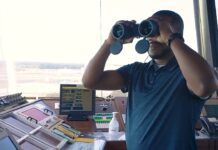






 I‘m a pilot, but some of my best friends are air traffic controllers. I’vecorresponded extensively with many other controllers in my role as an aviation journalist.I’ve spent dozens of hours at air traffic control facilities around the country,plugged-in and watching controllers ply their craft (usually in awe), and chewing the fatwith them in the lunchroom.
Of the hundreds of controllers with whom I’ve spoken in recent years, every one hasexpressed the same "love-hate" feelings about his or her career in ATC. All lovetheir work passionately. All hate their employer, the FAA, with equal or greater passion.
 Various controllers deal with their hostility toward the FAA in variousways. Most of the older ones — particularly those that were controllers prior to 1981 andsurvived the PATCO strike — talk with sad nostalgia about the old days, and count thedays until they’re eligible for retirement (on a generous civil service pension). Youngercontrollers express their anger more openly, and tend to be active in the National AirTraffic Controllers Association (NATCA), the labor union that was formed to represent theinterests of rank-and-file controllers after President Reagan destroyed PATCO and firedmost of its members when they walked off the job in 1981.
Controller morale seems to be at an all-low today, certainly worse than any time sincethe 1981 strike, and arguably even worse than those bad old days. From where I sit, thebiggest threat to the ATC system lies not in the frequent breakdowns of archaic equipmentor the squandering of billions of taxpayers dollars on unworkable automation projects, butin the fact that more and more controllers have become so disgusted with working for theFAA that they may either quit, strike, or (worse) simply stop going the extra mile whennecessary to make the system work smoothly.
Fist Fights and NATCA NOTAMS
Take Southern California TRACON, for example. This ultra-modern FAA mega-facility, onlyabout three years old, is equipped with all the FAA’s very latest and greatest hardware.Yet in recent months, stories have been leaking out of fist fights breaking out betweenSCT personnel at work, at least one episode serious enough that local law enforcement wascalled. Last August, the SCT union local took the unprecedented step of issuing notices to the press warning pilots of unsafe ATCconditions flying into and out of Los Angeles International Airport. (The AVwebnews staff dubbed these "NATCA NOTAMS.") These folks are not happy campers.
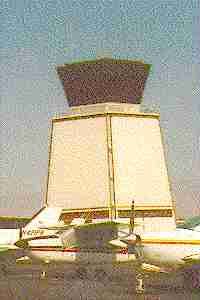 As you might expect, the extent of the morale problem variesgreatly from one ATC facility to another, and from one month to the next. Until not longago, for example, Cleveland Center in Oberlin, Ohio, seemed to be a model of efficiencyand controller-management harmony. Then the well-liked ZOB Air Traffic Manager waspromoted (the Peter Principle in action?) and his much-despised deputy took over. Withinmonths, controller morale plummeted and based on what I’ve read in a recent ZOB controllernewsletter, mutiny now seems to be in the wind.
Some facilities are doing okay, mostly the ones with managers that believe in givingthe rank-and-file controllers a strong voice in how business should be conducted. Acooperative program called QTP ("Quality Through Partnership"), in whichcontrollers and management work out policies and procedures together, has been verysuccessful in certain ATC facilities. But unfortunately, QTP has become a bad joke and adirty word at other facilities where management and union representatives are at eachother’s throats and the "we versus they" attitude is alive and well.
To understand how it came to this, you have to look back a few decades.
A Look Back
When I first became active in aviation in the mid-1960s, controllers were for the mostpart a happy group. Like airline pilots during the same era, controllers belonged to anhonored and highly-paid profession, one that they were proud of and that was held in highesteem by the American public. Mostly men from military backgrounds, they wore whiteshirts and ties and crew-cuts to work, and talked with male bravado about how they bentthe rules to "move the metal." The managers at ATC facilities were controllerswho had worked their way up the ladder, and the line controllers respected them as one oftheir own. Besides, as ex-military men, the controllers were accustomed to taking ordersand working in a hierarchical organization. The system worked smoothly, and life was good.The notion that these highly-trained, highly-skilled, well-paid, generally happycontrollers might view themselves as "labor" or have any interest in joining a"labor union" was unthinkable in that era.
Sure the job was intense and stressful, and controllers did suffer more divorces andalcoholism and hypertension (and in a few cases, burnout) than the general public. But nomore so than other intense, stressful careers like those of cops or test pilots. And younever heard the controllers complaining about the intensity or stress. To the contrary,they thrived on it. Like cops and test pilots, it’s what they loved most about the job.
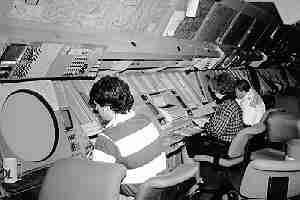 But things changed. The 1970s saw the controller ranks becomingfilled with a new generation of young controllers who came out of the anti-war movementand prized individual freedom. At the same time, the FAA was under pressure to become moreauthoritarian, enforcement-oriented, by-the-book, and (some would say) arrogant. A growingcultural gap developed between these young controllers and the FAA managers they workedfor. The young controllers wore long hair, came to work in jeans and sneakers, and workedat scopes and mics; the managers had crew cuts, wore suits and ties, and worked in officesdictating memos. As the controllers became more agitated and vocal, the managers becamemore autocratic and less accessible. A "we" and "they" mentality beganto develop, and the seeds were sown that ultimately resulted in the birth and growth ofPATCO and the ATC labor movement.
The PATCO Debacle
Then came airline deregulation in 1978, and with it an explosion of air traffic and(perhaps more importantly) its concentration and convergence at a handful of"hub" airports. The ATC system was totally unprepared for this, but thecontrollers made it work the best they could, working unsustainable amounts of overtimeand eating their brown-bag lunches while working position. Naturally, PATCO screamedbloody murder about overstress, understaffing, and bad working conditions.
 Then in 1981, in a moment of total insanity, PATCO presidentRobert Poli persuaded the majority of controllers to participate in an illegal strike,despite warnings by President Reagan that he would fire controllers who walked off theirjobs and bar them from government employment. I’ve had long discussions with a controllerfriend who refused to strike in 1981 and kept his job; he tells me that the peer pressureand strong-arm tactics used by PATCO to get controllers to strike were absolutelyunbelievable. Well, they struck, Reagan fired 11,800 striking controllers, and the FAA wasfaced with the awesome task of re-staffing the entire ATC system with tenderfootnew-hires.
In the clarity of hindsight, the strike aftermath was a mixed blessing for the FAA. Onone hand, the men and women who were hired and trained to re-staff the system wereuntainted by past prejudices, and (because they were hired in the midst of a horribledouble-dip recession) very grateful for their FAA jobs. They studied hard, learnedquickly, and followed orders.
But on the other hand, ATC was forced to make due with a horrendous shortfall ofqualified manpower for years while these new-hires came up-to-speed. And what the systemlacked in individual talent during that time, it was forced to make up for with additionalstructure and procedures and rules and interfacility Letters of Agreement. As a result,instead of separating airplanes from other airplanes, controllers increasingly foundthemselves separating airplanes from airspace. Air traffic management starting enforcingthe new rules with a vengeance. The Orwellian "snitch patch" was installed inCenter radar systems about this time, and Center controllers started having to defendthemselves before management every time the computer’s printer burped. The chasm betweenline controllers and management grew wider, and in 1987 another controller’s labor union,NATCA was born.
Deja Vu All Over Again
 At first, NATCA leaders brimmed over with enthusiam over how theyand FAA management would make beautiful music together, and how everyone would livehappily ever after. But the honeymoon didn’t last long. With air traffic continuing togrow while the FAA is under intense budget-trimming pressure and FAA managers being givenkick-ass marching orders in the wake of ValuJet, the controller-management rift has onceagain grown to Grand Canyonesque at many facilities. FAA managers are becoming more andmore hard-line, while NATCA leaders are becoming militant, grandstanding to the press, andsounding more and more like Bob Poli all the time. And although neither the FAA nor NATCAwill talk about it, the fact is that some controllers at some facilities are starting toretaliate against their management with subtle sabotage. At this point, such work actionsare making only minor ripples in an otherwise smooth-flowing system, but it’s a dangerousbeginning.
Meantime, Congress and the press seem to be single-mindedly focused on the other halfof the FAA: the regulation and certification side of the house called Flight Standards.The pressure is on for more FAA oversight of air carriers and their maintenancefacilities, beefed up airport security, and tighter regulations. To the extent that anyoneis paying attention to the FAA’s Air Traffic Division, that attention appears to befocused on upgrading the equipment and automation. Nobody ever seems to talk about thehuman side of the equation.
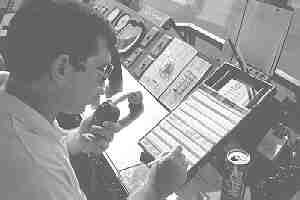 But make no mistake. It’s not the equipment or the computers thatmake today’s ATC system work. It’s the people who move the metal. And when they break,fixing them will be a lot harder than just swapping circuit boards.
So when the controllers at Southern California TRACON or Cleveland Center or some othermajor ATC facility finally say "enough" and throw down their headsets, turn offtheir scopes, and tell their FAA bosses to "take this job and shove it,"Congress and the press and the public will be probably be shocked. Anyone who cared enoughto watch and listen, however, could have seen it coming a long way off.
A Parting Shot…
Did you hear the one about the group of radical air traffic controllers who stormedinto FAA Headquarters at 800 Independence Avenue armed with assault rifles, and tookcontrol of a big conference room full of Air Traffic Managers from facilities across thecountry? The leader of the terrorists pulled out his cellular phone, called the head ofNATCA, and threatened to release one of the hostages every hour until his demands weremet.