








This is a great time for NASA.
It’s our 40th anniversary.
Yesterday morning, we launched Deep Space One, our first electric propulsion probe; we will turn on that electric engine in about two weeks. In about a month, the first piece of the International Space Station will be launched.
And in just five days now . . . returning to space will be an astronaut — and world-class and record-setting aviator — named John Glenn. Perhaps you’ve heard of him. . ..
Next week’s launch is getting a lot of attention . . . in fact, it has totally changed the kind of questions people ask NASA.
It used to be that people asked vexing questions like:
“What ‘s really in Tang?”
“Have we been visited by aliens from outer space?”
Thoughtful second graders would ask questions like:
“Can you explain how the Microwave Anisotropy Probe satellite will distinguish between supersymmetric 11 dimensional cosmologies and supergravity models for the Universe?”
But all that has changed. Now people all over the country have one question . . . and one question only:
“You’re sending John Glenn to space — how about sending MY Congressman to space?”
Kidding aside, I’m thrilled to be here today.
I’m thrilled because when it comes to what we do and who we are . . . there is a simple fact that is just as important as any shuttle mission. And John Glenn will be the first to tell you what it is:
You can’t spell NASA without Aeronautics.
We are very, very serious about that.
And that was my message when I first went to Oshkosh as NASA Administrator 6 years ago.
We had a productive meeting. We set some aggressive goals. And, together, we’ve produced great results.
Let me show you a video that portrays the future of General Aviation and invite you to keep these images in mind as I talk about how we make this vision real. (NASA Small Aircraft Transportation System Video).
We established a truly unique government-industry partnership called AGATE (Advanced General Aviation and Transportation Experiments) . . . and now over 70 companies are working together on GA technologies for next generation avionics, airframes, and pilot training.
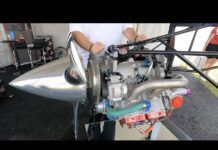
We established another partnership called GAP (General Aviation Propulsion Program) . . . and now companies like Williams and Teledyne Continental are preparing revolutionary engines for new airplane designs.
GAP, along with AGATE, combine for a commitment of over 1/4 billion dollars. Never before has NASA formed such far-reaching partnerships.
That is unprecedented in the last two decades of General Aviation research and development.
And we established something else too, . . . something that made AGATE and GAP possible . . . a new relationship between NASA and the General Aviation community. That relationship — along with our partners in government and industry — helped us develop our vision for aeronautics . . . what we call the Three Pillars for Success.
They are Global Civil Aviation . . . Revolutionary Technology Leaps . . . and Advanced Space Transportation.
Specifically, they encompass the following ten goals — the first eight deal with aviation . . . and the last two with space transportation.
Global Civil Aviation
Goal One — We want to reduce the aircraft accident rate by a factor of five within ten years, and by a factor of ten within 20 years.
Goal Two — We want to reduce emissions of future aircraft by a factor of three within 10 years, and by a factor of five within 20 years.
Goal Three — We want to reduce the perceived noise levels of future aircraft by a factor of two from today’s subsonic aircraft within 10 years, and by a factor of four within 20 years.
Goal Four: While maintaining safety and reliability, we want to triple the aviation system throughput, in all weather conditions, within 10 years.
Goal Five: Reduce the cost of air travel by 25% within 10 years, and by 50% within 20 years.
Revolutionary Technology Leaps
Goal Six: Reduce the travel time to the Far East and Europe by 50% within 20 years and do so at today’s subsonic ticket prices.
Goal Seven: Invigorate the General Aviation industry, delivering 10,000 aircraft annually within 10 years, and 20,000 within 20 years, back to a level we have not seen since the 1970’s!
Advanced Space Transportation
Goal Eight: Provide next-generation design tools and experimental aircraft to increase design confidence, and cut the development cycle time for aircraft by a minimum of 50 percent.
Goal Nine: Reduce the payload cost of low-Earth orbit by an order of magnitude, from $10,000 to $1,000 per pound within 10 years, and by an additional order of magnitude, from thousands to hundreds of dollars per pound, by the year 2020.
And at the same time, we want to improve reliability by a factor of ten or ten times ten.
And finally, Goal Ten: Reduce the cost of inter-orbital transfer by an order of magnitude within 15 years . . . and reduce the travel time for planetary missions by a factor of 2 within 15 years . . . and by an order of magnitude within 25 years.
I went back to Oshkosh earlier this year to get some feedback on our General Aviation goal — goal # 7.
I have to tell you . . . I’m an optimistic guy.
I know it is a “stretch goal.”
I know there are great challenges to overcome in engine and airframe design. I know that there are great challenges to overcome in avionics — both in the ways we navigate and communicate.
And I know that over-riding all of this is the great challenge to increase safety and decrease cost — building planes that are easy to acquire, easy to use, easy to maintain, and easy to integrate into a revolutionized Small Aircraft Transportation System, or SATS. SATS adds to and enriches the National air transportation system.
Bruce Holmes, NASA’s General Aviation Manager, talked in more detail about SATS earlier at this conference.
Again . . . I’m an optimist. There’s a “can-do” spirit at NASA.
Then I ran into some of you and asked, “Are we going far enough?”
The message was loud and clear.
You agreed that we couldn’t spell NASA without Aeronautics.
But you reminded us that — figuratively speaking — we can’t spell Aeronautics without General Aviation.
The Ten Goals are great . . . but if we are to revolutionize aeronautics . . .
. . . if we are to integrate General Aviation into the air transportation system . . .
. . . if we are to change not only the way we do business . . . but also the way we live . . .
. . . if we are to do all this . . . we need more specific, concrete, targeted goals and technology roadmaps specifically for General Aviation.
Some of you may have heard the story about the chicken who asked her friend the pig to go into a Ham n’ Eggs business together.
The Pig said: “For you, that’s an investment. For me it’s a commitment.”
In Oshkosh, you told us that an investment wasn’t enough. General Aviation needs a commitment with well-defined and clearly measured long-term, high-risk goals.
Not just for technology . . . but for certification and the infrastructure for a Small Aircraft Transportation System.
I’m here to tell you . . . with NASA and the FAA working together, this vision will become a reality. In fact, we want you to help us develop the specifics.
We’ve already taken an important first step.
Two weeks ago in Cleveland, at our Turning Goals into Reality Conference, I signed an agreement with Administrator Jane Garvey to ensure that NASA and the FAA would work closely together to improve safety and efficiency in our air transportation systems.
Working together, NASA and the FAA are cutting the time to certify composite materials by 75% and the cost to certify those materials by 90%.
We have also worked to make it possible to employ widely available software and computer hardware to reduce the cost while we increase the reliability and user friendliness of cockpits.
It is our hope and belief that this agreement allows us to do even more . . . and making sure that technology, certification and the Small Aircraft Transportation System fly together with no turbulence.
And it will ensure that as we reach new heights in safety and reliability . . . cost will continue to hit new lows.
Before I go any further, allow me to take this opportunity to thank FAA Administrator Jane Garvey for making this agreement possible.
In just over one year, Administrator Garvey has built up a record of accomplishment and a reputation for excellence. And what fuels that record and reputation — as what I’m sure you all heard yesterday — is passion, focus, and vision.
She is doing a wonderful job.
She has helped us get to where we are.
But remember . . . where we are . . . is just a starting point.
As we focus in on what technologies to pursue and what our “stretch” goals should be . . . we want — and we need — your input.
We’ll start with Engine design . . . but remember: what we are talking about is a long-term vision — a decade or two out in the future.
Maintenance and Reliability:
Currently, the average “active” GA airplane flies about 300 hours a year. At about that same time it needs an engine tune-up and possible replacement of engine parts.
And even with this major maintenance, the TBO (or Time Between Overhaul) is still only about 1600 hours. This represents one of the major cost factors in aircraft ownership.
Clearly, if we are to put wings on America . . . we must do better.
There are cars that require a tune-up only after 100,000 miles.
They do not require replacement of engine cylinders or rebuilding of engine accessories along the way.
The equivalent for a GA airplane would be 3,000 hours of operation . . . or 10 years of flying before a major tune-up or an overhaul. Engines that are easy and inexpensive to maintain throughout their life cycle.
How’s that for a goal? You tell us?
Propulsion:
Today, piston-driven General Aviation planes average about 150 miles per hour.
Again, I think we can do better.
We need to develop engines that, while consuming less fuel and weighing less, will more than double or triple the current cruising speed. I know many of you love your piston engines. Be prepared for a choice. We will push the boundaries on both piston and turbine engines that are unbelievably affordable!
Does this goal go far enough? You tell us.
Environment:
Right now, our engines are inefficient. They run too loud and too dirty. Communities shut their doors to airports, and even shut down airports!
If our vision is to become a reality airplane engines should produce no more noise or emissions than a car or a truck.
We need to end our dependence on leaded fuel . . . and use generally available, lower cost jet fuel in both the small turbines and piston engines of the future.
Perhaps our goal should be 24 hour per day operations at any public-use airport without noise complaints or curfews.
Is that the right goal? You tell us.
Next area — Airframes.
Cost:
Today’s General Aviation airframes cost about $50 to $100 per pound.
We are already committed to bringing this down to about $30 per pound.
But new car structures cost about $10 per pound. So maybe we can go further.
What about reducing the cost of General Aviation airframes to less than half or about $15 per pound?
And while we do that . . . what about making sure the maintenance costs of airframes also come down 50 percent?
And what about repair work on new composite airframes being available at any airport and any location?
You tell us.
Airframe Performance:
Airframe structures should be “smart” in the sense that they will contain embedded sensors and communications capabilities for safety and maintenance information.
They can also have embedded micro-devices that control the aerodynamics for more lift and less drag depending on the flight conditions.
Everyone has seen a bird fly; they don’t just have control surfaces and flaps on the back of their wing.
They have three-dimensional control that shapes their wing. They’re much more efficient aerodynamically than anything we can build today.
Should our goal be to develop smart structures that would not only increase performance of airframes today . . . but also dramatically reduce maintenance costs?
You tell us.
Next — Avionics:
Simply put . . . we need to bring the revolutionary advances made in computing, into the cockpit, and get rid of the “steam gages” we use today!
When computational capability goes up . . . as it does exponentially . . . so too must the capability of our avionics. And when the cost of that capability comes down . . . as it does exponentially . . . so too must the cost of our avionics.
Everyone here who has compared a panel mounted GPS system to a hand-held GPS unit knows what I’m talking about. The hand held version cost about 6 times less . . . and often works much better.
There’s no excuse for it.
We must also take into account that even the most sophisticated systems that we have today . . . aren’t advanced enough to help in decision making and risk management.
And that is the number one safety issue for General Aviation operations.
That is why it is essential that we work to develop the technology that gives a pilot full situational awareness of the vehicle’s state of health and the surroundings.
We should make it possible for remote sensing satellites to send signals directly to the vehicle to give the pilot real-time knowledge about weather and traffic and terrain.
GPS navigation systems will give the pilot the aircraft’s precise position.
Communication links and onboard sensors will determine where other vehicles and obstacles are . . . and an onboard computer database will tell the pilot where the other vehicles and micro-disturbances in the atmosphere will be.
Together, all of this will allow free flight by giving you real-time, on-board, unprecedented air-traffic control.
Our current investment in avionics — the AGATE program I mentioned earlier — has a goal to reduce the cost of avionics by more than 75 percent, while incorporating many of the features I’ve just talked about.
Should our longer-term goal be to equip General Aviation cockpits with avionics that reduce the cost by half again, to about one-tenth of the cost of today?
When it comes to situational awareness, should our goal be to make IFR flying, day or night, as safe and simpler than VFR flying?
What should be our timeline for developing a vehicle IQ — a system that is capable of self-diagnosis and self-repair?
And what about upgrading and updating avionics with simple and affordable software changes?
You tell us.
That’s the airplane . . . now let’s talk about the Small Aircraft Transportation System — the infrastructure that will support this new generation of GA airplanes.
First — Airports.
Instead of paving over hundreds of small airports, let’s pave the way for thousands of “smart” airports.
A future airport will integrate emerging communication, navigation, and surveillance technologies to produce new levels of utility for the Nation’s smaller airport infrastructure.
These airports of the future will support aircraft equipped for self-separation and self-sequencing in free flight, without the use of control towers or radar.
How about a goal to have the same day or night all-weather utility at all of the 18,000 small airports — the all-weather utility we take for granted at the 500 hub-spoke airports today?
You tell us.
When we have these thousands of small airports and the planes we discussed earlier . . . we will finally have within our reach the very reason we do all these things to begin with:
Mobility.
One of the main reasons the automobile displaced the train was not because the car was cheaper . . . but because the car was faster for doorstep to destination travel. The automobile increased the speed of doorstep to destination travel to over 50-60 mph.
Unfortunately, that’s where we’ve been stuck for the past three decades. In fact, the average speed of interstate highway travel has been slowly decreasing during the past decade.
Now, airlines are slowing down, too.
With the advent of the hub-spoke system, and increasing congestion, the average doorstep to destination speed for trips of less than about 300-400 miles (the range of most trips taken) average about 50-60 mph.
Think about it.
You are flying through the air at 300 to 500 mph during the part of your trip that is in the commercial airplane.
But your average speed from when you left your home to when you arrive at your destination is only 50 or 60 mph!
For trips of 300-400 miles, your average speed on the airlines is only 50 or 60 mph; that is so important to understand I needed to say it twice.
It’s time we start working to change this.
We envision advances in speed for personal transportation so an individuals’ average daily radius of action will increase by a factor of ten — from 30 to 50 miles in the age of the interstate highway and hub-spoke system . . . to 300 to 500 miles in the age of the Small Aircraft Transportation System.
And cost?
Today, the price of speed in new General Aviation airplanes is about $1,000 per mph. For a car it’s around $300-400 per mph (e.g., $30,000/80 mph).
Maybe that should be our goal, too.
You tell us.
Pilot Training.
Working with the FAA, we have already taken great strides.
We have reduced pilot training time from more than 7 months to about 3 months. We’ve reduced cost by over 25 percent. And we’ve done this by combining the instrument and private pilot training.
Can we go further?
What do you think about the goal of our children receiving pilot training for small aircraft just as they do now for Drivers’ Education in High School?
You tell us.
And, finally . . . the most important goal we could have:
Safety.
When we have advances in engine design . . . airframe . . . and avionics . . .
and when we have the air transportation system infrastructure to support it . . .
and when we have the training to use it, support it, and sustain it . . .
we will be able to make General Aviation as safe and reliable as commercial travel of the future. This means future General Aviation safety even better than today’s airline safety.
How safe? You tell us.
You tell us what works . . . and what doesn’t. You tell us what we need . . . and what we don’t. You tell us if these opening bids for what our goals should be go too far . . . or not far enough.
I am here today to ask for your help.
At NASA, we want to work with AOPA . . . FAA . . .SAMA . . . GAMA and others. We want to hold workshops over the next year to finely tune these goals.
And then . . . we want to come back here next year . . . with the goals on paper . . . and plans to make them a shared vision. Then each year, we will meet here at AOPA and measure our progress against these goals and our plans.
So let us know if we’re moving in the right direction and if we’re moving fast enough.
We can only succeed if we do this together.
And we will succeed. And when we do, the future might look like this:
A husband and wife and their two children board a commercial airline in New York.
It’s cold and foggy that evening. But they’re not worried about delays. The pilot will be able to see through the fog because of high-definition synthetic vision.
Of course, this capability has been available in GA cockpits for years.
They push away from the gate; it will only be moments until they reach the runway for take-off because they are using advanced taxiway navigation tools developed by NASA and the FAA
They fly to San Francisco.
In San Francisco, they get off the plane . . . and follow the signs to Avis and Hertz.
That’s where they pick up the keys to their rental plane — they have a lot of choices.
There have been choices ever since the FAA type-certified the Lancair Columbia 300 and the Cirrus SR-20 on October 23, 1998 at the AOPA Convention in Palm Springs!
The rental plane is also surprisingly inexpensive.
As a matter of fact, thanks to the advances we spoke about earlier, the price of all airplanes has come down dramatically. Even the 4-place personal jet they are flying in cost about the same as high-end luxury automobiles.
Both the husband and wife can fly . . . because years ago, their employers saw the advantage of personal air transportation to business . . . and were confident that the infrastructure would support it.
Their oldest child . . . is 15. He’ll learn to fly next year at school.
The family boards their rental plane . . . comforted by the fact that the days when GA airplanes were a factor of 10 less safe than scheduled airplanes have long past.
In fact, both have surpassed the safety level that long-haul jet transports had back in 1998.
The rental aircraft is equipped with all of the intelligent avionics I mentioned earlier . . . and our pilots cannot even fathom that there was time when people didn’t have real-time, on-board assessment of aircraft health, atmospheric conditions, and air traffic.
They fly to a remote area in the Pacific Northwest. That’s where the grandparents have retired.
There was once a time when this area was not accessible for approaches. But now, GA airplanes curve through the valley and land there all the time. Their computer has a digital map in its database of the local terrain, with updates broadcast continually from a commercial Litestar spacecraft constellation. The NASA RFP for the Litestar satellites was released back in the fall of 1998.
They drop the kids off and depart back for San Francisco in their rented small aircraft. There, they split up for their respective business meeting.
He boards another commercial airliner that takes him to Singapore. It’s a two-hour flight that costs no more than today’s subsonic ticket prices.
It’s environmentally friendly, too. We solved NOx problem a long, long time ago.
She stays in the rental plane . . . because she wants to visit three separate customers . . . all in California . . . but each about 200 miles apart.
By car . . . the three sites would require a total of 12 road hours to conduct 2 hours of business at each location.
The total travel period could be up to 4 days. She would be away from her family for three nights.
But because of the advances in General Aviation discusses at an AOPA conference at the end of the 20th century . . . she completes the business trip to these three locations in one extended business day.
She picks up her kids and heads home the next morning.
Her husband will meet them back in New York . . . . .
home of the World Champion Yankees.
Some will say that this is impossible (not the Yankees part. . .). That we don’t have what it takes. That this is a vision only for those who refuse to look at the real world.
At NASA, we couldn’t disagree more.
We exist to discover what is possible. That is what America is about.
36 years ago, when John Glenn made his first flight into space, there were those who said we’d never get to orbit, much less to the moon.
Almost 100 years ago now . . . when the Wright brothers were preparing for their flight . . . there were those — reportedly, even their own father . . . who said we would never fly.
But we got to orbit and the moon. And that GA plane in Kitty Hawk . . . made it into the air for 57 seconds.
Both changed the world forever.
That is what we can do, too. Because this is more than technology. . . more than airplanes . . . more than the “hundred dollar hamburger.”
It’s about creating highways in sky that will redefine freedom. Redefine who we are. Redefine what we aspire to be.
It will be some journey. And I don’t know what the destination will be. But I do know this:
If NASA, the FAA and AOPA travel together . . . there’s no question we’ll get there.