






























BEFORE THE UNITED STATES OF AMERICA
NATIONAL TRANSPORTATION SAFETY BOARD
Docket No. CD-33
In the Matter of:
ADMINISTRATOR
FEDERAL AVIATION ADMINISTRATION,
Complainant,V.
DARRYL H. PHILLIPS,
Respondent.
The above-entitled matter came on for Hearing, pursuant to Notice, before WILLIAM R.MULLINS, Administrative Law Judge, at Room 1020, 420 West Main, Oklahoma City, Oklahoma,on Friday, September 5, 1997, at 12:30 p.m.
APPEARANCES:
On behalf of the Complainant:
JOSEPH R. STANDELL, ESQ.
On behalf of the Respondent:
DARRYL H. PHILLIPS, Pro Se
INDEX
| DIRECT | CROSS | REDIRECT | RECROSS | VOIR DIRE | |
| Darryl H. Phillips | 15 |
EXHIBITS
| APPELLANT'S | IDENTIFIED | RECEIVED | DESCRIPTION |
| 1 | 11 | - | Photographs taken at the Salisaw United States Post Office. |
| 2 | 11 | - | Photographs taken at the Salisaw United States Post Office. |
| 3 | 12 | - | Rental agreement Post Office standard form 1093. |
| 4 | 13 | - | Photographs of the mailbox alone. |
| 5 | 13 | - | Photographs of mailbox and residence of Mr. Phillips. |
PROCEEDINGS
(Time noted: 12:30 p.m.)
JUDGE MULLINS: This is a hearing before the National Transportation Safety Boardbeing held in Oklahoma City.
Today is the 5th day of September of 1997, and this matter is on the petition of Mr.Darryl H. Phillips for the review of the denial of the – by the Acting Administrator ofthe Federal Aviation Administration of the issuance of an airman’s certificate.
And our Board Docket No. is CD-33.
At this time, and for the record, I would request a statement of appearance by theparties, and I take it, Mr. Phillips, that you’re going to be representing yourself inthis matter?
THE APPELLANT: That’s correct, Your Honor.
JUDGE MULLINS: All right. And for the Administrator?
MR. STANDELL: I’m Joseph R. Standell, S-t-a-n-d-e-l-1.
I’m the Assistant Chief Counsel, c-o-u-n-s-e-l, for the Aeronautical Center, MikeMaroney Aeronautical Center, Federal Aviation Administration, United States Department ofTransportation.
JUDGE MULLINS: Thank you.
Now, Mr. Phillips, the trial – this trial is different than most of the trials that Ido, because in this one, you are the Petitioner versus the Administrator, and as thePetitioner, you have the burden of going forward and establishing your evidence by apreponderance of the evidence.
Because you do have that burden, you get to make an opening statement first, you get toclose first and last, and you get to put on your evidence first.
But before we go to an opening statement, do you have any preliminary matters that Ineed to address before the opening?
THE APPELLANT: No, sir.
JUDGE MULLINS: All right. Does the Administrator have anything preliminarily?
MR. STANDELL: Yes, at least one, Your Honor.
We’d like to make a motion to dismiss on jurisdictional grounds. We believe thatpleadings have not established and none of the evidence will establish that there has beena denial under Section 44703 here.
The pleadings that were shown and the answer that we have submitted to the pleadingsshow that there was not a denial of an application for an aircraft registration. There issimply a delay in processing to allow Mr. Phillips to comply with the requirements of 6113and complete the application that’s acceptable to the Administrator.
So on that basis, we would move that jurisdictionally, there has been no denial andthat the matter is right for dismissal.
THE APPELLANT: Your Honor, I would argue against the granting his motion. Theevidence that I will present today will show that I have complied with 6113 and that theAdministrator, through the Airman Certification Branch, is operating contrary to the lawand operating in a capricious and arbitrary manner.
JUDGE MULLINS: In an abundance of caution, I’m – I’ll just take the motionunder advisement and go ahead, since we’re here, and receive the evidence because Iwouldn’t want this matter to go back somewhere if I ruled – whichever way I ruled – ifruled for the Administrator and then get reversed, then we’d all have to come back toOklahoma City.
So I’ll just, for the moment, take the motion under advisement and ask that youproceed. And at this time, Mr. Phillips, you may make an opening statement.
THE APPELLANT: Thank you.
MR. STANDELL: May I have – I have one other preliminary matter?
JUDGE MULLINS: Oh, certainly.
MR. STANDELL: I would just like a clarification with respect to denials, becauseI’m even less familiar with the precedents than you are, but the question I’ve got isthis: That Mr. Phillips has subpoenaed Mary Rickey and Harold Everett as witnesses, and Iassume that he’s going to call them
THE APPELLANT: I will. Those are my two witnesses
MR. STANDELL: Okay. And I understand that Mr. Phillips is not an attorney, and Iwas wondering if you would clarify for us and clarify for him, in particular, their rolesand whether or not he is bound by their testimony, since it’s, you know, they have notbeen established as adverse in any way, that –
THE APPELLANT: No.
MR. STANDELL: – and I’ll take them on cross examination.
JUDGE MULLINS: Mr. Standell has raised an interesting point, and that is, if youput on these folks that you have subpoenaed in your case in chief, then you may be boundby their testimony, and their testimony may not be favorable to the position you want toput forward here today.
THE APPELLANT: I understand that.
JUDGE MULLINS: At the same time, you know, I’ve read the pleadings and I’m notsure – I mean – well, I think I understand the issue, but I’m not sure why we would needwitnesses to support that, other than your own testimony that you submitted thisapplication and it came back with remarks or whatever that would be so indicated.
THE APPELLANT: Your Honor, as I read Section 44703, I see that I have the burdenof proof to show that the actions are arbitrary, capricious or not in accord with the law.
In order to do that, I need the testimony of the people that work in the AirmanCertification Branch.
JUDGE MULLINS: Well, as I said, you may be bound by what they say.
All right. okay. Then you may proceed with your opening statement.
THE APPELLANT: Thank you, Your Honor.
The specific subject today, whether or not I’m required to submit a map, whether anyairman is required to submit a map, is so small as to be almost insignificant. None of usshould be here wasting our time on something that small.
The legal principle behind it is anything but insignificant. What we’re really talkingabout is not a silly map. We’re talking about whether the Federal Aviation Administrationcan violate the spirit and letter of the law set down by Congress, whether they canviolate the regulations that FAA has promulgated, whether they can issue orders that arecontradictory to other orders, and then pick and choose on any given instance, which theywant to enforce and which they want to ignore.
Whether they can enforce orders that have expired many years ago, but they’re stillclaiming to enforce them; whether they can operate contrary to law, and that is what thishearing is about today.
Thank you.
JUDGE MULLINS: Do you wish to make an opening statement at this time, Mr.Standell?
MR. STANDELL: Yes, Your Honor, just a brief one, just to correct – perhaps tocorrect something that Mr. Phillips has said.
It is not completely true that we required that a map be submitted. We required eitherthat a description of the residence be submitted, or a map, anything that would show wherethe location of the residence was.
It’s our position that the requirement we make is totally consistent with all of theorders, with the basic Statute, 6113, with the application itself, which is very, veryclear as to the requirement to submit something in addition to what was submitted here.
So on that basis, we would say that the failure to do so is unjustifiable and isgrounds for the stopping of the process, if you would, until he complies.
JUDGE MULLINS: All right. Mr. Phillips, you may call your first witness.
THE APPELLANT: Your Honor, if it please the Court, I have several items ofevidence that I would like to enter prior to calling the first witness.
JUDGE MULLINS: All right. If you would, sir, in addition to the numbering systemthat you might have used, which I – you know, would be Petitioners 1 or – I would askthat you put the Board Docket Number on those, which is CD-33.
THE APPELLANT: okay. If you’ll give me just one moment, I’ll put it on the firsttwo that I’m going to introduce.
(Whereupon, a discussion was held off the record.)
JUDGE MULLINS: Mr. Standell, if you would just remain seated. We’re having alittle trouble picking you up here.
MR. STANDELL: Sure.
JUDGE MULLINS: Okay.
THE APPELLANT: Your Honor, the first two photographs that I would like to enterinto evidence, which are labeled P-1 and P-2, are photographs taken by me in the past fewdays at the Salisaw United States Post Office. P-1 shows a photograph of Post Office boxes
(Whereupon, the document was marked for identification as P-1.)
THE APPELLANT: P-2 is – also shows Post Office boxes, along with a patron thathappened by when I was there to take the pictures.
(Whereupon, the document was marked for identification as P-2.)
THE APPELLANT: The reason that I’m showing these is because there is a greatdeal of confusion on the difference between a Post Office box and a Rural Route.
In preparation for this case, as the Court is aware, I subpoenaed some items from – orthrough Mr. Standell, and I received a phone call from a lady who identified herself asbeing with his office, and I believe her name was Ms. Morgan, although I’m not sure aboutthat.
And she says, “Mr. Phillips, I have the items that you subpoenaed ready,” butshe says, “We have to have a different address because we cannot Fed Ex to a PostOffice box.
Now the point I’m making, Your Honor, is that I don’t have a Post Office box.
A Post Office box, as you can see in the pictures, and as we all know, is –
(whereupon, a discussion was held off the record.)
THE APPELLANT: Pat, can you carry the items up there? That would be a loteasier. If you’ll give that to his Honor.
The item labeled P-3 is the rental agreement. It is Post Office standard form 1093,which has to do with renting Post Office boxes, which is how you acquire one.
(Whereupon, the document was marked for identification as P-3.)
 THE APPELLANT: The next Exhibits, P-4 and P-5 – give itto the Judge first – are photographs of my mailbox. P-4 shows the mailbox alone.
(Whereupon, the document was marked for identification as P-4.)
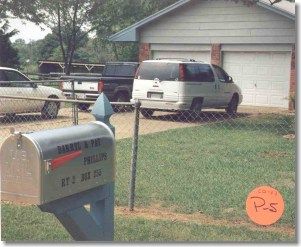 THE APPELLANT: P-5 is taken from a different angle. Itshows not only the mailbox, but it also shows my residence.
(Whereupon, the document was marked for identification as P-5.)
THE APPELLANT: There is no connection between a Post Office box and a ruralmailbox.
The next two items that I would like to put into evidence – here we go are originals ofitems that we received recently. These happen to be not from Fed Ex. I didn’t haveanything from Fed Ex. But they happen to be UPS, both overnight and more normal, slowshipment, as evidence of the fact that we do, indeed receive shipments, contrary to whatthe FAA believed we do get things out in the country the same as people in town do.
I know I’m belaboring this point, but it’s important because it goes directly to theheart of this case.
The next thing, Your Honor, that I would like to establish is that my address, which is-
JUDGE MULLINS: Well, you can offer these Exhibits, but if you’re going totestify, I’ll need to swear you in.
THE APPELLANT: I believe we should do that at this time.
MR. STANDELL: Your Honor, could we have a side bar for one second?
JUDGE MULLINS: Yes.
(Whereupon, a discussion was held off the record.)
MR. STANDELL: I’ll withdraw the request for the side bar.
JUDGE MULLINS: All right. Would you stand, sir, and raise your right hand.
Whereupon, DARRYL H. PHILLIPS was called as a witness on behalf of THE APPELLANT, and,having been duly sworn, was examined and testified as follows:
JUDGE MULLINS: I’ll let you testify from there so that you have all yourmaterials there, Mr. Phillips.
THE WITNESS: Thank you, sir.
JUDGE MULLINS: Unless counsel has an objection.
MR. STANDELL: No. I have No objection.
JUDGE MULLINS: Okay. Go ahead.
DIRECT EXAMINATION
THE WITNESS: The next item which I would like to enter into evidence, which islabeled P-8 –
JUDGE MULLINS: I’ve got two labeled P-6.
THE WITNESS: And no P-7?
JUDGE MULLINS: No P-7, and the – and the two P-6’s are exactly the same.
THE WITNESS: Yes. This is 7. Do you have that?
JUDGE MULLINS: No.
THE WITNESS: Okay. One moment, Your Honor.
MR. STANDELL: Your Honor, could I just have a – perhaps a two-second break,just to confer with Mr. Phillips for just one second?
JUDGE MULLINS: Certainly. Would you like me to step outside?
MR. STANDELL: No. No. That’s fine. I just – one second.
(Whereupon, a discussion was held off the record.)
JUDGE MULLINS: We just had a side bar conference and Mr. Standell has indicatedthat with the introduction of Petitioner’s Exhibit 5, which is a photograph of hisresidence and his rural route – post – mailbox, that the Administrator is satisfied thisis sufficient information for them to issue the certificate.
And with that announcement that makes the petition of Mr. Phillips moot, and therefore,the hearing is terminated.
THE WITNESS: Thank you, Your Honor.
(Whereupon, the hearing was adjourned at 1:00 p.m.)
CERTIFICATE
This is to certify that the attached proceedings before the NATIONAL TRANSPORTATIONSAFETY BOARD IN THE MATTER OF:
ADMINISTRATOR,
FEDERAL AVIATION ADMINISTRATION,
Complainant,V.
DARRYL H. PHILLIPS,
Respondent
DOCKET NUMBER: CD-33
PLACE: Oklahoma City, Oklahoma
DATE: September 5, 1997
were held according to the record, and that this is the original, complete, true andaccurate transcript which has been compared to the recording accomplished at the hearing.
Official Reporter
Comments on the transcript by Darryl Phillips
The transcript is complete. At the same time, the transcript is anything but a completepicture of what went on in the courtroom that day.
It is true that FAA attorney Standell used the photograph(exhibit P-5) as the means to end the proceeding. He was going to find some way to stop mefrom introducing the damning evidence I had against the FAA.
Look at that photograph. Is there anything in it that satisfies the requirement hestates in his opening remarks “We required either that a description of the residencebe submitted, or a map, anything that would show where the location of the residencewas.”
Can anyone (other than my neighbors) look at that picture and tell “where thelocation of the residence was”? Well, there are no palm trees so I guess that narrowsit down a little.
Is there anything in that photograph that satisfies the requirement set forth in FAA’sAction Notice 8700.2, which states “an airman residing on a rural route must disclosethe actual location of his/her residence”?
Is there anything in that photograph that satisfies the requirement set forth in FAA’sOrder 8710.3C, which states “..if the applicant…resides on a rural route, a boat,or in some other location that requires the use of a post office box or rural routenumber…the applicant must provide the geographical location of the applicant’s residenceon a separate piece of paper and attest by signature…”?
I think any reasonable person would agree that there is nothing in the picture to meetthose requirements. So if FAA says the picture is all they need, that shows (once again)that FAA is not interested in following their own requirements.
And if they’ll do it on something as small and silly as this, think what they will dowhen the stakes are higher.
How can the transcript be complete, and simultaneously incomplete? It’s those little”sidebar” conversations. That is where much of the real work is done. There isno ticking clock in a transcript, no way to see that the gaps – which look so small onpaper – are really larger than the “on the record” proceedings. Just prior tothe point where Standell threw in the towel, there is a ten minute break where Standelltook my two witnesses into the hall for a conversation. I imagine (but don’t know)that there must have been some disagreement between them, else it wouldn’t have taken solong. He wanted to get this thing stopped.
Legally, it is questionable whether he should have been able to take mywitnesses (who were only present because I had subpoenaed them) out of the courtroom atall. Indeed, I think a good question could be asked as to whether he could speak with mywitnesses at all once the proceeding had begun, even inside the courtroom. But that reallydoesn’t matter, the representative for the Administrator of the FAA was going to find away to end the proceeding.
Of course they could have ended it earlier. Months earlier. I had explained again andagain that what they were requiring was contrary to law. I had explained it in person, andin writing, and on the phone.
They wouldn’t listen, they were willing to take me all the way to court in hopes that Iwould knuckle under and give them a silly map.
And the taxpayers were paying for it all. It’s not just the dollar cost, we should alsoconsider the delays and backups in paperwork processing that had to get worse while theywere trying to force their illegalities on me. Or look at it this way: Think how muchthings would be speeded up if they treated all airmen as the law requires.
Period.
The lesson? FAA has been winning for a long long time. It rarely loses. In fact, FAAloses so rarely that it has lost the muscle tone that only comes from continued exercise.FAA has developed a soft underbelly. As a result, FAA is vulnerable. Federal Anti Aviationhas promulgated so many conflicting and contradictory rules that all we airmen have to dois dig in, do our homework, and fight.
At the same time, it is incumbent on us not to take advantage. If you are caughtbuzzing your girlfriend’s house, you should accept your punishment. Better yet, don’t doit in the first place. On the other hand, if you and your instructor are practicing forcedlandings and some country sheriff claims you were below 500 ft AGL, fight like hell.
The rules are supposed to support the goals of safety and efficiency. It’s up to us,each one of us, to hold the FAA to that standard.