


























There are two FARs that dictate the biennial checks for most general aviation aircraft:FAR 91.413 for the transponder and encoder, and FAR 91.411 for the static system andaltimeter.
First, notice that I didn’t mention the pitot system. While any sane pilot would liketo know that his airspeed indicator is reasonably accurate, the FARs do not require anytest of the pitot system. Go figure.
An avionics shop worth its salt will check the pitot system and alert the owner ifthere is excessive error. My experience indicates that it is not at all unusual forairspeed indicators to have errors of 10 knots or more, particularly in the normal cruisespeed range. We check the airspeed calibration at a number of points, especially at thestall and flap speeds.
Transponder/Encoder Certs
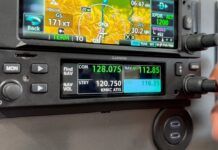
FAR 91.413 calls for the transponder to be tested for proper output power, frequency,bit encoding, ident time, and a host of other items. It also calls for the encoder to becorrelated to the altimeter; in other words, whatever the altimeter reads when it is setat 29.92, the encoder must read the same within fairly close tolerances. This test isquite elaborate and takes some time to perform.
FAR 91.413 must be complied with regardless if the aircraft is flown IFR or not. Wecall it the "VFR FAR" because even VFR-only aircraft must have it done. Evenmechanics sometimes get confused about this. Recently, some maintenance people were finedby the FAA for returning an aircraft to service without this FAR being complied with.
Static & Altimeter Certs
FAR 91.411 applies only if the aircraft is to be flown in IMC or on an IFR flight plan.It requires that the static system be tested to make certain it doesn’t have leaks greaterthan a certain threshold. The permissible leakage depends upon whether the aircraft ispressurized or not. In addition, the altimeter must be tested for friction, scale error,hysteresis, and accuracy at a whole series of altitudes from sea level up to the maximumaltitude that the instrument is certified for (usually 20,000′ for normally-aspiratedaircraft or 35,000′ for turbos.) Aircraft with air data computers require more elaboratetesting.
If you are interested in seeing a "spec sheet" that shows just exactly whattests have to be run to comply with these FARs, give me a call at (805) 922-2580 and I’llsend you a copy. The tests can get quite complex and time-consuming, particularly inpressurized aircraft.
Unpleasant Surprises
Frequently, an owner will taxi up to the shop for biennial certs and tell us thateverything has been working great, only to discover later that we found problems duringthe tests. Common problems are weak transponder output, a Mode C report that differs fromthe altimeter, or a leaky static system.
This scenario is far more likely if the certification tests haven’t been done for manyyears. In cases where the biennial certifications have been kept current, usually problemsare few and any repairs are inexpensive.
I recommend that these certifications be done religiously every two years. If theaircraft is not flown IFR, then you can save some money by complying only with FAR 91.413.
Transponder Tips
If ATC reports that you have a problem with your transponder or Mode C altitude, besure to verify this with a couple of other ATC facilities before you panic. It could justas easily be a problem with the controller’s equipment as with yours.
If your transponder is weak or intermittent, check your antenna. We often see thesesymptoms being caused by nothing more than an accumulation of oil or dirt on thetransponder antenna, causing the signal to be attenuated. An intermittent DME can becaused by the same thing.
These antennas are of the "stubby rod" or "shark fin" variety, andare usually mounted on the belly where they are prone to getting coated with oil, exhaust,and dirt. I recommend wiping down all belly-mounted antennas at every preflight. Youravionics shop will do the same thing, but they’ll charge you fifty bucks.
Another frequent cause of intermittent transponder operation is poor cooling. TheCessna/ARC transponder must be cooled with forced air or it will fail. A good avionicscooling fan is a must. I’ve actually seen them catch fire and burn up the main printedcircuit board! This destroys the transponder, of course, and maybe some other stuff aswell.
