










It wasn’t exactly what I hadexpected.
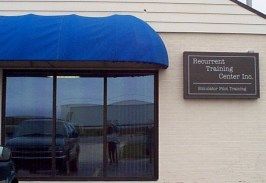 Let me explain. I am a 1,500 hour pilot with about half those hours in a V35A Bonanza Ihave owned for seven years. I fly about one hundred hours per year – a combination of VFRand (mostly) light IFR in our usually mild Central California climate. I have participatedin the American Bonanza Society’s Bonanza Pilot Proficiency Program on three occasions,that fine program consisting of a day of seminars followed by four hours of instruction inthe airplane over the following two days. Other than that, it has been IPC’s which I wouldoccasionally skip because I had satisfied the currency requirements for hours in the soupand approaches. I had never done any sim training.
I expected sim training to allow me to refine my skills handling systems failures andemergencies in the clouds: gyro failures, electrical systems failures – things that couldnot safely or realistically be simulated in the airplane. I also expected the sim wouldbehave like a Bonanza, even if the controls didn’t feel like one and the switches weren’tin the same place. Certainly, I thought, they must load a Bonanza floppy disk into the simthat models Bonanza flight characteristics in different power/speed/gear and flapsconfigurations. I would, I thought, come out of sim training being able to respond toemergencies like a robot – without even thinking.
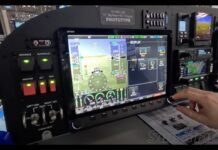
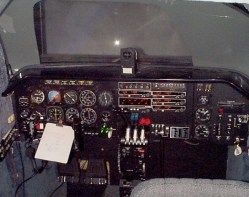 My first reaction to RTC’s AST 300 sim itself was disappointment.This thing doesn’t behave like a Bonanza, the visuals are rudimentary, and it doesn’t seemto reflect current computer technology. But after an hour or so of flying the sim, itsunique flight characteristics had become more familiar to me, less distracting, and I wasshooting approaches without much problem.
The sim is a lot harder to fly than the airplane. But that’s not a bad thing. I quicklyrealized that the sim was going to improve my scan. Take your eyes off the AI for morethan five seconds and you would find yourself in a turn. The Bonanza’s stability had mademe a bit lazy.
The real eye opener came during the LOFT part of the program on day two. While in ahold awaiting approach clearance, my pressure pump failed in a turn. The failure froze thegyro, and my attempts to level wings resulted with the airplane on its back before Ifigured out what had happened. Was the failure mode realistic? Who knows…but it was surea lot more realistic than an instructor sticking a rubber disk over the gyros, and itincreased my respect for the insidiousness of such a failure.
After getting the airplane squared away I called approach, declared an emergency, andasked for vectors to the nearest airport with an ILS. The sim went into freeze mode.”Chris, do you really want to fly vectors and an ILS with a whisky compass? How aboutasking for no gyro vectors and a no gyro approach to the nearest airport that has thecapability.” I had never though of that. In fact, I had never thought of a number ofthings the sim training exposed me to.
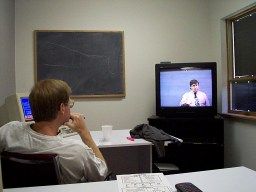 My expectation of becoming an emergency procedures robotwere unrealistic. The sim training proved to be more of a thinking exercise than a doingexercise. The biggest lesson I learned: not to be a do-it-yourself pilot. I had beentaught not to count on ATC for anything except separation. Don’t count on vectors,information, or anything else from the controller: fly pilot-nav everywhere. In simtraining at RTC, I learned that in an emergency a substantial amount of workload can beoffloaded to the controller, and I learned how to ask for it. It’s an emergency, afterall.
Would I trade my American Bonanza Society training for sim training? No, who betterthan ABS to teach specific systems and pilot technique for that airplane? They do a goodjob. But I definitely plan to alternate ABS training with sim training. That should coverall the bases.
