






















 Reading an insurance policy is not a favorite pastime for mostpeople. As a result, most policyholders don’t read their policies until after the loss.During our 25 years in the aviation insurance business, I have seen many situations inwhich the policyholder thinks coverage is included only to find out after the loss thatnone exists. Although coverage misunderstandings can and do occur in all lines ofinsurance, there is no coverage more misunderstood than the aviation insurance policy.
Many people assume that the policy coverages for auto insurance and aircraft insuranceare the same. In actuality, nothing could be further from the truth. We continuallyreceive questions from clients, prospects and acquaintances involving some misunderstoodpoints dealing with their aviation insurance coverages. In some cases these misconceptionsare spawned by inaccurate advice from a well-meaning friend or professional advisor.
When dealing with aviation insurance, don’t guess. Dig out your policy and read it.Many aviation insurance policies being sold today are in a “plain talk” formatand are much easier to understand than more traditional policy wordings. If reading yourpolicy doesn’t satisfy your curiosity, call an aviation insurance specialist for advice.We receive many calls of this type each month and we are always glad to help if we can.
In reading this article, you may think the answer to a question is obvious. You maythink, “who would ask such a stupid question?” Let us assure you, each topic wasthe result of a question from one of our clients or prospects. At the agency we work for (CS&A Aviation Insurance), we always welcome any discussionregarding aviation insurance matters. Keep in mind the only truly stupid question is theone that is never asked.
In the Event Of A Total Hull Loss
We hope you never have a hull insurance claim, but we all know that it is possible. Infact, the aviation insurance industry pays many millions of dollars every year for damagedaircraft. Recognizing this possibility, let us assume for a moment that your aircraft isseverely damaged in an accident. In addition, the damage is so severe that the adjusterdecides to “total” the aircraft and pay you the agreed value policy limit. Hethen takes possession of all the salvage, including the avionics. In a case like this youno longer have an aircraft to insure. You call your agent and instruct him to cancel yourpolicy and return the unearned premium.
Don’t be surprised if your return premium is only calculated on the liability portionof the premium and the hull portion of the premium becomes fully earned in the event of atotal loss. (Your deductible may not be your only out of pocket expense.) Insignificant,you say? It is not unusual for an owner of a more sophisticated aircraft to pay $10,000 ormore for hull insurance. Although some very broad policies include “premiuminsurance” wording allowing the full unearned liability AND hull premium to bereturned, it is quite normal for an aircraft hull insurance premium to be fully earned inthe event of a total loss. It is best to ask before you buy.
Wording Variations You Might Look For
1. “We shall not be liable for any return physical damage premium with respect toan aircraft on which a total loss has been paid.”
2. “We will also return any unearned Aircraft Physical Damage premium to you. Wewill compute what we’ve earned based on the percentage of the policy period that hasexpired at the time the aircraft became a total loss.”
What Do You Mean, My Mechanic Can’t Fly My Aircraft?
All too often, a client will allow a mechanic to test fly his aircraft followingmaintenance. The belief is that because he is a mechanic he is an approved pilot under theowner’s insurance policy. The answer: The fact that the test pilot is your mechanic doesnot change the policy’s pilot requirements. The same rules apply to the mechanic/testpilot that apply to any other pilot of your aircraft.
In order that your policy is not voided, your mechanic/test pilot must meet the”open pilot warranty” of your policy or your underwriter must specifically namehim as an approved pilot, as with any other pilot.
(In addition, the test pilot can expect no protection under your policy unless he isnamed as an additional insured on your policy and is given a waiver of subrogation on thehull. Because of your mechanic’s professional responsibility, this is an endorsement thatis difficult to convince an underwriter to give.)
Your Umbrella May Not Include Aviation
When discussing needed limits of aircraft liability with new clients, it is not unusualfor a prospect to tell us his company only needs a small primary or underlying limit ofliability. Usually he will nonchalantly ask for a limit of $1,000,000. He will usually sayhis company’s commercial umbrella liability policy applies over this primary layer andcarries his total limit of liability up to some satisfactory level.
It is a common misconception of business executives that a commercial umbrella policycovers everything. We want to go on record now and state, “THERE IS NO POLICY THATCOVERS EVERYTHING.” In most cases, commercial umbrella policies contain exclusionsfor aircraft and watercraft. You will see restrictive wording that may say:
“This policy does not apply to any liability arising out of aircraft;” or”This policy does not apply to personal injury or property damage arising out of theownership, maintenance, operation, use, loading, or unloading of any aircraft owned by theInsured or rented to the Insured without a crew,” or “This policy does not applyto liability from the ownership, maintenance, operation, use, loading, or unloading of anyaircraft/watercraft owned by the Insured or leased by any Insured for a period greaterthan thirty consecutive days, unless the Company has been notified of the existence ofsuch aircraft/watercraft and the Insured has agreed to pay any additional premium and hasagreed to accept such terms as may be required by the Company.”
Although the exclusions in umbrella policies and in excess liability policies vary inwording, most policies completely exclude coverage for aircraft liability. We might add,personal umbrella policies also exclude aviation exposures.
Impairment Exclusion
Some aviation insurance policies exclude coverage if the pilot is impaired by alcohol,drugs, or toxic substances. “This section does not provide protection for bodilyinjury or property damage caused at a time when the ability of the pilot is impaired byalcohol, drugs, or toxic substances.”
What Is Included In Your Liability Limit?
We tend to take our liability limits for granted. Seldom do we ask the question,”Are my defense costs included in my liability limit or are they paid outside thelimit?” We all know attorney fees and other defense costs can be enormous. If youcarry a $100,000 limit of liability and you spend $50,000 in defense costs it is veryimportant to know if this expense is included or covered outside your policy’s limit ofliability. Some aviation insurance policies specifically include defense costs in thelimit the company will pay. In the above example, we would have only $50,000 remaining inliability limit to offer for settlement after paying the defense costs.
Other companies set the cost to defend outside the policy’s liability limits. Wordingsuch as “the Company will pay with respect to such claim, in addition to theapplicable limit of liability all expenses incurred by the Company…” Obviously,with this more liberal wording, the cost to defend does not deplete the amount you have inyour liability limit to pay a claim settlement.
Can your Family Bring Suit Against You?
I am sure you have heard, “Anybody can sue anyone for anything.” This is truein today’s legal environment. But, could my family sue me? They certainly can. The papersare reporting increased incidences of children suing one or both parents for some act ofnegligence and of husband/wife suits.
How does your aircraft insurance policy deal with family suits? It may interest you toknow that although some insurance policies treat family suits as any other liability suit,some provide coverage with greatly restricted limits. Wording such as:
“The most we will pay for bodily injury to your spouse or the spouse of apermissive user is 25% of the limit for “each person” and “eachpassenger,” but not more than $25,000.”
“The most we will pay for bodily injury to your parent or child or the parent orchild of a permissive user is 12.5% of the limit for “each person” and”each passenger,” but not more than $12,500.”
This restrictive wording is most important to aircraft owners who own their aircraftindividually and insure their aircraft on pleasure and business policies. Although not ofimportance to everyone, this subtle limitation is something of which you should be aware.
Liability Coverage For Employees
Transportation of employees on corporate aircraft: One of the most common uses ofaircraft is for the transportation of company employees for company business. Thecorporation may own the aircraft or it may be owned by a senior stockholder and leased tothe corporation for corporate use. In either event, the corporation asks to be named aseither the named insured or as an additional insured. One of their primary concerns is toprotect the company against employee suits in the event of an accident, which results inthe injury of an employee. In reality, the liability section of an aircraft policy willnot provide coverage for the employee injured in the course of his business. Typicalpolicy wording dealing with this issue may be “We won’t cover any liability claimthat’s covered under a workers’ compensation, unemployment compensation, disabilitybenefits law or similar law. Nor will we cover claims for injury to your employees whilethey’re actually doing work for you…”.
Since aviation policies specifically exclude work-related injury, our suggestion isthat you always advise your workers compensation underwriter of any aviation exposure.This will allow them to make a small premium charge for the coverage extension. If yourcompany employs a professional pilot, be sure to add the appropriate worker’s compensationclassification code for flying crew to your policy.
Warning: Some worker’s compensation underwriters will not accept aviation risks. Theythink the exposure is too hazardous. Although you must not conceal the exposure, don’t besurprised if your underwriter asks you to replace your coverage at renewal.
Do Your Pilots Meet Your Policy’s Pilot Requirements?
An insurance policy pilot requirement is an area about which we continually caution ourclients. Although pilot qualifications are an obvious concern with any aviation insurancepolicy, we are constantly amazed by the lack of attention given to this important detailby many owners and chief pilots. In the absence of a named pilot, if the open pilotclauses (the stated minimum pilot requirements) of your policy are violated, you may voidyour insurance policy. When we call this to our customers’ attention, we get responseslike:
“For what I pay in premium, everything should be covered.”
“I know this substitute pilot has a lot of time in this type of aircraft, I justdon’t know exactly how much.”
“I know he is a good pilot, I would put my family in the aircraft with him.”
The fact is, it doesn’t matter how much you pay in premium or how good a pilot youhave, if he is not a named pilot or doesn’t meet the minimum requirements stated in thepolicy, you may violate your policy clauses and could void your coverage. Know for surewhat qualifications your pilot has. Look at his logbooks. Leave nothing to chance.
Lienholders Interest Coverage a.k.a. “Breach of Warranty”
You may have heard the term when discussing aircraft financing with your chosenfinancial institution. Usually an aircraft lending institution wants some assurance thatit will be paid its loan amount if a hull claim is denied because the insured violatedcertain policy requirements such as approved uses or approved pilots. The most commonexample of such a violation would a loss arising when the aircraft is being operated by anon-approved pilot. Each policy stipulates the type of pilot who is qualified to fly anaircraft. This may be done by specifically naming the approved pilot, by giving someonethe authority to approve pilots on behalf of the insurance company, by a blanket set ofpilot criteria called an “open pilot clause”, or any combination of these.
If, following an accident, it is discovered a pilot not approved by the policy wasoperating the aircraft when the loss occurred, coverage could be voided. If the policycarried a Lienholders Interest Endorsement (“Breach of Warranty”), in favor ofthe financial institution, the insurance company would pay the lienholder up to theoutstanding lien amount but not more. Keep in mind, Lienholders Interest Coverage is notan automatic coverage. It must be specifically requested, but is usually added by theunderwriter at little or no extra premium charge.
This “Breach of Warranty” Sounds Great!
Well don’t be hasty. The insurance company is not in the habit of setting up coverageguidelines and freely giving them away. The violation of a policy requirement whichresults in the subsequent payment under a Lienholders Interest Endorsement can set up oneof the few situations in insurance where an insurance company could subrogate against itsown insured for reimbursement of the amount paid to the lienholder. In other words, thecompany would pay the bank and then look to the insured for reimbursement of the amountpaid. Lienholders Interest coverage favors only the lienholder, not the insured.
Right To Purchase the Salvage
In discussing the method of settling an aircraft hull loss with an insured, we get theresponse, “It won’t matter to me. I won’t be alive to care.” It might be ofinterest to know that very few general aviation crashes result in fatalities. In mostcases, the hull claim is settled as a partial loss and the aircraft is repaired andreturned to service.
The most frequent circumstance is the constructive total loss. This is a situationrequiring such extensive repairs that the repair cost plus the salvage bid (taken from asalvage buyer) exceeds the insured value of the aircraft. In this case, the insurancecompany will pay the insured for the aircraft as required by the policy and sell thesalvage to a salvage buyer. The net loss to the insurance company will be the difference.
Many aircraft owners say, “I want the insurance company to pay me the agreed valueof my aircraft and then allow me to buy back the salvage and have the aircraft restored.”It’s my aircraft, I don’t want to sell it to a salvage buyer.”
Your insurance contract (your policy) gives the insurance company the option to repairor replace your aircraft at the company’s option! If the company pays you the agreed hullvalue as stipulated in the policy, the salvage becomes the property of the insurancecompany and the policy commitment is complete. Basically, you sold your aircraft for theamount agreed to in the policy. The company owes you no courtesy or preference inretaining the salvage. Some companies will allow an insured the opportunity to bid on thesalvage, but no preference is given. As stated in one insurance company’s policy; “Ifwe decide to take the salvage we can sell it or do whatever else we want with it.”
The Additional Insured
Adding an additional insured to an insurance policy is simple and usually inexpensive.In fact, many companies routinely request that they be added as additional insured beforethey will allow their employees to ride on a general aviation aircraft. This is a means ofassuring the party responsible for the passenger that the aircraft is properly insured.So, why not add everyone flying in the aircraft? Limits. You buy specific limits ofliability for your aircraft. If an additional insured must be defended under yourinsurance policy, it dilutes the total amount remaining to defend you. You should have agood reason to share your total limit of liability insurance. They may be satisfied withjust a simple certificate of insurance, which certifies the aircraft is insured, and forwhat limits. It does not have to include additional insureds and therefore would notdilute your coverages.
Loss of Use and Depreciation Due to Damage History
I carry “all risk” hull insurance. “All risk” means everything iscovered — Right? Without getting into the definitions of “all risk” forms ofcoverage and a discussion of all the misnomers associated with this standard andmisleading insurance term, let’s just say that “all risk” doesn’t mean all risk.Not only are certain causes of loss not covered under an “all risk” policy form,but also certain types of resulting damage are not insured.
Assuming the loss is not the fault of another party and is payable under your hullinsurance policy, your insurance company will step in and pay for the repair orreplacement of your aircraft.
This, however, is limited to damage to the aircraft itself. Other hidden losses such asloss of use and depreciation sustained due to the damage history are not covered under anormal hull insurance policy.
Loss of Use
Loss of use is that loss sustained due to the time an aircraft is down for repairs as aresult of a hull loss. During the period of time necessary to repair the aircraft you haveno aircraft to use. Your payments to the bank, hangar rental or lease payments, pilot’ssalaries and other continuing expenses must be paid. If your aircraft use is pleasure andbusiness or corporate industrial aid, the effect of the loss of use is less than that of acharter or leased aircraft. Although some uses are more critical than others are there isan economic loss due to the lack of availability of the aircraft in almost everysituation.
Several of the top insurance companies do offer a coverage called “Extra Expensefor Substitute Aircraft”. Although not specifically designed to cover loss of use,extra expense will pay a sum of money to the insured softening the overall economic lossto the insured. Extra expense is not universally available from every insurance companyand is not offered for many purposes of use.
Depreciation Due to Hull Damage
Depreciation due to damage history is a real loss in any significant hull claim.Although not normally realized until the aircraft is sold, the retail value of an aircraftthat has never been damaged is usually higher than one with prior damage history.Obviously, the smaller the damage and the better the repair facility, the less thenegative effect will be on the value of the aircraft. As mentioned above, the hull portionof your aircraft policy will not compensate you for the loss due to damage depreciation.
Please note, if someone else damages your aircraft due to their negligence, they wouldbe expected to compensate you for your entire loss. If they were insured, their insurancecompany would be responsible to pay for the repairs of your aircraft as well as lossessuch as loss of use and depreciated value of your aircraft resulting from damage history.
My Loaner Engine Is Covered?…Right?
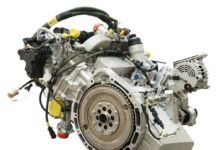
It is not uncommon for a turbine operator to rent a loaner engine during times of majorengine repair. This allows the aircraft to stay in the air avoiding costly loss of use dueto maintenance. In cases like this, the maintenance facility drops your “owned”engine and hangs the loaner engine in its place. Your engine is sent to a repair facilityfor overhaul and you continue to enjoy the use of your aircraft.
Is the loaner engine covered by your hull insurance? Yes, if it is installed on youraircraft.
The question you should ask is, who covers your owned engine after the loaner engine ishung on your aircraft? The answer is, if you don’t have an extremely broad policy, theremay be no coverage for the engine or other spare parts under your policy. Usually, theaircraft hull policy covers your engine, if removed from your aircraft, but only if noreplacement engine is mounted in its place. If a replacement engine is mounted on youraircraft, the replacement engine becomes part of the aircraft and is covered. At thispoint, your own engine may become uninsured. Note: Some very broad policies providelimited coverage for spare parts.
Many times, the maintenance facility accepts responsibility for your engine. After allmy FBO buys hangarkeepers legal liability insurance. That covers everything…Right?Wrong. Hangarkeepers is designed to cover loss to aircraft but only if the FBO isnegligent. So, how is my engine covered if we have a windstorm, a fire, a theft or someother “Act of God”? Many FBOs and maintenance shops buy liability policies withspecific limits of coverage to cover property of others. This, however, is not alwaystrue. In fact, this is such an obscure part of insurance, the facility’s owners, managers,or their insurance agents may not have addressed this exposure. Our suggestion to you isto ask the question and then get it in writing.
Hot Starts, No Problem I’m Covered…Right?
Wrong. A pilot has a “hot start”. The assumption is, if FOD damage iscovered, hot starts should also be covered. This is not the case. If you have an engineloss resulting from internal heat, your aircraft hull insurance will not answer. This isspecifically excluded in your policy with wording similar to “We will not pay forphysical damage to an engine that arises out of heat or the improper operation of aturbine engine.”
This is universally true in all turbine aircraft hull policies. Your best insurance isa well-trained, conscientious pilot.
