
















P
Dial Eastern
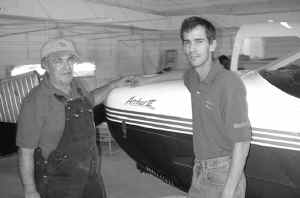
Over the years, AviationConsumer readers have heaped praise on Dial Eastern almost to an embarrassingdegree. Words like superb and true craftsmen come frequently tomind. What exactly is Dick Guenther doing out there to merit that sort ofadulation? In short, the shop pays attention to detail, lavishes time and efforton prep work, stays on schedule-something owners consider important-andcharges a fair price. And thats not to say cheap. For singles, Dial Easternwants between $7000 and $11,000, putting them on higher side of average. Theshop paints twins for between $13,000 and $20,000, quite a bit higher thanaverage, according to our surveys.
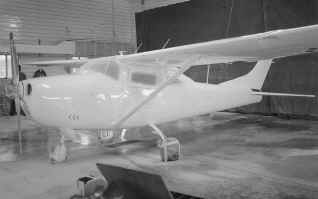
Next comes what Guenther andHollis say is a must for any paint job, whether premium-priced or not: Allcontrol surfaces should be removed, something thats often not done. Indeed,after our shop tour, Hollis inspected the company Mooney and within secondsnoted a telltale wedge of overspray behind an aileron, sure proof that thecontrols hadnt been removed during our last paint job.
Guenther and better shopsinsist-rightly-that controls be removed, stripped, inspected and, mostimportant, rebalanced after painting. On some controls-Bonanza ruddervatorsand Mooney ailerons-this is a critical task and shouldnt be skipped. But itshould still be standard on all aircraft. Guenther goes so far as to record thebalance data in the aircraft logbook, along with the signoff for the paintitself.
Stripping: Chemicals vs. BlastingPainting an airplane-that is, the actual laying on of the color-is the quickest part of the process; a couple of good spray techs can base coat an airplane in under an hour. But their work will only be as good as what’s under the paint and that’s where prep work comes in, specifically stripping, arguably the most tedious and time-consuming aspect of the job. Considering that aircraft paint has to withstand exposure to sunlight, extremes in temperature and the abrasive effects of rain in flight, it’s tough stuff and equally tough to remove from aluminum. Various schemes-mostly chemical-have been tried but these days, most shops rely on either chemical stripping or bead blasting, a mild abrasive method using plastic media blasted onto the surface with compressed air. When it first emerged nearly two decades ago, we published a couple of horror stories about bead blasting gone bad. Although the process "cuts" the paint off with tiny plastic beads that are softer than both the paint and the underlying metal, the process inevitably creates friction and heat. Since aluminum has a high coefficient of expansion, heating aircraft skin causes it to pucker and once distorted, it doesn’t return to its original tautness. Before blasting was refined, a few aircraft were seriously damaged by the process. A second significant problem with bead blasting is that those little beads-like dust-go everywhere and if the aircraft isn’t sufficiently protected, they’ll turn up inside the cabin, wing compartments, instruments and everywhere else they don’t belong. Reese Aircraft is unique in that it does both chemical and bead blasting. Reese has two shops, one in Robbinsville and a second at Stewart Airport in Newburgh, New York. The latter paints mostly turboprops and jets and strips via blasting. The Robinsville shop strips chemically. Ken Reese told us that in the early days, there were problems with bead blasting, mostly related to operator error and a tendency to use too much air pressure. "You heard the horror stories about blasting, no question," Reese says, but it was never as bad some claimed. "There were stories about blasting holes through the skins and that just never happened." Blasting is a skill akin to painting itself and Reese says it’s critical to keep the blast nozzle moving over the painted surface being stripped. Reese actually treats the surface with a chemical stripper first, then clears the paint away with bead blasting, which goes quicker thanks to the paint being loosened first. At least some blasting media does find its way into the airplane. "Do we keep every little grain of media out of the airplane? No, we can’t" says Reese. "We do keep it out of critical areas," he adds. That means the airplane’s openings are sealed, the engine is wrapped and the glass and fiberglass are masked before blasting begins. Not that blasting media is especially damaging if it does get into moving parts. Reese once commissioned a lab test in which increasingly large amounts of blasting beads were injected into greased bearings, which were then spun and measured for wear. Reese says the plastic blasting media caused no wear until so much of the stuff was injected that it displaced the grease, causing the bearing to dry fail. With proper precautions, Reese says he doesn’t stay up nights worrying about blasting media contamination and given the utter lack of complaints we hear about the process, neither, we think, should anyone contemplating having an aircraft bead blasted by a knowledgeable shop. |
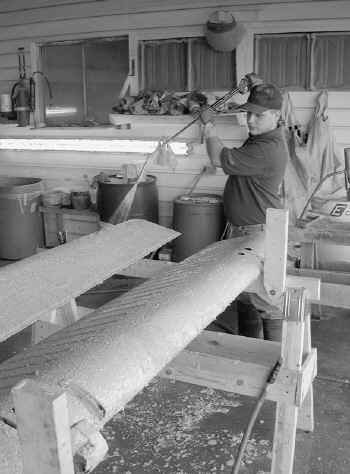
Stripping
Asnoted in the sidebar, there are two methods of stripping, chemical and beadblasting. And within chemical stripping, several products are used, some benignand some not so benign. Dial Eastern uses plain industrial methylene chloridemixed with a soap or wax carrier. Although methylene chloride is consideredhazmat and requires special disposal methods, its not corrosive. Guenthertells us hes re-painted his own work on a number of aircraft in whichstripper found its way either between lapped skins or inside a structure butwasnt entirely flushed out. In that case, he says, you find a slippery, waxycoating but no corrosion.
Thats certain not to bethe case if the aircraft was stripped with acid stripper, which some shops stilluse because its faster than any other method, including blasting. However, nostripper can be entirely flushed-especially from laps-and if its notremoved, acid stripper will cause corrosion, sometimes enough to cause expensivedamage that wont be obvious for years to come.
Guenther says he has no beefwith bead blasting and believes it will produce as good a job as chemicalstripping in the hands of the right shop. On the other hand, like most shops, hecan tell war stories about blowing blasting media out of the airplane yearsafter it was stripped and painted by another shop.
Which led us naturally tothis question: How about forgetting stripping and just scuffing up the paint andspraying on a fresh coat? Will Dial Eastern do that as an alternative to anexpensive strip and paint? No, he says, the controls need to be removedand balanced, thats one thing. The other thing is that when you paint oversomeone elses work, youre counting on a mechanical bond not a chemicalbond between the two paints.
Sand-and-sprays might lastbut many dont and later, Hollis showed us a Bonanza that had been flown infor an estimate. It had a sand-and-spray and where the paint had worked aroundthe rivets, the top coat was peeling away from the older paint. It was, inshort, a mess. Its a warranty issue, too, according to Hollis and Guenther.Stripping the paint down to bare metal is the only chance were going toget to see whats under the old paint. If anything needs to be fixed, wellwant to do it before we put color on.
Spotless
Guenther believes that whena paint job has problems, its often due to whats done-or not done-atthe next stage. Following stripping, the airplane has to be exhaustivelypressure flushed and cleaned of even the tiniest contaminants, for any foreignmaterial will complicate the laying on of color and may ultimately causeadhesion problems later on. Careful attention is paid to skin laps, so anyweeping of stripper or anti-corrosion compound is removed.
Speaking of the latter, thisis a sore point with most paint shops, including Dial Eastern. Anti-corrosioncompounds such as ACF-50 and Corrosion-X are generally seen as a good thing,unless you run a paint shop. The stuff weeps out of rivet holes and between lapsand no matter how careful the shop is, if theres enough of it on the surface,the paint will form little non-adhering craters called fish-eyes.
If you even thinkyoure going to get your airplane painted, dont have it treated withanti-corrosion compound for at least six months before, says Guenther. A yearwould be better. And while youre at it, have any engine oil leaks taken careof. A leaker can fill the skin laps with oil, causing the same problems.True, itll be confined mostly to the belly, but the better the paint adhereseverywhere, the better the airplane will be protected.
Etching, Priming
Following stripping andflushing, the next operation is etching, treating the surface with a mildsolution of phosphoric acid to thoroughly clean the metal deep into its surfacestructure. At Dial Eastern, Guenther uses stainless brushes and mild,non-corrosive abrasives to do the etching, followed by more flushing.
Contrary to popular belief,airplanes get their share of body work, even new ones. (Some sayespecially new ones.) Body work is similar to what goes on in the auto industry,dent and blemish filling and fine sanding. And yes, they use Bondo, albeit aspecialized polyester type mixed with an aluminum paste. When its appliedcorrectly, primed and painted, youll never know its there.
After body work, theaircraft is alodined, a so-called chromate conversion process that serves asboth a base corrosion protector and an adhesion improver for subsequent coats.Were told that alodining is a routine process by most shops but weve alsoheard that some shops skip this step. We think its worth asking about andthat it should be done.
Following a short curingperiod, the shop can move on to the next step, which is priming and painting. Aswe reported on our paint shop survey article in the November issue of AviationConsumer, shops tend to pick a paint system theyre comfortable with and stickwith it. Having heard from hundreds of readers and dozens of shops, we dontsee much difference between the quality of the major paint systems.
At Dial Eastern, Guentheruses DuPont products, specifically Imron over Variprime primer and, in demandingapplications where oil or corrosion compound seepage might cause adhesionproblems, a tough epoxy primer called Corlar.
Three hundred miles to theeast at Reese Aircraft in Trenton-Robbinsville, Ken Reese uses JetGlo, late ofPPG but recently bought by Sherwin Williams. Each speaks highly of the otherproduct line, leading us to conclude that which one a shop uses revolves morearound customer service and convenience than quality issues.
When we bounced thatobservation by Ken Reese, he agreed, but added this: If a customer asks andthe airplane is going to be outside, Ill recommend AcryGlo over JetGlo.AcryGlo, also in the Sherwin Williams line, is an acrylic urethane with betterUV protection than JetGlo. JetGlo, on the other hand, is more resistant tohydraulic fluid and jet fuel and the wide temperature swings jets see in normaloperations. To Reeses eye, JetGlo, however, holds out better, meaningthat it retains the total wet look high gloss of a fresh paint job.
Eyeballs On
Which leads us to ask Reesehow he judges a good paint job. If you really want to examine a paint job,dont do it outside. Bright sunlight will hide every flaw and itll lookgreat, says Reese. Get it into a hangar lit with sodium vapor orfluorescent and grab a towel and wipe it down.
Huh? Thats right, saysReese, if you really want to see the details of another guys paint work,eyeball the entire surface of the aircraft as you wipe it down. What are welooking for, exactly? Viewed obliquely, the surface should be evenly glossy andwet looking, with no dull spots. If you see the latter, says Guenther, the shopmay have been working with a single spray man who couldnt keep up with thepaint, thus the fresh paint wasnt worked into the wet stuff on the surface.Look for crispness around stripping, with no paint built up along the edges orroughness where the rules were masked. If the airplane has curved stripes, theyshould be fair and smooth, with no quick turns. It goes without saying that youshouldnt see any runs, sags, fish-eyes or orange peel in an otherwisepristine surface. (Nonetheless, we still do.)
As Chris Hollis noted, liftthe control surfaces and look around the counterweights, horns and control rodends. If the control surfaces werent removed during painting, youll see itand its the kiss of death against a quality paint job. Check detailssuch as window glass, moldings and other contrasting surfaces. If theresstripper burn around the window edges, the shop wasnt very good at masking.And every contrasting surface should be free of overspray.
Some paint jobs look good ontop or at a distance-what Dick Guenther calls a 50-footer-but aquality job should look just as good on the belly, meaning the gear wells shouldbe shipshape-and-bristol and there should be no sign of painted over greaseblobs or corrosion, an indication that the shop thought no one would ever lookunderneath.
The Extras
Most reputable shops-andboth Dial Eastern and Reese qualify-will firmly insist on certain details andwill recommend others as nice-to-haves. At Dial Eastern, for example, someexternal fasteners are included in the price of the job but manycustomers-especially those driving high-zoot singles and twins-opt toreplace everything with new stainless steel. On a twin, that can cost a coupleof thousand bucks. But if youre spending 10 times that on paint, why put theold, corroded fasteners back on? Guenther also recommends replacing any worncontrol parts, such as rod ends or the nylon locking nuts. Youve got thecontrols off, it doesnt make sense to go through all that again just to putin new nuts later, he says.
Both Reese and Guentheradvise asking the shop about what exactly the price includes. At Dial Eastern,you get a base color and two stripes; anything beyond that is an extra andextras can add up. Also ask if door jambs, baggage doors and otherquasi-interior elements are included in the paintwork. Generally they arent,but you may want them done so get a price.
Having visited both theseshops, we can recommend either without reservation. But whether you go with DialEastern, Reese or any other shop, we also recommend a visit for a walkthrough ofthe shops process. If nothing else, youll educate yourself in what goesinto a good aircraft paint job.
Contact Dial Eastern States at 740-942-2316 or www.desapi.com.
Reese Aircraftis at 609-586-9283 and www.kdaviation.com.