


























Immediately after Air France’s Concorde crash, graphic photographs and video of the disaster were broadcast to millions of television viewers. So-called industry experts appeared on various networks soon after and speculated about the cause of the crash. One pundit, who has authored a book on aging aircraft, raised the specter of the inherent danger to passengers who travel on older aircraft. The author claimed that deregulation has caused many airlines to keep operating aircraft past their design life.
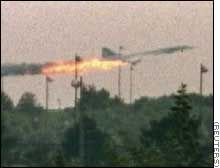
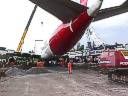 However, initial investigative reports indicate that the Concorde tragedy was caused by a tire blowout that pierced a fuel tank and caused damage to at least one engine. In response, pundits are now claiming that the Concorde’s design is inherently dangerous and that this type of accident was inevitable. One fact is clear although not reported: The accident was not a direct result of the age of the aircraft, despite the widely reported finding of small cracks in the wing structure of some Concordes a few days before the Paris crash. Even so, British Airways and Air France have since grounded their Concorde fleets indefinitely.
 A week or two before the Concorde crash, a Boeing 737-200 operated by Alliance Air, an Indian Airlines subsidiary company, crashed at the Patna, India, airport while executing a go-around. Reporting via telephone on CNN shortly after the accident, Indian news representatives indicated that concern was being raised immediately over whether the 20-year-old Boeing 737 had been kept in service too long. According to Indian Airline’s reports, the aircraft was number 671 on the Boeing production line and had accumulated 44,087 hours and 49,500 cycles. Subsequent reports by ground observers claim that an engine may have been on fire before the crash.
Fast-food Answers
The public is outraged at any airline accident and wants immediate answers. If the aircraft in the accident was older than 15 or 20 years, they are all too willing to believe claims by self-interested “experts” who say such aircraft are increasingly at risk of falling out of the sky. In accidents where the aircraft is relatively new, blame is immediately assigned to the pilots and advanced technology with which they interact.
 In this “fast-food-immediate-answer” environment, the NTSB and similar international authorities have to wade through the evidence to establish the most probable cause of the accident. Note the two words: “probable cause.” Experts, analyzing all available data, will not conclude what definitely caused an accident, only what the most likely cause was. And yet, hours after any accident, media spokespersons have assigned blame by inference.
Competing Economic Forces
It is a fact that since deregulation, competition has forced many airlines to continue to operate aircraft past their intended service life. Indeed, one large airline operates a significant number of older-technology aircraft with an average age of 18 years. Even so, some carriers, such as Delta Air Lines, intend to replace their older-technology aircraft in the near future. However, this decision is based on the disproportionate cost of maintaining these older-technology aircraft rather than their inherent lack of safety and airworthiness.
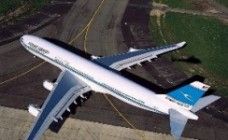 Singapore Airlines and Cathay Pacific are taking the opportunity to monopolize on the traveling public’s apprehension of older technology airplanes by overtly advertising the newness of their fleets. These airlines’ implied message is that new aircraft are safer and more comfortable while older aircraft are less safe and lack amenities offered by newer technology.
It would seem that in these times of marketing madness, people adopt conceptions of industry standards based on what is presented via the media. The problem is that most media reports sensationalize air travel safety and most politicians and critics of older aircraft act on self interest. No one, it seems, is interested in presenting a balanced look at this particular problem.
Well, are aging aircraft a danger to the traveling public? Let’s take a look.
Recent U.S. Accidents Involving 20-Plus-Year-Old Aircraft
Analysts say that human error has accounted for 70 percent of aircraft accidents over the last decade. A small portion of these are maintenance induced; however, very few accidents have occurred as a direct consequence of aging aircraft systems or structural integrity. There are two spectacular accidents worth taking a close look at since they have both spawned initiatives aimed at eliminating similar events.
TWA 800
TWA flight 800 departed John F. Kennedy International Airport in New York on July 17, 1996, on its way to Paris and blew apart in the air a short time later. Four years later, the NTSB investigators and Boeing are in agreement that an explosion in the center wing fuel tank caused the accident. Despite a $32-million study conducted by Boeing, company officials were unable to determine the source of the spark that allegedly ignited volatile fuel vapors in the tank.
A preliminary report by the NTSB suggests that fuel vapors in the empty center wing tank of the Boeing 747-100 were heated to an explosive level by the air-conditioning packs during more than two hours of ground time. Subsequently, during climbout, this explosive mixture was ignited by an unknown source. The explosion is thought to have originated in one of the two center compartments of the fuel tank and rapidly moved forward, ultimately resulting in separation of the entire nose of the airplane from the fuselage.
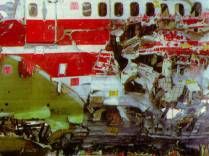 In its preliminary report, the NTSB suggested that the “most likely” source of ignition was a “short circuit outside of the center wing tank that allowed excessive voltage to enter it through electrical wiring associated with the fuel quantity indication system.” The board expressed the opinion that the fuel tank design of the Boeing 747 was “fundamentally flawed.” However, the board went on to say that there are no critical hazards in fuel tanks and wiring that require emergency action. The latter statement concurs with a recent statement by the Air Transport Association (ATA).
While the ignition source is yet to be determined, subsequent inspections of other older-technology aircraft revealed some disturbing problems with fuel tank wiring. As a result, two Airworthiness Directives requiring fuel tank wiring inspections were issued by the FAA for Boeing 727 and Boeing 737 aircraft. And recently, the FAA has been considering a ground-based system that would pump inert nitrogen gas into fuel tanks of commercial jetliners. Such a system is estimated to cost approximately $1.6 billion to install. For years, the military has pumped nitrogen into tanks of fighters and transports in order to protect them from occasions when a bullet might ignite fuel tank vapors.
While rare, occasional fuel tank explosions do occur. In 1990, a Boeing 737 exploded while taxiing for takeoff at Manila airport. Eight people died as a result. The NTSB and other investigators have publicly shown their displeasure at Boeing for not disclosing data from a study the company conducted on military 747s in 1980 where problems with center wing fuel tank overheating were revealed. One of the key findings of the study was that hot runways and air-conditioning packs can overheat fuel tanks. To reduce this effect, it was concluded that insulation should be added to shield the tanks from such heat sources.
Sources at the NTSB reportedly said that if they had been privy to the findings of Boeing’s report at the time they were investigating the Manila accident, a red flag might have been raised which may have led them to recommending fuel tank changes. In its defense, Boeing agrees that it is embarrassing the test results were overlooked, but points out that the study was conducted on fuel pump problems in the military which are significantly different to those used on commercial jetliners.
 Responding to public concerns over aging aircraft, the White House Commission on Aviation Safety and Security (WHCSS) recommended that the FAA expand its Aging Aircraft Program to also cover non-structural systems. As a consequence, the FAA Aging Non-Structural Systems Plan was formulated. It describes various maintenance, training and reporting initiatives, development of advisory material, research programs and other activities. This program will be discussed later in this article, but for now it is worth noting that significant deficiencies in wiring inspections of aircraft in service were revealed. Numerous problems with aircraft wiring, such as frayed wires, contamination from water and other substances, and the frequent presence of metal shavings were found.
Aloha 243
In 1988, an Aloha Airlines Boeing 737 lost an 18-foot section of its fuselage at approximately 24,000 feet due to metal fatigue. Miraculously, only one person died – a flight attendant – and the crew was able to land the aircraft safely.
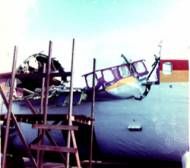 As a result of this accident, several well-needed studies on metal fatigue and corrosion were initiated. What was revealed from these studies was that corrosion is an insidious threat to structural integrity that can be almost impossible to detect in some circumstances without non-destructive methods. Often it is necessary to disassemble aircraft structures in order to gain access to areas of interest. Methods commonly used to detect corrosion include: visual inspections, radiography, ultrasonic, acoustic emission, eddy current, magnetic particle and dye penetration.
Aluminum alloys used in aircraft structures have changed over the years, with some being more prone to stress corrosion cracking than others. Surface corrosion, pitting corrosion and exfoliation were found to be improved if the alloys were clad with pure aluminum. However, this cladding is removed in certain areas such as in countersunk rivet holes. What becomes important in how and when corrosion will occur is the geographical location of the airport where the aircraft is parked, material selection, surface preparation, material removal and cleaning methods.
A multiple-site damage crack, such as occurred on Aloha 243, can be initiated by small cracks that initiate and propagate from highly stressed rivet locations. A sudden failure of a panel can cause several additional panels to fail almost instantly. However, there is no known method for determining either corrosion initiation or propagation times. As a result, periodic inspections are the only viable method of detection. Data gathered from inspections could be shared between operators and manufacturers to develop a risk analysis on the ultimate safety of the aging aircraft fleet.
A combination of obliquely backscattered ultrasonic signals (OBUS) and sensor-array real-time imaging (SARTI) promises to reduce the need to remove paint from aircraft surfaces prior to inspection. These nondestructive methods for detecting flaws in aircraft structures could help ensure that aging aircraft remain structurally sound while holding down maintenance costs.
The goal of iterative testing and analysis is to determine the ultimate economic life of the aircraft. At some point, the maintenance costs become prohibitive and the airplane is replaced. Now, however, there is the added marketing aspect of the traveling public’s concern over aging aircraft to be factored into the equation.
Queen Of The Skies
The TWA and Aloha Airlines accidents can actually be linked to probable failures due to the age of the aircraft. In the first instance, decayed wiring in the fuel tank, and in the second, metal fatigue caused by undetected and treated corrosion. But not all older-technology aircraft are being put out to pasture. The inveterate DC-8 is still flying proudly and promises to be the first jet airplane to be operated commercially for 40 years.
 The DC-8 was the first jet-powered transport manufactured by the Douglas Aircraft Company and entered service with United Airlines and Delta Air Lines in 1959. There are series -10, -30, -40, -50, -60, -61, -62, -63, and -70 models of the four-engine transport; the latest modification being the incorporation of high-bypass turbofan engines. Out of a total of 556 aircraft being built over a 14-year production run, approximately 300 DC-8s are still in service today. DC-8s provide the backbone of many cargo fleets, such as Emery Worldwide and Airborne Express.
In the last 10 years, there have been seven DC-8 crashes in the U.S., none of which can be attributed to aging aircraft structure or systems. The latest accident occurred in February of this year when an Emery Worldwide Cargo DC-8 crashed shortly after takeoff from Sacramento. Although the cause of this accident has not been determined, the last communication from the aircraft allegedly implied that the crew was experiencing a severe center of gravity problem. The other six accidents are:
A Fine Air DC-8-61F that crashed after takeoff from Miami, Fla., in 1997; the NTSB found the probable cause to be severe center of gravity problems.
An Airborne Express DC-8-63 that crashed in Virginia during flight tests in 1996; the NTSB found the probable cause to be inappropriate control inputs being applied during a stall recovery attempt.
An Air Transport International (ATI) DC-8-63F that crashed after takeoff from Kansas City, Mo., in 1995 while attempting a three-engine ferry flight. The NTSB found that the captain probably rotated too early resulting in a stall.
A Kalitta International DC-8-61 that crashed on approach to Guantanamo Bay, Cuba, in 1993; the NTSB found contributory factors of impaired judgment, decision-making and flying abilities of the captain and flightcrew due to fatigue, coupled with the Navy’s failure to provide a system that would assure the local tower controller was aware of the inoperative strobe light.
An Air Transport International DC-8-63F, that crashed on approach to Toledo, Ohio, in 1992; the most probable cause was found to be spatial disorientation of the captain and failure of the crew to recognize or recover from the unusual aircraft attitude in a timely manner.
An Air Transport International DC-8-62H-AF that overran the runway after aborting the takeoff from JFK in 1991; the flight engineer had allegedly calculated V-speeds and trim settings for 242,000 lbs when the actual takeoff weight was 342,000 lbs.
What is immediately evident from these accidents (with the possible exception of the three-engine ferry case) is that the structural integrity and system operation of the aircraft were sound. Since all the DC-8s involved in the accidents were more than 20 years old, this is pretty convincing evidence that age alone is not an exceptional risk element in airline operations. It also reinforces the fact that human error accounts for most accidents.
Wired For The Twenty-first Century
In compliance with the FAA’s Aging Non-Structural Systems Plan, the FAA, in cooperation with airlines and manufacturers, has initiated steps that include full and complete teardowns of selected aircraft due to go out of service. There are also steps to establish a lead-the-fleet research program, an expansion of the FAA-DOT-NASA cooperative aging aircraft program, an expansion of programs of the Airworthiness Assurance Working Group to include non-structural components, and encouraging the use of modern technical know-how to predict ongoing airworthiness of aging non-structural components and systems.
 Usual procedures for monitoring non-structural systems are addressed through the FAA’s continuing airworthiness program. Airplanes are routinely maintained, inspected and repaired as necessary; as the aircraft becomes progressively older it becomes more expensive to maintain its airworthiness and reliability. At this point, depending on the economic status of the airline and industry, the airplane is usually replaced.
As part of the study, specialist engineers visited airline maintenance facilities to visually inspect three DC-10s, one DC-9 and a B-727 undergoing heavy maintenance checks. These aircraft were chosen based on their availability, age, hours of operation and cycles. Systems primarily of interest included wiring, lightning protection, hydraulics and flight control systems.
The investigators found some areas of serious wiring deterioration, damage and contamination. Deterioration was found in wiring bundles, connectors, grounds, clamps and shielding. Wire insulation becomes stiff and easily cracked if improperly handled or allowed to move unrestrained and the investigators found some evidence of isolated cracking of outer layers in multi-layer insulation wire types. Contamination of wiring bundles by metal shavings was evident and this was presumed to have occurred during previous maintenance. Heavy dust and various fluid contaminations were also evident in some areas. Ground terminals were found to have resistance measurements outside manufacturer’s specifications and isolated cases of connector pin corrosion were revealed.
A principal area of concern revealed by these inspections is the inadequacy of current wiring inspection methods. Inspection criteria are too general and usually require that only a visual inspection be performed. One example of these inadequacies is that under current maintenance philosophy, wiring inside conduits is not inspected. It has generally been accepted that this wiring is protected from damage. While these inspections were conducted on aircraft using primarily mechanical or hydraulic fight control systems, the investigators expressed particular concern over the implications for fly-by-wire airplanes. These airplanes, some of which have been in service for fifteen years, have full-authority electronic flight and control systems. The ramifications of wiring faults on this category of aircraft are potentially more catastrophic than older technology airplanes.
Conclusion
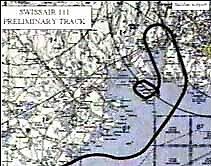 It is possible that one operator might figuratively run an aircraft into the ground where another will perform regular maintenance in a conscientious manner. It is also true that accidents rarely occur due to one factor alone: There is usually a chain of events that lead to a catastrophe. In some accidents, aging aircraft systems might have played a contributory role. However, system abnormalities also affect newer technology airplanes. One case in point is the Swissair MD-11 accident where faulty wiring in the cabin entertainment system has allegedly been cited by some investigators as a possible source of the fire that ultimately disabled the crew.
What is blatantly apparent is that an airline’s maintenance philosophy is reflected by its on-time departures and arrivals, canceled flights and diversions.
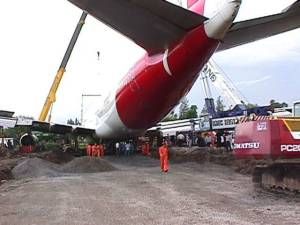 When an airline’s management team decides to increase its competitiveness by curbing maintenance costs, reducing training or stretching existing staff expertise to its limits, they are practicing false economy. One prime example of this may be the recent spate of incidents incurred by Qantas, the erstwhile premier airline for safety. Qantas has experienced an embarrassing array of incidents, including a BAE-146 packed with politicians that suffered an engine failure during takeoff, a B-747-400 that overshot the runway at Bangkok, a B-747-200 that lost a piece of an engine during flight and a B-747-300 that had its undercarriage collapse while preparing to take off from Rome. Qantas’ unions allege that cost-cutting has led to lapses in maintenance standards. It could be bad luck, but to me the unions seem to be spot on the money.
Some aircraft accidents have occurred due to basic design flaws that were grandfathered into new models. Some pundits allege that the B-737 rudder system stands as a good example. It is possible that the B-747 center fuel tank system may be another. However, design flaws are only evident over time. The important thing is that these flaws be addressed on an aggressive basis. Boeing has agreed with the FAA that a ground-based system to pump inert gases into fuel tanks may be viable. In the meantime, I for one will be asking for ground air-conditioning carts to be connected during turnarounds so it won’t be necessary to run the packs for long periods of time.
As revealed in this article, corrosion, metal fatigue and wiring problems can be addressed by aggressive maintenance procedures. Whether this is economically better than investing in new equipment is for airline management teams to decide. However, clearly the FAA must oversee airlines to ensure that maintenance procedures are not circumvented in the drive for profits. What we don’t need are the “buy-my-book” authors, and “elect-me-next-term” politicians who are only too eager to scare the traveling public for personal gains.
 If I had to estimate the statistical probability of an accident occurring solely because of an aircraft’s age – that is, events similar to TWA 800 and Aloha 243 – I would say the odds are better than 1 in 100 million. But that is just a guess. However, I would like to know why people don’t ask what the odds are of a two-engine failure on a B-777 now that ETOPS limits have been stretched to 204 minutes? Is it because there aren’t any political gains to be had? Or is it just that we haven’t experienced any instances of this calamity yet?
We’ll see. It hasn’t happened yet, but believe me, it will. How do I know? Simply because it can happen. And when it does, stand back! The traveling public is going to want heads to roll. Until that time, whether you are traveling on older-technology airplanes or state-of-the-art, new-technology wonders, remember that it is the human element in the operation of the airplane that is the most crucial factor. When it comes to pilots, most passengers would agree that a little gray in the hair is a good thing.