

























Myintroduction to the high cost of replacement parts came shortly after I first bought mytwin Cessna in 1987. I hadn’t yet started doing my own maintenance at that time, and Iinnocently asked my A&P to check the deicing boots and find out why they weren’tinflating. A week later, I got the plane back with a logbook entry that said"replaced aft flow valve and LH check valve in surface deice system," plus aninvoice for $806 in parts (plus labor). I was not amused when I discovered, during my nextflight, that the boots still didn’t work.
Not long after that, I noticed a horrible noise up in the nose baggage compartment, andasked my A&P to see what it was. This time, the logbook entry read simply"replaced radio blower," and the invoice read $536 plus labor.
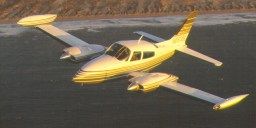 It was events like these that ultimatelyhelped convince me that I needed to get more involved in the maintenance of my airplanebefore it drove me to drink, divorce, bankruptcy, or all of the above. I did my first"owner-assisted" annual on the 310 in December 1988 (to be honest, it was an"owner-retarded" annual), and discovered that I really enjoyed swinging wrencheson the airplane. By 1990 I had progressed to the point that I was doing nearly 100% of thework on the airplane myself (under A&P supervision, of course), and I’ve been doing myown maintenance ever since.
I find that one of the great joys of doing my own maintenance lies in finding creativeways to avoid paying exorbitant prices for replacement parts. I get a lot of satisfactionevery time I manage to find a way to avoid paying hundreds or thousands of dollars for apart I know should really cost a tenth that much. Maybe it’s just me. Most aircraft ownerslike to brag about how fast their plane is, or how little oil they burn between oilchanges, but I brag about how much I saved on parts during my last annual.
Fix vs. Replace
The best way to avoid the high cost of replacement parts is not to have to buy them atall. I’ve found that more often than not, a little time spent repairing a broken part cansave a bundle in parts replacement cost. The more expensive the part, the more justifiedyou are in trying to repair rather than replace it.
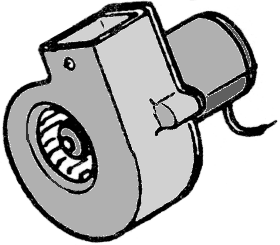 Replacing this avionics blower cost $536.00. Fixing it cost $24.00 in parts plus an hour of labor. |
Remember that $536 avionics cooling blower that I bought a decade ago? Well, Idiscovered during my annual earlier this year that it had crapped out again. The in-linefuse had blown and when I installed another fuse, the blower ran but made a simply awfulnoise.
I took the blower apart and determined that the problem was in its little 28-volt DCmotor. Maybe I could just order a new motor for it? Nope…the motor isn’t available.
I debated about whether to try to take the little motor apart, and concluded I hadnothing to lose by doing so. I removed the end cap and determined that the brushes andcommutator both looked fine. Further disassembly was clearly a job requiring tweezers, ajeweler’s screwdriver, and a very steady hand. Should I continue, I asked myself? Sure,what did I have to lose?
I gingerly disassembled the motor completely, and it became obvious what was wrong. Therotor shaft ran between two tiny ball bearings, and one of them had self-destructed,spewing a dozen pinhead-sized steel balls into the motor’s interior.
By now, I figured the situation was hopeless. But just for laughs I put the two tinyball bearings (one good, and one bad) into a zip-lock bag and took it over to the localbearing supply house. "I don’t suppose you could find me a replacement forthese?" The man behind the counter pulled out a strong magnifying glass, studied thebearings, found a part number on them. He looked up the part number in a huge bearingcatalog. "I can get you one of these," he said, "but you’re not going tolike the price."
"Try me," I said, thinking of the $536 price of a replacement blower.Apologetically, the man explained that the tiny ball bearing would cost $12 to replace."I’ll take two," I said, figuring that it would be incredibly stupid not toreplace both bearings while the motor was apart.
Of course, I was by no means confident in my ability to put the motor back togetheragain. But I did. And it worked like new. Total investment: $24 in bearings plus perhapsan hour of effort. Good deal!
More Fixes
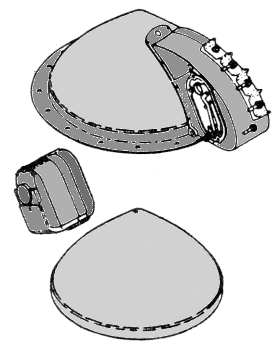 List price for this Grimes retractable landing light assembly is $4,620.54 . Just the motor alone costs $1,827.00. At these prices, it’s certainly worth trying to fix. |
Another item on my discrepancy list for that same annual was the righthand retractablelanding light: it was retracting very slowly and making a funny noise. This sameretractable landing light assembly (originally made by Grimes) is used in virtually alltwin Cessnas from 310s to 421s. Cessna lists the full landing light assembly at abreathtaking $4,620.54, and a replacement "power unit" (motor) at a mere$1,827.00. So it was pretty much a no-brainer that I was going to take this thing apartand try like heck to fix it.
It took me the better part of an hour to get the power unit completely disassembled. Atfirst, it wasn’t obvious what was wrong. I did notice, however, that the motor had amagnetically-operated brake built into it, and theorized that perhaps the brake wasdragging.
There didn’t appear to be any kind of brake adjustment, but it looked to me like maybeif I bent the brake assembly just a little, it might work better. I did that, reassembledthe unit, and gave it a test.
Oops! The landing light retracted even slower than before and made more noise thanbefore. Hmmm.
I took the whole thing apart again (more quickly, because this time I knew the drill),bent the brake assembly in the opposite direction, and put it back together again. Thistime, the retraction was perfect and the unit sounded normal. Another problem solvedwithout the need to take out a second mortgage!
My deicing boots weren’t working again, so during that same annual, I decided to take aday and go over the entire surface deice system with a fine tooth comb. I found andpatched a bunch of pinhole leaks in the boots. I also discovered that both check valves($241 each) were inoperative, as was one of the control valves ($565 each). Would I haveto replace them, or could I perhaps repair them?
The valves in my surface deice system were made by Airborne, and it was pretty clearfrom the fact that these valves were assembled with rivets instead of screws that Airbornedidn’t consider them field overhaulable. But once again, I asked myself "what do Ihave to lose?" So I drilled out all the rivets and took the valves apart.
The insides of these valves were in pretty bad shape. They were heavily contaminatedwith carbon dust, no doubt accumulated during previous air pump failures. What’s more, therubber diaphragms were cracked around the edges near the rivet holes, and the rivets hadworked loose enough to cause air leaks. I cleaned all the parts, repaired the crackedrubber, and reassembled the valves using 4-40 machine screws and self-locking nuts insteadof rivets. My mechanic and I tested the repaired valves in accordance with Airborne’sspecifications and found they all now worked perfectly. I figure they’ll probably befine for another five years or so, and I saved yet another $1,000 in parts cost.
By the end of the annual, I figured I’d saved at least several thousand dollars inparts cost by fixing instead of replacing. I’d spent a few hours on these tasks, learnedquite a bit about the innards of several assemblies that had previously been black boxesto me, and was generally quite pleased with my decisions to fix rather than replace.
But My Shop Says…
It’s important to understand that most maintenance shops would normally not take thetime to disassemble a blower motor, retractable landing light power unit, or deice controlvalve. They’d simply order new parts, and you’d pay for them.
There’s a very good reason for this. In any successful repair facility, the mostcritical resource is manpower. The shop’s business volume is typically limited by thenumber of qualified A&Ps it has on staff. Faced with the alternatives of(1) using an hour or two of scarce mechanic’s time to try to fix a bad part, or(2) invoicing the customer for a replacement part, most shops will order thereplacement part nearly every time. If you were running a busy shop, you would, too.
On the other hand, if you participate in your own maintenance (even on an owner-assistbasis), you always have the option of saying "let me try taking that gizmo apart andsee if I can fix it." Your supervising A&P probably won’t object. If it turns outthat you can’t repair the part, all you’ve lost is a little time, you’ve probably learnedsomething useful about how the subsystem works, and you can always revert to Plan B(ordering a replacement part).
Even if you don’t swing wrenches on your airplane, it’s probably not a bad idea to askyour shop to notify you prior to ordering any part that costs more than a few hundredbucks. That way, you have an opportunity to talk to your A&P about the possibility ofrepairing the part rather than replacing it, or if that’s not feasible, trying to find alower-cost replacement part.
If You Can’t Fix It…
Even if you determine that you can’t fix a defective part, often someone else can…andsave you lots of money in the process.
I recall some years back, my 310 developed the distressing habit of occasionallypopping the landing gear motor circuit breaker during gear extension, leaving the gearpartially down but with no green lights. I jacked the airplane and swung the gearrepeatedly, but was never able to reproduce the problem that way. In a spasm of wishfulthinking, I even replaced the gear motor breaker, but the new breaker popped from time totime, just as the old one had done.
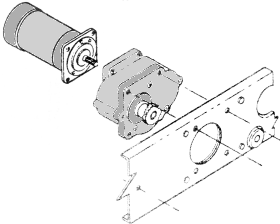 A new Cessna 310 landing gear motor lists at $2,848.00. I got mine overhauled for $200. |
After hand-cranking the gear down the rest of the way a few times, I decided thissituation couldn’t be allowed to continue unresolved. At the next annual inspection, Ipulled the landing gear motor, removed the end cap, and verified that the brushes andcommutator looked fine. So much for an obvious problem.
Cessna had plenty of replacement p/n 9910002-3 landing gear motors in stock, and wouldbe delighted to send me one for just $2,848.00 (list price).
At this point, I turned to the Cessna PilotsAssociation for suggestions. CPA’s John Frank suggested I try calling B&S AircraftParts and Accessories, Inc., in Wichita, Kansas (phone 800-835-2961, fax 316-264-7898)—anFAA Repair Station that specializes in overhauling aircraft motors of all sorts. I calledB&S and they said they’d be glad to overhaul the motor for me.
I sent the motor to B&S, and got it back yellow-tagged a week later with a bill forabout $200. That was seven years ago, and my landing motor breaker hasn’t popped oncesince then. Consulting with CPA on this one saved me more than $2,600.
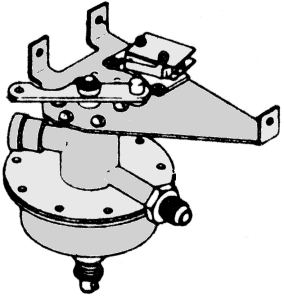 This fuel selector valve cost about $700 when I priced one seven years ago. Today, Cessna says there are none available. But Shaw Aero Devices still overhauls them, and also sells overhauled exchange units. |
And then there was the pre-flight when I removed the fuel cap from my right aux tank tocheck the fuel level, and wound up with a face-full of fuel that spewed out of the fuelfiller port. Turned out that my righthand fuel selector valve had become defective, andwas allowing fuel to transfer from the tip tank to the aux while the airplane was parked.Since the tip tank is a lot higher than the aux tank, the result was a pressurized auxtank and a big gusher of fuel when I removed the cap for a looksee.
At the time, Cessna had replacement fuel selector valves in stock for about $700 a pop.(Today, they’re classified as "no longer available.") I pulled the fuel selectorvalve, and took it apart far enough to determine that there was nothing wrong with it thatI could fix.
A little research with CPA revealed that although Airborne (who originally made thevalves) was no longer supporting them, a small company named Shaw Aero Devices in Ft.Meyers, Florida (best known as a fuel cap supplier) could overhaul the valves or supplyexchange overhauled units. I Fedexed my faulty valve to Shaw Aero Devices (phone941-768-5644, fax 941-768-0232), and got it back with a yellow tag ten days later. The tabwas about $200 plus shipping, and the valve has worked perfectly ever since.
Salvage Yards
There are times when a defective part is simply too far gone to repair or overhaul, buta replacement is either unobtainable or absurdly expensive. Under these circumstances,it’s often worth making a few phone calls to see whether you can get aused-but-serviceable part from an aircraft salvage yard. The Cessna Pilots Association has an excellent list of names,addresses and phone numbers of dozens of salvage yards, complete with tips on which yardsspecialize in what kinds of parts. CPA members can obtain the list free from themembers-only section of the CPA web site at http://www.cessna.orgor by calling the CPA office at 805-922-2580. Other owners associations such as theAmerican Bonanza Society and theMooney Aircraft Pilots Association provide similarinformation to their members.
A perfect example arose during my last annual. While troubleshooting my airplane’sailing surface deice system, I discovered that the little amber cockpit annunciator lightthat indicates when the tail boots were inflated wasn’t coming on, even though the bootswere inflating fine. I quickly located the cause: a defective pressure-operated switch inthe tail.
I removed the pressure switch and found it hopelessly corroded and beyond repair.Clearly, it was going to have to be replaced.
When I looked up the switch (p/n 1D1194-3) on the Cessna price list microfiche, Ilearned that this $150 part was no longer available, and had been superseded by p/n1D1470-72. When I looked up that part number, I found that it cost $300, but that it toowas no longer available and had been superseded by p/n 3D3535-7. I looked that one up, andit was available: $568.00. Terrific!
Since the surface deice system in my airplane was made by BFGoodrich, I called them inOhio and asked what the story was with all these musical part numbers and escalatingprices. The BFG customer support rep was very helpful. He explained that the originalswitch (1D1194-3) was actually an automotive part, but that the supplier had decided notto sell parts for aviation use any more because of product liability concerns. So BFGturned to Hobbs (the hour meter people), who supplied the 1D1470-72 switch for awhile.Then Hobbs stopped making the part, and the only source BFG could find was an aerospacefirm who built pressure switches for military applications. The 3D3535-7 came from thisfirm, which is why it commands a price worthy of the Joint Chiefs of Staff!
Before caving in and paying Cessna $568.00 for a replacement switch, I decided to tryphoning some salvage yards from the CPA list. I got lucky. The first company I called wasPreferred Airparts in Kidron, Ohio (800-433-0814), a firm that specializes in"parting out" twin Cessnas. I gave all three part numbers and asked if they hadanything in stock. "Hold on, let me check." A few minutes later, the man cameback on the line and told me he had one used 1D1194-3 in stock which he would let me havefor $75. It took me about a half second to say, "Ship it!"
If you’ve never patronized a salvage yard, it’s important to know how they work.Normally, the parts they send you are "as is" with no yellow tags or assuranceof serviceability at all. The deal is this: they send you the part, you inspect it anddecide if you want to keep it or not, and if you don’t, they’ll take it back and refundyour purchase price, no questions asked. At least the reputable ones will.
When the switch from Preferred Airparts arrived, it looked every bit of the 20+ yearsold that I’m sure it was. But I hooked it up to a regulated air pressure source on thebench and determined that the switch closed and opened at precisely the correct airpressure. Despite the cosmetics, and in consultation with my IA, I determined that thepart was fine.
I cleaned it up as best I could, sprayed it with zinc chromate to inhibit furthercorrosion, and installed it in the airplane. It works fine, and I expect it will continueto do so for years to come.
To paraphrase Everett Dirksen: you save $500 here and $500 there, and pretty soonyou’re talking about real money.
Discount Parts Houses
When all else fails and you find that you have no alternative but to buy a newreplacement part, that still doesn’t mean you have to pay list price. CPA’s salvage yardlist also includes a couple of dozen sources for discount parts, and many of themadvertise in Trade-A-Plane and other aviation publications.You can normally buy Cessna parts from these discount houses at least 20% below listprice. If they don’t have the part you need in stock, they’ll usually get it from Cessnaand sell it to you for the same discount.
For example, I recently needed to replace an instrument lighting rheostat in myairplane. Cessna’s list price was $85.10, but I bought it through a discount house for$59.90. Every little bit helps.
Working With Your Shop
If you do your own maintenance like I do, all of the cost-saving strategies I’ve talkedabout in this article are "fair game." But if you’re like the vast majority ofaircraft owners, you rely on a shop to maintain your aircraft. And you need to stay ongood terms with your shop.
It’s important for you to recognize that most shops buy their parts at discount andresell them to you at list price, and that this is not only a legitimate practice butusually represents a significant portion of the shop’s income. So if you show up with acarton full of parts you bought from a discount house and ask your shop to install them,the shop manager might not be too thrilled.
So what should you do? The answer is a legitimate subject for a heart-to-heartdiscussion between you and the manager of your maintenance shop. As a general rule, youshould probably be content paying your shop list price for ordinary expendables (like oilfilters and spark plugs) and parts that aren’t too expensive (like my $85 lightingrheostat).
On the other hand, you can legitimately negotiate with your shop for a better deal onpricey parts (like that $4,620 landing light assembly or $2,848 gear motor). And beforepaying big bucks for such a part, you should absolutely insist on thoroughly investigatingother options: can the part be fixed in-house, sent out for overhaul, or replaced with aserviceable part from a salvage yard? If not, can the part be obtained at a lower pricefrom a parts discount house?
Of course, all of this is moot if your shop winds up replacing an expensive part onyour airplane without consulting with you first. As suggested earlier, it’s not a bad ideato ask your shop to call you before ordering any part more expensive than some agreed-tothreshold (like $500) so that you have a chance to discuss the possibility of money-savingalternatives.
This is an area where your $40-a-year membership in a maintenance-savvy owner’sassociation like CPA, ABS or MAPA can be worth its weight in gold. These associations havetechnical staff members who are experts on where to get the best possible prices on parts.As a member, you are shortchanging yourself by not doing your homework before purchasingany expensive part for your airplane…or letting your shop do so.