























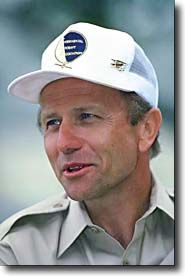
 AVweb spoke with EAA president Tom Poberezny a week before AirVentureOshkosh 1998:
AVweb: So, AirVenture Oshkosh is nigh upon us.
Poberezny: Yes, actually we feel that is has started already withthe people already arriving
AVweb: How crowded is it this early out?
Poberezny: Usually the 4th of July is kind of the kick off. Earlyarrivals come primarily from those camping and many of the volunteersthat help us. I would say that we probably have 800 to 900, maybeclose to 1,000 already. It is mostly people who are semi-retired,or whatever that basically have the time. They spend their summersin this area and their winters in Florida, or Southwest. Aircraftare starting to arrive at a pretty good pace, picking up thisweekend. And, of course, all of the exhibitors start to pour inhere on the weekend also.
AVweb: What are your thoughts about the extraordinary AVweb coveragewe have planned?
Poberezny: Number one is I think it’s great to have that sortof coverage, because what I think what it does is offer greatexposure for the organization and for aviation. Our goal at theevent is to promote aviation. Obviously, not everyone can gethere and for those who can’t, hopefully someday they will.
This is a little different that the coverage we get from a typicalmagazine because the coverage will be in some cases more in-depthbecause you are covering it as it happens, as opposed to writerswho have to go back and write the story and have a couple thousandwords to tell the whole story. And, it is 30 or 60 days beforeit usually comes out.
I think that it’s a great opportunity for us, as an organization,through the event, to expose the organization to people that haveheard about us or maybe heard about the event but didn’t realizeor understand the relationship of EAA to the event. Youknow a lot of people hear the word AirVenture Oshkosh but don’trealize that EAA is the organization that presents it.
AVweb: Really? Do you think that is a significant problem?
Poberezny: Well, I don’t want to put it in the category of significant,but it is a communications issue, because what is happening isthe event has grown so tremendously that a lot of people who arewhat I call the "enthusiast," or a new pilot, or someonejust interested, they have heard about, quote, AirVenture Oshkosh. And, that is the word that is used a lot. There are people whodon’t realize that at AirVenture Oshkosh is the EAA convention,as opposed to that big air show at AirVenture Oshkosh. So I callit a communications problem. It’s a blessing of the success ofthe event where sometimes the event can grow more in the mindthan the organization, which doesn’t have the dynamics of event.
AVweb: Was that part of the reason behind the adoption of theEAA AirVenture name?
Poberezny: That’s correct. In other words, we wanted to developa name we could brand. We can’t brand the name Oshkosh becauseof OshKosh B’Gosh and everything else. And we wanted to branda name that tied the two together. The event is obviously ourconvention of the members, but it’s a celebration of flight thatwe open the door to say we welcome anyone who is an enthusiastto come. It’s your chance in one week to touch all phases ofaviation and if you can’t be here, AVweb can bring it to yourhome so that next year you will be here. So, AVweb‘s coverageaffords the opportunity to hopefully recruit new attendees sometimein the future, or bring back people who didn’t come this year. And, secondly, the new name highlights EAA, and obviously AirVentureOshkosh is our biggest recruiting tool. I hope these people whoare involved in recreational aviation say, gee, I’m going to joinEAA. If this event is an example of what they do, for fun flying,that is the place to be.
AVweb: What percentage of AirVenture attendees are repeat andwhat repeat attendees are newcomers?
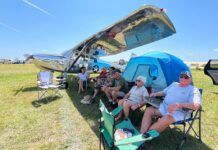
Poberezny: I am giving you this as an estimate, I can’t give youan accurate survey, but having been involved as long as I have,what you are looking at, and I will use the word "repeat"as the fact they it may not be consecutive years, but people whohave at least come here sometime in their aviation career, youare probably looking at 60-65%. What you will find is that thereis a core of people, a pretty good percentage, that come yearin, year out. It’s their family vacation. One of the reasonswe get a high percentage of repeats is that we have oriented theevent towards the family, because what you are doing is takingthe discretionary time of the family to go somewhere for an extendedperiod of time. If you can’t involve the family, it becomes moredifficult for the aviation enthusiast in the family to justifytaking that amount of time off, either traveling across the countryor half way around the world to get here. What you will findis that you will go in the camp site and there are people whohave camped next to each other for 10 years, their kids have grownup together, their spouses have become close friends, they communicateduring the year, and part of the essence of the event is not justthe activities, but also the friendships, and the renewal of thosefriendships.
 AVweb: What percentage of attendees are pilots and their familiesas opposed to simply aviation enthusiasts?
Poberezny: What we are finding is that the percentage of familiesthat come with pilots that are members versus non-members is smaller,because there you are getting more a pilot and his or her aviationfriends that come along versus the member who brings their familybecause it is their event. So you really find a lower percentageof families coming with a non-member pilot than with a memberpilot. What I would say is that probably the non-member pilotwho is bringing family members is less than 20-25%. For themit is probably a 1, 2, or 3 day trip and for many of them it maybe the first time, or the first time in a long time. This incontrast to the member who has a higher level of repeat participationand as they repeat more, the tendency is they will bring theirfamily more frequently.
AVweb: What is your favorite part of the AirVenture Oshkosh experience?
Poberezny: Actually, it’s the anticipation. You work all yearlong for something and you see it all start to some together andthe tents are going up, the people arriving, like a big party. You know how you get excited about this party you are going tohave? And, you are almost as excited as the momentum builds asthe actual event. So for me it is that excitement of watchingsomething build every year, people coming back every year, renewingfriendships. It is funny, it will be a year since I have seena lot of people that come back and when you see them it’s likeit was just yesterday. It’s the excitement, the wide varietyof aircraft, the arrival — you know you see the warbirds, theultra-lights, the rest — all in one place. To me it’s the peopleaspect of the event. What happens is the hardware creates theexcitement, but the people create the emotions.
AVweb: What do you find the most challenging aspect of puttingon an event this size?
Poberezny: That is a really good question, and what I have tosay is that in general it’s the fact of taking care of people24 hours a day, because what we have is that they’re literallyliving with us in the campsites, in the vehicle campsite and theaircraft campsite. So, that creates challenges in that we becomean instant city with all of the responsibilities that come withthat, from our medical facilities to sanitation — we have totake care of all the things we do in our normal lives. At a singleevent you don’t have to worry about so much, because you openthe gates in the morning and close them at night and the peoplego someplace else. Here they stay with us.
The initial challenge is the way people arrive — everything fromRV’s to cars to motorcycles to airplanes, it’s a multi-aspectlogistical situation and on top of that we want to provide thehighest quality of programs. It’s 500 forums, the workshops andall of that, so the logistics is the challenge to be able to createthe most efficient and highest service possible, make it entertainingbut still provide the level service where people feel that theyare treated on a one-on-one basis, not just kind of herded inand herded out. And, as you grow the challenge is how do yougrow and still maintain the personal service? The reason we havebeen successful is that the dedication and participation of thousandsof volunteers that take a big job and break it down to thousandsof small jobs. And, obviously, with great pride. People arehere working because of a passion for aviation and they want tobe involved in something that’s a success. If you spend all thosehours and hard work your only pay is the success of the eventand you will do everything possible to make it the best possibleso that the member and visitor leaves here happy. We’ve alsogot customers who are exhibitors as well as the member who participates.
AVweb: How many people do you expect this year?
Last year our attendance was around 840,000 for the seven days. This year we are looking at that same general area — the mid800s. Last year we had approximately 2,700 display aircraft,that is the warbirds, antiques, classics, etc., the flight line. We expect this year to be in that range or a little above, andthat doesn’t count the exhibitor aircraft that are in the outdoorexhibit areas. To give you an idea of the number of aircraftwhich includes the show planes, the exhibit aircraft and the transitarea, and the general aircraft that fly in for the day or forthe week, we park the aircraft essentially in 80 foot rows, centerto center is 80 feet. On many of the rows the airplanes are tailedin, double parked — back to back. If you walk past every row,not down the row, just past every row, you walk 5.2 miles. Sothe logistics of landing and taking off aircraft and parking themover a 5.2 mile site is accomplishment in itself for all of thoseinvolved.
AVweb: How much flying are you doing yourself these days?
 Poberezny: Well, when I was flying air shows with the Eagles andstuff, I was running maybe 300 hours per year, but now it is allpersonal and cross country, in my Twin Commanche, which isthe primary aircraft I fly. So, I fly right now about 140-145hours per year, which still keeps my hand in there pretty much. I must say that I miss the air shows, but I don’t miss all thecross country flying in that Eagle, you know trips to the WestCoast and stuff. After awhile, when you have done it a numberof times…but it was great while it lasted. It was 25 wonderfulyears and I met some great people.
AVweb: Do you miss the aerobatics part of it?
Poberezny: Yes, I miss three things about it. Number one is theaerobatics, because it’s my favorite part of flying. Number two,I miss the camaraderie that existed between Charlie, Gene, andmyself. When you fly with someone for 25 years and you are travelingthat much you develop a very close friendship. And thirdly, Imiss the opportunity to entertain people. We were entertainers. We’d go to an air show and it was fun to receive the responsefrom people who would hopefully enjoy what you were doing, becauseair shows are a form of entertainment to the enthusiast and publicalike. Now, would I go back and do it again? No, I am done. I left on my own terms, I feel comfortable with the decision. So, although I miss it, I don’t miss it enough to go back andstart it all up again.
AVweb: What sort of problems that have occurred in previous yearshave you addressed and hopefully solved this year?
Poberezny: Probably the biggest areas we have had to address,and this has been over the last four or five years, is outgrowingthe physical site. We moved up here in 1970 and developed thesite — over 20 years as the event grew you put buildings here,and roads over here, and you park here, and finally you find that20 years later things are not in the right place. And, you wishyou knew in 1970 what you know in 1990. Now, we have things physicallybuilt here and so we had to kind of rebuild the site to facilitatethe growth of traffic, facilitate and enhance safety, expand exhibitareas where we have permanent building and outdoor exhibits. So, we had to do a master plan and retool the site so we couldhang out for the next 20 years. This year has been the fourthyear of a five year master plan, of which essentially this year,the fourth year, has accomplished about 90% of what we wantedto do.
The site is much more user friendly, it facilitates the movementof aircraft and people much better in the exhibit areas, and ofcourse, when you make changes like this, when people are usedto something, change can always catch them off guard. We havealready gone through the worst of it, but that has been the biggestchallenge, because when you do something like this it better beright the first time, because once you build a building for ahalf million or three quarters of a million dollars as a big exhibitbuilding, you can’t move it 30 feet because you put it in thewrong place.
AVweb: How much total investment has this been on EAA’s part?
Over the last four to five years we’ve spent in land acquisition,outdoor exhibit areas, indoor exhibit areas, electrical, utilities,roads, etc. it will be an investment of between $4 million and$4.5 million. When we are all done it will be over $5 million. The indoor exhibit buildings alone were half that – $2.5 million,roughly.
AVweb: What does it cost to put on this event every year?
Poberezny: You are talking about an annual budget, not countingcapital investment, up in the $3 million area, and that you couldn’teven touch if it weren’t for the thousands of hours that are contributedby volunteers, not only during the event, but on a year-roundbasis for their leadership and participation. And, when you thinkabout it, our convention fee, for example, for a member that comesfor the week — 7 days — the weekly registration tag is $75 or$13 a day. Other conventions can run anywhere from $25 to $100per day. To have all you have here for $13 per day! Now, forthe non-member the weekly fee is $150, or $22 a day. And, thereason we can do it at that price, which I think is an extremelyreasonable and fair price, is because of the thousands of volunteerhours. What we are trying to do is make this an event where asmany people as possible can participate and try to keep it aseconomically feasible as possible. And in all honesty, for peopletraveling a long distance, say from Arizona or whatever, the registrationfee is by far the smallest part of their cost.
AVweb: One of the themes this year is the history of corporateaviation. Correct?
Poberezny: That’s correct. It is one of our three themes.
AVweb: What are the other two and why don’t you tell us about how you have approached the three.
Poberezny: A number of years ago, probably going back seven or eight years ago, we started with some focal point programs,because people wanted to have something they could focus on, specialactivities over and above the magnitude of the event. We tryto pick some unique themes every year.
One of the three this year is the history of corporate aviation. The reason we picked that is that many of the antiques and classicsand contemporary airplanes that have been on the flight line foryears, the beautifully restored aircraft, in their other lifeserved as a corporate airplane, back in the 20’s or 30’s or 40’s,in many cases were the start of what we know as corporate or businessaviation. We thought, why not recognize that phase, because wespent the last three years on military and WWII and now it istime to visit some of the other aspects that support aviation. What you will see during the week is the whole spectrum fromthe 20’s to current, in terms of the evolution of the businessairplane or corporate airplane. And, going from a situation whereyears ago the airplanes were designed for other purposes and todayyou’ve got a whole category of airplanes designed specificallyfor corporate purposes — you’ll see that change over time. Itwill be interesting to see a Twin Beech sitting next to a Gulfstream.
The second is medal of honor recipients — it’s our nation’s highesthonor — the Congressional Medal of Honor. We have recognizedthe different aspects of military aviation over the years andwe felt it was important to recognize this cadre of people whohave earned the nations highest honor in a battlefield. We haveinvited one individual from each of the branches of the service— the Air Force, the Marines, Navy, and Army. Each honoree receivedthat honor in an aviation situation which ties in with our event.
The last theme is a tribute to aviation heroism and the differencebetween valor and the field of battle in the military, and heroismby private citizens who at one moment were living a normal lifeand the next moment thrust into unusual circumstances and hadto react accordingly, unrehearsed and unpracticed. That is whywe have invited the crew of FedEx 705 that was hijacked, or attemptedhijacked, a couple of years ago flying out of Memphis to San Jose. The crew are all EAA members and all aviation enthusiasts, soit’s a chance for members to meet members just like themselvesand listen to them tell their story which is obviously very emotional,and at the same time extremely interesting. The heroism expressedby those three individuals is something that we all want to riseto if that same level of response is ever required of us.
In each case of corporate aviation, there will be displays andthemes on the main display area. In the case of the individuals,the medal of honor recipients, and the aviation heroism, therewill be daily forums each day where people can listen and askquestions. We try to create the feeling that wouldn’t it be greatto have these people in your home, to live with them and listento them talk in a casual way and answer questions. We try tomake it more of a conversational program, rather than a speech.
AVweb: Administrator Garvey. What are your feelings about thejob she has done so far and where she is taking general aviation?
Poberezny: Well, she has now been on the post for about one year,in fact she came here last year not quite yet the official administrator. And, she faces some real challenges. It was interesting whenDavid Hinson was there, he came in with a tremendous aviationbackground, but had to carry a lot of baggage as far as dealingwith the political structure. Whereas Jane Garvey was broughtin as a change agent and someone who could deal with the politicalaspects, and hopefully could find a number two person who couldcover daily operations of the agency. I think the challengesshe has run into is trying to find the right people inside oroutside the agency. What the agency is finding is that they needto restructure themselves, if they are going to get qualifiedpeople either internally or externally to take on the challengesof these positions. And, I think it is taking her longer thanshe expected to fill some of the positions she expected to fill. There have been some recent announcements, so I think realisticallywe have to be somewhat patient. I think it is taking longer thanexpected and that’s not because of any fault of her own. It’sthe personnel issues that have had to be filled. There’s an awfullot of people in acting positions in Washington right now, waitingto have positions filled. I think she is a very astute person,understands the political system very well, is a very quick learner,is an excellent listener, and if she can surround herself withthe right people who bring expertise, I think she will have anexcellent tenure. If she doesn’t, I think she could have someproblems. And, I am sure she would recognize that also. Anyonewould in that situation.
AVweb: How do you feel she views general aviation and sport aviation,in particular?
I think she values it. I don’t think she has had enough exposureyet to it, totally. We have had a couple of meetings with heras part of the General Aviation Action Plan Coalition, which isthe consortium of general aviation organizations, and I foundthat at those two sessions she has been very knowledgeable onthe issues and shows a sincere interest in the activity. I thinkthat with the recent "ticket program" issue, and others,she better understands the strength of the general aviation communitywhen significant issues come up and I think she has respondedto it. She made the wrong decision to pursue it, but I also thinkshe has acknowledged that it needed to be put on a back burner. I think she has positive feelings towards general aviation, butright now other segments of aviation dominate her time more thangeneral aviation. We are not as high up the priority order assome of it. I don’t think that means she values it any less,it’s just that there are priorities established.
AVweb: How do you find that people’s perceptions of general aviationand sport aviation have changed over the years and is it for thebetter or worse, or how is it going in terms of the publics’ perception?
Poberezny: I think that is a good question. I think probablyin the publics’ perception it hasn’t changed much from a few yearsback. Are you familiar with GA Team 2000?
AVweb: Sure, AVweb is a member.
Poberezny: Its goal is to increase the number of student starts.Really, it’s a marketing effort, the first real initiative thathas been industry wide. There have been other efforts, game plansand others, that had a specific life span. But, aviation asa whole has been very poor at marketing aviation. Our strongestcompetition is with boating, motorcycling and other recreationalactivities. When you look at that, we don’t compete very wellwith them. I mean, when you look at the perceived cost of aviation,the time it takes to learn how to fly, the myriad regulations— I mean you add all those things, they are all things that say,why do I want to bother, I will go drive my motorcycle or buya boat. So, from a marketing standpoint — we have to do a betterjob. And, once we do a better job, then I think the perceptionwill change. I think right now it’s not a negative perception,I think a lot of people like airplanes — just go to the localairport. You’ll see people just sitting there watching airplanestake off and land. The enthusiasm is there, but the perceptionis, "I can’t do it because I don’t have the skills, can’tafford it," or they feel awkward going to the airport anddon’t even know where the airport is. There are too many perceivedwalls that have got to be broken down to invite people in. Oncethat happens, I think you see a positive interest and it changesinto a positive perception. The interest is there, but there aretoo many perceptions — some real, but many unreal, that are keepingpeople out. It’s the old story — you have to invite people andget them through the door.
 AVweb: What do you think the biggest challenge facing EAA andsport aviation is today?
One, obviously, is maintaining the privileges we have. That couldbe a regulatory or government problem. You need to constantlymaintain a working relationship with government to ensure thatthe guidelines that we follow meet or exceed, and in most casesexceed, government standard. Self-regulation is much better thangovernment regulations. Second, the challenge is to reach outto the thousands of people who have an interest in flying, butdidn’t know that they are invited in – again, it’s that marketing/promotionissue. And, that is where events such as AirVenture Oshkosh,Copperstate, Sun and Fun, and others, as well as our 950 localEAA chapters could do a great job. When you talk about EAA, wehave almost a thousand chapters that meet monthly. That is 12,000aviation activities ma year. Many of them have fly-ins, or breakfastflights, or flying activities. Then we have the Young Eagles rallies,and so on, and when you look at it conservatively the EAA is anorganization that through its local chapters, Young Eagles, fly-ins,etc., creates about 15,000 aviation activities and events a yearfrom local meeting to activities at the local airport. So itgives lots of opportunity for people locally to make aviationfriends. And, that is important. We all like recreation in someform, and in many cases we like to recreate with others, whetherit’s golf or whatever. Well, aviation is the same way. You wantto make aviation friends and that’s what EAA does. It providesyou the opportunity to do that.
AVweb: There are a number of program EAA has been in the forefrontof pilot and aviation advocacy. You mentioned one of the, YoungEagles. Another one that was recently introduced was the EAAAME Pilot Advocate program. How do you view these programs interms of how successful they have been and if they have livedup to your expectations? Where do you see them going?
Number one is Young Eagles. Young Eagles has probably been themost significant program ever. Now, the convention itself isthe biggest, but evolved from back in 1953 because we have hada convention every year since the organization started. But,Young Eagles started out as a program with a very major goal —to give one million kids airplane rides. We just hit the 400,000a week ago, so we are well on the way towards that goal and ithas been extremely safe and well promoted. What it has done area couple of things. Number one, it’s gotten 400,000 kids in theair that otherwise wouldn’t have. Number two, for a lot of themit has created the fact that, "gee there’s more than I knewout there. What’s next?" So, it’s led to some new initiativeswhere we are expanding our programs to residence camps, aviationcamps, curriculums, and I really feel that as a result of YoungEagles, the work that EAA will do in youth education and promotingaviation will grow exponentially over the next decade. That program,in all honestly, has exceeded my expectations because of the offshootof other programs that are developing.
Another program that is turning out to be very successful is FlyingStart. It’s a program at the chapter level, and what it involvesis we encourage chapters at the local level to advertise in thelocal weekly paper to invite people to the airport. They arenon-pilot aviation enthusiasts who come out to the airport, ourchapter will host you, we will have flight instructors there,we will have the local flight school, we will have an FBO, etc. It’s a one hour program geared towards an audience of non-pilots. Number one it allows people to find the airport. Number two,they are all equal in the audience — they are walking into anaviation enthusiast audience. Number three, they have a chanceto meet some aviation friends. Number four, they get to meeta flight instructor right there on the spot. The goal is to getpeople to answer their questions about what it takes to learnto fly. Hopefully they will be encourages and the session willbe the conduit bringing the flight school or flight instructortogether with the student. As a result of this program conductedat a number of local chapters, we are running about one out of five, about 20%, of those attending the Flying Start program— are taking their first flight. At least initial lesson. So,we see that – in its early stages, this is the first completeyear — we have had about 1300 to 1400 people participate thisyear. So that means about 300 people taking that next step intoan aircraft. I think that program is showing initial positivein terms of helping allow all the other great programs out thereto promote aviation.
Programs like our advocate programs, medical advocates and legaladvisory counsel, are our members helping members. As an organization,we just don’t have the resource to have the expertise on staffthat can answer every question. So, we have been able to go outto our members as volunteers and have them help the organizationin many ways. In this case we have gone to EAA members who happento be in the legal profession or medical profession. They arevolunteering their time to help members with specific issues andthey have been very successful in terms of the help, especiallyfor people in the early stages of a medical issue or who are lookingfor advice beyond their experience of their local AME or doctor.
AVweb: Do you find them a recruiting tool in any regard?
Poberezny: The legal advisory and the AME program are really moreof a member benefit service, because it is an assistance to membersthat are in the organization primarily. A lot of people thinkingabout joining aren’t thinking too much about the medical issuesand others, they are looking for what can I get in terms of mydollars or whatever. I think that when you look at programs suchas Young Eagle and the others, they ultimately have the benefitof people being exposed to the organization because you are outthere in more of a marketing mode in terms of promoting aviationand in the other cases you are more in a service mode.
 AVweb: When people think of general aviation advocacy organizationsthe two names that come to mind are AOPA and EAA. How do youcontrast or compare what you do at EAA with AOPA?
Poberezny: The way I always look at it, and obviously I can’tspeak for Phil (Boyer, AOPA President) in terms of trying to describeAOPA, what I see is that they are both important to aviation. Obviously AOPA is very strong in Washington and that is one oftheir major focuses, among other things. We are a field organization. That is an obvious contrast. I think they are also complimentary. We can’t do everything AOPA does, and AOPA can’t do everythingwe do, so I think they help to fulfill the total aviation pie. There’s some areas of overlap, but when it comes down to it,the community is so small that if it grows, those areas of overlapjust enhance the service to those who need those services. Wesee ourselves as somewhat activity oriented with obvious areasin Washington that we work. I would see AOPA with a lot of focusin Washington and they also provide a lot of pilot services onan individual basis to their members. So, I see them as complimentaryorganizations that have overlap, and at the same time a few areasof individual focus that do not specifically overlap.