





Fair warning! I’m actually going to say some very nice things about the FAA in this column. If you don’t like this sort of thing, skip this column and comeback for the next one. Yes, yes, I’m of sound mind (well, as much as I ever am), and I am not being coerced, this is from the heart, even if it does feel very strange.
Frankly, I don’t much like government, and I do more than my share of grumbling at the FAA. I think the only natural functions of government are: 1) a military, to defend against external enemies, 2) a judicial system, to settle disputes, and 3) a police force, to enforce the law (and there should be very little of it to enforce). The further we get from those, the less well things work. Just as pigs make bacon and pork chops pretty well, government does the basic functions pretty well, but for anything else, I think it’s like teaching a pig to dance. Even if you do manage to do it, the results won’t be very pretty, or useful, and there will be a good deal of wasted effort.
We shouldn’t need an FAA at all. I see no need for “government certification” of aircraft, pilots, or anything else. All could be far more efficiently handled by other means, outside government. It won’t happen, of course, but it’s nice to dream.
What Good Is an ATP?
What real use is an ATP certificate,anyway? If you go out and get one, will an airline say “Gosh, you’ve got the highest certificate the FAA issues, you must be really well qualified, so here’s a 747, please take this load of passengers to Tokyo”? Of course not. No airline, and no insurance company would allow that.
Regardless of the certificate in your pocket, you will always be required to undergo some additional training and checking to make sure you are qualified for any specific operation, whether you are a Private Pilot renting a new airplane at an FBO, or taking a trip to Tokyo. Does that certificate really mean anything? I think not, although it is a nice trophy, and one to be proud of. The government should not be in the business of issuing trophies, in my opinion.
But, alas, we are apparently stuck with a society that believes more government is the answer to all problems, and we’re stuck with the cumbersome, inefficient, and sometimes even downright malevolent FAA.
This is saying nice things? Hang in there, I’m coming to it!
It’s All the CAF’s Fault
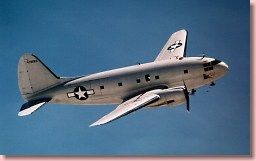
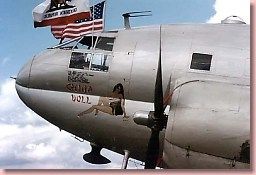
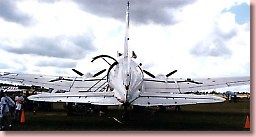
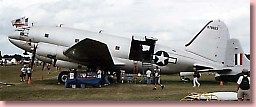
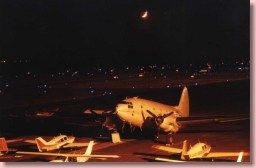
Several years ago, I joined the Confederate Air Force (CAF), and the Southern California (SoCal) Wing at Camarillo, Calif., primarily because they operate one of the last remaining Curtiss-Wright C-46 “Commando” aircraft, long my all-time favorite airplane. I had flown them for nearly 2,000 hours in Southeast Asia under a Chinese ATP, but to my regret, had never gotten the FAA type rating.
There is a real shortage of pilots, instructors, and Examiners for this ancient 48,000-pound monster, once the largest twin ever produced. At the time I joined, there was only one person who was current in the airplane, who had a CFI, and was designated to give checkrides. This was Noel Merrill Wien, the son of Noel Wien, the legendary Alaskan bushpilot and airline founder. Merrill himself is something of a legend, and a wonderful gentleman, one I am proud to call friend. He is a member of the NDPER program (National Designated Pilot Examiner Registry), authorized by the FAA to give something over 50 different type ratings in “vintage” aircraft, some of which he’s never even flown himself!
Merrill has his hands full with all these exotic old birds, is often called upon to fly the CAF’s B-29 “FIFI,” and also serves as instructor and check pilot on it and virtually all the other WWII bombers and transports, too. In addition, his longtime passion is the big flying boats (PBY, Albatross, etc.), and he gives instruction and checkrides in those, too. Very early on, he strongly encouraged me to get my CFI, II, and MEI, and to try and get to be an Examiner on the C-46, in order to relieve him of some responsibility for this one airplane, and perhaps others in the future.
I had been playing with the idea of getting the CFI, as a matter of “personal growth” and “challenge,” so this provided the final encouragement needed. Some months and several thousand dollars later, I had the CFI-A, II, and MEI, after meeting some really neat people along the way. The process was made easier by the distinguished John Caughlin, a WW-II A-26 bomber pilot, and current CFI at Galvin Aviation, Boeing Field, Seattle, Wash. John will be 80 in a few more years, but is lean and spry, supports a full schedule of students, and is as good an instructor as I’ve ever flown with. He makes a mockery of the stupid age-60 rule at the airlines.
A Nice Interaction with the FAA
My initial CFI ride was with the FAA’s Candy Carrerra of the SEA FSDO (Flight Standards District Office). She was very quick to schedule the ride at our request, friendly and professional, just what an FAA Inspector should be. She was just the first of a long series of positive interactions with the FAA. I had heard numerous horror stories of 80% failure rates on the CFI ride, all-day orals, and while I’ve survived over 200 checkrides without a bust, I was more than a little uptight over this one. Candy put me at ease, gave me a good, solid 3-hour oral, we broke for lunch, did the checkride, and were done with the CFI by mid-afternoon.
John Caughlin continued my training in the Galvin Duchess, and the II and MEI were added on with another Examiner from the Seattle area, Larry Hanna. He also conducted a smooth and professional checkride, and was a good representative of the FAA.
CFI stuff done, I turned my attention to becoming an Examiner.
There are many types of Examiners, but only three major types of Pilot Examiners, with numerous sub-types for each. These, and the requirements and privileges, are thoroughly covered in FAA Order 8710, currently version 3C, titled “Pilot Examiner’s Handbook.”
Briefly, there is the PPE (Pilot Proficiency Examiner), who can give proficiency checks required by FAR 61.58 in airplanes that require two pilots. A PPE may perform such checkrides anywhere in the world. Application to become a PPE is made directly to the FSDO, generally the one where the Candidate lives and will do the checkrides.
A DPE (Designated Pilot Examiner) can give type rating rides and proficiency checks in specific aircraft types, issue temporary certificates (and Notices of Disapproval!), and can also give proficiency checks, but is limited to specific FSDO regions, usually just one, and usually the one where he lives. Application is to the NEB (National Examiner’s Board) in OKC (which I’ll cover in a short while).
NDPERs can do all the above, worldwide, but only in “vintage” aircraft, by “groups.” For example, if the NDPER is himself type rated in the DC-3, he is automatically qualified to give all checkrides in all vintage twin aircraft with tailwheels. A DC-4 rating would qualify him to give rides in all four-engined aircraft with nosewheels, and so on. At this writing, there are only seven NDPERs, and the program is run by the EAA (Experimental Aircraft Association), under the supervision of the Great Lakes FSDO.
On to a PPE
I wanted the PPE and DPE designations, for the C-46, up to the ATP level. For this, the requirements are to hold the category, class, and type rating as a pilot and instructor with at least 25 PIC hours in the type; a Class 2 medical; at least 21 years old; good record and reputation in the industry; a history of cooperation with the FAA; and employment in a position of instruction or evaluation. Additionally, for the DPE, it is necessary to attend Examiner’s School in OKC, a week-long course costing the “Candidate” (FAA’s term) $300 plus all expenses.
While I met those requirements, the first problem was that I live in Seattle, but the primary “work” would be on the C-46 in Camarillo, and a second C-46 in Midland, Texas, and perhaps elsewhere. A few phone calls led me to Dave Lehman, of the Seattle FSDO, and Karla Towe, of the Van Nuys FSDO, in whose area Camarillo lies. These two Inspectors jumped right on the problem, saw the need, and agreed that Dave would be my POI, but that since the C-46 was in the VNY area, Karla would also sign off on it, and conduct my initial checkrides, as well as my annual “FAA oversight” rides. All this took some months to put together, but essentially, it was that simple, for the PPE. I am also indebted to Rick Cremer, a long-time Inspector and friend who wrote a very nice letter of recommendation for me. I hope his reputation has not been irretrievably tarnished in so doing!
The end result of that process was my designation as a “PPE C-46”, allowing me to give the FAR 61.58 checkrides (but not type ratings), anywhere.
DPE Not So Simple
The DPE designation is not so simple, because something new has been added in the past few years. The FAA has established the NEB, which meets four times a year in OKC. Prior to the establishment of this Board, it was common practice for an FAA Inspector to retire from the FAA, and move straight into an Examiner’s position, with the help of his friends in the FSDO. Many felt this was unfair to the many qualified people who were not previously from the FAA, and that perhaps this was a “good old boy” network that did not produce the best product. A “more level playing field” was desired.
Now, the DPE Candidate applies directly to the NEB, bypassing the FSDO entirely. The next time the NEB meets (four times per year), all the applications are reviewed, and the NEB notifies the Candidate that he meets the requirements, or if not, what he can do to meet them. Upon approval, the Candidate is placed in a “National Candidate Pool” in OKC.
The next time a FSDO sees a need for a DPE in their area, they send a request to OKC, stating the exact requirements. OKC then does a search in the “pool” for the three most qualified people in the FSDO’s area, and the FSDO must select from those choices. If the former FAA Inspector is one of the three, fine, but if not, he’s out. Seems like an improvement, to me, albeit at the cost of a little more bureaucracy, and time. Yes, I know, that’s a contradiction with my opening remarks! So, sue me!
A Stroke of Genius
At first, this NEB business seemed like a formidable obstacle. But Dave and Karla thought about it, talked about it, then agreed that if they asked OKC for a DPE in the C-46, mine would probably be the ONLY name to pop up! I don’t remember who thought of this first, but it was a stroke of genius, and after that, everything fell into place nicely.
Each DPE candidate must successfully complete the initial pilot examiner standardization course conducted by the Pilot Examiner Standardization Section, AFS-642, in Oklahoma City. I attended this in September of 1997. Dave Lehman had indicated it was a “good school,” but I must confess I had a hard time believing it, after all, it was the FAA, right? Dry, dusty, boring? But, he was right, and it is more than just “good.” Two long, full days are taken up with classroom instruction, using modern presentation equipment, multi-media, and instructors who really know their stuff, and more than a few who poke some good-natured fun at the FAA, too. Two more days are taken up with practical, hands on demonstrations and role-playing, with Candidates video-taped while giving a simulated oral, with the others looking on. The group debriefs, then they watch the video tape, then they debrief again. If you think the FAA can be harsh, your peers are merciless! This is a very effective process, in my opinion, a lot of fun, and a lot of laughs. The final day consists of some clean-up items, a comprehensive written exam that requires an 80% score for passing, and final paperwork.
All this is run under the watchful eye of the tough-looking, cigar-chomping, gravelly-voiced Director, Ron Bragg. He’s salty, and a little scary, until you see him in action on the class videos, where he usually plays a buffoon pilot trying to put one over on an Inspector. A couple of those routines are good enough for prime time, highly entertaining, and make the point very well. After a couple of those, it’s possible to see the twinkle in his eye in person, even when a few of us said he really played a buffoon very well. He was very helpful to me, and is very accessible, even handing out his direct private phone number, for problems during the school, and later. I’d publish his number here, but I don’t think his sense of humor is that good! Several of the other instructors did the same, and Ron and his bunch have been very quick to help several times since that school, when I’ve had questions.
Proving It to the FAA
This process does take a fair amount of personal time, and many months, but eventually everything was done, and all that was needed was for the FAA to observe me giving someone else a rating ride. The poor sucker who got dragged into this was one Chuck Tully, an L-1011 Captain for Delta Airlines, who is also active in the SoCal Wing of the CAF in his spare time. It takes a certain amount of courage to do this, as there are two people looking on, both making judgments, and “different dynamics” in the cockpit. He rose to the occasion masterfully, making it easy for all three of us.
Once again, Karla Towe of the VNY FSDO came through for us. Karla is an interesting lady, having come up the hard way as a flight instructor, including a stint flying tourists over the Grand Canyon. She holds an ATP herself, and a Convair 440 type rating. She has somehow gravitated into doing a lot of things for the warbirds, and she is often the FAA rep at airshows in Southern California. She seems to enjoy climbing into these old birds, and while she doesn’t look for trouble, she doesn’t miss much. She was on the jumpseat with Merrill and I one day when we blew an oil line in the C-46 and pumped all the oil out on that side, but she never turned a hair, and cheerfully hung around afterwards until dark, to see if we could fix it in time to continue the check. When we couldn’t fix it that day, she cheerfully showed up the next day, a Saturday(!), and finished the job.
She is acutely aware of the difficulty in getting three or more active airline pilots, an old airplane, the weather, and the FAA all together at the same time, and has several times gone well above and beyond the call of duty to make something work for us. Kudos also to her supervisors in the Van Nuys FSDO, who are quick to approve of her handling some of our oddball requests. Her immediate supervisor, Jim Ford, has also been of considerable help, direct and indirect.
Just a Few Checkrides
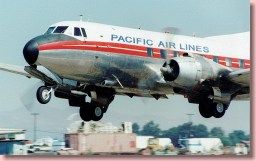
I called her up a few weeks back, and asked if she could do a “few checkrides” in the Martin 404 that belongs to Airliners of America, a new museum at Camarillo. “Sure,” she said, warily (she knows it’s “trouble in river city” when she hears my voice on the phone), “but what do you mean, ‘a few checkrides’?” After a bit of negotiation, and a few moans and feeble protests (“You want WHAT?”), we agreed to:
For a warm-up, on Friday:
- My own Martin 404 type rating ride, by Merrill Wien, Karla watching, with Jeff Whitesell (owner, CFI) in the right seat,
- Merrill’s annual “FAA oversight” ride as an Examiner,
- Merrill’s CFI renewal,
- Jeff’s CFI renewal.
On Saturday, we really got with it:
- I conducted a type rating ride in the M-404 on Kerry Bean, a US Airways captain, with Jeff in the right seat, Karla observing,
- That ride was my checkride to be a DPE for the M-404,
- It satisfied my need for an annual “oversight ride” by the FAA,
- Karla renewed my CFI, on “acquaintance” and Examiner status,
- And Kerry’s CFI, based on his check airman status with US Airways.
Nine certification “events” in two days, during two checkrides! This has to be an all-time record, yet it was all 100% legitimate, and met all requirements.
All together, this saga brought me into direct contact with a couple dozen FAA people. A whole bunch of airshows “from the inside” have exposed me to several dozen more. All of them were helpful, courteous, pleasant, and professional.
Is this an aberration? Only time will tell. Before all this, I thought most FAA Inspectors were, uh, “bad,” with perhaps a few good ones. That has shifted dramatically, and I am close to holding exactly the opposite view, now.
I still think most of the “FAA System” stinks, it just cripples good people with bureaucracy and unnecessary paperwork. But, they’ve got some good people.
Be careful up there!