











 Every pilot out there is going to hate mefor this, but I cannot help but tell this story. To brag. To flaunt my pleasureshamelessly. Please, cut me a little slack, for this has been one of the most wonderfulachievements of my flying career. I cannot stop grinning, every time I think of it. Adream has come true, and I have touched and flown history.
Let it be hereby recorded that on August 8, 1999, Mrs. Deakin’s little boy Johnny flewa Connie. The real, honest to goodness, king, queen and prince of the props, a LockheedConstellation, and in command, at that.
About This Airplane

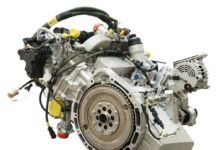
 Tobe completely accurate, it’s a Lockheed EC-121T “Warning Star,” BureauNumber 53-0548. It bears its original USAF markings on an all-over gray paint job, a tinyFAA registration number of N548GF, and a Certificate of Airworthiness listing it in theExperimental Exhibition category. It lives at the Camarillo airport in SouthernCalifornia. It bears with bemused dignity the huge belly radome that cannot quitecompletely ruin the magnificent lines of this most graceful bird, but never mind, youcan’t see that monstrous tumor from the cockpit. From the cockpit door (“Station260”) forward, it is a pure 1049G Super Constellation, with the very biggest WrightR-3350 Turbo Compound engines, and do they ever sing! It is the only one of its kind stillflying in the world, and likely to remain so.
I had the incredible experience of being the PIC on the 3+05 test flight, withoutbenefit of any training whatsoever, and without ever having flown one before. I cannothelp but wonder if that makes me only the second person in history to fly a Connie”cold.” The copilot was a private pilot (the owner) with about 100 hours in thebird over the past five years, and the FE was an FAA Maintenance Inspector, on his first”solo” flight as a newly rated Recip FE. All legal, too, with FAA waivers andeverything. A bizarre situation, to say the least, but who says there’s no adventureleft in aviation!
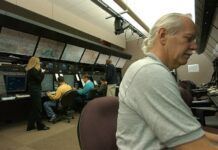
 Thebird is interesting in its own right. Delivered to the USAF as an RC-121D in the Spring of1955, it was modified to an EC-121T in 1970, then mothballed with four brand-new enginesand props in 1978. There is some mystery about possible spooky activities in her finalactive days, and an unexplained 70 hours in the logs, but no one is talking. She ended upin cocoon storage at Davis-Monthan, and eventually would have been reduced to cotter keysbut for the Pima Air & Space Museum, which purchased her along with several others inabout 1981. In 1994 the present owner, Wayne Jones, purchased her, and created the”Global Aeronautical Foundation,” a non-profit, tax-exempt foundation for thepurpose of displaying her to the public as a flying museum. The ship still contains allthe electronics gear, with all the crew stations for the long patrols, numerous radarscopes, and other mysterious stuff, which packs the cabin from one end to the other. Themassive radar antenna is still in the huge radome, and turns with the touch of a finger.
Wayne takes it to the occasional airshow if offered enough fuel, and it’s a fascinatingtour, if you ever get a chance to go through it. Well worth the few bucks donation he asksto help pay for a little fuel. At 500 to 600 gallons per hour, the donations are needed!
How I Got Involved
The previous pilot, Frank Butorac, was a very old ex-Lockheed test pilot on Connies.But for some reason, he became angry last summer, and wrote several critical letters tothe FAA, grounding the airplane. He died shortly thereafter, leaving the airplane withouta crew, and leaving some recordkeeping issues. The FAA informed the owner that unless hegot some professionally trained crews, and instituted professional recordkeeping andmaintenance, the airplane would remain on the ground. While the airplane is still inmagnificent shape, a few ADs and required maintenance had probably slipped by or had notbeen recorded properly.
 Oil is truly added by the barrel, into a “Reserve” tank in the left wing root. Later, it is transferred to the individual engine tanks by a large hydraulic motor, or with a backup electrical pump. |
Tery McMaster, the FAA maintenance Inspector (who is also a C-130 FE in the Guard) tookthe project under his wing, soon got hooked personally (a Connie will do that!) and beganworking on the airplane on his own time. He cleaned up the records and now has everythingbeautifully organized. All the ADs and bulletins are up-to-date, and he really put theairplane in tip-top shape over the past year, with a lot of volunteer help. Thanks Lord,for volunteers, for without them we’d never be able to fly these old birds. This one is aspecial challenge, due to the sheer size! It’s a day’s work just to service it,and when oil is added, it’s by the barrel.
As the time approached for a test flight to return the aircraft to service, the FAAassigned a Flight Inspector from the Van Nuys FSDO named Gary Hunt to the project, and setup some requirements that had to be met. An early problem was that there is no way the FAAwill consider it a Connie, it’s an EC-121, for which there is no type rating at all.Therefore an L-1049 type rating will not suffice to fly it, and a Connie type ratingcannot be acquired in it. That is ridiculous, pure bureaucratic BS, but even the goodpeople in the FAA can’t get past the paperwork on this one. It must be flown under anFAA Letter of Authorization (LOA). While there are a couple of current Connie pilotsfloating around, there were absolutely no EC-121 qualified people, since they’re alllong out of service, except this one. The next best choice was to find someone with recentbig radial experience, used to a three-man cockpit, with recent CRM training, and someonethe FAA would be willing to designate as an instructor and check pilot. Somehow, forreasons I still do not fully understand, and which I have absolutely no intention ofquestioning, my name seemed to sorta float to the top (Some would say “kinda likescum on the surface of the pilot pool,” but they’re just jealous!)
The basic proposition was for me to do the initial test flights under a temporary LOA,and check myself out in the bird. Once I’m comfortable, the FAA has indicated they willarrange for some sort of check ride, then issue me a permanent LOA, followed by a”Letter of Operational Authority” (LOOA), which will entitle me to issue LOAs toothers on the beast. Since the standards are the same as a type rating, it’s just”examiner” and “type rating” under other names, as far as I’mconcerned. As soon as I’m comfortable doing so, I’ll move to the right seat, and start thetraining process for at least two more captains, and several copilots. They won’thave it as easy as I did, they’ll have a fire-breathing monster in the right seat!But at least I can be tamed, bribed, and distracted with suitable quantities ofchocolate-chip cookies and other goodies, applied frequently.
Once we get at least one legal crew up to speed, the airplane can once again attendairshows, go on tours, and do movie work. We’re already talking about taking it toOSH next year. Lessee, that’s only about 8,000 gallons of 100LL for the round trip.Man, I sure am glad I just fly it, and don’t have to feed it!
An Offer I Couldn’t Refuse
Now, if you find all this bizarre, just imagine how I felt! I made ’em repeat thisproposition a couple of times to make sure I had it straight. Then I gulped once or twice,tried to keep a straight face and act nonchalant, and ever the fool, said, “Yeah,sure, I can do that!”
As a kid (well, I’m still a kid, but you know what I mean), I had watched andlistened to these magnificent airplanes, and dreamed of the day I might fly one. Alas, thejets came along, blowing the prop airliners out of the air with their kerosene stink andtheir awful noise. The props never had a chance, for the jets are faster, safer, and moreeconomical, but no jet will ever raise goose bumps like a big radial does when it coughsto life. To me, the Connie is still a flying wet dream.
The jets gave me new dreams to dream, and I’ve been lucky enough to have satisfiedmost of those, although I’ve not flown the F-104 (yet!) But even with all those yearsin jets, I never quite forgot the big radials and old airplanes, and especially the bigbird with the banana fuselage, the long, spindly nose gear, and the tiny cockpit windows.I still remember that on every single Connie I’ve ever seen taking off, the landinggear will come up fairly evenly, but at the last second, the left main, always the leftmain, falls back down almost all the way, then it will slowly come back up again, and thedoors will close. I have wondered for more than 40 years what quirk of the hydraulicsystem causes that, and I’m wondering still. Perhaps some reader can enlighten me? Isee nothing in the systems that would cause that.
I had not even seen a Connie in more than 20 years, when I happened to become involvedwith the Southern California Wing of the Confederate Air Force at Camarillo a few yearsago, and the C-46 based there. While flying that, I became aware that there were twoflying Connies there, parked nose to nose on a remote corner of the airport. One is”The Camarillo Connie,” a beautiful blue and white C-121 converted to a civilianconfiguration (and legal as a Connie, go figure!)
The other is locally referred to as “The Radar Connie.” When I arrived at myfirst airshow with the C-46 (El Toro), I spotted “The Camarillo Connie” alreadythere on display. In looking it over, I discovered it was being flown by my old friendChuck Grant, with whom I had worked at Air America and Japan Airlines, where he had beenone of my chiefs (one of the good ones). He gave me the tour, and I couldn’t helpcaressing the airplane when no one was looking. But there seemed to be no opening for me.
Later that day, I was standing by the taxiway when it taxied by, with those four giantengines singing their siren song, and I am not ashamed to admit the tears were streamingdown my face at the sight and sound. What a magnificent machine! I didn’t mind at allgetting spattered with a few drops of oil from the smoke it was still trailing after thestart, as the wingtip passed over my head.
After that show, by prearrangement, we flew along in formation for a few minutes, bothheaded home for Camarillo, while some photographers on our C-46 shot up roll after roll offilm. What a sight! That big, graceful, curving shape – right there – right in mywindow, filling it! So beautiful, with the gear tucked up!
But flying one still seemed a distant dream, for all the seats were taken – untilWayne Jones and the FAA decided I could try this one on. I attended a meeting one day, andthat afternoon it was somehow decided that I should get to taxi the airplane around a bit,and even accelerate to about 70 knots on the runway, then do a planned reject. Theydidn’t have to ask me twice! We couldn’t legally fly that day, but no one willever know how tempted I was to just let it go! Everyone seemed to be pleased with howI’d handled those simple chores, and shortly thereafter I was notified that I was tobe “The Man” for the initial flying, and that they hoped I’d do theinstructing on it. I acted suitably reluctant and bashful, but had a hard time notslobbering all over the airplane, the people and the ramp.
 Never fully believing it wouldreally happen, I went into a frenzy of study. I talked to Connie pilots and crews, and Iwent through every manual I could find. I intended to know that airplane at least as wellas that other fool who first flew it in 1943. Better, in fact, for at least I knewit would fly, and he didn’t.
While the FAA seemed willing to stick any idiot into the captain’s seat, they were(properly) adamant that the Flight Engineer (FE) seat be occupied by a real FE with theRecip rating, and who was current in recips, though not necessarily current in a Connie.Our FAA man did not have the recip rating, though he is an active FE in C-130s in theGuard, and knew this Connie rather intimately, having wrenched on it for over a year.Accordingly, he was sent off to Kansas City, where the fine folks who run another Connie(“Save-A-Connie”) gave him some training, and the FAA checkride. Good move, theConnie is very much an FE’s airplane. I’ve now proven that any hamburger can flyit, but operating that panel is “something else.” Somewhere in the back of mymind, I’m thinking it would be “nice” to have the FE certificate, earned inthe Connie.
A Few Little Glitches
 On that fateful Sunday, all theplayers were in place and the airplane was ready, or so we thought. We took our places andbegan running the checklists, with me worried that at any minute the FAA would would showup and halt the show. Of course I wasn’t really thinking of our very own FAA man,flying with us, trusting fool that he is, for he’s as nuts as I am.
With the first engine start, the secondary hydraulic system quantity dropped to zero.Okay, no big surprise, fluid drains back into the reservoir while it’s sitting, leavingthe pipes empty. So we shut down and refilled, putting two gallons of red stuff in, andstarted up again. Oops, same thing, it needs even more. We shut down to do that, andsomeone found the left main strut spurting hydraulic fluid and foam, maybe a blown strutseal.
Oh, man! My heart sank, my dream of flying a Connie seeming to take wings without me,for a blown strut seal is a lot of work to repair, and we’d not fly that day.
But wait. Foam? Waitaminnit guys, we shouldn’t see foam unless there isn’t enough fluidin the strut in the first place. Maybe, just maybe, this is not a blown seal, and maybeit’s an easy quick fix (“Not a chance,” said the mean little devil on myleft shoulder). Hoping, we let all the air out, and poured in four quarts(that’s a lot for a strut!) of red 5606 hydraulic fluid, then refilled the strutwith nitrogen, and there was only the tiniest seepage, good enough for flight. We figuredsome flexing would reseat the seals, and sure enough, it did. Those seals may getreplaced, this winter.
Still fearful of seeing that FAA man running across the tarmac, waving his arms andscreaming “Stop, Stop, it’s all a mistake!” we went through the checklists,and fired the lady up for the third time that day. The hydraulic fluid level held solidand steady! Another obstacle falls.

But the little devil on my shoulder was merciless, whispering in my ear “Ha,you’ll probably have a bad mag check, turkey.” My heart was in my mouth, but alleight mags and all systems checked out flawlessly, and we were ready. The tower cleared usto taxi up the abandoned half of the runway to the threshold, and cleared us for takeoffon the remaining 6,000 feet.
Takeoff Power
With a final glance around looking for that FAA man (who I’d have ignored at thispoint), I grabbed a handful of throttles and marched them forward, bringing the big 3350sto full-throated roaring fury. Well, not quite, we’re limited to 52 inches ofmanifold pressure and 2,880 HP with 100 octane fuel (100LL) instead of the 59.5 inches and3,400 HP we could get with 115/145. 115/145 is no longer available, except for the bigReno racers.
Somewhere around 35 inches, I called “engineer’s throttles, max power,”and the FAA man in the FE’s seat pushed them on up to 52 inches, trimming them nicelyfor me. The engines sound lovely, partly because the exhaust gasses pass through”Power Recovery Turbines” (PRTs), the shafts of which are connected to theengine’s crankshaft by fluid drives, recovering something around 500 HP. Thoseproduce a muffling effect, giving the engine its unique sound, and making them muchquieter than the open stacks of most big radials. This is not without cost, however, forthose devices are also nicknamed “Parts Recovery Turbines” (and worse), and areanother source of failures, often nasty ones.
 Accelerationfelt really good. The airspeed indicator came right off the peg, and with a glance acrossthe cockpit, I confirmed that both were reading the same value, and rising equally.Initial steering on the takeoff is done by a nose gear steering wheel on the leftsidewall, and this is used until the rudder becomes fully effective at around 70 knots. Itis my habit to wiggle the rudder a little on this type of steering system, and when itbecomes effective, I move my left hand to the yoke, keeping my right hand on the throttlesjust in case of a failure that might prompt an abort. I was only a little surprised whenthe rudder pedals became effective well below 50 knots indicated, but moved my hand to theyoke, anyway.
The Need for Speed
 It suddenly seemed to me that it wastaking far too long to attain 70 knots, which was also the speed we’d agreed upon forthe FE to abort. Since he has all the engine stuff back there where the pilots can’tsee it, I’d briefed him that if he saw anything he didn’t like, just go aheadand pull the power off on his own, but only below 70 knots. After that, it was to be mydecision alone. The center panel is strangely bare, with the only engine instruments beingmanifold pressure and RPM. With our gross weight of about 114,000 pounds, refusal speedwas 100, after which I would not abort for any reason, and takeoff speed was 113.(Technically, there is no such thing as “V1” and “V2” in thisairplane; the military did not use those terms. But “refusal speed” is roughlyequivalent to “V1” and “takeoff speed” is roughly equivalent to”V2.”
Suddenly, we seemed to be going awfully fast, so I checked both indicators, and bothwere still showing about 60, and coming up kinda slowly, which did not match thefeeling in my fanny. About then I realized the airplane was telling me loud and clear”I wanna fly!” and by golly, the end of the 6,000′ runway was sort ofapproaching rather briskly. We were very suddenly far too late to abort, so I eased thenose up, and away we went, climbing at 80 knots indicated (far below stalling, normally).The airplane flew great, so I just kept the takeoff attitude, which gave me about 300 fpmrate of climb. I called for the gear up and kept takeoff flaps to 3,000′ just to be safe,then milked them up.
According to plan, I did a lazy climbing left turn to the downwind, then continuedturning left over the Camarillo airport. I had previously coordinated with Camarillo Towerand Point Mugu, and let them know what was happening. I wanted Mugu to be aware of theflight, because if we’d had any major emergency that required an immediate landing onthat first takeoff, I wanted to be able to just make a left turn, then a right turn, anddump the airplane onto Mugu’s 11,100-foot runway. Their superb emergency equipmentprovided by my tax dollars also entered into the equation.
But this didn’t even qualify as a minor emergency, so we climbed out to 7,000 overthe ocean west of Camarillo, where I did a couple of steep turns. They felt good, so Iwent right into a series of stalls to see just what was going on with the airspeedindicators. I usually consider stalls a waste of fuel, mostly, but this time they sure hada valid purpose! We found stalling speeds of 87 clean, 75 with takeoff flaps, and 55 withfull flaps and gear! Somewhere between 30 and 40 knots low. The pitot/static system hadjust been recertified, and we figured something had been left loose. (It turned out to bemud-dauber’s nests, deep in the pitot tubes.)
The speeds were completely repeatable, so we just computed some new speeds based onthem and continued with my planned profile, engine shutdown, maneuvering at slow speedsdown to V1, METO power, go-arounds, etc., getting a feel for the machine at altitude.
Gear Down?
Unfortunately, the first time we put the gear down, we found an unsafe indication onthe nose gear, which was worrisome. We talked that over, and decided we’d just do theminimum necessary stuff to get back on the ground – once. The IAS indication we were ableto correct and allow for, but the nose gear was a definite no-go for further flightinvolving takeoffs and landings.
 We did a landing pattern at 7,000′,to get a feel for procedures timing and checklist usage, and a rejected landing. This wasa very worthwhile exercise, for it gave me an excellent idea of how the landing patternwould go. For one thing, I left the landing checklist a little too late, which would haverushed us during the real thing.
I had planned to shoot several ILSs into nearby Oxnard right down to the runway with arejected landing in order to give me a good sight picture on a known descent path, andlater with various combinations of flaps and engines out. Since the unsafe nose gear wouldnot have any effect on a rejected landing, I went ahead and did one, ignoring the gearindication, and the loud warning horn with full flaps and unsafe gear. No surprises, theairplane was very stable on the ILS, very easy to fly, although the instruments are sobadly located, I have a terrible time getting any kind of scan going. I feltone ILS and go-around was enough, so we flew out over the ocean again, and extended thegear the final time, this time for real. The FE crawled down in the belly to take a peekat the alignment lines on the nose gear, and it showed safe visually, so we figured it wassafe to land on it. Very little choice, by then!
 I shot a nice, easy visual trafficpattern into Camarillo, offsetting the final as I always do to keep from making thenoise-sensitive residents unhappy, got kind of a crunchy landing (but I’ll take it!),reversed, and could have turned off at the 3,500 foot point. To save wear and tear on thebrakes, I just let it roll to the Delta taxiway, maybe 4,500 feet down the 6,000 footrunway.
We pulled off, stopped, shook hands all around, did the after-landing checks, andtaxied home. I was astonished to find we’d been out of the blocks for over three hours!Except for the malfunctions, we had a very smooth flight, everyone worked really welltogether, just like we’d been doing it for years. Wayne had a couple of very worthwhileand helpful comments during the flight, and Tery did a wonderful job on the panel. Notthat I’d know if he didn’t, unless he shut an engine down with fuelmismanagement, I can’t even see what he’s doing, back there!
The Second Flight
The pitot systems were blown out, and to my surprise, a lot of trash came out. (No, itwasn’t visible.) I really thought a couple nuts had been left loose (besides the onesin the left pilot seat). How did those mud-daubers build equal nests in each pitot system,anyway? The unsafe nose gear turned out to be a part that had been installed backwardslong ago. That was fixed, cleaned, and lubricated, and the airplane was declared readyagain. But twelve long days were to pass before all the players could assemble again,since all are employed, and most employers don’t really care about flying Connies.This is the chronic problem with all these old airplanes, and the reason for the shortageof crews.

|

On August 21, Tery and I showed up early, and began the long, long process of doing athorough preflight. I volunteered to “spin the PRTs,” which involves reachingdeep inside three different exhaust stacks on each engine, finding the turbine wheel, andspinning it. This gynecological exercise is to make sure it turns freely, with only theresistance of the fluid drive that connects it to the main crankshaft. To my surprise, the#2 engine, lower outboard PRT made a distinct scraping noise, and resisted my effortsenough to indicate there was a problem. I will never again be tempted to skip this check,for this is an excellent example of one thing that can cause a PRT fire. In five minuteswe had the cowling open, exposing the outer shroud around the turbine. This consists oftwo halves of a clamshell-type cover, with a large ring around the rims, holding themtogether, with two large bolts squeezing the ring tightly. Tery and I busted a fewknuckles and offered up a few aviation prayers, for one bolt came easy, the other oneresisted all efforts, and finally had to be cut out. By then, the rest of the realmechanics had arrived, and I was in the way, so I collected my two trainees and proceededto cockpit for some drills and discussion. Good excuse, I thought.
Dana Dorsey is the Chief Pilot for the Connie, and a good thing, too, I don’t likethat sort of work, I’m content to do training programs. Let him pick em,I’ll train em. Dana has a brand-new job with Spirit Airlines as an MD-80 pilot,and has a good deal of experience with radial engines on Convair 440s and North AmericanB-25s. Lee Hughes is a pilot for United, also with radial experience, and both are slatedfor the left seat on the Connie. Lee was not present for either flight, and I doubt thatmade him very happy! The other trainee for the second flight was Steve Johnson, a pilotfor SkyWest on Brasilias. With less time, and little radial experience, he is slated tofirst fly as a First Officer (FO) on the Connie. None have any four-engine time, but thatdoesn’t mean much to me. I’m more interested in the fact that they are used toworking as a crew, and they are getting ongoing professional training and flying,including CRM and other crew concepts, and that at least the captains know a bit about thecare and feeding of big radials.
Scheduling Paradox
There is a troublesome paradox in these operations. With full-time working pilots,scheduling becomes almost impossible. It’s tough enough with a two-person crew, I cansee that getting three people with the time off at the same time is going to be aformidable challenge for Dana. So we really need to check out a number of crews, but oncewe do that, there isn’t enough flying to keep everyone current in the airplane. If weuse someone who is retired, he is not going to get enough time in the Connie to remainsharp, and he won’t be getting time in anything to keep the skills up. These pilotsoften very quickly fall behind in regulations and procedures, and lose motor skills, too.At least most working pilots are maintaining their skills in something, even if itdoes burn kerosene.
As the King of Siam said, “‘Tis a puzzlement.” It’s a real Catch-22situation, with all the old airplanes. Of course, very few of these charitable,non-profits can afford to pay for any crew member, we’re all volunteers, with a fewrare exceptions.
But we’re hoping to get at least one more captain fast-tracked into the seat, andTery is tasked with getting a couple more FEs up to speed. That will at least improve ourodds of being able to work out a schedule, and may allow us to attend an airshow or twobefore the season is over.
 After that, thereal work begins, getting a full training program up and running, then getting a fullcomplement of three crews checked out. The first step will be a good solid ground school.I anticipate doing an intensive five-day course with a PowerPoint presentation, computerprojection, and some video. Five days is not much, compared to the old days when new hiresspent 30 to 45 days in school on an airplane like this. But there are several differences.Back then, new hires didn’t have much experience, and ground schools had to be set upfor a broad range of subjects, including regulations and procedures (company andgovernment), weather, aerodynamics and a lot of basic principles of airplane systems.
Want to Learn More?
None of that will be mentioned in my ground schools. In the old days, pilots wereexpected to be able to do some really silly things, like “draw the hydraulic systemschematic, from memory.” The modern approach is “What does this cockpit leverdo, and how, when would you use it, and what happens with a failure?” I don’tcare how much hydraulic pressure is available to the brakes through a reducer from themain system. That figure can’t be read in the cockpit, or anywhere. If it works, itworks, if it doesn’t, deal with it. Pre-study and self-study will be musts, for thosereally wanting to know the machine. It will not be a five-day vacation, unless people areattending just for the interest and the nostalgia value!
I’m doing this already for the C-46 (two days) and the Martin 404 (three days) andthose courses have been well received. I’m looking at October 25-29 for the firstConnie ground school. The next M-404 ground school will be November 6, 7, and 8. The nextC-46 ground school is in January All will be in Camarillo, Calif.
There were rough black and white copies of various manuals floating around, but I getvery impatient with these, so I just borrowed the military manual (the “DashOne”) for this airplane, and had it copied at a good print shop. It’s in fullcolor, so the schematics are useful. It’s a great manual, as most of the old militarymanuals were, for they were produced without regard for cost. If anyone is interested inbuying a color copy, contact me. The cost of color copying has dropped dramatically in thepast few years, making this sort of thing affordable. I’m also working on getting allthis on CD-ROM, and I’ve got several other old books duplicated too,
If you’re interested in signing up for one of the groundschools or obtaining one of thebooks, drop me an enote at [email protected].
Retirement Looms!
 I hit 60 in October, and while I’ve been approved by JAL to keep onflying the 747 as a copilot to 63 (we can do that, under JCAB and ICAO rules), it is timeI began looking for new opportunities. One avenue I’m exploring is doing just thissort of thing, highly specialized ground schools on the old airplanes, and possibly enginemanagement for general aviation engines, as well. I believe there is a great need forpilot education in this area, for there are many Old Wives’ Tales floating around outthere, and much misinformation. If you don’t hate me too much for being soinsufferable about flying a Connie, wish me luck!
Be careful up there!
