




















 The ink is barely dry on my new temporary pilot certificate with “G-IV” appended as a type rating. This is, of course, the rating for the magnificent Gulfstream IV. This airplane, more than any other, has become the favorite of movie stars, “dot.com” billionaires, and those whose time is of very high value. If you’d like one, it’ll cost you about $32,000,000, and you’ll wait about 18 months for delivery. Gulfstream is building them as fast as they can make them, with about 500 already operating. I’ll tell you a little bit about this airplane later. It’s a real rocket, and I think I’m going to like it very much.
I normally love training, for I look forward eagerly to learning new things. I’m usually walking on air when the new qualification is complete. For the first time in my life, that’s not true, this time. It has been the most miserable three weeks of my life, and I’m just glad its over.
Why? I can give you several reasons, but I’m still unsure of how much each contributed.
Some Background
 I have admired the Gulfstream lineup for years, and for about the last 10 years, with age-60 looming, I joked whenever I saw one, “I wouldn’t mind a retirement job on one of those.” Proves the old adage, “Be careful what you wish for…”
I hit the age-60 mark almost two years ago, and chose to move to the right seat of the 747, remaining with Japan Airlines. (US rules mandate a move to the Flight Engineer seat to continue past 60, but Japanese/ICAO rules are different.) That was good to age 63, but as of June 1, my favorite route went away, and rather than face a base change to Honolulu, the long commute from Southern California, and a 22 day-per-month schedule, I cast about for an alternative. To my pleased surprise, a very classy G-IV operator fairly close by expressed interest in me, a deal was struck, and it was off to school for me. I looked forward eagerly to it, for I have never flown a glass cockpit, and I was excited at the possibility of flying an airplane I had so long admired.
The Training
 To my knowledge, there are only two practical ways to get the type rating. You must go to either FlightSafety International, or Simuflite Training International, the two major training centers for many of the corporate jets. This operator uses Simuflite, so it was off to DFW (Dallas/Fort Worth) for 21 days. The cost has been in the $50,000 range until recently, when only one school had the G-IV simulator. Now that both can do the job, the cost is in the $25,000 range, although prices vary depending on how many crews an operator sends. By comparison, a 747 type rating can be had for less than $10,000. We need more competition in the G-IV!
Yes, it is still possible to get the requisite training in the real airplane, and take the practical test for a type rating in the real airplane as well, but at several thousand dollars per hour, it wouldn’t take long to exceed even the exorbitant cost of a simulator program. Unfortunately, the FAA has very stringent additional requirements if you choose to use a simulator exclusively.
Simuflite was a very mixed bag, to me. Without exception, all the people I met and worked with were excellent, highly qualified professionals, all highly experienced, some with real-world experience in the G-IV. All did their very best, but all were operating under severe limitations that simply ruined the experience for me, and made the training much less effective than it should have been.
The Good News …
 The G-IV simulator at Simuflite is excellent, world-class. Visuals are gorgeous, everything is very realistic, motion is excellent, and while I haven’t yet flown the actual airplane, everyone agrees the simulator flies just like the real thing. That’s a rare tribute from pilots, as most are highly critical of simulators, hating them with a passion.
Simuflite’s physical plant is very nice, a large, airy, spacious modern building on the west side of the massive DFW airport with well-equipped classrooms (but without electrical outlets for personal computers, a major limitation for me).
Computer projection is used extensively, and I lust for some of the software they use to make some of the presentations. I’d love to put that software to work in my ground schools for old airplanes!
… and The Bad
But that just about ends the nice things I have to say about the training.
Lack of CPTs
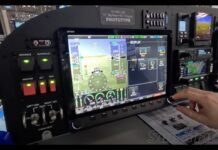
 Airlines generally have “CPTs” (Cockpit Procedures Trainers) that are open to trainees at all hours. These are usually fairly complete simulators, with many working systems, but without motion. Simuflite has one G-IV cockpit mockup with backlit color panels, but the only moving control or device is a switch to turn the lights on behind those panels. It is useful to get accustomed to the location of the various items, and to practice elementary drills, but it is utterly useless for any other purpose. That’s fine as far as it goes, airlines have those too.
There is another “cardboard cockpit” (called an “Avionics Trainer”) with black and white images of the panels, a lone FMS control/display unit on the right side, and a “Display Controller” on the left side (not really a practical arrangement for solo practice). These are supposed to be working devices, but they are so quirky, and the computer malfunctions so often, it’s nearly useless. I tried to use this one a lot. I really did, but found it so frustrating I finally gave up as a non-productive use of my time. I did get one session of about 40 minutes where nothing crashed, and I was able to practice programming the FMS on the ground. Otherwise, every time I tried, I’d just about get it booted up, program it to the area where I needed practice, and it would crash again, or worse, give me results not faithful to the real thing. The story is that the vendor went out of business, left town, and took all manuals, computer source coding, and information about the “simulator” with them.
They do supply half-size color blowups of the various panels, and by pinning these up on my hotel room wall, I was able to accomplish far more than with the mockups.
Off-Limits Sims
Simuflite flatly does not allow trainees into the simulators unless there is an instructor available for the entire time. That is a major limitation, in my opinion. They are very short of instructors, so the simulators were basically “off-limits” except for the scheduled sessions. That’s a pity, because they were badly underutilized, empty most of the time during the day, and always unused at night, when I would have loved to practice with the motion off. I understand FlightSafety allows such use of their simulators, a major benefit, in my opinion. There is nothing like some quiet time alone, or with a training partner, making all the goodies work, exploring the systems, and seeing the “live results.”
There were three sessions scheduled with an instructor in the “paper cockpits,” and since the simulators were open, we were able to use the real simulators, instead. That was helpful, but I still say that some quiet time alone in the simulator would have helped immensely.
Firehose Ground School
 Roughly speaking, the first half of the course is ground school, the second half simulator, then a practice oral and simulator check, and the final day is the real oral and simulator check. There is some overlap in the middle, but that’s the general idea.
The ground school was ably taught by Bill Horner, an outstanding young man with an encyclopedic knowledge of the G-IV. He is an excellent instructor, and I learned a number of little things from him about instruction that I intend to adopt in my own ground schools. I think he tends to hit the nuts and bolts, and the details a bit too much for an initial course, but again, that is probably FAA-driven.
Unfortunately, the FAA has dictated just exactly what must be taught, how long must be spent on each item, and to what level of detail it must be explored. The result is that everyone in my class felt like a fire hose had been stuffed in each ear, and the ocean pumped in, eight hours a day, every day for the 10 days of ground school. The G-IV is a very complex airplane (covered later), with many unique systems, and of course it’s all stuffed together into a highly automated environment. Instead of making it easier, the malfunctions become much more difficult to understand, with many variations.
Most of that ground school went by in a blur, and while Bill was very patient and willing to take questions, it was very obvious to us that time was passing, and more time spent further exploring the electrical system would mean less time available later for other subjects. There is immense pressure to “move along” throughout the course, and that pressure is felt by both the instructors and trainees.
I remember clearly towards the end of “Electrical,” the class got very, very quiet, and when Bill asked, “Any questions on electrical?” the class was silent. I hadn’t even learned enough to ask questions!
We all, by unspoken common consent, allowed passing on to “keep the schedule,” hoping to “get it” with study in the hotel room, or perhaps learning more about it in the simulator. To some degree, that happened, but I don’t think it’s the best way to do it. We all agreed that after eight hours of intense concentration in class, desperately trying to understand new and strange systems, we all felt like jelly at the end of the day, and anything but sleep (and often poor sleep) was impossible. Of the 21 nights I spent there, I had dinner by room service 19 times, and I usually loathe room service. I was just too pooped to clean up and go out for dinner.
Monkeys at Typewriters
One problem for me (among many) is Simuflite’s (and Gulfstream’s, I suppose) unrelenting use of new and complex acronyms right from day one. “ACBPCU,” “DCBPCU”, “AHRS,” “ASCB,” “DDRMI,” “DBDI,” make perfect sense now, but when used machine-gun style during an explanation of an entirely new system, they are a bit daunting. There are 504 acronyms listed in the glossary, most of them invented by Gulfstream, and I’m hard pressed to find one that we didn’t have to use. Bad move, in my opinion, it would be better to use the full term, even if it does take more space on paper, and half a second longer to say. “DC Bus Power Control Unit” is ever so much more understandable than “DCBPCU.”
Real Training, or Just Filling Squares?
School started on a Monday, and by Wednesday I was convinced that I was too old for this stuff, and seriously considered just dropping out and forgetting the whole thing. I knew I wasn’t getting it, was hopelessly behind, with little hope of catching up, because the new stuff just kept coming, fast and furious. In all the training I’ve done, I’ve never come close to feeling like that before. In most courses, I’ve been able to turn around and help the other guys in the evening, but not this time. Not even close.
But in looking around, the much younger guys in my class had the same deer-in-the-headlights look, and some quiet conversations revealed they felt much the same. Several people who had previously been to both FlightSafety and Simuflite calmed us down, and said it was always like that for everyone at both centers, and that no one expected us to “get it all,” this was just a rapid-fire “exposure” to the systems, and if some of it rubbed off, fine. If not, that was fine, too. Several instructors confirmed this, more or less, and all assured us constantly that we were on-track. The constant refrain was “They’re just filling squares mandated by the FAA.” Many said that everyone felt there were “peaks” and “valleys,” in the training, or that training was “like a sine wave.” It sure felt that way to me, with deep valleys, and low peaks!
In my opinion, the real training is almost non-existent, almost accidental; it’s mostly an exercise to satisfy the FAA, the real villain in all this. A secondary villain must be the marketing department at both centers. The universal refrain was that the instructors are constantly pushed into a corner, forced to condense, condense, condense, so that the course can be reduced by just one more day, so that one center can advertise “We do it in only 21 days, reducing the time your crews take, and saving you money.” Then the other school cuts their course to 20 days, and advertises that. The customers don’t seem to care, so long as their pilot comes back with the FAA-approved G-IV type rating (or the recurrent sign-off, with a shorter stay). The people who pay the penalty are the instructors, who are forced to ram the material down the throats of trainees, and of course most of all, the trainees, who must take it, and survive, with their jobs on the line. BAD system, in my opinion.
Can the pilot be honest, come back home and say, “I wasn’t properly trained?” If you think that, wow, do I have a bridge for you! Well, I’ll say it, loud and clear, I was NOT properly trained. I am neither as well trained as I could have been in the same time period, and I’m a long way from being as well-trained as I should have been, for that kind of money (or any kind of money). In theory, people are coming out of that training, and going on a line flight, with passengers, as captain. In reality, I suspect most operators do additional training, and I certainly hope I get more, because I don’t feel ready.
Dogs Watching TV
 There is one simulator session early on, obviously to give a little familiarity. With no prior glass experience, I was pretty confused, nothing was where I was used to it, my scan was destroyed, and even on that first session we had a couple of failures “to get a head start on the squares.” A call “Watch your airspeed” was completely confusing, because not only did I not know instinctively where to look, the vertical tape display on a CRT didn’t even look like airspeed, to me! The numbers move, and the index stays still, and I still say it moves the wrong way. (Gulfstream must agree with me, because the newer G-V reverses the direction the tape moves. THAT will be fun for those who are dual-qualified!)
As someone said, “Now I know how a dog must feel, watching television.” The first time I heard that, it was acutely unfunny, but I must admit, I lost my sense of humor very early on.
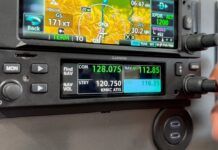
I think I could have handled this, if I’d been allowed to hand-fly the machine for a couple hours, and shoot a couple of hand-flown approaches. That might have allowed me to develop a scan for all the new instrumentation, find everything, and start looking in the right place sooner. But there is no time for that, the very advanced automation is used from the very beginning, and it is the single biggest training item. It’s a wonderful system, but if you don’t program it exactly right, it will betray you in a heartbeat, and often in a very confusing manner (can you spell “Cali?”) Coached through it, it’s very simple to take off, plug in the autoflight, push the right buttons to make it fly around, intercept an ILS (or any other type of approach) and watch it fly the approach to 50 feet flawlessly, with utter perfection all the way. Perfectly smooth, very tight tolerances, it’s just awesome. You tell it the departure airport and runway, the destination, the departure procedure (by name), the route, the arrival procedure (by name), the landing runway and the type of approach, and it knows (and flies) the route, with all crossing altitudes made automatically. It’s very seductive!
What the $%&*???
Before I could really get a handle on normal operations, the abnormals and emergencies started coming, hot and heavy. At one point, I was flying the simulator from Boston to New York, at night, in heavy icing conditions for the first time. We got the anti-icing systems going, but I was none too sure we were done, and suddenly the left engine’s electrical supply system failed. That’s not too bad, the automatic systems work well, all the buses auto-switch to a secondary power source, mostly the right engine. Then the instructor failed the right engine, which killed all the electrics from that engine, leaving only the essential buses powered (I think). At that point, I kinda lost track of what was failing, and I think another backup system came into play, leaving most of the panel dead and black. We recovered what we could, but I think that’s the one where we landed hurriedly and left it running, for the next crew was waiting, and we were late.
“Any questions?”
“Uh, yeah, what was all that?”
It really didn’t matter, the squares for “icing,” “single electrical system failure,” and “both electrical systems failure,” “engine failure,” “Inflight engine restart,” and probably half a dozen others got filled, and that’s all that counts.
Frantic Sim Sessions
 Simulator sessions are only two hours and fifty minutes, split between two trainees, who swap seats at roughly the mid-point. The first session, it takes about 1.5 hours just to get to the engine start, as the checklist is an extensive “do-list,” with 17 items on the “Cockpit Preflight Inspection,” 102 items on the external and internal preflight, then after returning to the cockpit, an astonishing 190 items before hitting the first start switch. MANY of those items involve performing additional steps. It is the very worst example of the old military-style “do-list” I’ve ever seen, anywhere.
Trainees are “encouraged” to develop their own “flows,” then to use the checklists in a quick manner to make sure nothing was missed. That’s fine, but there is only the most rudimentary suggestion for a proper flow, and every instructor had his own ideas on how that should be done. The result is that we were left to develop our own flows, while learning a strange airplane! I find that outrageous.
Adding to that problem, my question was, “Ok, if I develop my own flow and use it on the check ride, then back it up with the checklist, will the examiner accept that?
“Oh, that depends on the examiner.”
I went back to the hotel barely fit to drive, after that exchange.
I’m accustomed to four-hour sessions, two for each trainee, so the 1:25 sessions each are done before I’m really started. I can only surmise that the 2:50 sessions are an economic move, allowing a single instructor to do two full sessions in one day. That makes a savage schedule, where one four-hour session would be much better for both the trainee and instructor. An hour for briefing (more is better), four hours in the box, an hour debrief, a half hour for lunch, and a bit of paperwork makes a full day for an instructor.
The way Simuflite does it, there is a frantic rush to get everything done and get out of the box for the next crew. Undone items are carried over, making the next session even more hectic. The 20th day is supposed to be a practice check ride, with the instructor just watching. Wrong, it was non-stop instruction, because there were still half a dozen squares that hadn’t been filled, and I was still screwing up everything I tried to do in preparation for the check ride.
Standardization?
My training partner and I also had something like seven different instructors, and the same instructor two days in a row only once. There is a small attempt at standardization, and some similarity between the people, but not nearly enough. Scheduling for the instructors is a bear, with several of them going seven and eight days straight, often with more than one simulator session per day. I understand FlightSafety is much worse at this game. I actually felt sorry for most of the instructors, for if done well, it is an intense game. I couldn’t do it without burning out, and there are signs of that with a few of them.
There is some argument for not standardizing everything, in that operators in the field are doing things their own way, and if SimuFlightSafety enforces a rigid standard, it will be more confusing in the field, particularly when trainees come back for recurrent training.
Boeing solved this problem neatly in about 1972, with the introduction of the 747. They stated loud and clear, “You will fly this airplane OUR WAY, or we won’t sell it to you.” The results were wonderful, at least at Japan Airlines. That was the first time I’d seen or heard of “flows” backed up by short, “killer item only” checklists, and that system has worked beautifully for 30 years, to my personal knowledge. It is also readily adaptable to ALL airplanes.
Could Gulfstream do this? Maybe not, now that there are over 500 G-IVs in the field. There is also the chance that the dark side would prevail, and it would be poor standardization, which is worse than none at all. But there is some evidence that someone back in Savannah knows his way around checklists and human factors, for the abnormal and emergency checklists are VERY well done. There are NO formal memory items, and pilots are expected to know enough to take the obvious immediate actions, while flying the airplane. I can pick some nits with them, but they are nits. The normal checklists are, I’m told, written by Simuflite, and they are worthless.
Rode Hard and Put Away Wet
The three weeks wore me down, and for the first time in my life, I was uncertain, not confident, either in the box, or over passing a check. The “practice check ride” went so badly, I was devastated, didn’t think I’d ever be a Gulfstream pilot. I’ve NEVER been like that before. When the instructor signed me off for the check, I was dumbfounded, and just asked, “How can you DO that, I didn’t do a single thing right, today?”
“You’ll be fine.”
I was so tired and discouraged at that point, I no longer cared, and figured if I got a pink slip (would have been my first ever), it just didn’t matter. The nasty thought crossed my mind that perhaps Simuflite needed a few more “busts” to “look good” for the FAA, and maybe, just maybe, I was the goat, here. There just didn’t seem to be any other explanation, because I wouldn’t have signed me off.
The next morning we met the examiner, one “Dee” Simmonds. Big bear of a man in his sixties, sharp as a tack, deeply involved with computers, and very knowledgeable in the G-IV. He gives a check just exactly the way I like to try and give mine, relaxed, easygoing, explores the issues rather than pure memory items, and goes out of his way to put everyone at ease. I went first, figuring I had about an 80% chance of getting a pink slip, really down on myself, as I had been throughout most of the course. (Yes, that may have been part of my problem.)
To my utter shocked surprise, the whole checkride went very, very well! I was very pleased with my own performance in the left seat, and felt I did a very good job of supporting my training partner when his turn came (as he did for me). As the first few items went by, my confidence began to grow back, and by the end, I was very comfortable, and enjoyed the rest of the ride, as I usually do. Larry Mort also did a fine checkride, and we were both issued the temporaries. There is no question we met the standards of the PTS, and then some.
Whose Fault? Three Guesses …
What happened, here?
Did the age factor enter into it? I honestly don’t know.
Is the “firehose” training effective? Maybe, for a check ride, but only time will tell as I get out on the line, and start the “real training.”
Is it the best training that could be done? Clearly, NO! What can be done to improve it?
 First, foremost, and above all, the FAA needs to get the hell out of the micro-management business! Let the real professionals set up and manage the training programs, while lightly monitoring the RESULTS, if they must. The FAA no longer has the expertise, or the money, or the time to interfere with the training process (or any other, for that matter). That’s good, I’d like to see the budget cut by 90%, so they can’t do more. The FAA is in deep trouble, with their insane bureaucratic bumbling chasing off all the good people (in all departments), leaving many drones. The good people who do remain are buried in BS, and unable to do the right thing, even if they know what that is. Many of the good ones are very discouraged, and are just trying to get their time in, so they can retire.
I’ve said it before, and I’ll say it again, the FAA is the biggest single impediment to flight safety in existence. We’d all be much better off without them.
(None of my comments are aimed at working air traffic controllers, who are every bit as professional as any pilots.)
I believe Simuflite (and FlightSafety) have the expertise to do a good job, if the FAA were to get out of the way, and marketing was forced into a lesser role. I attended FlightSafety twice, about 40 years ago, and loved the experience. But the FAA was nowhere to be seen, in those days.
No matter what it takes, Simuflite must stop this firehose junk. It is NOT a good way to do it. Trainees should be developing confidence as the course progresses, not losing it. If something needs to be taught, it should be taught, and the course should not continue until it is taught.
I just hope I never have to attend another of these high-powered “Type rating factories.”
Be careful up there!