
























Oneof the regulars here at the Pilot’s Lounge went through an interesting processrecently. Armando made the decision to obtain his flight instructor certificate.He has a full time job that pays reasonably well so he probably isn’t going tochange careers. Some of the other regulars thought he was crazy to spend themoney to get what is generally considered to be the most difficult certificateto obtain. They continue to work him over pretty hard, even now as he is workingon the certificate, claiming that he is spending a few thousand dollars for nogood reason. Old Hack even told him that CFI stood for Crazy (something orother, there was some background noise at the time and I missed it) Idiot.
There Are Drawbacks To Being A Flight Instructor
I did a lot of listening to the naysayers and to Armando as he weighed thepros and cons of getting a tough ticket that may or may not generate a financialreturn. It caused me to ask myself why in the world anyone would become a flightinstructor other than to simply build flying time in the process of moving ontosomething else in aviation. In a time when the people of our country are gettingwealthier but giving substantially less to charities – yes, generally beingmore and more greedy – the idea of becoming a flight instructor”just” to instruct strikes some as pointless.
 Itis a sad fact of aviation life that a flight instructor’s pay rate can beabysmal. Not long ago one of the major training colleges advertised forinstructors in the national aviation press and offered well under $10 per hourfor the privilege of teaching students at that school. There are FBOs that payminimum wage for instruction given in the air and less or nothing forinstruction while on the ground. As a result, their instructors hustle thestudents into the airplane, start the engine to get the Hobbs meter recordingtime and then brief the flight. The quality of the resulting instruction isobvious. Even if an instructor can somehow manage to give 1,000 hours of dual ina year, an income of less than $10,000 in return for the skills and education heor she has amassed is nothing short of insulting. For those who jump in to saythat an average work year for a U.S. employee is 2,000 hours, it must be pointedout that a flight instructor who manages to spend 1,000 hours in an airplanegiving dual in one year will also have to be the one who puts the coffee pot onin the morning when he or she opens the office and shuts the lights off atnight, because with weather, mechanical problems, scheduling difficulties andthe like, that instructor will spend a lot more than 40 hours a week on the jobwhile getting paid for only a fraction of time spent at the airport.
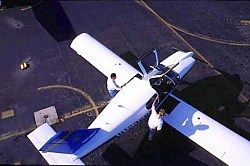 Flightinstruction, particularly at the primary level, is just plain hard work. Anyinstructor who has given six to eight hours of instruction in the airplane inone day, along with the associated half hour before and after each flight, isgoing to have spent from twelve to sixteen hours on the job. That person will bepretty wiped out at the end of the day. Primary instruction is probably thetoughest type of instruction (not the most dangerous, the toughest). Theinstructor is dealing with students for whom almost everything in aviation isnew and so must help the initiate absorb a tremendous amount of foreign materialas well as adjust to and make sense of brand new sights, sounds and sensationsin an amazingly short period of time in the air. Then that sucker, err,instructor, gets to decide when to turn the novitiate lose after putting his orher own certificate on the line with a signature.
Instruction in the ab initio programs that are proliferating seems tobe particularly unrewarding. I’ve spoken with a fair number of instructors whoteach in those programs and who have expressed extreme frustration with aninflexible syllabus that is strictly geared to the practical test standards andseems designed to turn out one-dimensional, mechanical pilots who meet only theminimum standards so that they can be plopped into the right seat of a commuterairliner. I hear of students who have never experienced a full stall and neverlanded on a grass runway nor faced a crosswind anywhere near the demonstratedvalue for the airplane. Worse, too many of the “drivers” (and yes, itis still the most degrading term by which you can refer to a pilot) who aregraduated from those programs are shockingly arrogant; an unforgivable emotionin aviation, for a true pilot knows that the sky is absolutely unforgiving ofthose who combine aeronautical ignorance with the vice of boldness.
 Finally,there is a concern about personal liability. While lawsuits against instructorsare exceedingly rare, they have happened. When an instructor signs off a pilothe or she asserts that the pilot is capable of handling the airplane withoutdoing violence to it or its occupants and has the judgment to know when theportents advise parking the airplane and aviating another day. Realistically itis impossible for an instructor to be perfect in analyzing every pilot with whomhe or she flies, so if a signed-off pilot then rolls an airplane up into a ball,there is a concern that someone will attempt to point the finger at the flightinstructor who blessed the union of that pilot and airplane. Insurance coveragefor instructors is not cheap and that which is available may not provideadequate coverage. For the pilot who has managed to acquire a few assets thequestion is: Why risk them by instructing?
It is certainly no surprise there is a shortage of instructors.
So Who In The World Is Foolish Enough To Instruct?
Now I understand what many call aviation’s Catch-22: Crazy people cannot beallowed to flight instruct since they pose a danger to themselves and others;however, anyone who wants to flight instruct is, by definition, crazy….
As Armando went through his process of making the decision whether to becomean instructor, I found that I was reflecting on the reasons I continued toinstruct on a part-time basis and I talked with some instructors I respect aboutwhy they started and continued to instruct. Here are a few of the reasonsinstructors keep instructing.
Free Flying Time…
Not surprisingly, a large number of flight instructors originally got therating so that they could amass flying time without being charged for it.Several mentioned that the whole concept of getting paid to fly was prettywonderful to consider after spending so much to get where they were in aviation,therefore they decided to become a CFI. Everyone I spoke with said that the freeflying time motivator wore off in a hurry, though. They discovered thatinstruction was substantially more work than they anticipated. Interestingly,those who quit instructing did so almost immediately upon acquiring the hoursnecessary to move into something else in aviation. Given the pay provided mostinstructors, it’s not surprising that there has to be something more that keepsthem working with pilots.
…Just A Little Bit of Respect…
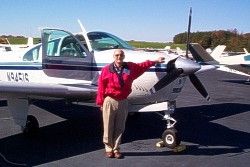 Asa new instructor, it’s great the first time a pilot with more flying time asksyour opinion and listens to it. It is intrinsically rewarding for your opinionsto be given some degree of respect around the pilot’s lounge. Most instructors- not all, of course – have managed to absorb a bit more aeronautical lorethan the average pilot and have pretty good insight into problems or challengespilots face. While giving free advice may very well be giving away somethingonly as valuable as its price, a lot of instructors have found it gratifying tobe sought out for information that they have acquired through hard work andstudy. There are a few instructors who let this go to their heads and becomeinsufferable know-it-alls. Fortunately, they are not a majority and I am toldthere is a special circle in hell for them.
…The Pure Pleasure of Watching A Student Learn…
Probably the intangible benefit that keeps instructors doing the job throughicy cold mornings and endless trips around the pattern is the simply joy ofwatching someone learn. Seeing the absolute delight emanate from a student whohas just greased on a landing after trying to squeeze juice out of a plasticcontrol wheel while struggling with heading, airspeed, flare height and a littlecrosswind, is to feel some of the deepest satisfaction a person can experience.Knowing that you, the instructor, with just a few words of direction, correctionand encouragement, were able to create the environment in which that studentcould learn to do something he or she desired so much, is to be nearly aspleased as the student. You probably didn’t know it when you were a student andsweating bullets on short final, but if you had a good instructor, he or she wasevery bit as eager for you to do well as you were. An instructor who finds thathe or she enjoys helping all sorts of different people achieve their goals isvery likely going to stay with flight instruction even after there is no need tobuild up any more flying time, and is going to charge enough to continue toinstruct as regularly as possible.
…You May Find That You Enjoy Teaching A Great Deal…
 Inmany flight schools, as in the military, it is not uncommon for thewet-behind-the-ears recent graduates to stay on as instructors for a time. Acertain percentage resent it. They put in their time to build hours, put thechecks in the boxes for the students in the training program and go home at theend of the day to do anything but think about flying and their students. At theopposite end of the spectrum, a certain percentage revels in the opportunity toinstruct. They are the ones who spend part of their evenings getting ready forthe next day’s students, who are seen sitting on the bench by the ramp withstudents at the end of the day still working with the students, or stop by theairport bar for a beer with their students so they can keep talking flying. Theyare the ones who are the first to admit they learn great deal from theirstudents even as they are teaching. Those instructors also realize that theyreally learned to feel an airplane once they became instructors and are eager tosee what else they can learn on the next flight and what they can share withtheir students. They are the ones who lose weight during the first 100 hoursthey give dual because they are applying body English to try and help thestudent on crosswind landings. They are the ones who insist on more than thebare minimums at ab initio schools and make sure the students have seen afull stall and can recover and know how to keep the ball right in the center allthe time so they will do it when it really matters. They are the ones whoschedule sessions of dual to fly to flight breakfasts so students can experiencea congested mix in a traffic pattern and land on a grass runway and then canjust walk around among the little, old airplanes scattered on the grass andexperience the soul of aviation. They are the ones who turn out pilots who trulyfly, rather than drive, airplanes. And there will never be enough of them.
 Thenew instructor learns about, and often becomes fascinated by, human nature. Forme, most experiences in that process were pleasant, some weren’t. I sawdetermined students who had budgeted so closely that I learned to plan thelesson to the tenth of an hour on the Hobbs meter because the student just plaincouldn’t afford it if I misjudged and got us back a tenth or two over theallotted time. Those students read voraciously, showed up for lessons preparedand got the very most out of every minute. At the other extreme, I metbusinessmen who wouldn’t read the lesson materials and paid me to sit and readit to them. I flew with rogues who were absolutely convinced that they knew muchmore than I (sometimes they did) and that they couldn’t learn a thing at allfrom an instructor (rarely true). These types left me angry and frustrated aftereach session. I worked with pilots returning after years of inactivity andshared their visible pleasure as the memories came flooding back when thecontrols came alive in their hands. I met charlatans who tried to fly and thenran out on their bill at the FBO and I flew with brilliant students in auniversity flying club who could make the collection of aluminum parts I’d beenshoving through the air fly with a smoothness and lan that I ached to emulate.
…Lasting Friendships Formed
When I talk with other instructors about why they instruct, a common theme isthe friends they have made because of it. Many described lifelong, closefriendships they developed. One became friends with a student who did someinvesting on the side, he taught the student to fly, the student taught him toinvest. That instructor is now very comfortable financially. The three men whostood up with me when I got married had all been students of mine at one time oranother. They are, 20 years on, still some of my best friends. One of themmarried one of his students. It must have been a good match – after that hebecame a Naval Aviator and a Blue Angel and they are still married. Because I’dbeen his instructor, once he joined the Blues I was lucky enough to spend sometime around that fascinating group of people, an experience that was veryrewarding. I’ve shared extremely satisfying times with primary students as theymade their first unassisted landing, with instrument students the first time theneedles stayed inside the doughnut on an ILS and once, while flying with aninstrument instructor student between layers of cloud as the sun rose and turnedthe world to gold, I turned to see him mesmerized by the spectacle and asked,”Tell me, Dan, why do you fly?” Those times and those friends remaintreasures. They happened because I became a flight instructor.
A Chance To Effectively Share The Passion of Flight
Most of us fly because we are addicted to it. The sky and the machines we useto traverse it fascinate us. We have utterly lost ourselves to flight. Whileaway from airplanes we daydream about them. We mentally soar with the airplaneswe see, even rudely interrupting conversations to watch airplanes pass. When wedetect someone who might be interested in flight, we immediately want to shareour experiences with him or her.
 Asan instructor you have a chance to not only share the joy of flight, but to doso effectively. Part of that difficult training to become an instructor islearning how to read people to communicate with them on the appropriate leveland how to give an initial ride that doesn’t cause the prospective pilot to geta second look at lunch during flight or run howling from the scene after it.We’ve all run across the well-meaning boob whose idea of showing someone aboutflying consists of steep turns, stalls and generally terrifying the prospect ashe shows off how macho he is. Or the person who is going to “help” astudent by taking him flying and “pounding” on him. Good instructorsare also good aviation salespeople. They show what flight can be and encouragesomeone new to aviation to take those next steps and learn to fly. They do it ina non-threatening way that allows the prospective pilot to experience thewonders of flight in his or her own way.
You Might Be Able To Reach Someone…
As an instructor you may have the chance to have some input to that roguepilot that you know is just plain dangerous. At some point, he or she has tocome in for a flight review. That may very well be the opportunity for you toactually make a difference and get through to the pilot in a way that causes himto see what he is doing and make some changes. There are no guarantees; therogue pilot is one of aviation’s nasty little challenges to all of us and I’vewritten about just how awful it can be to try and reach one. However, you maysave some lives that you couldn’t even hope to reach if you were just anotherpilot at the airport looking on in askance as the nut did something dumb yetagain. You have the opportunity to actually make a difference.
…You Deserve To Get Paid For Affecting People’s Lives…
 Alot of instructors have gotten into the habit of not allowing the amount theyget paid even come close to keeping up with inflation. I’m guilty; at $40 perhour I now get less than I did, allowing for inflation, 20 years ago. Flightschools have, until the instructor shortage, been able to get away with payingtheir instructors insultingly low wages. Yet, there are a few instructors outthere who make it a career. They enjoy instructing. They do a good job of it.They also decided to make a living wage as a CFI. Tennis pros charge at least$50 per hour to teach someone in short pants how to hit a ball across a court.There is absolutely no reason that a person who takes others’ lives in handshould charge a cent less to teach them to fly. Interestingly, the instructorswho do charge rates consistent with those of tennis pros have waiting lists ofstudents. People will pay for excellence. Those instructors also spend timepromoting aviation because they realize what only a few younger instructors havefigured out, that part of the job is selling aviation.
…There Are Ways To Reduce Liability Exposure
An instructor working for an FBO has one nice little benefit: It is probablethat if there is an accident that the FBO is going to get sued, not theindividual instructor. There is a legal term known as respondent superior thatmeans the employer is liable for the mistakes of the employee. I have never,ever seen a lawsuit in which an instructor that worked for an FBO was suedindividually. As an instructor you may want to get together with your local FBOand work out something mutually beneficial. The FBO gets a good instructor(although it is going to have to pay you at least what the local tennis clubspay their pros) and you get insurance coverage and stronger protection againstgetting sued personally.
In general, whether an instructor works for an FBO or is self-employed, thebest protection against a lawsuit is to be quite conservative. While it is thesubject for another column, a practice of only signing off pilots for ratings orcheckouts or flight reviews if you are personally satisfied that the pilot meetsyour standards for knowledge, skill and judgment – all of which had better behigher than what the FAA requires – AND you make a very careful record ofeverything you did with that pilot in your log and the pilot’s, will go a longways toward protecting you in the event of a potential lawsuit. If you do notconsider the pilot’s performance acceptable for a flight review or an airplanecheckout you simply make an entry in the pilot’s logbook that you gave dual inspecific areas and stop there. If you see a serious deficiency in any area andyou have any concern that the pilot will go fly anyway, note the observeddeficiency in both books. Good records will help defend against an accusation ofimproper instruction and have been known to prevent suits from being filed whenthe plaintiff’s attorney found out that the evidence was not going to befavorable to the pilot who had crashed.
A Chance To Give Something Back
Face it, almost anyone who has experienced the lure of flying for any time atall is consciously aware that he or she has been given a gift, an wondrousopportunity to see and do things so very few of those who beetle across theearth ever imagine. Most of us want to give something back to aviation. If youare the sort who wants another person who might be receptive to the pull of thesky to experience the magic of flight, that desire, in itself, is reason enoughto instruct. I think you will be glad you decided to instruct.
Armando, good luck finishing up your CFI. I hope it proves to be emotionallyand financially rewarding to you. A lot of us here in the Lounge are pleased youwill be joining the CFI ranks soon.
See you next month.