












 It’s another one of those late evenings here in the pilot’s lounge. I’m here because it’s a place that is conducive to thinking. I returned from a trip a couple of hours ago, put the airplane away and started to leave the airport but turned around and came back here to the lounge where it was quiet. I’ve been here alone for some time, thinking about something that happened before I took off for the flight home from the small airport I had visited. I can’t get it out of my mind.
As I was taxiing out for departure, I glanced over at the parking lot and saw a kid by the fence, watching airplanes. It was a classic picture, the airport kid, something we so rarely see anymore. In a baseball cap, go-to-hell shirt and jeans, astride a bike and leaning on the fence, I couldn’t tell whether the kid was male or female. What I could see were eyes that held mine and stopped me cold, right there on the taxiway. I saw eyes burning with a hunger for flight that could not be extinguished short of death. I saw such an honest and absolute determination to fly that I involuntarily hit the brakes hard enough for the airplane to bob up and down on the nose strut. There was no begging or pleading in those eyes, just a look of desire that was as intense as any I’d ever seen. I suddenly realized I could have been looking at my teenaged self. I knew precisely what was going on behind those eyes, for I, too had felt the same fire at that age. I knew every one of the feelings that drove the look I saw and knew how powerful the feelings for flight can be in the heart of an airport kid.
 I did something I’d never done before: I pulled over to a tiedown spot, shut down, got out, walked up to the fence and spoke with the kid. I don’t know how long we talked, but we talked about airplanes, how they work and learning to fly. Then, to my minor amazement, I heard myself asking whether the kid wanted to take a brief flight. The “yes, please” came out immediately. I put the kid in the left seat and gave a very brief introductory lesson just as I had done scores of times for the people of all ages who had walked into flight schools where I had worked and told me they wanted to learn to fly. We flew maybe 15 minutes. After we landed we talked a little more. Then the kid picked up the bicycle and rode off. The entire time I was aware of the kid’s eyes, blazing with energy and determination, missing nothing, trying with every fiber to absorb everything.
I’ve just realized that while I’ve been sitting here in the lounge thinking about the kid, I’ve written two letters. I’ll share the second one with you next month. The first I’ll let you read in a moment. It’s a letter to that kid. I just hope I can deliver it someday – I didn’t even get the kid’s name.
Dear Airport Kid…
I hope you don’t mind the appellation. Believe it or not, it’s a term of respect, and perhaps endearment, that has long been applied to the teenagers who frequent little airports, and although older pilots would probably profanely deny any such flowery sentiment, the very vehemence of their denials would actually verify the truth of their affection for the teenagers at their airport. So, anyway, at an airport, it’s not bad to be called “kid.”
I was the one who slid the tires stopping my airplane in front of you today. I saw you sitting on your bicycle, looking through the airport fence. I don’t know if it was my ongoing fury at the stupidity of erecting large fences at little airports that keep out the very people we wish to attract, or the intensity with which you were looking at the airplanes, that made me first pay attention to you. Perhaps it was because you seemed to be very nearly the age I was when I started learning to fly, and are using a bicycle for transportation because you aren’t yet old enough to drive.
Yeah, I’m an old guy – over 40 – but I sure enjoyed talking with you. I enjoyed it because we spoke a common language, that of flight. You obviously have read a lot and taught yourself much. It’s okay that you mispronounced some of the words that you had read, simce you had never had the chance to hear them spoken aloud.
As we talked and you asked me questions about technical matters and details of things that interested you, I was reminded of the fresh perspective of someone just coming to flight and how hard it is to keep some of the oddly contradictory things straight. You said it didn’t make any sense that when an airplane was flying toward the west that it was “westbound,” but when the wind was blowing that same direction that it was “an east wind.” I agreed and pointed out that one has to do rote memorization of some things until you acquire the perspective to understand the reasons. We talked about the recent article we’d both read explaining that the method of referring to wind direction was established hundreds of years before the method of describing the direction an airplane was moving was ever considered.
You spoke of the windsock in almost poetic terms. You described to me how it looked to you from the ground. You had only seen it from below, watching it standing above you – a majestic tube of orange doing the regal duty of serving pilots, providing information of vital importance. Then, later, when you saw it from above for the very first time, you could not believe that something so large and brightly colored could ever be difficult to see, but you also saw why new pilots sometimes read it backwards and land downwind.
You had spent hours at that fence. You had gazed on the taxiways and the runway that I took for granted. You saw the cracks and irregularities in the pavement and you had even planned how you would guide an airplane so as to miss the bumps when you finally would have a chance to taxi to the runway.
Gateways and doorways
You described the runway as a gateway. You said it was a gateway to the entire world. Looking through your eyes I saw how correct you were. You told me that from that airport any person could taxi to that runway and take off in a little airplane and go anywhere. I wished I had thought of that way of looking at runways. Because of you, that strip of asphalt suddenly became more valuable than Oz’s fabled yellow brick road. The road only lead to the Emerald City, a runway leads us to anywhere we can dream of going. The concept also caused me to shudder with the wave of anger as I thought of the evil involved in the action of anyone who would destroy a runway, anywhere, and kill the dreams of kids such as you. And I realized the monstrous evil of Mayor Daley of Chicago and his plan to terminate the dreams of the inner-city children who see the runway at Meigs Field as the gateway to a bigger world and better life. You made a big impression on me, kid.
You told me that you lived about three miles away and rode your bike to the airport whenever you could because you liked airplanes. You had discovered the aviation magazines in your school library and had also read all its aviation books. You had figured out that you could get other books through inter-library loan programs. You impressed me. Making the effort to get to the airport and reading all you can about flying show that you are willing to accomplish what you set out to do. You don’t know it yet, but your determination, perseverance and willingness to work toward your goals will take you a long way in this world … whatever you choose to do.
You said your parents understand your desire to learn to fly but don’t have the money to pay for it. Fortunately, it doesn’t look as though they will stand in your way when (please don’t say “if”) you find a way to learn. You are very lucky – too many kids your age have their dreams wrung out of them by the naysayers and moles and those who flee from the fullness of life and cannot or will not understand what it is to fly.
You asked me some questions about the elevator trim tab because in diagrams it seemed to you as if it worked backwards. The best way to show how it worked was to look at an airplane, so I did the necessary stuff to get you through the security fence and we used my airplane to look at how the flight controls operate. I watched the light bulb light over your head as suddenly the simple and elegant way trim tabs work made sense to you. I then offered you a brief airplane ride. I wish I could explain what I saw in your eyes as you accepted the offer.
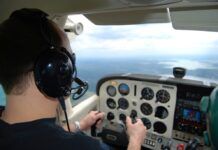
The cabin door was open because we had been moving control surfaces and looking at the control wheel. I showed you my flight instructor certificate and suggested that you take the left seat. Watching you gingerly get into the airplane, I was suddenly thrust back to the first time a flight instructor told me to get into the left seat. I was initially overwhelmed, because to me that was the pilot’s seat and it would be presumptuous for me to sit in that holy place. I, too, got into that wonderful chair very carefully. As I watched you go through the open door, I realized that when I had passed through a similar door 32 years ago, it wasn’t just a door to an airplane. I entered a doorway to adventure. That open, beckoning door opened an entire new world to me, one that I would not trade for anything. If you want it badly enough, that door to adventure is still open. I hope that maybe you got a glimpse of what is on the other side today.
You had a very brief, introductory lesson. We started the airplane and you taxied it. Together we did a runup, then you used the rudders to steer the airplane on takeoff. You learned about attitude flying and how to put the nose just above the horizon while at full power to make the airplane climb, and then how placing the nose below the horizon and setting cruise power generated level flight. You started to learn how the airplane felt and that you did not have to keep it in the air with muscle and main force. You didn’t really ever relax because there was so much happening and you were so excited beneath your cultivated cool exterior, but you did learn you couldn’t squeeze juice out of a plastic control wheel.
After we landed and shut down, we talked about your impressions of the flight and the way the airplane was much more responsive than you expected, then you retrieved your bike and rode off. I’m not convinced the wheels of the bike were touching the ground. Keep that slip of paper on which I wrote the date, type of airplane, what we did and how long we flew. I signed it and put my instructor’s number on it. That flying time counts. Staple it in your logbook when you get one.
Unspoken questions
While we were talking, you asked me several very probing questions without using words. The questions were precisely the same ones I was too shy or too afraid to verbalize when I was your age. Because we didn’t talk about them while we were together, I’ll do my best to answer them for you now. Your audacious outfit, hairstyle and jewelry is designed for many things, including aggravating adults and asserting your independence, which you must do as part of growing up. It is also partly your way of trying to hide the question that worries you more than anything in the world: Will you be good enough? Behind your surface braggadocio, you want desperately to know whether you really can accomplish the goal that is so important to you that you are hesitant to even mention what it is you want to anyone. That is why you went to the airport by yourself and why you have been too shy to approach the pilots you have seen. It’s okay to have that gnawing uncertainty about whether you can do this thing you want to do.
So, let’s answer that question right up front: Yes, you are good enough. You can learn to fly and do so very well. You displayed your intelligence when we talked. I heard you express yourself and discuss technical matters, ask good questions and listen to the answers. I saw how you handled the airplane when we flew. I certainly couldn’t help but observe that you had the underlying drive to get to the airport in the first place. You definitely have the ability, intelligence and drive to reach your goal of flight. That uncertainty you feel is actually going to help you. It is going to form part of the drive you will use to keep going and learn to fly and show yourself and others that you can accomplish your goals.
You will make mistakes. All of us do. It’s okay to make mistakes; they are part of the learning process. It’s important that you draw the correct conclusions regarding the cause of your mistakes so you can learn from your errors. You will learn what is life-or-death important and what is not, and how to operate so that you minimize the risk of making mistakes with the life-or-death stuff.
The cost of learning to fly
Right now you don’t know how or where to go about learning to fly and you don’t know how much it will cost. I’ll put it succinctly: It will cost everything you have. As you learn and then as you fly throughout your life it will demand that you be willing to think objectively and act honestly on the conclusions you reach. Otherwise it will kill you, because aviation does not forgive a pilot who will lie to him or herself about such things as the weather and condition of the airplane.
It may come as a major surprise, but as a kid in high school you are in the best position of your life to learn to fly. You are capable of learning faster right now than at any time in your life. You do not yet have the financial distractions of paying rent on an apartment, tuition in college, supporting a family or the million and one other demands on your money that you will have within five or six years. My friends in high school … who assured me they would learn to fly as soon as they had a little more money … never did. Something always got in the way. You can get a part-time job and put the money toward learning to fly. Yes, it will be tough. I’m the first to admit that minimum-wage for jobs such as kids get has not even come close to keeping up with inflation, while the cost of flying has outpaced it. You can wait tables, flip burgers, wash airplanes, work in a shirt laundry, park cars, or set up a lawn-care business for your neighbors (you’d be surprised how many of your neighbors would rather pay a responsible high school kid than a commercial service). Yes, you’ll have to work a lot of hours for each hour you fly. I’m also aware there is less tolerance for kids these days than at any time in recent history. There is also less tolerance for taking risks so there are going to be a lot of people who think you’re nuts for learning to fly. That’s fine – you’ve already shown me that your blood consists of something more than dishwater, which is why you were at the airport. Let the rest of them vegetate at the mall. I’ve come to believe that the future managers are the kids who can be found at airports, the future managed are the ones at the malls. Live, let the rest of them merely exist.
Where to learn
I could also see you wondering where you go to learn to fly. I cannot give you any definitive guidance because I do not know your airport at all well. Ask around. Talk to pilots you meet at the airport. Find out if any of your teachers at school are pilots. They often prove to be a tremendous help. Your school system or local community college may have ground school classes at a reasonable price. Look on the bulletin boards at the FBOs and flight schools to see if anyone is selling a set of private pilot videos because they have just finished the rating. Whether you are male or female, call the local Boy Scout Council office and see if there is an Air Explorer Post. The Explorer program is co-ed. There are not a lot of Air Explorer Posts, but if there is one in your area there is a good chance it will provide you with some assistance in getting started. Use the Internet and find out all of the sites that have information on learning to fly that don’t cost you anything. Beapilot.com will give you some guidance. Join AVSIG on CompuServe and take advantage of the guidance, support and technical assistance available on that technical forum. Subscribe to aviation magazines using the discount cards in them or read them in your community or school library. Read AVweb – it’s free. If you can afford it, join AOPA and see about their mentor program where an experienced pilot helps you as you learn to fly.
I have to be brutally honest about one possible route to the sky even though I know I’ll get criticized by the knee-jerk types who defend it unthinkingly: I’m hesitant to recommend joining the Civil Air Patrol cadet program because the quality of the local squadrons varies so widely and there are a significant number that are just awful. Too many kids join thinking it is a route to learn to fly and find that all they do is wear uniforms, march and salute adults who are frustrated General Pattons and wish to lord it over those under them. Those kids waste the time they would otherwise use learning about flying. Don’t rule out CAP, just be extremely cautious about joining. Visit a lot of squadron meetings as a guest before make a decision as to whether it will take you toward your goals. CAP may turn out to be the best thing you ever did if you luck out and get a good squadron. It can be an excellent route to the military academies for college.
Even as a high school student, talk with the military recruiters and find out what programs exist for flying for the military (including the Coast Guard). There are college ROTC programs that provide some or all of your tuition along with flight training if you meet the rather stringent medical requirements. More than one friend of mine could not put together the money to fly in high school or college but took advantage of an ROTC program to go to college and then become a military pilot. Every single one of them speaks highly of the experience and would do it again in a heartbeat. It doesn’t mean it was easy, but it allowed people who otherwise would not have been financially able to accomplish their goals get an excellent education, learn to fly, have some extraordinary experiences all over the world and then come out of the service eminently employable. There are many, many colleges that offer joint programs where you obtain an undergraduate degree and the commercial, instrument and multi-engine ratings. Many have scholarships. Be cautious of the “ab initio” programs that dress their students in psuedo-airline-pilot uniforms, for too many of them teach only to the minimum regulations and only what they perceive you need to know to get a job with an airline. They have a reputation for turning out airplane drivers instead of pilots. And never, ever forget that, historically, the most derogatory term extant for a pilot is to be called an airplane driver. It says to the world that such a person is incapable of truly flying an airplane, only of robotically operating the machinery, sloppily herding it from one place to another without any lan or panache whatsoever. Promise yourself right now that you will take pride in the world of flight and never sink to the depth of driving an airplane through the sky.
Yes, it’s worth it
I saw it in your eyes. You seek to become a pilot. Don’t ever settle for anything less.
Working day and night toward that goal you have it will probably be worth all of the effort and money. It will pay off in satisfaction, adventure and a unique perspective on the world. It may or may not pay you well monetarily. Only a tiny percentage of pilots make a lot of money. If you go into flying with money or a mere job as a goal, or treat learning to fly as some sort of pedestrian technical education, you will be sadly disappointed because pursuit of that job will distract you from truly learning to fly and becoming one with an airplane. Ironically, that distraction may mean you don’t get the job that happens to pay very well because you were diverted from learning to fly well in the first place.
You may end up with a life in aviation, but you don’t have to make that choice now or even in the next few years. If you do choose make your living in aviation, you may sometimes regret it – just as you would have periodic regrets if you became an investment banker. You may be disappointed sometimes but you probably won’t often be bored because a life in aviation can take you anywhere … to inches above the cotton fields of Louisiana, over the jungles of Africa, to the edge of space, to late nights laced with kerosene smells and early morning wake-up calls that tear at your very being. You will see and do things very few other humans ever experience: sunrises so brilliant you will cry at the sight if you have any poetry in your soul; double rainbows with the shadow of your airplane in the center; the purple lightning of St. Elmo’s Fire reaching in long tentacles forward into the night from the nose of your jet and other phantasms beyond belief. And, you will come to know that you are slightly apart from the rest of humanity because of what you have seen and done because the ground-bound can never understand, nor can you explain things fully to someone at a cocktail party when you are asked, “why do you fly?”
You don’t know it yet, but there are people at the airport that want you to succeed. Get to know as many as you can. Some will be helpful, some will not. Some who are helpful will be knowledgeable and some won’t. As with any learning experience you have to sort out what is good and valuable and practice it and determine what is not good and avoid it.
Yes, you can do it. Yes, it’s going to be tough and there will be a lot of times when you question whether you can do it. There will be times that you scare yourself badly and wish you were anywhere but aloft. Regardless, I think the work you have already put into reaching your goal, as well as the work you are going to put into it, will be worth your while.
Oh, and do me a favor, please. Thirty years from now, when you are taxiing out and see the kid on the bike by the airport fence, please shut down and go talk to that kid. By then you will realize some of what aviation has given to you. Talking to that kid will be a very good way of giving something back.
Your friend,
Rick Durden
See you next month.
