


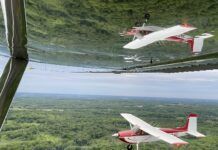
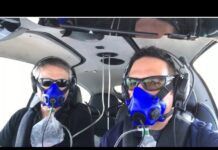










 The pilot’s lounge relocated a bit to the south, while I spent some time doing volunteer flying in a Cessna 206 for LightHawk, the airborne conservation organization. LightHawk does most of its work in the U.S., but assists in efforts in Central America during the winter. My rotation was in the country of Belize. I’ve written about flying for conservation in the past and have nothing but praise for LightHawk and other groups that use aircraft to support ongoing research activity as we learn more about how to be good stewards of our natural resources.
While living conditions can be somewhat primitive, the opportunity to meet the very talented pilots who routinely fly into challenging locations and pit your skills against those same conditions overshadows any transient complaints that the cologne you splash on first thing in the morning is eau de bug dope. When the term “runway” is the product of someone’s optimism and you are trying to alight on one when it’s hot and the crosswind is gusting to 25, many of the things you think are important back in the States suddenly lose their significance.
|

I particularly enjoy meeting and talking with the pilots who fly in Belize. They provide a glimpse back to the days of swashbuckling, when one’s aviation skills, cunning and judgment could make all the difference as to whether the outcome of a flight would be successful. A diverse, interesting and capable lot, they come not only from Belize, but all over the globe, to a place where they must demonstrate their ability to successfully spike a Cessna 206, 207, 208 or an Islander onto an airstrip often not much wider than the landing gear, get stopped in a limited distance and then pry the assemblage out of there again, on a day-in and day-out basis. When interesting weather and strong winds are stirred into the mixture, watching them practice their craft is a joy. They are very good.
While there is a long, fat runway at the International airport, a few miles to the northwest, the municipal airport at Belize City, the largest city in Belize, has but one runway, about 1,700 feet long. It is surrounded on three sides by water. There is no overrun. Each threshold simply rises out of the Caribbean. There is a small obstruction in the form of a mangrove-covered peninsula about 100 feet off the departure end of runway 30. It is one of the better runways in the country – better than many because it is wide enough to turn around on and the pavement is in good condition.
Because the afternoon temperature is usually in the 90s, on light wind days the heavily-loaded Cessna Caravan 206s and 207s use much of the runway getting off the ground. Most enjoyable to watch are the same airplanes coming down final as the pilots judge time, speed and distance to flare over the water and then roll the wheels on the first few feet of the runway just as the wing decides it is all done lifting for that flight. Without major heaves on the brakes or heavy reversing, the pilots almost invariably make the mid-field turnoff. It’s an art, and those who recognize the skill involved never tire of the view.
Naturally, in talking with the pilots, one never hears anyone brag of his or her accomplishments. The conversations are more likely to be the converse – comments about making a smooth landing due to sheer luck, or a fortuitous gust rescuing the airplane from their own ineptness. It is delightful to hear, because pilots who regularly fly into demanding airports must genuflect to the gods of speed control and angle of attack on every flight without fail, or risk much personal mortification. Those who practice the art know best of all just how thin the margin is between success and disaster.
A Slight Embarrassment
|

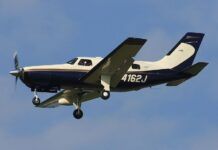
In the midst of watching airplanes with registration numbers beginning with “V3” respond to the ministrations of their commanders one windy afternoon at Belize City Municipal, I saw a light single speed down final, flare while still high and then begin to float down the runway. The pilot wisely went around and tried again. To my dismay I saw that it was an N registered airplane. One of my own countrymen was publicly demonstrating his difficulty with speed control on final to pilots who view such a transgression as even worse than putting ice in beer. On the next approach he did not begin his flare until over the end of the runway. It became obvious that he had again tacked on extra speed, for the airplane continued past where I stood while maintaining a constant three-foot altitude. The pilot eventually squashed it onto the ground at midfield. Fortunately, panic braking was not needed to get stopped.
Later, in one of the little bars at the airport, I heard the pilot of the airplane mention that he didn’t like short runways because he had to fly final so slowly and the airplane just felt so sloppy on the controls when he flew at book speed.
I didn’t say a word to him. I behaved. I really did. The Belizean pilots nearby just rolled their eyes.
The Pilot’s Lounge Convenes
Because the Pilot’s Lounge is on what I like to refer to as a virtual airport, it is completely portable. The discussions and learning experiences I have had with other pilots have taken place at numerous airports around the country, via e-mail exchanges and on some of the Internet aviation forums, most notably Avsig, the oldest, and to my mind, the best of the bunch. The evening after I had seen and heard the pilot of the floating airplane, it happened that I was staying at a venerable roadhouse and institution in its own right, JB’s Watering Hole, about 30 miles west of Belize City. I was talking flying with two U.S. pilots, Jerry and Jim Hoogerwerf. Jerry is a volunteer pilot for LightHawk and makes his living operating a charter service at the airport in Soccoro, New Mexico. His brother Jim had recently taken his last trip out as a Delta Airlines 767 captain before retiring. I greatly respect their opinions on matters aeronautical. I wanted to talk to them because the attitude of the pilot of the floater was still bothering me. It had caused me to think of some flight reviews I’d given to pilots who were generally satisfactory manipulators of the controls, yet sloppy in holding altitude, heading and airspeed and quite cavalier about the idea of flying precisely. They seemed to fly without lan or grace and gave no indication they were even aware that anything was lacking. Having had precision flying drilled into me by my betters at a pretty early age, the attitude of being satisfied with just herding an airplane in some general direction has always made me uncomfortable.
I raised the subject with Jim and Jerry. I’d flown with Jerry and watched him nail airspeeds and altitudes and grease on landings. I also knew that he had been the national champion in a grueling competition put on by the United States Precision Flying Team back in the late ’70s before that organization sadly collapsed in confusion. Jim had spent his life in a world that requires precision, first with the Air Force and then as an airline pilot. I figured they would be able to provide some insights on the subject.
Because It May Really Matter
|

The brothers started out by saying that one of the reasons they believe it’s important to fly precisely is that sometimes it really does matter. Jim lives in Atlanta, Georgia, and keeps his airplane on a 1,500-foot strip. Not only is it short, the runway has a dogleg in it and obstructions at both ends. At that airport, precision is its own reward and lack of it carries its own penalty in bent airplanes. Jerry responded by pointing out that Jim’s airport is really the exception. Most pilots fly out of airports with something over 3,000 feet of pavement that is at least 75 feet wide. There is little need for pilots to hold a recommended speed on final because they have plenty of room to screw up and still land and get stopped. They can come in with partial or no flaps, carry 20 extra knots and plant the airplane at well above stall speed and come swerving to a halt because the nosewheel will apologize for many of their transgressions. Their bad habits of speed control are not punished. Because most airplanes are so forgiving, a pilot can routinely make crummy approaches and landings and rationalize them away.
As I listened to Jim and Jerry, my initial reaction was that having to actually come up with a reason for precision flying beyond “because I told you so” the next time I was asked during a flight review was going to be a little challenging. I was reminded of some pilots I’ve flown with who simply like going into the sky and wandering about wherever the feeling moves them (recognizing that there are some limits on airspace). That is most pleasant to do from time to time, but meandering best defines how they fly all of the time.
I was beginning to feel cynical, so I asked about my friends who fly no more than 25 or 50 hours a year and only take a few cross-country trips. Is it even worthwhile for them to make the effort to fly the airplane as well as they can? Even though they had agreed that most pilots do not run into the need to fly precisely in their day-to-day operations, Jim and Jerry both commented that the reality of things is that a pilot never truly knows when he or she is going to need to use every bit of the skill acquired over the hours and years. Aviation reality means that there are so many unknowns, so many variables, and our accident rate is so high, that in any given year of flying, there is a very strong probability we will face a situation where every bit of our skill is needed. As a result, they felt strongly that it’s wise to be in the habit of flying the airplane as accurately as one can.
Murphy Had A Law
|

That made sense to me. Tailwheel pilots know from having their faces rubbed in the need for holding the airplane absolutely straight on takeoff and landing that they must handle those airplanes precisely all the time because they can get bit suddenly. It just takes one little gust, or a slightly dragging brake, to start a swerve. Left untended for only a moment, that swerve can go out of control faster than Gretsky could fool a goalie. No matter what ratings a tailwheel pilot possesses, watch one of them on takeoff or landing. If the nose of that airplane starts moving left or right even as much as a degree, there is rudder input to put it back where it belongs right Johnnie now.
It’s true for the nosewheel pilot as well, I think, but the frequency of harsh warnings is much less. However, as sure as Murphy had a law and corollaries apply to aviation, you are going to need those atrophied skills when you least expect it and most wish it weren’t so. When you finally convince the family to take that flying vacation, your 0800 departure is going to get delayed until noon. Therefore, you are going to arrive at that scenic little strip a half mile from the place you rented on the lake at 3:00 p.m. as the thermals are doing their worst and the wind is kicking up across the 2,300 foot strip that has trees on each end and side. Your sins are going to come home to roost because you’ve been flying final at 85 knots with 10 degrees of flaps in the Archer because it feels so sloppy at 70 knots with full flaps and there’s a better-than-even chance that you are either going to damage that airplane when you try to land or you are going to scare the bejabbers out of your family – or both.
When that day comes, will you really postpone the trip or divert to another airport? You haven’t exactly been practicing self-discipline in your flying up to that point, have you? What will cause you suddenly to change your entire pattern of flying habits and decision-making? Every time you’ve flown in the last few years you’ve been evaluating yourself. It’s something we all do. You’ve told yourself that your flying was good enough, haven’t you? Now, the day has come when your “good enough” flying practices and decision-making procedures may not truly be good enough. The conditions will demand that you radically revise your internal standard as to what is “good enough” such that you will need to either suddenly decide to fly final on speed, with full flaps and make the needed, large control inputs, or divert to another airport. Will you? The accident statistics say that you will probably do neither, for we are creatures of habit. The chances are that you will try to get into the strip and damage the airplane in the process.
Personal Performance Standards
|

It’s simply a fact of human nature. When we are in the habit of self-evaluating to a very loose standard (severe grade inflation so to speak) we’re very unlikely to suddenly snap out of it and be completely objective. Besides the low likelihood that we will change our habit patterns suddenly, most of us haven’t flown with anyone else (at least since our last flight review), so we don’t have an objective standard of measurement for ourselves other than the speeds printed in the POH. Unfortunately, when we’ve tacked on extra speed on final every time, we’ve already told ourselves that we don’t have to pay attention to them, haven’t we?
Jim and Jerry’s remarks on the likelihood that we will face a situation where a habit of flying precisely will be required reminded me of aerobatic students I’ve trained. A huge proportion of those who sought aerobatic instruction told me that did so because they wanted to improve their skills so they would be able to recover from a serious unusual attitude, such as might happen if they were rolled inverted by wake turbulence while close to the ground. I knew, and they knew, that the reason was pure rationalization. The reason most everyone wants to fly acro is that it is a heck of a lot of fun. Yes, acro does really bump up a pilot’s skill set, but the risk of being inverted by wake turbulence is almost infinitesimally low so let’s call a rationalization a rationalization.
If we can spend a chuck of money on aerobatic lessons for a nearly non-existent risk, why can’t we simply alter our habit patterns to deal with a very real risk? It doesn’t even cost anything (which should certainly be attractive to us tightwad pilots). We do fly into Oshkosh and other airshows where the arrival pattern requires holding an airspeed and altitude precisely. Failure to do so has killed people. Every one of us has experienced stronger crosswinds than forecast when it comes time to land. We have experienced airport construction where the only runway open for a few weeks is the shortest one. The need to be in the habit of flying an airplane precisely is real because we still haven’t tamed all of the risks of aviation. That’s one of the reasons we like to fly – it isn’t pure vanilla and the sharp edges haven’t been filed off. But, we have to recognize the other side of the equation; we have to keep ourselves ready to deal with those sharp edges.
Pride and Enjoyment
|

I found that I agreed with what Jim and Jerry said about reducing our risks by getting into the habit of flying precisely. It certainly made sense to me.
After we split up for the night, I kept thinking about the subject. If it’s not enough to remind us there are consequences for not flying precisely, of not doing our best every time we get into an airplane, perhaps the whole concept of pride should be raised. We had the moxie to decide to learn to fly. We made a major effort – and there is no other description for learning to fly; it’s a major effort. We joined a group that makes up less than one percent of our country’s population, a tiny fraction of one percent of the population on earth, who can fly airplanes. That’s something of which to be proud. No matter what we say when being self-effacing, obtaining a pilot’s certificate is no small accomplishment. We have every right to be proud of it. We shouldn’t tarnish it by giving less than our best when we fly.
Many, many pilots have said they learn something every time they fly. It’s one of the reasons many of us fly, because there is something new every time we venture aloft. Don’t we owe it to ourselves to strive to fly as perfectly as we can every time we strap ourselves into an airplane? If nothing else, the better we do something the more fun it is. And, despite any claims to the contrary, we fly because it’s fun. For it to keep being fun, we want to do it as well as we can.
To show that we are more than some life form water bugging across the surface of the planet, don’t we owe it to ourselves to fly our airplanes to the best of our abilities? If the budget only allows two hours of flying this month, shouldn’t at least one of them involve an effort to decide what speeds we are going to hold on climb out and approach, and what altitudes we are going to fly, and then nail them? And then, when we land, to chose a spot where we are going to touch down, and hit that spot, on speed and on centerline – or, if we don’t hit it the first or second or third try, to go ahead and make four or five patterns so that, after some effort, we are either there or getting much closer than when we started the exercise?
When we do that, maybe, just maybe, we’ll walk away from the airplane with a little more confidence in ourselves, knowing that we can make the trip to the airstrip on the lake and the airplane won’t cringe at its tiedown when it sees us pull up with the family and the luggage.
See you next month.