
















 Here in the pilots lounge at the virtual airport a few of us are muttering darkly about May’s flying weather. It comes after a winter for wimps, so mild that the lakes never froze hard enough for skiplane operations. It says right here in the contract that we’re supposed to have a cold winter with lots of ice on the lakes and plenty of snow for sports. Winter gets to hang around through a miserable April and we are rewarded for our fortitude with the flowers and warm breezes of May. Somebody didn’t get the briefing. Good grief, coming home last week at 6,000 feet just south of Battle Creek I picked up enough ice that I had to descend to warmer air.
Old Hack just laughs and tells us to quit whining. He was right about the sucker hole warm spell last month and says that that when I shake my fist at the weather it just makes things worse. He’s probably right about that, too.
The View From Up North
 After last week’s flight I wandered into the lounge and found that a friend I hadn’t seen in a while was in one of the big chairs. He was heading for his summer flying job in Alaska, so I was treated to stories of operations in that loveliest of states. He and I talked well into the night, and, in the process, got onto a subject that stuck with me, leading to this column. He has done some, let’s just say, challenging flying – including fire bombing in a number of countries as well as throughout the U.S. We started discussing accident rates by geographic location, and the higher rate in Alaska.
My friend pointed out that Alaskan pilots are the first to admit that there are special challenges involved in flying in the last frontier. They know that the accident rate is significantly worse than in the lower 48. After all, they are the ones who are going to be the first at the scene of the crash, so safety-of-flight means self-preservation – a subject near and dear to each one. He also said that most pilots in Alaska are clearly not stupid. They recognize that there’s a problem and they’re working on it. They are fully aware that there is no simple way to improve the accident rate. The causes are complex, so they must be attacked on a systematic basis. However, he also was pretty vehement in asserting that one of the roots of the difficulty in further reducing the accident rate in all areas of the U.S. lies within the FAA itself.
His experience lead him to feel strongly that the FAA needs to do some introspection because a continuing reason for aircraft accidents is that a small number of FAA inspectors have poisoned the relationship between pilots and the FAA – enough that programs proposed by the FAA are looked at with deep suspicion in segments of the aviation community. He said that, because of actions by inspectors who either didn’t know what they were doing or were perceived as out to just violate pilots, rather than to encourage safe operation, a certain, fairly significant percentage, of pilots are convinced that the FAA is not geared toward safety. Rather, pilots believe the FAA is putting into place regulations, procedures and programs that make it easier for the agency to nail pilots for those inevitable times when they violate a regulation. These pilots (and many others) believe it is impossible to complete a flight without breaking some regulation, and that all of the FAA’s new “safety” programs are merely window dressing for ways to make it easier to prosecute pilots who are simply trying to make a living or engage in a legitimate form of recreation.
Something’s Very Wrong Here
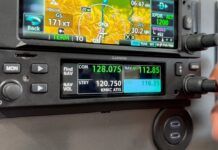
After my friend departed, I couldn’t help but think back to what he had said. I recalled that the FAA has come up with a very impressive program, including onboard hardware and software, that provides a great deal of information to pilots, in flight, and promises to significantly improve general aviation safety. I believe it’s called Capstone and it was introduced in Alaska because someone wisely felt it would do the most good where conditions are most difficult. When I first heard about the program I wondered how I could get the hardware put in my airplane because I liked what I saw. Unfortunately, the most recent report I’d seen on Capstone was that effectiveness was not nearly as high as expected because a significant number of pilots using it didn’t trust the FAA. They were not making use of the capabilities of the equipment because one of the side effects was to provide a lot of information to the FAA as to where each individual airplane was, even in a non-radar environment. Pilots felt they had not received adequate assurance that the FAA would not play Big Brother and use what was supposed to be a safety system to track and prosecute pilots for violations of FARs.
It seems to me that when a system that promises to substantially increase safety of flight is not used because the very people it will keep alive are afraid it will be used against them, something is seriously askew in the aviation world.
I’ve been around pilots and airplanes long enough to have heard all sorts of “evil FAA” stories. The times I’ve been able to look at the facts behind specific stories I’ve found that some were true, some were complete lies and the rest were somewhere in the middle. I’ve come to the general conclusion that pilots and FAA employees are human, so naturally there is a normal spectrum of humanity among each group; some are wonderful people that I feel lucky to know, some are the dregs of the bilge, but most fall in the middle, heading off to fly or work each day with the intent of doing the best they can with the resources at hand.
The Dregs
Sure, all of us have seen a situation at an FBO, charter operator, flight school, airline, or maintenance shop where one or three real dirtballs either slipped past the hiring process or just went sour after time on the job. Some of them manage to hold on to their jobs long enough to make others miserable, or, in some cases, to kill themselves and others in an aircraft. It’s always a sad commentary when a chief pilot says, following an accident, “I knew I should have fired that jerk,” or words to that effect.
Even those who think capitalism is the root of all evil have to admit that one of its big redeeming features is that most of the time the screwups, misfits, egomaniacs, incompetents and little Napoleons get themselves fired before they hurt someone (unless they own the place).
The Danger Of The FAA’s Dregs
 The FAA doesn’t have the freedom to fire those it hires and who then prove to be unable to play well with others. Back in the days of the spoils system, a political election meant that the hacks, sycophants, toadies and glad-hinders were given federal jobs as a reward for sucking up to the victor. In those days, being competent was no defense against getting swept onto the street should one be of the wrong political persuasion.
The problem was obvious, significant and had to be fixed. After years of wrangling and arm waving, the civil service system was installed for federal employees. It got rid of the major problem, but the job security provisions had the side effect of making it exceedingly difficult to fire someone, even if stunningly incompetent.
For most federal agencies, civil service just means that the fumblers are limited to merely frustrating or aggravating fairly large groups of people. The terminally confused usually can’t do more than waste lots of money.
Within the FAA the stakes are higher. The chronically befuddled or oppressively egotistical are in an environment where their actions can, and do, frustrate the FAA’s otherwise very real efforts to reduce the general aviation accident rate. I suspect there are about 3 to 5 percent of FAA employees who fall under that far end of the bell curve for advanced incompetence, unpleasant little personality disorders or just plain mean-spiritedness.
The problem is that the things those folks do start accident chains that kill people. The problem children have a negative impact on safety that far exceeds their numbers because just one can alienate a lot of pilots. FAA managers know who the aggressively disoriented are but are endlessly frustrated by a system that makes it nearly impossible to get rid of them. It makes no sense that it is easier for the FAA to revoke a professional pilot’s certificate, effectively taking away his or her livelihood, than it is for the FAA to fire one of its own incompetent employees.
Yes, the agency and various aviation groups have pressed for some relief from civil service restrictions on firing. Thus far, efforts have been unsuccessful. I suspect a reason for the failure is that the approach taken to the change has not been to improve safety but to streamline the bureaucracy. But, that’s an oxymoron. The problem needs to be faced head-on. The FAA is charged with improving aviation safety and, because it has been generally willing to look at virtually all avenues of doing so, it must tackle the safety problems generated by its own employees. Because the FAA deals in life and death, employment rules that give no consideration to the more pressing concern of people dying in airplanes must be changed.
To Improve Aviation Safety, Change The Civil ServiceSystem
I want to make it clear that this is not a “bash the FAA” article. I have my disagreements with official positions taken by the agency as well as with individual employees. I happen to agree with a number of the positions taken. I respect and like most of the employees I’ve come to know. I have written to the FAA in opposition to proposed regulations I felt were idiotic and in support of ones I felt were good.
I regularly find myself on the opposite side of cases brought by FAA lawyers in the Chicago office. Over the years, I’ve had some heated discussions with some of those lawyers, yet, I have come to learn that if one of them makes a representation to me, I can count on it being true. While I’ve often wished they would just come around to my point of view, they are the sorts of aggressive, competent lawyers the FAA needs to hire and retain.
I’m fortunate to live where the local FSDO is staffed with some excellent inspectors. They know aircraft and understand the real-world decisions pilots must make when dealing with weather and maintenance. Not one shows a need to prove he or she is superior to local pilots by intimidating anyone. Yet, they also have to be the cop on the beat, and have demonstrated that they can usually see through and not tolerate any crap from those pilots or mechanics who fall under the incompetent end of the bell curve. I’ve listened to praise for maintenance inspector Paul Hansen from the local EAA community and was present when inspector Anson Gray showed great respect and courtesy while doing his job in investigating an accident in which a close friend was involved.
The Ripple Effects Of Incompetence
 The problem lies at the other end of the spectrum of FAA employees. Because a few simply cannot understand, or just don’t care, that their behavior has repercussions in the aviation community, they do things that destroy the respect members of that community have for the FAA in general. The immediate effect is for the communication between the affected pilots and mechanics and the FAA to stop. The FAA has learned through bitter experience that when communication between it and the aviation community is adversely affected, learning stops and safety suffers. The FAA is aware, and teaches, that one of the best ways to prevent accidents is with information. When pilots don’t trust what they are told by the FAA, they stop listening and talking to the FAA. When the FAA stops getting feedback from those who are putting it on the line in airplanes every day, it can’t do its job of providing relevant information that may save the lives of those in those airplanes.
As an example of just how important ongoing communication and learning really is, look at the FAA Wings program. To stay current in the program, a pilot goes to one FAA safety seminar and takes three hours of dual in a year. That’s it. It sounds pretty basic, yet, for years the simple process of giving out lapel wings to pilots who sat and listened to information from the FAA and then took some dual was so effective that there were no fatal accidents involving pilots who were current in the program. That’s a stunningly effective example of the value of communication. When the FAA alienates pilots, they are less likely to attend FAA programs or even listen to what the FAA has to say. That puts those pilots at greater risk of buying the farm than those who do seek out what the FAA has to say.
The FAA learned about the need for the free flow of information painfully. Following the Cerritos, California midair between the Cherokee and the airliner in the LAX TCA (okay, now it is the class B airspace), Congress mandated that the FAA quit coddling those rich, irresponsible pilots and violate them for the most minor of FAR violations. The FAA did as told, precipitating the nastiest cold war between the agency and the pilot community in history. Information from the field to the FAA stopped cold. Pilots refused to talk to FAA employees about anything. Congress’ “violate ’em to reduce the accident rate” program was a disaster. The accident rate did not drop in the slightest. The guilty party was Congress, because it imposed a practice that stopped communication among people who needed it; the FAA, some dead pilots and passengers, and general aviation safety were the victims.
The FAA, recognizing that it needed data it used to get just from normal interaction with pilots, teamed up with NASA to set up the ASRS. Through filing an ASRS “NASA report” pilots could tell about safety of flight concerns and operational errors without getting in trouble and do so in a way that the FAA couldn’t track them down. Funny, the accident rate resumed its decrease.
The FAA needs to treat its rogue employees and managers for what they are: communication saboteurs. When their actions cause a section of the aviation community to cut off communication with the FAA, they decrease the level of safety for that community. That is intolerable. The FAA needs the authority to terminate those employees who cause such problems without having to devote hundreds of hours to papering the employee’s file before discharging him or her.
The FAA has undertaken creative programs to improve safety. It is doing some pretty amazing things, such as Capstone in Alaska and work with NASA on various projects. It now has a small fund so as to give modest cash bonuses to its employees who accomplish something above and beyond the call of duty – an excellent idea.
Dear FAA, Can The Bad Ones
The FAA is rewarding those who are very good at their job. That’s essential. Also essential for safety of flight is for it to find a way to discharge those employees who actually undermine the agency’s efforts. Civil service rules must be changed; they can no longer be allowed to protect those who are a hazard to the safety of those of us who put our trust in aircraft.
See you next month.
