
















I just got back from a very enjoyable flying vacation trip toMexico with my wife and another couple. I flew my Cessna 210from Dallas to the beautiful city of Puerto Vallarta, Mexico.After nearly a week in PV, we moved up the coast and over intoBaja. We departed on November 10, 1994 with the expectation ofspending a little more than a week in the country and returnedon Saturday the 19th. I thought that some of my experiences mightbe of help and interest to others who may be thinking of a similartrip.
Preflight Concerns
The most direct routing from Dallas would have required a flightdown the center of Mexico. This would have placed an extensiveportion of the route over very high terrain with little weatherinformation and no ground radar support. Couple this with theknowledge that mountain flying can be a very unpredictable unforgivingexperience if taken lightly and you have my reasoning for thefollowing route.
I flew from Dallas to El Paso, Texas and spent the night there.Early the next morning at sunrise, we flew from El Paso to Hermosillo,Mexico (an Airport of Entry). We cleared Mexican customs andthen continued from Hermosillo to Guaymas, where we picked upthe eastern coast of the Gulf of California. Our southeasterlyroute from Guaymas took us down the coast line past Ciudad Obregon,Los Mochis, Culiacan, Matzalan and finally Puerto Vallarta.
This routing proved to be the best for two reasons: It limitedmy exposure to the high terrain, and once I reached the coastit allowed for VFR flight at a much lower enroute altitude alongmy course. Before telling you about the details of the flight,however, let me recount the pre-flight planning.
AOPA and the Paperwork
AOPA offers a terrific information package on flying to Mexico.I found that the paperwork requirements both going in and comingout were exactly as outlined in the AOPA brief. In addition,AOPA sells a Mexico trip guide kit. In it you will find the AOPAFlight Planning Guide to Mexico. I found this to be most informativeand helpful.
From the AOPA chart department, I purchased all the necessaryWAC charts and ONC charts for the areas I was planning to be in.Another thing that I purchased through AOPA, which turned outto be worth its weight in gold, was Jeppesen’s Latin Americantrip kit for IFR flying in Mexico. Even if you are not an instrumentrated pilot, this can be a very handy item to have and in my case,saved me from having to turn back to El Paso when the weatherdeteriorated to solid IFR.
The secret to having a wonderful time flying in Mexico is to doyour homework beforehand and be as completely prepared as possible.For example, you may or may not be asked to produce some of thepaperwork listed in the AOPA guide book. However, if you are askedfor something which you do not have with you, it could be a verycostly mistake. I was never asked to produce my pilot’s medicalcertificate (that is until arriving back at US. customs) or theaircraft weight and balance data, but I was fully prepared justin case.
If you are not the sole owner of your airplane or are flying aplane owned by a partnership or corporation, you may need a notarizedpermission letter from the other people or the organization shownon the aircraft registration. I was never asked for it even thoughtI had one. Had I not brought the permission letter, though, I’msure it would have been the first thing the Mexican authoritiesasked to see.
I can almost guarantee that you will be asked to produce yourMexican insurance policy. I was asked to do so several timesduring the trip. Do not cross the border without it. I got minefrom Cutter Aviation. This is a great FBO in El Paso and I highlyrecommend them anytime you are passing through. They chargedme $29.00 for ten days of coverage and it was the best rate Ihave seen, unless your own American insurance company will provideit as a freebie. I was told by them that they just provide thisas a service for their customers. Be sure to purchase the insurancefor more time than you plan to need it.
The last time I flew in Mexico was 1991. At that time, the AOPAand several pilots were warned that the people who were on boardthe plane when it crossed the border and were listed on the "Internacion"(a very important document, do not lose it) were supposed to beon board each time the plane landed. This is still a listed requirementand, as far as I could tell, one that still appears to be enforcedat many airports. I cite the fact that the passengers are listedby name on your flight plan at many airports. In other wordsno picking up or dropping off passengers. This was not a problemfor me; however, if I were going to test this issue, I would thinkit wise to brush up on your Spanish to facilitate talking yourway out of the potential trouble this may cause. In short, I justdon’t think it would be wise to violate this rule.
Fees, Fees, Fees
The "new" peso is indicated by an "N" in frontof the dollar sign; example N$l00. At the time of my trip inNovember 1994, the peso was worth about 3.3 to 3.4 to the dollarat most banks in Mexico. I found that the U.S. dollar was readilyaccepted for all aviation purchases (fuel and landing fees) butat a poorer exchange rate (generally about 3.0 to the dollar).So it would make sense to carry pesos for fuel and landing fees.
Airports which have a dispatch which is similar to a FSS in thestates are referred to as SENEAM airports. They generally arethe ones that have some type of commercial service and an operationalcontrol tower. At SENEAM airports you will pay a takeoff anda landing fee. If you file a flight plan from one SENEAM airportto another SENEAM airport, you are charged for the takeoff andlanding at your departure airport. Thus when you arrive fromthe states and are going to fly on to another SENEAM airport,you will pay the landing, the takeoff and the subsequent landingfee. At subsequent airports you will pay only for the landingand takeoff. If your destination is a non-SENEAM airport, youwill pay only for the takeoff.
ASA airports will also charge a landing fee and for parking. These fees are based on weight. I was charged approximately N$11by ASA for landings. As far as controlled airports with towersare concerned, I never landed at a SENEAM airport that was notalso an ASA airport so I always ended up paying fees to both agencies;however, they were collected by the same agent. As for overnightparking in Puerto Vallarta, it seems that it is based on an hourlymetric ton charge and is broken down into long term parking andshort term parking. When we arrived there, a Mexican soldiermet us on the ramp at our selected parking spot and recorded ourarrival time among other questions. The bottom line is that thecost for parking my aircraft, a Cessna 210 (2 metric tons as theyfigured it to be) from 1735 local on the 11th to 1000 on the 17th(122 hours.) was N$196.19 or approximately $59.00. That workedout to about $11.80 a day. If you have problems with the math,don’t blame me. Just be ready to pay about $12.00 a day for parking.
To clarify the fee issue, I found that the first landing in Mexicoat the airport of entry will cost you about $27.00 and all theother stops while in Mexico should run about $20.00 to $23.00if it is a SENEAM facility. This does not include overnight parking.If you are a penny-pincher, my advice is to stay at home becauseyou and your calculator are bound to get you in trouble. Justlook for the big mistakes in their calculations and you’ll beon your way with no problems. The above fees were somewhat consistenteverywhere I went, leading me to believe that they we accuratelyadministered. I am sure that it would have helped if I spokemore Spanish, however since I did not and paid up immediatelywithout question, I was out and going in no time at all.
Avgas in Mexico is a cash only deal, unless you have an internationalcredit card for fuel purchase. I used cash only for fuel purchasesand had no problems. I bought fuel at Los Mochis, Puerto Vallartaand Loreto. It was all 100/130 octane (green). For those of youlooking for 80 octane fuel in Mexico, there is none.
Keep in mind that fuel is sold by the liter. 1 U.S. gallon equals3.875 liters. You will pay the posted price per liter plus a10% value added tax. This 10% value added tax is applied to justabout anything you purchase in Mexico. In Los Mochis, PuertoVallarta, and Loreto, I paid the same price for gas, N$1.45 perliter. This worked out to about $1.85 per gallon if you pay indollars and $1.68 per gallon if you pay in pesos. I was generallybuying about 70 gallons of gas at a time and the difference inpaying pesos versus dollars was about $12.00 a fill up. You cansee from this that it is always best to go to a Mexican bank andexchange dollars for pesos and pay for everything in pesos whenpossible.
I did purchase 10 gallons of gas for $3.00 per gallon at PuntaChivato, an uncontrolled field in Baja. The price is subjectto the need and the availability. While I’m on this subject,let me cover a related item. Be sure to bring your own oil foryour aircraft because you are not likely to find it in Mexico.
Operational Considerations
The main problems in flying around central and southern Mexicoin a non-turbocharged or non- pressurized aircraft are the highterrain and the lack of any good enroute weather briefing. Youshould always plan for the worst-case scenarios and never allowyourself to get painted into a corner. All of the flying in themountains should be planned for the early morning hours and thelate afternoon. As a good rule of thumb, the air begins to deterioratearound 10 am local and grows steadily worse until about 4 pm,then gradually improves until dark. Stay out of the mountainsor on the ground at your present location if the wind is over25 knots on the surface. With the tropical temperatures a yearround factor, density altitude problems will almost always needto be considered at the higher elevations. Also keep in mindthat where you have high terrain in close proximity to a coastalairport, the possibility of late afternoon rain showers and lowclouds can occur. Know your aircraft performance before evergoing into the high mountainous terrain and always be heads upfor the possibility of ever changing conditions.
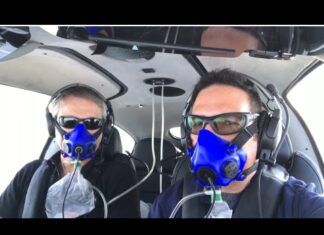
Night VFR flying is prohibited in Mexico. IFR is not impossiblebut requires some real attention in a single engine piston aircraft.In many cases you may be limited by the fact that the MEA’s onmany of the routes are 14,000 and 18,000 feet. Single engineIFR is allowed but unless one has a turbocharged aircraft equippedwith oxygen, you may find yourself severely limited. If I wasgoing to spend any time flying the interior of Mexico, I wouldhave at least some portable oxygen on board, if for no otherreason other than to climb as high as possible to get out of theturbulent air over the high terrain. Use oxygen carefully becauseI am not sure where you would go to get it refilled. In summary,if you have a normally-aspirated single-engine aircraft, you shouldprobably consider limiting your flying to VFR only.
While flying in Mexico, you must be on a flight plan at all times!It remains open until you close it at the next SENEAM airport,even if you take days to get there. If you are planning to overnightat several uncontrolled fields enroute to your destination, alwayslist them on the flight plan. Keep in mind, that no one is goingto come looking for you after your scheduled arrival time at yourdestination, unless someone you know in Mexico initiated the search.Yes, you are very much on your own in the event of a forced landingand the terrain is often very rugged.
Let’s say by way of an example, you are enroute from Hermosilloto Puerto Vallarta. Enroute, your passengers decide that theyneed an unplanned break. The closest place is Los Mochis, whichyou did not place on your flight plan as a scheduled stop. Whatto do? No problem, just go over to Los Mochis and land. You willhave to close your previous flight plan and open a new one toPuerto Vallarta. You will also have to pay all the associatedfees for that airport.
Now for a different scenario. Let’s say when your passengersapproach you with their needs, you spot a pretty little runwayout in the middle of nowhere, which looks like it should be noproblem to get into or out of. You land! Now, out of no where(that’s the way it always happens), here comes this uniformedMexican soldier (with his rifle over his shoulder) who speaksno English. You gather that he wants to see your flight planand you show him your paperwork. If this is a military use field,or a restricted field of some type, you may be in serious trouble.Believe me when I say that he will not be pleased when he cannot find his airport, which he is assigned to protect, listedon your flight plan. This would be another one of those timesto speak fluent Spanish. This may not always happen as I described,but when it does you will wish that you had just let the folksin the back wet their pants. You will probably be detained whilehe makes a very thorough search of everything on the aircraft,even some parts of it that you haven’t seen. However, if youhad realized that you wanted to land at this field, placed iton your flight plan as a stop, and knew it to be a legal landingsite (very important), he would probably have quietly disappearedafter making a quick check to see that you had the right numberof passengers on board.
If you want to land at an uncontrolled field which was not listedon your flight plan, by all means make sure that it is some placethat gets a lot of little airplanes coming and going routinelyand you know it to be OK to land there. The Mexican governmentis hard at work trying to stop the smuggling of illegal substancesout of small airports by small aircraft.
Here’s a story we heard in the hotel bar at Punta Chivato fromsome Americans coming in from California in a Cessna 180. Afterclearing customs in Mexico, they were continuing south to theirdestination at Punta Chivato when a pit stop became necessary.They spotted an uncontrolled paved runway nearby with other aircrafton the field and decided to land. From nowhere came an armoredmilitary half-track vehicle with several soldiers on board, rightup in front of the turning aircraft engine, guns pointing rightat the pilot’s head. The lead soldier demanded their paperworkand when he did not find that airport on the flight plan, he wasunconcerned about their potty needs. Thanks to one of the quick-thinkingand enterprising female passengers on board, who had been caughtin the bushes with her pants down, serious trouble was avoidedwhen she managed to buy their way out of it with 2 dozen homemadechocolate chip cookies which they were saving for the trip. Thesoldiers let them go with a warning not to land there again. True story!
I have flown into several uncontrolled fields in Mexico. In allcases they got little traffic and were used as convenient footpathsin many cases. In one case even as a parking lot for large RV’s.One should always know that the runway he is about to use issuitable for his aircraft and the other very important point isthat it is legal to land there. If you see other aircraft onthe field (maybe its OK) or have been told by other pilots thatit is OK (very important), then proceed with extreme caution.If all of the above is true, then make sure that you overflythe landing area and carefully look for holes, large rocks, muddyconditions, very sandy surfaces and any other types of obstructionsbefore committing to the landing. Especially after heavy rains,small uncontrolled dirt fields can be very hazardous to you andyour aircraft. Remember to be heads-up on this type of flyingand keep to the beaten path. It could be a long walk out!
Navigation
There are plenty of VORs with DME in Mexico, although they tendto be located at the airports with control towers. This generallyplaces them on the lowest ground around so their range is nottoo great for planes operating below the jet routes. In additionthere are still some NDBs which are still used for enroute navigation.I have a Trimble 2000 GPS on board my plane and it has provento be a great investment. During previous visits when my aircraftwas equipped with Loran, I would lose all usable signals aroundthe central parts of Mexico. The GPS is great also for planningroutes over the lowest available terrain.
WAC charts are no longer printed for the southern parts of theMexican area. CH-22, CH-23 and CJ-25 are the only ones available.The chart numbers may have changed by the time you make your order.You have to use the ONC charts which are printed on heavy paperand only on one side. They are hard to use in a small cockpit.They show the location of VORs but no additional information.It is good to have an IFR enroute chart to back up the ONC withand also because they are maintained current. The IFR chartsalso give you the latitude and longitude to program airports thatmay not be in your GPS database. With the AOPA flight planningguide to Mexico, the ONC charts, the WAC charts, the IFR charts,and the IFR airport approach plates, I did not feel the need forany additional information.
In Mexico, I have never found the kind of good weather informationthat we are so accustomed to in the States. One thing that Ifound most helpful in this regard was that most all of the resortarea hotels have CNN and The Weather Channel. Satellite TV isbig in Mexico. I found this to be a very vital source for atleast the big picture. I understand that there is a weather servicein Mexico City (5-726-1672); however, I can not speak to thispersonally since I have not used it. I understand that they mayonly speak to you in Spanish, and mine is not that good. Youmay also try asking the dispatcher at SENEAM airports to tellyou the weather for your destination. At Hermosillo and PuertoVallarta the dispatchers were fully capable of giving me the latestweather and the forecast at all of the points along my route toBaja. However, enroute weather was not available. Enroute I askedthe approach controllers along the way for updates and each timehad no problem getting them.
Some airports have tiedown tie points in the tarmac, but I neverfound one that provided ropes, chains, or chocks. You have tobring your own. In addition I brought my own tiedown anchorsand chocks. If you plan to overnight at any unimproved fieldthese should be must-carry items.
Security at airports seemed excellent. Most public airports havesoldiers or police wandering around with submachine guns or automaticrifles which seems to discourage undesirable elements. I neverleft anything of value visible in the airplane, any more thanI would in my car, but I never saw any sign that anyone ever touchedmy plane.
There are several TCAs (they are still called that) in Mexicoand the IFR charts show them. Even though you are VFR, you arestill required to talk to approach control for that facility beforeentering his airspace. A good rule of thumb is to attempt contacton approach frequencies for all tower controlled fields priorto 50 NM out. This will help one avoid calling a tower 10 milesout and then discovering that it has a 50 mile TCA. The controllersat all the major airports speak excellent English. When you firstcontact them you should provide the following information: whoyou are, your location as referenced to him (radial and DME),your destination, and your last point of departure. Be preparedwhen asked, to give him numerous updates on your position whilein his airspace, especially if he has other traffic in the area.Remember that he is providing aircraft separation from your positionreports. I only encountered one airport which had radar surveillance(Puerto Vallarta). I also found that while transiting the differentenroute approach facilities they were an excellent source of weatherupdates for my destination. Also for what it’s worth, one othergood reason for contacting all of the enroute approach controllersis that in the unlikely event of a forced landing, someone wouldknow when they last heard from you. I’m not sure if this wouldhelp but who knows. It sure doesn’t hurt.
Now for My Trip
The morning we left El Paso I was racing to beat a rapidly movingfrontal system which was bearing down on the northern portionof my flight path, bringing with it IFR conditions, moderate turbulence,isolated thunderstorms and the potential for heavy rains. I hadthe aircraft topped off with fuel from the day before. Afteran early morning weather brief from Albuquerque FSS, a brief discussionwith advice on my return to the USA, and filing my flight planto Hermosillo, we launched off just minutes after legal sunrise.The 284 NM leg to Hermosillo was over the mountains and I feltthat I would possibly beat the turbulence with the early morningdeparture, which was indeed the case.
It was also steadfast in my mind that I would not continue topress towards Hermosillo if the high terrain could not be keptin sight visually at all times and most importantly, that I didnot allow myself to get in a position that a VFR retreat to ElPaso became impossible. Fuel was not a problem considering thefact that I had taken off with sufficient gas to travel all theway to Hermosillo and return to El Paso, with still an hour anda half reserve on board. Enroute I made several deviations aroundproblem weather areas, always keeping a constant track of my locationon the charts. My GPS and Strikefinder were invaluable in thissituation.
After crossing the highest terrain enroute, I tuned up HMO VORand switched to approach control. We learned quickly after talkingto approach, that the field was IFR at 800 overcast and 1.5 milesvisibility. Approaches were in progress at the time we firstchecked in with Hermosillo. The controller, in very good English,asked if I and my aircraft were capable of shooting the approach.Thanks to the fact that I had ordered the IFR Jepp Kit from AOPA,I could answer yes to all his questions. I was quickly sequencedin for the approach and landed in heavy rain.
Once on the ground my immediate concern was whether or not afterclearing customs, would I be allowed to depart IFR, before theweather got even worse. I checked the MEA enroute to Guaymaswhich is along the coast and found that it was only 7000 ft. I thought that if I could get to Guaymas then if need be I couldshoot an approach to underneath the overcast if I could determineVFR conditions existed to the south. When I asked the dispatcherat Hermosillo if he could, he pulled up the weather for Guaymasand all of the SENEAM fields enroute to Puerto Vallarta. (I wasshocked. Keep in mind that I had to ask for it though). Indeedthe weather was better every NM that I could achieve going south.I asked if it was possible to file an IFR flight plan and thencancel it once I achieved VFR conditions. No Problemo!
I filed IFR from Hermosillo to Puerto Vallarta by way of the Victorairways. About 50 NM south of Guaymas we were in clear skiesand I canceled my IFR and proceeded VFR. Due to the fact thatit was raining cats and dogs when we were ready to depart Hermosillo,coupled with the fact that I had 4 hours of fuel on board, I electednot to refuel at Hermosillo. Consequently, I made an unscheduledfuel stop at Los Mochis which I had not listed on my flight planfrom HMO to PVR. No Problemo! We arrived in Puerto Vallartaat about 1730. By the way, for those who are wondering aboutthe time zones; PV is on Central time. Just to the North of PV,they are on Mountain time. The aircraft was secured for the weekand we started looking for the first cold cerveza.
On Thursday the 17th, we departed Puerto Vallarta with plans tovisit Baja for a couple of days before going back home to Dallas.I filed a flight plan to Loreto with stops at Las Palmas, HotelSerenidad, and Punta Chivato, all places that I had visited before.We had good weather for this leg of the trip and elected to crossthe Gulf of California just south of Los Mochis to a point onthe southern tip of Baja. This worked out to be about 160 NMoverwater and we had the necessary survival equipment with us.
We stopped in Las Palmas for lunch and, after a brief look around,headed up the coast at about a 1,000 feet for a two hour flightto Hotel Serenidad. What a beautiful and majestic flight! Withthe clear water of the coast coupled with the mountainous terrainof Baja as a backdrop, we were constantly overwhelmed around everycorner. After a brief stop at Hotel Serenidad, we elected tomove on because it looked like it might rain and the runway thereis of a muddy clay which when wet really makes a mess of youraircraft. Having stayed there before under different conditions,I can highly recommend it when things are a little dryer. Wetook off and continued across the bay to Punta Chivato for a twonight stay. The runway is better under wet conditions and theview from your room is breathtaking. We had a great time witha full day of fishing and relaxing in the warm sun. The hotelthere cost about $60 a night and is well worth the stop. No creditcards are accepted however.
On Saturday morning we had coffee in the restaurant while watchingthe weather channel for a big picture view of the latest satelliteweather. There seemed to be a low pressure area being pushedby the upper level jet stream that we possibly could have to dealwith just south of El Paso, but the El Paso weather channel forecastdid not look that bad. We departed Punta Chivato for Loreto around0800 . There we cleared customs, refueled and departed non-stopfor El Paso. I tried numerous times to get a call through tocustoms at El Paso by phone at the airport in Loreto, but withno luck. Finally, relying on a previous Albuquerque FSS briefer’sinformation, I elected to depart for El Paso and contact themon 122.4 when I was an hour out. I had been told that they wouldbe more than helpful in my need to notify customs with the requiredone hour notification.
We climbed to 11,500 feet. enroute and noticed right away thatwe were getting a 60 to 70 knot tailwind. Now what pilot in hisright mind would not want to see this type of condition? Wellthis was one of those times. My Cessna 210 was doing about 235knots groundspeed and this was going to be a problem to achieveradio communications far enough out to give the required fullhour notice to customs. I attempted to call Albuquerque FSS tono avail and finally got another aircraft on the frequency, whosaid he would be more than glad to attempt a relay.
Of all the times to get an unhelpful FSS specialist; yes, that’sright, no help! The FSS lady told the other aircraft that I wouldhave to contact her personally before she wouldrelay anything to customs. (By the way, after talking with hersupervisor for about an hour after I was repatriated, I thinkshe will be a little more helpful in the future.)
To make matters worse, it was about that time that we startedgetting continuous moderate turbulence at all usable altitudes.I finally got in touch with the FSS lady personally by radiowhen I was about 30 minutes out and after laughing at me overthe radio she reluctantly said she would notify customs. I askedher kindly, if after she notified customs would she please relayback to me if I needed to hold south of the border until my hourwas up. She stated in a very uncaring tone, that was between meand customs. Welcome, home! Not once did anyone in Mexico treatus like she did. Moral to this story is to make a personal phonecontact if at all possible.
After weighing all my options, I simply decided that rather thanget beat up by the turbulence any more than absolutely necessary,I would press on in knowing that I had made the attempted contactmore than an hour out. I was sincerely worried that I was goingto have to address this problem with Customs. Customs never saida word about it and they were very nice to us all.
El Paso to Dallas was a piece of cake. All in all, a great tripand one that I would definitely recommend to anyone looking fora vacation with adventure and relaxation.
Conclusion
I have always had an excellent time flying my plane around Mexicoand would highly recommend it to anyone looking for a fabulousvacation trip. I have had absolutely no difficulty with anyoneat any SENEAM airport. Everyone was always completely professionaland pleasant to work with. I think the secret to having a wonderfultime while visiting this majestic country is to plan your tripcarefully, know your aircraft’s operational limitations, neverpaint yourself into a corner, keep to the well-beaten paths, andby all means be as pleasant to everyone as you would like themto be with you. Remember that you are in a foreign country wherethe rules are different and you are the visitor. The personwho acts like the horse’s patoot will probably never get a betterview.
It is amazing to me that the hardest part of any trip to Mexicois the return to the good old USA. If my experiences prove truefor the Mexican pilot who is attempting to enter this countrylegally, I am sad to say that we must look like the big old uglyAmericans.