











Monday, August 21st: SMX-BFI
After topping the tanks of my trusty Cessna 310and packing it with lots of charts, coats, luggage, cameras, and survivalgear, I take off with my brother-in-law Joel for a long-anticipated flyingvacation trip to Alaska. It’s the first time for both of us, and somethingI’ve dreamed about doing for 20 years. Equipped with AOPA’s Alaska infopacket, Jeppesen’s Canada/Alaska trip kit, and Don Downie’s book YourAlaskan Flight Plan, we’re about to spend the next week and a halfchecking out the land of the midnight sun and Exxon’s most expensive blunder.You bet I’m excited!
It’s late in the season to visit Alaska. The best flying weather occurs inJune and July. But that’s also the height of the Alaskan tourist season, andaccomodations are hard to come by without advance reservations. Our strategywas to try to time our trip late enough that advance reservations wouldn’t benecessary, but early enough to avoid the really bad flying weather. It’s aroll of the dice, of course.
Today’s leg is a routine 4+15 IFR flight from my home base of Santa Maria,California [SMX], to Seattle’s Boeing Field [BFI]. The west coast isenshrouded in a thick stratus blanket, as it often is this time of year, so there’s not much scenery to look at.
But the flight isn’t completely boring. Not long after reaching cruisingaltitude, I notice the attitude indicator doing a funny littledance, and soon it winds up settling about 10 degrees wing-low. The horizongradually strightens up, behaves itself for about an hour, and then the anomaly repeats itself. Oh, great!
Touching down at BFI about 3 pm, I make a beeline for American Avionics’instrument shop and throw myself upon the mercy of the shop supervisor,begging him to check out my ailing horizon, and explaining that my long-anticipated vacation trip to Alaska is in jeopardy. He agrees.
Twenty minutes later, my horizon is out of the airplane and disassembled on thebench. "Contaminated bearings," the technician states, "needs an overhaul."Looks at his watch. "We can probably do it for you now." I’m thrilled andgrateful. I’m even permitted to watch the entire surgical procedure, which iswas quite interesting. My instrument, complete with a fresh yellow tag, isback in the airplane by about 6 pm. Incredible service!
We have dinner with a Seattle friend and sack out at his home, eagerlyanticipating our first sight of Alaska tomorrow.
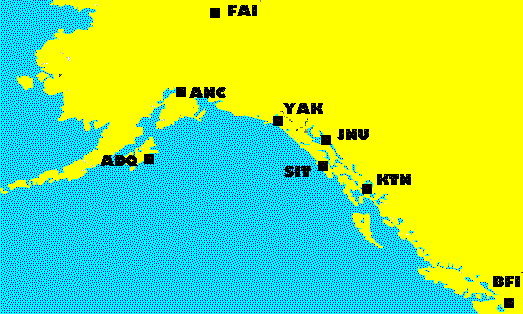
Tuesday, August 22nd: BFI-KTN-SIT
Departed Seattle Boeing Field (BFI) about 10:30 am on an IFR flight plannonstop to Ketchikan, Alaska (KTN). Not even an especially long flight…just 3:15. The 12,000′ cruising altitude put usskimming the tops of the undercast that extended from Seattle halfway up the Canadian west coast and started to break up around Prince Rupert. Astonishingly for this time of year, the north half of the flight was absolutely CAVU.The Canadian west coast is unbelievably desolate. I’m not sure I’d want tofly the coastal route in a single-engine airplane. Not only isn’t there anyplace to make a forced landing for hundreds of miles at a stretch, but evenif you walked away unscathed it’s hard to imagine who’d find you. The inlandAlcan Highway route with its numerous landing strips is by far the moreconservative choice for a single-engine flight. But we were flying a twinand making the most of it, flying from Washington to Alaska without any needto land in Canada and deal with customs.
Most of the flight was handled by Vancouver Center, and differed only a littlefrom a typical IFR flight in the U.S. Canadian ATC uses slightly differentterminology (e.g., "radar identified" instead of "radar contact"), andemphasizes the "N" at the beginning of the aircraft tail number ("twin CessnaNOVEMBER two six three eight x-ray"). The airways (V440, V317) are based on acombination of VOR and NDB navaids. Otherwise, it could have been any 3-hourIFR X-C. Although during the course of the three hours, I did not hear asingle other IFR GA aircraft; the only other IFRs were a succession of AlaskaAirlines 727s leaving contrails above me at FL350.
Arrived at Ketchikan International Airport just before 1 pm local (Alaskan)time. What a glorious sight! The KTN runway extends right along the westedge of the Tongass Narrows, while the city of Ketchikan is a two-block-widestrip of civilization that extends right along the east edge of the narrows.There is high terrain on both sides of the narrows. In the waterwayseparating the runway and the town were two huge white luxury liners, dozensof floatplanes of every description, and hundreds of boats of all sorts. Theconstant flow of floatplanes in and out of the narrows was spellbinding.
Leaving 38X on the airport ramp, it was just a short walk to the ferry terminalfor the short ferry ride across the water to the town ($2 round-trip). Wetook a fascinating 3-hour walking tour of Ketchikan. The most memorablepart for me was seeing the tens of thousands of salmon swimming upstream inthe Ketchikan river like a southern California freeway traffic jam. Thesalmon fish hatchery is mind-boggling, and the king salmon are unbelievablyhuge. Ketchikan is the salmon capital of the world.
At 5:30, we departed KTN for a one hour IFR flight to Sitka. Sitka had beensocked in all day and was quite invisible under the low undercast, so we shota LDA/DME approach and broke out about 1000′ above the sea to the glorioussight of the runway literally sitting in the middle of the ocean andsurrounded by water on all sides. A bridge connects the airport-island to thecity of Sitka. As we tied down at the FBO about 7 pm, the owner was about toclose up and drive home, so he offered to drive us over the bridge to ourhotel. We had a nice dinner and decided to make it a reasonably early nightin order to get up early to explore this most Russian of all American cities.
Only one minor mishap marred an otherwise perfect day of flying andsightseeing: on climbout from KTN, my right vacuum pump failed. Since bothpumps are over 800 hours old (and the typical life of a pump is 500 hours), Ican hardly complain (the pumps are fully depreciated, that’s for sure). But itis something I’ll have to take care of right away. Since my airplane requiresthe larger-size 400-series vacuum pump (because of the deicing boots), theonly place I’m likely to find the needed pump is in Achorage, which is threehours flying time from SIT. I’ll make some phone calls in the morning andfigure out what to do.
Wednesday, August 23rd: SIT
Today was a non-flying day. It wasn’t supposed to be, but that’s the way it turned out.Woke up bright and early, and made a few phone calls from the hotel in Sitka(Westmark Shee Atika, a lovely place). First call was to Wilbur’s FlyingService at Anchorage Merrill…no problem on the failed Airborne 400-seriesvacuum pump, they have them in stock. Next call was to the Glacier Bay Lodgeat Gustavus (pronounced "gus-TAY-vus", not "GUS-ta-vus"!) to secure reservations fortwo nights’ lodging and a 9-hour boat tour of Glacier Bay tomorrow. Thirdcall was to FBO at Sitka asking that the airplane be fueled for alate-afternoon departure to GST.
Spent all morning and early afternoon checking out Sitka on foot. Must’vewalked seven miles. This is a fascinating town with an awful lot to see. TheRussian church and the fabulously-restored mansion of the Russian Bishop (took16 years to restore, just fully opened to the public for the first time thisyear). A wonderful National Historical Park with thickly-forested grounds(Sitka spruce, mostly), several dozen huge Tlingit totem poles, and gorgeousviews of the city, harbor, and salmon runs. Three terrific museums. Allsorts of art galleries (one specializing in nothing but engraved seal tusks). A little coffee house with the best espresso I’ve ever tasted (oh soS-T-R-O-N-G but not at all bitter…remarkable). Breathtaking views everydirection you look. Sitka is really neat.
About 1:30 pm, phoned SIT FSS to get a weather briefing for the 30-minuteflight to Gustavus. Gustavus hasn’t reported any weather all day. Hmmm.PIREP 30 minutes ago by a PA28, unable to get into GST VFR. PIREP 90 minutesago, departing pilot reports 200-foot ceiling at GST. HMMMmmm… GST is anuncontrolled airport with an NDB approach, 880′ and 1-1/2 minimums for acategory B airplane like my 310.
So much for FSS. I phoned Glacier Bay Airways at GST. Some nice-sounding ladyanswered the phone. I explained that I’m supposed to fly a twin Cessna into GST,but can’t get any current weather…are there any pilots around who could giveme some weather info? Lady explained that there is no certified weatherobserver around so there is no "official" weather available, but looking outthe window she’s guessing that its something like "5 SCT E8 BKN 14 OVC 2 L-F"!I remarked that she sounds like she knows something about weather. Sheallowed as how she used to be a certified weather observer for 10 years. Iasked her if she thinks the approach to GST could be made. She said she guessed probably not.
I thought about filing anyway and taking a looksee, but that’d cost a couple ofhundred bucks in operating costs and I’ve still got only one vacuum pump. So Ithink better of the whole thing and decide to stay over in Sitka anothernight.
Tomorrow we’ll give GST another shot…if still below minimums, we’ll just goon to Anchorage, and hope to catch Glacier Bay on the way back. Gotta go withthe flow, I guess.
As a consolation prize, I did some more walking arounddowntown Sitka, ate a large dinner of blackened prime rib (so spicy it nearlyturns my ears red) and mud pie, and hit the sack early: around 10:30 pm(remember, it doesn’t even get dark here until 9 this time of year). SITweather had lowered substantially with the coming of nightfall and it startedto rain heavily and steadily. I have little hope for getting into GSTtomorrow.
Thursday, August 24th: SIT-GST
About 1:30 am I awoke with a massive bout of insomnia, due partly to thesecond coming of the blackened prime rib. The rain wasstill pelting down. A big cruise ship had bedded down for the night in thechannel outside my window, its lights diffused by the rain. I fired up mylaptop and did a little work. Now it was 2:30 am, the rain had taperedoff, the cruise ship lights were distinct and bright and twinkly in theharbor. I went back to sleep.When I awoke, it was 8:30 am, no sign of rain, ceiling about 2000′ broken, andone tantalizing spot of blue sky that was gone as soon as I spotted it, butspoke of improving weather. A call to SIT flight service revealed that a GSTreport had been received and it was quite good: 5 SCT E25 BKN 20.
Now if only I can get a reservation at Glacier Bay Lodge…I’d had to cancelmy reservations when I was weathered out last night, remember? Numerouscalls…the phone is always busy. An hour later, finally the call ringsthrough. Glacier Bay Lodge is almost full, but yes they can squeeze us in. Another call to SIT FSS to file an IFR flight plan for the 38-minute flight.
After a double espresso and a pecan sticky roll at the gourmet coffee shop, Icatch a taxi to Sitka airport. Pay the tab for $220 worth of avgas…enoughto fly to GST and then 3 hours GST-ANC with IFR reserves…no fuel isavailable at GST except in emergencies. Careful preflight…no water in thefuel despite the airplane sitting in the rain for two days.
I call SIT FSS for clearance. They advise that Alaska Airlines’ 727 isdeparting IFR ahead of me, and a Baron is IFR inbound…possible 25-30 minutedelay. Alaska takes off. FSS calls: how soon can we be ready for departure? "Instantly." FSS chats with Baron, convinces him to make the DME arctransition to the LDA/DME approach, rather than the procedure turn. Then givesme a clearance with a 2-minute void time. It takes all of those two minutesto back-taxi to the end of the runway 29 (no parallel taxiway). I launch justas the void time arrives. FSS hands me off to ANC Center. I thank SITprofusely for managing to sandwich my departure between the 727 and the Baron,then switch to center freq and thank the Baron for his cooperation. Everybody’s so nice here!
Bases 1500′, tops 5300′, overcast cirrus above. Not a lot of scenery cruisingat 8000′ on top. Scarcely enough time to get levelled off and leaned upbefore it’s time to start studying the GST approach plate. Decide to try theVOR/DME Bravo approach first (1080′ minimums), then NDB Alpha as plan B (880’minimums).
The approach goes smoothly, we break out about 1400′ and have the GST runwayeasily in sight five miles out. Call to JNU FSS to cancel our IFR. We landstraight-in, grab the last remaining tiedown spot, and call a taxi for the10-mile bumpy ride from the airport to Glacier Bay Lodge.
The Lodge is lovely (it should be at $130/night…no TVs or phones either). Ihave a chance to wash my dirty clothes (finally) and walk around Bartlett Coveand watch the sea birds and phone Jan on the one public phone that serves the whole lodge.
Time for dinner now, followed by a three-hour naturalist program put on in theLodge auditorium by the Park Service. Early to bed. Tomorrow I must arise early and be on the boat at 7:00 am for a 9 1/2 hour cruise up the west arm of Glacier Bay.
Friday, August 25th: GST
Providence works in mysterious ways. You’ll recall that we planned to flyinto Gustavus Wednesday evening so we could take a boat tour of Glacier Bay onThursday, but that GST was below instrument minimums so we had to slip thewhole plan back 24 hours, right?What a fantastic piece of good fortune that weather delay turned out to be!Today turned out to be one of those incredibly rare days that the localphotographers who take the pictures for postcards of Glacier Bay wait threeyears for! When I awoke at 5:30 am and looked outside, there was a tinybreak in the otherwise-overcast sky to the north, and the sun was shiningthrough the break and illuminating the 15,000′-high snow-covered Mt.Fairweather like a beacon on the horizon. I dressed hastily (we were warnedto "bring lots of layers of clothing, hats, gloves, binoculars and cameras"),ate a quick breakfast, assembled on the boat ("The Spirit of Adventure") at6:45 am, and left the dock promptly at 7 am on the dot. By now the break inthe overcast had grown and I could see that the chances for some sunshineup-bay was looking promising. Sunshine in Glacier Bay is nothing short ofextraordinary this time of year.
Glacier Bay National Park and Preserve is the 5th largest of the nationalparks, about the size of the state of Connecticut. Glacier Bay itself is 65miles long and accessible only by boat, kayak, or floatplane. Since the mostinteresting glaciers are at the deepest recesses of the bay, it takes a ratherfast boat to make it all the way up and back in a day. The Spirit ofAdventure is such a boat: a huge 120-foot-long three-deck-high catamaranpowered by dual 16-cylinder 2500-hp diesel engines, it cruises at nearly 25knots, and completes the tour in 9 hours flat (including a half-dozen stops toview glaciers and wildlife at close range and to drop off and pick up campersand kayakers), departing at 7 am and returning at 4 pm.
I cannot begin to do justice to this boat tour of Glacier Bay. The blue-icetidewater glaciers were infinitely more impressive than the pictures andvideos convey, and the sounds of the ice cracking as the glaciers "calve"off huge icebergs, and the feel of the icy wind as it blows across theglacier before hitting your face are as much a part of the experience as thesight of the glaciers. But there was so much more to see in Glacier Bay thanthe blue-ice glaciers…
We saw one truly unique glacier composed of jet black ice! This glacier wasa so-called "galloping glacier" that advanced nearly a full mile in the lastyear. Last summer, it was not even visible from the Glacier Bay… this year,it had reached the bay and was calving incredible black icebergs into thebay. Why black ice? Because the glacier advanced with such incredibleswiftness, it scoured black sand from the igneous rock over which ittravelled, and this black sand became so well mixed with the ice that the icetook on a uniformly black appearance, almost like asphalt. This sight wasawesome even to the Glacier Bay regulars who live here… there has beennothing like it for at least 20 years.
The wildlife that I saw in Glacier Bay was also fabulous and unique. SouthMarble Island is a bird rookery and was covered with tufted puffins in fullmating colors (those fluorescent yellow and orange beaks that make them looklike the koala bears of bird-dom), cormorants, glaucous-wing gulls, oystercrackers, and other rare birds seen only in this region. Further up the bay wesaw a herd of gigantic sea lions sunning themselves in the unexpectedsunshine…these critters weigh 2,000 pounds and are the size of a Toyotapickup truck…and they bellow like lions. At the end of Johns Hopkins inletat the north end of the west branch of Glacier Bay, we saw no fewer than 3,000harbor seals relaxing on the pack ice and soaking up the rays…these guys areonly about six feet long and 200 pounds, and so cute that I would have takenone home if it wasn’t illegal.
By the time we returned to the Glacier Bay Lodge, the sky had cleared all theway to the south end of the bay. I’m keeping my fingers crossed that thisweather will stick around until tomorrow so we can get some actual VFR-typesightseeing weather for the flight to Anchorage…up until now, the flying partof the trip has been all IFR…nice easy IFR, mind you, but let’s face it: thetop of an undercast in Alaska looks pretty much the same as it does anywhereelse!
If the weather is nice enough in the morning, we might try the 30-minute hopto Skagway (a VFR-only strip nestled in a steep river valley and featuring acolorful old gold-rush town) before continuing on to Anchorage. But if"normal" weather returns, we’ll just file IFR to Anchorage and miss thescenery. Another exciting prospect: we will be arriving in Anchorage with noreservations for either a hotel room or rental car. Wish us luck!
Saturday, August 26th: GST-SGY-ANC
Saturday morning dawned with a glorious cloudless sky at Glacier Bay andvisibility so good you could almost reach out and touch 15,000-foot Mt.Fairweather 50 miles away. We eagerly anticipated a fabulous sightseeingflight along the Alaskan gulf coast to Anchorage today, with glorious views ofYakutat Bay, Prince William Sound, and the Anchorage area, landing atAnchorage’s G.A. airport, Merrill Field, and arranging to have the rightvacuum pump replaced on Monday morning. Because getting a last-minutereservation in Anchorage is so difficult, I broke my rule about spontaneityand made a reservation at the Anchorage Travelodge downtown. A perfect planfor a perfect day.The first surprise came on the 10-mile taxi ride from Glacier Bay Lodge toGustavus airport…about halfway to the airport, we drove into anear-zero-zero fog bank! Not to worry…with glorious sunshine only a fewmiles away, the fog at the airport can’t last long, right? Anyway, if itdoesn’t, I can always make an instrument takeoff…that’s what twins are for,right?
A phone call to Juneau FSS yields the second surprise: "VFR not recommendedalong the coastal route to Anchorage…low ceilings, rain, fog from Yakutatwestward…not expected to improve during the day." You’ve got to bekidding! How about the inland route via Skagway, Burwash, Northway, Gulkana? That’s all good VFR up to about 100 nm from Anchorage, at which point theweather goes to pot rapidly. Anchorage is forecasting 400 overcast in rainand fog. OK, guess I’ll take the inland route…beats watching the top ofthe undercast for three hours. Maybe I’ll stop at Skagway…it’s supposed tobe a neat gold-rush town, and it has a runway that’s only a couple of blocksfrom the center of town. OK, we have a plan.
The fog is rapidly breaking up at Gustavus airport, so we depart VFR and flyup the eastern arm of Glacier Bay (the one we didn’t see by boat) at 1,500′.Fantastic! Then we climb to 6,500′ and cross over the terrain to Lynn Canal,then follow the canal north past Haines to Skagway. The town is situated in asteep, narrow blind canyon, with the runway literally right in the middle oftown. It feels really strange letting down into a narrow canyon with 6,500’walls on both sides, but sort of exciting at the same time. I touch down atSGY and spend a few hours exploring Skagway on foot. Bought a few gifts, ate alight lunch, yacked with the locals, and located a phone to call FSS. It’snow 2 pm.
Juneau FSS indicates that the weather is about the same as indicated earlier,except that Anchorage is down to 300 overcast in heavy rain with floodwarnings. Probably won’t be able to get into Merrill Field, which is astrictly VFR operation. We file for MRI anyway, with ANC (Anchorage Int’l) asa first alternate and Homer as a second alternate (since ANC is forecast below600-2). This will be a combined VFR/IFR flight plan…VFR from SGY toGulkana, then IFR into MRI/ANC. I’ve never tried this before, but it doesn’tfaze the FSS specialist at all…they do it all the time here.
The VFR portion of the flight is breathtaking. I can see the snow-coveredWrangell mountains (peaks at 15-19 thousand feet) from hundreds of miles away.The route proceeds across a stark wilderness of lakes and mountains toNorthway, where it follows the AlCan highway into Anchorage. As I approachGulkana, I feel some light chop and see textbook standing lenticularaltocumulus over 16,000-foot Mt. Sanford. The turbulence quickly passes. AtGulkana, I call Anchorage FSS through the Gulkana RCO, close our VFR flightplan, file a PIREP on the standing lenticulars, then contact Anchorage Centerand pick up our IFR clearance into ANC.
50 miles past Gulkana, we fly into clouds. Shortly thereafter, it starts torain…hard. I start picking up some rime ice. I have the pitot heat, propheat, and windshield heat on, but don’t want to use the boots…I’m down toone vacuum pump, remember, and that’s what inflates the boots. Center descends us from 12 to 11, then from 11 to 10. The ice stops forming, although it doesn’t melt off yet. It’s not enough to worry about. Center hands us off to ANC approach, who descends us to 3 and queries us on our destination. "We filed for Merrill, but I guess there’s no way to get in there in this weather, correct?" Affirmative. "OK, please amend our destination to International, we have ATIS information November." Roger.
The ILS approach is right on the money, and we break out at 250′ above thetouchdown zone in a driving rain (I feel us hydroplane when I touch thebrakes). We taxi to Van Dusen, shut down, and dash inside so as not to getsoaked. Nice hospitable airport, ANC: landing fee, $30/day parking fee,$60/day if you want a hangar. Cheapest rental car is $60/day. I look at mywristwatch: 7 pm. Omigosh! My non-guaranteed hotel reservation at theTravelodge! A phone call confirms that the reservation became history at 6pm. After some more calls, I obtain a room at the new Clarion hotel near theairport… $180/night, which I manage to negotiate down to $140. Welcome toAnchorage!
Well, I’m about to go have dinner and a nice big glass of wine. Tomorrow isSunday…we’ll take our $60/day rental car and explore some local stuff in theAnchorage area. If the weather lifts to VFR (even marginal), I’ll ferry theairplane to Merrill so the vacuum pump can be replaced on Monday morning.
Sunday, August 27th: ANC-MRI
This morning in Anchorage provided a brief respite to the rain that has beenpelting and flooding the city for days on end. The weather was reported as 3SCT 8 SCT 25 BKN 40 OVC, and since it could worsen at any moment, it seemedlike an opportune moment to ferry the aircraft from Anchorage Int’l to MerrillField (where an Airborne 442CW replacement right vacuum pump awaitsinstallation on Monday morning).The VFR hop from ANC to MRI is hardly long enough to retract the landing gear.As I pulled up to Wilbur’s at MRI, owners Joe and Anna Wilbur were justleaving for church, but Joe took the time to chat with me and assure me thathis son Steve would get me all fixed up first thing in the morning. Joe hasbeen operating out of MRI since the mid-fifties, and Wilbur’s is a classicfamily operation. Joe’s an A&P and AI as well as a pilot, and all of his sonsare, too. I think he had four sons in the business, but one died last year inan aviation accident. Anyway, real nice folks…salt of the earth types…thesort of people you visit Alaska to meet.
Being at Merrill, we were only a few blocks from ANC Center at Elmendorf AFB,so I phoned the number that the controller had given me over the air yesterdayand asked if we could drop by for a visit. The fellow at the other endexplained that they really prefer not to have visitors on weekends becausethey operate the center with just a skeleton staff, but if I called Mondaymorning they’d be most pleased to extend their hospitality. Since the Wilburbrothers will be working on 38X Monday morning, that’s most likely whatI’ll do.
Drove around downtown ANC awhile…it’s much smaller than I thought, butthe architecture is very modern and very innovative. Almost everything hasbeen built since the city center was decimated in 1964 by a monster 9+earthquake. I stopped by the tourist-trappy "Alaska Experience Theater" andsaw a half-hour cinerama-type film on Alaska’s wildernesses and afifteen-minute film on the ’64 quake, and spent some time in an exhibit ofpost-quake photographs. Checked out some art galleries and antique shopsbut managed to escape without buying anything.
Then the highpoint of the day: a drive around the Lake Hood floatplane baseand a visit to the Alaska Aviation Heritage Museum located adjacent to LakeHood. The museum is an absolute must-see for any aviation history buff. Theyhave a bunch of rare aircraft in various stages of restoration, and aone-of-a-kind Stinson Trimotor airliner that is in such pristine conditionit’s unbelievable…I think it’s criminal that they don’t have the funds to beable to hangar this airplane.
The floatplane operation is far and away the world’s busiest…it even has atower and an ATIS! It has two water runways (E-W and N-S) and a short gravelstrip for wheel-equipped aircraft. Thousands upon thousands of floatplanesare based at Lake Hood…I have no idea how many, but a drive around theperimeter of the lake is an absolute mind-blowing experience. Everything fromSuper Cubs to C185s to Beavers and Otters to a couple of Twin Beech 18’s arefloat equipped and operate in and out of the base at a pace that isremarkable. I think I could watch the goings on for days without gettingbored. My desire to add a floatplane rating to my pilot certificate has beendoubled and redoubled after today.
Well, now there are some mundane chores like finding a laundromat and doingthe wash and eating dinner and catching up on CIS. I’ll probably try tovisit ANC ARTCC in the morning, then (if the Wilburs get 38X repumped) try tofly somewhere where there’s decent weather. Maybe north to Fairbanks, maybesouth to Homer and Kodiak Island…it all depends on what kind of weathertomorrow brings. According to the crude weather map in today’s AnchorageDaily News, there’s another front coming this way from Nome. The weather isnever dull in Alaska this time of year. At least hopefully I’ll be able toface it with two vacuum pumps.
Monday, August 28th: MRI-FAI
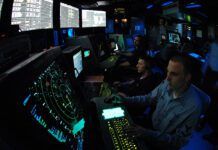
This morning was low overcast and rainy in Anchorage. I checked out of ourhotel and drove to Merrill Field. Checked in with Wilbur’s…they had justtowed 38X into their hangar and were about to start work on changing out thefailed right vacuum pump. Stopped by ANC FSS for an in-person outlookbriefing: a cold front is moving through ANC today, all passes leading out ofANC are expected to be IFR or very marginal VFR, best weather is to the northin Fairbanks. Looks like we’ll probably go to Fairbanks today, probably IFR,probably risking some icing (freezing level 6000′, MEA 10000′), but flying to betterweather.I call the watch supervisor at ANC ARTCC and arrange a tour of the Center.It’s only a few minutes drive from Merrill, right at the entrance gate ofElmendorf AFB. I’ve spent a fair amount of time in various ARTCCs, butAnchorage Center is a little unusual. It covers a HUGE amount of airspacewith very few sectors…each Alaskan sector is the size of, say, all of Bostonor New York Center’s jurisdiction. The equipment is also ratherunusual…Anchorage Center uses EARTS…essentially the same ARTS radar dataprocessing equipment normally used in a TRACON but adapted for enroute use.(The same sort of setup is used by Honolulu Center and San Juan Center.)Another interesting twist is that several of Anchorage Center’s westernmostsectors (Bering Strait and Aleutians) use radar data from military radar sitesthat are somehow interfaced with the EARTS computer. The military radar siteswas never designed for ATC use, and as a result the Center must use 20-mileseparation (rather than 5) for those sectors that depend on these militaryradars. In case you were wondering, ANC Center is only a Level 1 facility,but is treated as an "overseas" assignment by the FAA so controllers receive a25% tax-free cost-of-living allowance above and beyond the normal GS payrates…which is no windfall if you consider the astounding cost of living inAnchorage. I spent two hours at the Center in all, and it was a veryinteresting visit.
Checked back with Wilbur’s…vacuum pump swap complete. Tab: $695 for thepump plus $42 labor. Probably could have done a little better back in SMX,but not by much. Those Airborne 400-series pumps are expensive.
Ate lunch at a local greasy spoon near Merrill Field called Peggy’s…greatmeatloaf! Then drove into downtown for a visit to the Alaska Museum of Artand History. I’m not much of a museum-goer, but this museum was absolutelyextraordinary…perhaps the most exciting art and natural history exhibitsI’ve ever seen. I budgeted 30 minutes, and finally tore myself out of themuseum after 90, wishing I could spend several more hours there. This museumwill be very high on my list next time I visit Anchorage. Phenomenal!
Drop off the Avis car and get a lift back to Merrill. Another visit to ANCFSS reveals not much information. Alaskan weather reporting sites are few andfar between, and Alaskan pilots aren’t very good about filing PIREPs. Ispeculate that this is because most Alaskan G.A. flights are VFR in illegalweather conditions, and filing an accurate PIREP might result in enforcementaction. [Grin!] And it appears that Alaskan G.A. pilots almost never flyIFR…sneaking around visually at treetop level is apparently awell-entrenched tradition of Alaskan aviation. Well, not for this chickenpilot! I file IFR to Fairbanks International.
The flight was another outstanding IFR trip. Climbed out of ANC throughmultiple wet merging layers and levelled off at 12,000′ between layers withalmost unlimited visibility. A rip-roaring tailwind boosted my groundspeed to220 knots, making the whole trip a 1:10 affair. As I reached Denali, thehigher layer of clouds above broke up just enough to provide a spectacularview of 20,000-foot Mt. McKinley. Descending into Fairbanks, I did pick up alittle rime ice between 12,000′ and 9,000′ but it all melted off quickly as Icontinued the descent.
About 7,000′ I broke out to the sight of Fairbanks, plunked smack in themiddle of an uninhabitable sea of muskeg swamp on the bank of the Chena River.The wind was calm, so I requested a circle-to-land visual approach to runway19R so that I could get a bird’s-eye view of the city on a wide base leg.
Fairbanks International is an interesting and uniquely laid-out airport. Onthe northwest side is a 10,000×150 instrument runway with ILSs both ways. Onthe southeast side is a 3,200-foot touch-and-go runway and a gravel runway usedby bush planes and ski planes that dislike asphalt. Between the runways is awater runway for floatplanes! You fly it, FAI can accept it!
After renting a Hertz car and checking into the hotel, I drove 10 miles westto the old gold-rush town of Ester, AK, home of the world-famous Cripple CreekResort and the Malamute Saloon (made famous in Robert W. Service’s poem "TheShooting of Dan McGrew"). I chowed down on a filling all-you-can-eat buffetdinner of baked halibut, fried chicken, and reindeer stew (burp). Then Iattended a vaudeville-style show at the Malamute…a combination ofvery funny slapstick comedy, Alaskan folk songs, and readings of RobertService’s poetry.
Early tomorrow morning I’m taking a 3-hour tour of the Chena River on theDiscovery III, a huge sternwheeler riverboat. Then I’ll check the weatherand decide where to go next. Wherever that is, it will be my most distantpoint in Alaska…by Wednesday, I need to start working my way back towardthe lower 48.
At the hotel in Fairbanks that night, I woke up from a sound sleep at 2am and was drawn to the window, where I witnessed a lovely and delicatedisplay of aurora borealis. It was not the "curtain" sort that you usuallysee in pictures…rather, it looked like someone was slowly pouring luminousmilk onto the top of the sky and it was trickling down the sides to thehorizon.
Tuesday, August 29th: FAI-ADQ
Up this morning at the crack of dawn to get down to the dock for the morningcruise of the riverboat Discovery III, a 140-foot 1,000-passenger sternwheelerriverboat which tours the Chena and Tanana rivers near Fairbanks. This was abut more "organized touristy" than most of the activities on this trip…theriverboat tour is populated mostly by retired folks from the Princess and GrayLine Tours and the like…but it was so well done and so interesting thatI wound up not being offended by the touristiness, and had a very good time.The Disovery III is operated by Captain Jim Binkley, his wife, sons, andextended family, and they do it as well as it can be done in every respect.Jim’s a native Alaskan and has been doing this for 51 years, and learned histrade from his grandfather and father before him. He and his sons are alsopilots…they own and fly a Baron out of Fairbanks.After the boat trip, I checked out of the hotel in Fairbanks, ate lunch,spent some time exploring an excellent Alaskan Lands Exhibit in the basementof the Fairbanks courthouse building, and then headed to the airport and theFSS. I still hadn’t decided where to go next…West to Kotzebue and Nome onthe Bering Sea, or South to the Kenai and Kodiak on the Gulf of Alaska.Checking the weather, everything looked much worse than Fairbanks…a largelow-pressure area with moist air is affecting the weather over most of Alaska.Everything other than Fairbanks was IFR or MVFR. Under these conditions,going west to OTZ/OME seemed risky and awfully remote, and both forecasted fogand rain. So I decided to fly IFR to Kodiak Island (ADQ), an easy 2:45flight even with the forecast headwinds.
Drive to FAI airport, return the rental car, and preflight ’38X.Cleared as filed at 11 thousand. Climbout is VFR but soon I’m flying oversome "stuff". The stuff gradually slopes upward until I’m skimming it,then in it. Light rime ice…I ask for 13 and get it. But the stuffoutclimbs me and I start picking up some ice again. On go the pitot heat,prop heat, and windshield heat. Not to mention cabin heat. Those two100-amp alternators are humping to keep up with the electrical load.
After awhile, I start to notice a small split in the manifold pressureneedles. Couple of inches. I advance the right throttle to close up thesplit. But the split redevelops…and I’m out of throttle on the right side.The ball seems a bit off-center to the left, so apparently the loss of poweron the right side is real.
OK, what have we here? Probably induction icing, right? Or possibly somefailure in the turbocharging or induction air system. Pull the right enginealternate air control…no change. Great.
About now, the right alternator-fail warning light comes on. Oh, terrific! Ished some load…windshield and prop anti-ice off, leave pitot heat on. Let’ssee if this is for real. Switch left (good) alternator off…left alternatorfail light comes on (as expected) and right alternator fail light goes off!Huh? Left alternator switched back on, both fail lights off…whew, falsealarm.
Back to troubleshooting the right engine partial power loss. Oops, what’sthis? Right engine fuel flow suddenly reads ZERO! Then back to normal. ThenZERO again. Wait a minute, the right engine is still running smoothly, EGT isstill there, there must be fuel flow…this is obviously an instrumentationproblem.
Now the right alternator fail light illuminates once again. Cycling the rightalternator field switch will not correct the failure. This time switching offthe left alternator results in two alternator fail lights and a low voltagelight, and the loadmeter confirms: this time, the right alternator hasactually failed for real. I pull and reset the field breaker…no change. Itry to remove the field fuse to see if it’s blown, but I can’t seem to unscrewthe ^&$*(!@ fuse holder.
Let’s see now…partial loss of MP, failed fuel flow indication, spuriousalternator failure followed by real alternator failure, all on right engine.These symptoms don’t fit together. They don’t make sense. This is nothappening to me!
OK, troubleshooting doesn’t seem to be going so well, let’s turn our attentionto some contingency planning. Kodiak Island is the last place we want to gowith a mechanical problem. We better start thinking about landing inAnchorage. I call Center, advise that we seem to be having some engine andelectrical problems, request descent to the MEA (to try to stop the iceaccretion, since we can’t use all our deicing gear on one alternator), andrequest current ANC and MRI weather, advising that we may be diverting to ANCor MRI. Center descends us to 10,000′ and advises we cannot get lower forquite some time. ANC weather is MVFR in rain.
Level at 10 thou, the ice isn’t melting but at least it’s no longer accreting.MP split looks a little less than before, but still there. Fuel flow needleis now indicating normally! I try recycling the right alternator once againand, wonder of wonders, it comes back on-line…confirmed by loadmeter. Hmmm.I fiddle with the right engine controls and discover something very strange:if I retard the right throttle slightly, the MP actually increases just abit. Fiddle, fiddle. Hey, the MP split is going away! MP is now normal, EGTis normal, fuel flow is normal, both alternators on-line, everything isnormal. Twilight Zone time. I hate to leave you in suspense, but Ihonestly have no idea what went wrong or what made the problem go away. I canonly assume it has something to do with moisture getting in the wrong placesand freezing, but I’ve not been able to construct any scenario to account forall those seemingly-unrelated anomalies.
I advise Center that the problems "seem to have gone into remission" andrequest a climb to 13 thou again…approved, and this time we top the cloudsagain. I tell Center everything looks fine and we’ll plan on continuing toKodiak as filed. A look at the WAC chart reminds me of what unhospitable terrain I was flying over while I was troubleshooting these problems,and I feel glad that I’m flying a twin today.
The rest of the flight goes uneventfully. Weather starts breaking up nearHomer at the south end of the Kenai penninsula, and ADQ is good VFR as Iapproach it after a long overwater leg. I elect to shoot the ILS/DME approachwith a DME arc transition anyway, just for the fun of it. I arrive on-timeat Kodiak at 8 pm, fuel the airplane, and catch a taxi into town. Thatlittle in-flight episode took more out of me than I realized. I feel wornout, my body is sweaty, my clothes should be burned.
I check into the hotel and eat dinner. I have a bowl of the most superbseafood chowder that I have ever tasted anywhere…Kodiak is the largestcommercial fishing port in Alaska, and the seafood is awfully good. I takea shower, type up my notes, and it’s time to hit the rack. A loooooongday.
Wednesday, August 30th: ADQ-HOM-YAK
I spent this morning walking all over the town of Kodiak. This isdefinitely not a tourist town…it is a working fisherman’s town with oneof the largest fleets of fishing boats of anywhere in the world. Also theworld’s largest U.S. Coast Guard station, believe it or not.I passed up breakfast but stopped at a little coffee store and had someespresso…the owner was an ex-pilot and talked all about why the TwinCommanche is the only decent light twin and how Cessnas won’t last on theAlaskan Gulf coast because Cessna is too cheap to corrosion-proof theiraircraft. (He’s right.) He also told us the story of his life, from his Navy days inPortland in the 50’s to his stint as an Alaskan marijuana distributor (he gotbusted) and liquor distributor and liquor store owner to his presentsemi-retirement. I’d have never gotten out of there except that thetelephone rang and we seized that opportunity to make good our escape.
I stopped at the Visitor’s Center where a lovely lady spent a half hourtelling me all sorts of interesting things about what life is like on anisolated outpost like Kodiak Island, and all about the Tsunami in ’64 thatwiped out the town and its fishing fleet. I visited the Baranof museum thathad some very interesting exhibits concerning the indian and Russian heritageof Kodiak, and the famous Kodiak Russian Orthodox church with its twoturquoise-blue onion domes.
I stopped at some stores and bought a few things, then returned to the hotelto check out, eat some of that world-class seafood chowder for lunch, andsecure a hotel reservation for the night.
I thought I’d stop at Valdez tonight, but not a single vacancy existed inany of the five hotels and motels in of Valdez…full-up with folks involvedin the oil-spill cleanup. So I tried Cordova (on the east end of PriceWilliam Sound) but it was full-up, too. Things were starting to lookdesperate, but I finally secured a reservation at the Yakutat Lodge, yourbasic hunter/fisherman’s hangout at the airport at Yakutat, Alaska, a tinyindian town and fishing port known for its late-season fishing.
I took off VFR (!) from ADQ and spent a half-hour doing low-level sightseeingaround the back side of Kodiak Island (I’m talking Mike Busch low-level, not Alaskalow-level…about 2000′-3000′). Very rugged, lush, and wild…very lovely. Then I headed 100 nm overwater to Homer on the southwest corner of the KenaiPenninsula, landed at HOM, topped up the tanks, and visited with the FSS. Iwas still hoping that I’d be able to fly to Yakutat VFR down low and see thePrince William Sound from the air, but Valdez hadn’t reported any weather forthree hours and Cordova was reporting IFR with 800′ ceilings, rain showers,and fog…VFR by Alaskan standards but not my cup of tea. So I filed IFRfrom HOM to YAK at 11,000′.
This flight turned out to be quite similar to yesterday’s FAI-ADQ flight. Atfirst I was well on-top at 11,000′. Eventually the tops rose to put me inthe soup and I started to pick up some rime, so I climbed to 13,000′ andamended our routing a bit. I was in-and-out at 13,000’…mostly out, buticing when in…and I even had a mini-replay of the alternator-fail andMP-loss scenario for just a few minutes (same altitude, same icing conditions,same bizarreness). This time I hardly blinked.
About 90 miles east of YAK, the undercast finally broke up just in time togive me an absolutely stunning view of the entire Wrangell Mountain range(peaks up to 19,000′), Icy Bay, and the gigantic Malaspina glacier. Yakutatwas good VFR, although with RW- all about. I landed.
After parking the airplane, I followed some signs to the Yakutat Lodge (whereI had finally been able to make a room reservation). There was nobody in theoffice, but I finally located the manager in the bar and he checked me intothe last available room. It cost $70, payable in advance, thank you.
The accomodationscouldn’t possibly conform to the building codes anywhere in the lower 48. Theroom contains five (count ’em) bunk beds. The sheets are gritty with sand (Ichecked all five beds). No phone. No TV or radio. No coathangers. Noscreens on the windows, and giant mosquitoes everywhere. A few feet from thelodge, indians are packing huge containers of fresh-caught salmon and crushedice, and loading them into a rag-tag fleet of DC-3’s, Beech 18’s,Dehavilland Beavers, Cessna 206’s with huge oversized tires, and some rag-wingradial-engined single-engine critters that I can’t identify. Naturally, thewhole place reeks with fish odor.
THANK GOD…MY 5,000-MILE QUEST IS OVER AT LAST…I’VE FINALLY FOUND THE REAL ALASKA!
If I survive the night, I will probably fly to Juneau in the morning andspend the day exploring it…then back to the lower 48 on Friday.
Thursday, August 31st: YAK-JNU
I survived the night, the claustrophbic stall shower, thenot-exactly-clean towels, and the sandpaper toilet paper. Except for twolarge mosquito bites on the back of my right hand, I’m not much the worsefor wear. It’s raining this morning, even through the sky looks blue andthe surface visibility is unlimited (oooh, those mountains look lovely).How it can rain when the sky is blue is just another of the many mysteriesI’ll be leaving behind here in Yakutat…never to return. Why I didn’tjust press on one more hour to JNU last night I’ll never know. But YAKwill remain as vivid in my memories of Alaska as Sitka or Glacier Bay.I got the heck out of YAK just as quickly as I could this morning…nobreakfast, no coffee, no nothing. To add a final insult to injury, I hiked ahalf-mile through the mud with three suitcases to get an in-person briefing atYAK flight service station, and found a locked door with a sign taped to itsaying that due to personnel shortages the FSS doesn’t open until 10:30 am!I wasn’t about to hang around.
Flew YAK-JNU VFR. Weather was good enough that I decided to fly low alongthe Yakutat River, hang a right at the Great Pacific glacier, and navigate tothe northern tip of Glacier Bay, fly down the bay to Gustavus, and then hang aleft into Juneau. It was a gorgeous, breathtaking, glorious flight…I gotto see most of the glaciers and ice fields in Alaska, something that very fewpeople ever get to see so clearly and at such close range. Visual navigationwas difficult…it’s hard to tell one glacier from another…but finally Ifigured out that if I read out our lat/lon from the LORAN and plottedthat lat/lon position on the Sectional chart, I could figure out where wewere. Sort of your poor man’s moving map. Worked pretty well.Once in Glacier Bay, I saw two huge cruise shipssightseeing near the northern tip. I looked hard to find the "Spirit ofAdventure" tour boat that I had taken last week, and finally spotted it…itlooked like an insignificant speck on the lake, even though the boat seemedenormous when I was on it.
Landed at Juneau International and it was the most convenient airport in Alaska.Within five minutes of touchdown, the aircraft was refueled, I had a niceHertz rental car, the car was driven onto the ramp and over to the plane, andbaggage was unloaded from the plane and loaded into the car, and I had ahotel room reserved! Outstanding.
I drove the 10 miles south from the airport to downtown Juneau. Had a greatlunch at a restaurant called The Fiddlehead. Then spent 90 minutes visitingthe Alaska State Museum…a fascinating and truly outstanding exhibit ofAlaskan native cultures, wildlife, and history…ranks up there with thefabulous museum in Anchorage. Also visited a second museum…theJuneau-Douglas city museum…with very interesting exhibits about thegold-rush days and the huge gold mining and refining industry that used todominate Juneau at the turn of the century. I drove all over town, acrossthe bridge over Gastineau Channel to Douglas Island (where I snapped somegreat pictures of Juneau), then north to the great Mendenhall Glacier. Greatday of sightseeing…very glad I decided to spend our last day in Alaska inJuneau.
Tomorrow I head for Seattle (with a quick refueling stop in Ketchikan).
Friday, September 1st: JNU-KTN-BFI
Friday dawned in JNU with lovely VFR weather. Got an in-person briefing atJNU FSS…weather couldn’t be better, even a tailwind for the first portion ofthe flight. Filed VFR JNU-KTN 1+15 (to top tanks) and IFR KTN-SEA 3+10.Kicked tires and lit fires and launched.Flew JNU-KTN about 1500′ via the inside passage, detouring to see the smalllogging towns of Petersburg and Wrangell on the way. The scenery wasbreathtaking. Saw a remarkable number of huge cruise ships…I never imaginedthat there were so many. (90% of the people who see southeast Alaska do so bycruise ship.) It was also most interesting to view the huge "log rafts" beingtowed from logging camps, although it was a bit disconcerting to see how manyareas have been clear-cut…totally stripped of trees by the loggers. I landed at KTNand refueled quick-turn. An IFR Alaska Airlines 727 was inbound to KTN whichwould have entailed a 15 or 20 minute delay in getting an IFR departurerelease (KTN is non-radar: one-in/one-out), so I departed VFR and picked upmy clearance over Annette Island VORTAC.
Level at 11,000′ I was on top of everything for as far as the eye could seeand clocking better than 200k GS at 60% cruise power. LORAN reception of theWest Canada chain was good, so the autopilot flew the trip nav-coupled to theLORAN while I drank in the views of the Canadian west coast. (Recall that Ididn’t see much scenery on the SEA-KTN flight due to the undercast.)
The Canadian radar controllers use the terminology "radar identified" insteadof the American "radar contact". Surprisingly, one of the Vancouver Centercontrollers accepted my handoff callup with "radar contact". I asked thecontroller if they used "radar identified" and "radar contact"interchangeably. His smart-ass reply: "Affirmative, and yes."
Once again, there was hardly anything going on on center frequency. Ilistened to some news on the ADF to pass the time, but there’s not much AMradio receivable along that barren stretch. I fired up the 2-meter hamtransceiver and chatted with a couple of folks on the ground: two loggersdriving a pickup truck full of firewood near Port Hardy, and later a retiredcouple in Nanaimo at the north end of Vancouver Island. Hams always seem veryexcited to talk to an aeronautical mobile station.
Arriving in Seattle, I ran into the first real weather of the trip…widelyscattered thundershowers which lit up the stormscope pretty well. I only hadto deviate a little bit, but watched some pretty impressive cloud-to-grounddischarges right over downtown Seattle as I was flying the localizer intoBFI. Touched down at BFI within a minute or two of my planned 4 pm arrivaltime, and taxied to Flightcraft.
Saturday, September 2nd: BFI-SMX
The flight home was smooth and uneventful. We were on top of a thickundercast until about halfway down Oregon, but the tops were low enough thatwe got a great view of Mt. Hood, Mt. St. Helens, Crater Lake, and severalother volcanic peaks that poked well up through the undercast. By KlamathFalls, the clouds had vanished and was replaced by California haze. Wetouched down at SMX at 3:15 pm with 1+30 reserves left in the tanks.It was a fabulous, memorable vacation…one I’ve looked forward to for manyyears…one that I’ll remember for a long time. I’m glad you could ridealong.
For Statistics Buffs…
Entries from my logbook:
8/21 SMX-BFI 762nm 4.3hr IFR/ILS 13 apch/R.O.N./attitude gyro o’hauled
8/22 BFI-KTN 586 3.6 IFR/visualapch
" KTN-SIT 159 1.2 IFR/LDA-DME apch/rt vac pump failed
8/24 SIT-GST 83 0.7 IFR/VOR-DME-B apch/Glacier Bay Lodge
8/26 GST-SGY 63 0.5 VFR/lunch stop
" SGY-ANC 447 3.4 combined VFR+IFR/ILS 6R apch/broke out at 250′
8/27 ANC-MRI 5 0.1 VFR/ferry to Merrill Field for maintenance
8/28 MRI-FAI 223 1.2 IFR/visualapch/new vac pump OK
8/29 FAI-ADQ 444 2.9 IFR/ILSapch/flakey alt-fail-sensor/induc icing
8/30 ADQ-HOM 118 1.0 VFR/sightseeing Kodiak Island and Kenai
" HOM-YAK 359 2.2 IFR/ILS apch/Prince William Sounds socked in
8/31 YAK-JNU 172 1.2 IFG (Ifollow glaciers)/Glacier Bay sightseeing
9/1 JNU-KTN 203 1.5 VFR/fuel stop/Petersburg & Wrangell sightseeing
" KTN-BFI 586 3.3 IFR/ILS 13 apch/R.O.N. at Deakin’s house
9/2 BFI-SMX 762 4.2 IFR/visual apch/home at last
TOTALS 4,972nm 31.3hr
Avgas used: approx 900 gal, $1,800, 28.7 gph, 6.5 mpg.
