























Wally Roberts was born October 22,1936 in Pasadena, Calif., close enough to the Monrovia airport to see airplanesin the pattern. Around age 12, he watched a PT-13 auger in after stalling at thetop of a loop, killing the pilot and his girlfriend. For a while after that hehad a phobia about airplanes, but when that passed he realized that he wanted tobe a pilot. Years later he realized that watching the accident had made him asafer pilot. Wally entered the Air Force at 17, got stationed close to home atVictorville, Calif, and after the service taught flying at El Monte airportwhile he studied accounting at a local college.
With the airlines in furlough mode, Wally logged a couple of years as a CPA,and when the airlines started hiring again he signed on with TWA in January of1964. He became a captain in fairly short order, flying 727s and L-1011s, andhis interest in the details of terminal instrument approach procedures led tohis serving as Chairman of the Air Line Pilots Association [ALPA] Charting andInstrument Procedures Committee. Wally became fed up with Carl Icahn’s hijinx atTWA and retired from the captain’s chair in 1990 at age 54 — six years early.He now serves as an advisor to the ALPA TERPs committee. In the ’90s Wallywrote a monthly column for Belvoir’s IFR Refresher. Wally is one of a selectgroup with his own final approach fix — WALLY intersection — on the VOR DMEapproach to his longtime home airport at El Monte, Calif. His latest crusade isto get the FAA to release MVAs — minimum vectoring altitudes — to Smith,Honeywell and Jeppesen so pilots can see them on their moving maps. You can readmore about that and other TERPs issues at Wally’sTERPs website.
When did your interest in airplanes begin?
I grew up near the airport at Monrovia, California. Our house wasn’t exactly in the pattern, but once in a while a guy would fly a wide downwind and come over the house. From ’46 to ’50 we had a lot of GI training, mostly in Aeronca 7ACs. I liked to ride my bike to the airport and watch the planes. One day — I was about twelve — I watched a guy doing low-altitude loops in a PT-13. He had his girlfriend in the back seat and was trying to impress her family. On the third loop he stalled and crashed and killed them both. No fire, but it was a pretty gruesome crash. After that I had a phobia about airplanes for a while, and if I saw one in the air I had to go inside. I never really talked about it to anyone, and one day the phobia went away — like phobias will do in young people. Seeing that crash at that age probably contributed to me being a safer pilot.
Were you from an aviation family?
No. My parents didn’t fly and didn’t want me to fly. I had to get them to sign papers so that I could go into the Air Force.
When you went into the Air Force did you want to fly fighter jets, orbombers, or transports?
Flying the F-100C sim I was an enlisted man, and I didn’t fly at all. By my last year I had obtained my private certificate — on my own — and I got stationed at Victorville, which was close to home. The best thing about Victorville was the flight simulators, and I logged a lot of time in them. After getting used to shooting approaches at 180 knots on final, shooting them at 100 knots in a Piper was easy. While I was going to college I taught instruments at El Monte airport. I started teaching in a Link trainer because I had a ground instructor’s rating as a Link Trainer Operator, then I got my CFI-I a year or so later.
We got into trouble one rainy night flying the ILS into Santa Barbara. The approach begins out over the ocean, and we flew through the localizer without realizing it. Eventually — after too much time had passed — I figured out we were flying toward the mountains and we began a stall-horn climbing turn out of there. After that I decided that teaching instruments after putting in a full day at work might not be such a great idea.

What did you study in college?
Accounting. First at a junior college in Azusa, and finished up at L. A. State. I worked as an accountant for a couple of years, then the airlines started hiring and I got a job at TWA. They hadn’t hired anybody since ’58, so once things started moving, I was in a good position to move forward pretty fast. The first year and a half I was with them I didn’t touch an airplane. I was a second officer, and this was the “old” second officer. You think of second officer now as being a flight engineer on a three-person airplane, but this was a fourth person in the cockpit. It was kind of a union thing. Until the flight engineers got pilot qualified there had to be three pilots in the cockpit, so the first year and a half I just went along for the ride, then I checked out as co-pilot, and a year and a half later I was a captain.
Fortunately, I had considerable charter experience and a lot of twin-engine time. Some guys didn’t make it because they moved too fast and didn’t have the background. I got bounced back to co-pilot twice — once for about a year and a half, another time just for a few months — other than that I flew captain my whole career.
Which airplanes were you flying?
I have a lot of co-pilot time on the 707, and I flew co-pilot on the 1011. I flew captain on the DC-9, 727 more than anything else, and then the 767 and then the 1011. I retired early on the 1011. I left when I was 54 — six years before I had to — because the airline was going through such an upheaval when Carl Icahn bought it, and I just didn’t want any part of it anymore. I could afford to leave and I left. I missed the flying for quite a few years, but I didn’t miss all the other grief that went along with it.
Did you think about going to some other line?
I put feelers out for a couple of years but you had to be qualified on the right equipment and I didn’t have the right equipment qualifications. Qualifications expire so fast, so the only thing I really had to offer by the time I left the airline was the 1011. My 767 time was already too old, so there was no fit.
 | |
| Captain Roberts at home in a TWA L-1011 |
Did you fly GA during your TWA career?
I was actively involved in general aviation in El Monte until about ’76. After that it was pretty casual, just enough to stay current, and I’m not even doing that anymore. My interest in just light airplane flying is just not there anymore. I had my turn in the barrel and I enjoyed it. If somebody came along with a Citation X right now and wanted me to help them out, I’d be happy to fly one of those, but I don’t think I have to worry about that too much.
Walk us through how an airport gets an instrument approach.
At major airline airports the idea develops a life of its own in the community. But at a secondary airport or a general aviation airport that doesn’t have much in the way of commercial operations, the number-one key player in getting an instrument approach is the airport manager, the airport operator.
Then it starts with the politics of the FAA. The Region would look at it and the Airports Division. Region has three major divisions — it has Airports, Air Traffic, and Flight Standards — there’s other stuff, but those are the three important ones. Airports Division will look at it and say, “Well, how much money federal money do we have sunk in that airport? Yeah, that sounds like a good idea,” and then they pass it over to an Air Traffic analyst who will determine if it would create a burden on already existing traffic. For a long time they wouldn’t even let us have an approach at El Monte because the missed-approach conflicted with LAX arrivals, but they finally worked it out — L.A. gave a little bit, actually. They didn’t give away traffic capacity, but they modified the approach procedures so that El Monte could coexist, which is the correct way to do it.
If the Air Traffic people see no problem, then it’s just a matter of when then FAA has the resources to develop the approach procedure, and that’s gotten far worse than it used to be. They don’t have the staffing since they centralized it in Oklahoma City in about 1995. That was good in some ways, but they didn’t end up with the workers they used to have and plus they have this mandate to develop 500 GPS — and now they call them RNAV — approaches a year, some of which are very important and some of which aren’t used hardly by anybody anywhere. It’s kind of skewed things a little bit, but having said all that, if an airport has a demonstrated need and the airport manager really wants it and the air traffic facility is there to support it, he’ll get his approach.
And what will determine whether that approach is precision ornon-precision?
ILSs are very expensive and you’d find them at an airline airport where there’s just a whole bunch of federal money — so-called trust-fund money from the airline passengers. Once the FAA spends a million and a half dollars for the ILS the airport has to kick in and spend another million dollars for the approach lights, because an ILS without approach lights doesn’t utilize its full potential. Chino (Calif.) is a great example. They have no terrain problem with their final approach segment at all but they’re 200 and 3/4 because they don’t have approach lights.
Palomar has approach lights. It was 200 and 1/2 for a long time and now it’s 200 and 3/4 because of the airport manager. He wanted Dash-8s to come in there and because the taxiway isn’t far enough from the runway they had to accept an increase in visibility. That’s a real penalty for the jet operators that are flying for hire because all of a sudden they get stuck with RVR 4,000 rather than 2,400.
Let’s say our approach is an ILS. What happens next?
They do a preliminary study to make sure that the terrain will support an ILS. That study would be reviewed in the region by the Regional Flight Procedures Office. The NFPO — National Flight Procedures Office, AVN-100 — in Oklahoma City would ultimately do the final design and publication. Those folks are all TERPs qualified and they can do a rough sketch to make sure that the ILS is feasible before they spend the money on the hardware. The equipment is installed by airway facilities and the procedure is developed.
That’s not true of a VOR approach because the VOR is there anyway. The GPS doesn’t have to be there, so that would just come out of the blue, and then you try to design an approach if they want a RNAV approach, and get it to fit the best way you can.
And who does that?
They’re called Procedure Specialists, and they’re TERPs-qualified people in the NFPO office in Oklahoma City. They used to be pilots. In fact, they used to be the co-pilots in flight inspection, which I preferred, but FAA claimed they didn’t produce as much so most of them now are non-pilots, and this creates some problems. They do pretty good work overall. If they make a serious mistake, it will be caught in flight inspection, and the first time they fly it will be in the daytime when they can see and catch problems that got missed in the design.
Who decides which runway gets which approach?
The airport manager would have a lot to say about that. Generally you would want it into the runway that’s used when the weather’s the worst. In the coastal airports in California, the prevailing winds are from the water, and generally that will still work even when the weather’s bad. At many of the coastal airports it would have been easier to put an ILS from the west, and that would work when the weather’s bad most of the time, because when the fog’s in the wind is calm. But then the ILS can’t be used as a safety tool for a normal landing when the weather’s good, and the ILS is still invaluable at night even when it’s clear.
How does our new approach make its way to NACO and Jeppesen and into our56-day update?
The approach leaves AVN-100 as a regulatory form in a textural format and it has nothing to do with anybody’s charts, but it is geared to NACO because those are the official government approach charts. This is one of few, if not the only, country with that slant on it. Most countries just slap out a crude little chart in their ICAO-compliant aeronautical information publication. Jim Terpstra of Jeppesen told me that the United States is the only country in the world where the approach procedure itself is regulatory, per se, and that the others are … it’s more just an aeronautical information publication. Obviously it becomes regulatory for U.S. airlines flying them, because their ops manual makes it regulatory.
If I were the aviation dictator of the United States, the Jeppesen charts would not just be accepted into commercial operations — they would be approved and Jeppesen would have to involuntarily adhere to some chart specs they may not now. By the same token, I’d want them to have a lot of input in that process because I wouldn’t want to compromise their product. In a lot of ways they do know best, and they do listen to the users. At AVN there should be some kind of an oversight advisory board — like a civilian review board of a major police department — with sharp instrument pilots from airlines, business aviation, and general aviation that maybe have all had a short TERPs course. They don’t have to know how to design procedures, but know enough about the criteria where it’s just not alien to them.
The FAA, left to their own devices, internalizes too much and loses contact with what’s really going on in the industry. My latest crusade is to get the FAA to release MVAs {minimum vectoring altitudes) because they’ll work with a moving map. They’re too complicated to print on a chart, but they’ll work with a moving map. I could see them resisting on the grounds that pilots will start second-guessing controllers, but you could solve that with a operations directive saying “Pilots will use MVA information for safety and terrain avoidance, not to second-guess controllers.” What’s got me festering is they’re using 9/11 and national security as the reason for not releasing them.
Who issued that opinion?
They wouldn’t tell us. The lady that had to deliver the bad news is a very nice lady who runs the Flight Data Center — the people that put the charts out into the Federal Register and handle the FDC NOTAMs. I wouldn’t even ask her who told her that because I wouldn’t even want to put her on the spot, but — in the FAA vernacular — we think it’s somebody on the 6th floor at 800 Independence Avenue, not on the 10th floor [the Administrator’s floor]. The 10th floor doesn’t even know this kind of stuff’s going on. The 6th floor are the petty managers. The 10th floor are the wheels. Probably if you got this thing up the wheels and could get their attention, they would override it. The problem is, though, you can’t get there unless you’re with an organization and want to spend political capital on it, and ALPA isn’t going to do that right now because they’re fighting the guns-in-the-cockpit thing. It’s being sorted through right now, and we’ll probably make a FOIA [Freedom Of Information Act] request and cite the reasons why there’s no valid reason of withholding, and see what happens. If it wasn’t for the guns-in-the-cockpit thing right now, I think we could probably spend some political capital on it and have our head safety guy go over and see Jane Garvey. They meet once a month anyway, and we could put that one on the table, but they won’t do that because every one of those is political capital. AOPA should be on our side in this one, but they’ve got their hands full with 9/11, too.
After you left TWA did you ever consider working for the FAA?
No. I did toy with being an operations inspector because a friend of mine knew the head guy over at L.A. I went over and talked to him but another friend of mind said, “You wouldn’t last. You just wouldn’t be happy in that morass,” and as far as working in the procedures area, which I do enjoy, wouldn’t be controversial like being an inspector of something. It’s such a bureaucracy. A friend of mine said, “You should go to law school,” and I said, “No, fighting a legal case is fun as long as it’s my cause, but if I had to do it for somebody else’s cause that I don’t care about, then it would get old fast.”
I wouldn’t want to be out there having to design approach procedures. It’s more fun to audit one in an airport where we know its problems and try to make the system better than sitting down there and grinding these things out. To me, that would be like going to work for the enemy. I don’t consider the individuals within the organization to be my enemies — a lot of them are friends — but I consider the organization to be an enemy, I truly do. I think it’s aviation’s enemy, as an organization. It’s just a horrible federal bureaucracy and, like so much of our government, it works because there are people like AOPA and ALPA and the American Pilots that chomp at them at the right time or the right place — and the Boeings that do it behind the scenes — otherwise it would be totally out of control.
 | |
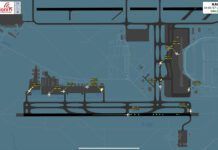
| this is how MVAs would show up on your moving map — click for a larger image |
What topographical software do you use to review approaches?
I use XMap from De Lorme. They’re in Maine and they’re the same people who make electronic road atlases. You can buy an electronic topos for each state, and some of the mountainous states, the big states, are in two sets. They’re all corrected to WGS-84, so they’ve taken all the errors out. In fact, the FAA should have this tool to audit some of their own work. They have the paper charts in the back room — the 1-to-24,000s — but they’ve got errors on them to begin with because they’re not corrected to WGS-84, and it’s a lot of work to go back there and figure out which one to pull out and try to augment when they’re doing work on a procedure, so they just let the computer do it and the computer’s 1-to-100,000.
You’ve reviewed a lot of approaches. What are some of the screwy onesyou’ve seen?
I know some approaches that I think should have never been designed.
For instance?
There are some that I don’t think are safe that have a high inherent CFIT [controlled flight into terrain] risk to them. Those are what I call the traffic-moving approaches that would have never even been considered before TERPs and before high-performance jets lulled them into it. One example is the localizer approaches at Monterey [Calif.] from the east. Those are inherently very hazardous approaches, and the place that’s even worse than Monterey is the back course localizer and the VOR approaches at Medford, Oregon from the south. They’re awful, and you’re just better off at Medford flying around and getting on that ILS, at least when the weather’s bad. The ILS is on 14 and these bad approaches go to 32. They’re lined up but they don’t have any straight-in minimum because they’re so steep. Even though circling inherently has its own set of problems, you’re still safer to fly the ILS to 14 and circle if the weather’s decent and you know the airport. In this case, circling’s less hazardous than flying those approaches.
What’s wrong with Monterey?
You shouldn’t cross mountains that are 3,500 feet high to a sea-level airport coming down the side of those mountains. With any altitude mismanagement there’s no forgiveness at all. Bingo, it’s over. Go in some time on a nice clear day when they’re using 28 and fly those approaches and dump yourself down to the minimum altitude. Get down to 4,200 feet before you get to the FAF and if you weren’t on an instrument approach you could be arrested for buzzing.
If that were a major air carrier route — if you had 100 approaches a day going in on that thing day in, day out — the accident rate would shut it down. Fortunately, the weather’s usually good there and when the weather’s bad they usually use an ILS. For years all they had was an ILS and the airport worked just fine, then they got radar. That’s the downside of when the air traffic managers take over. Some of them are just interested in moving airplanes. Others are more safety conscious, but I don’t know why anybody ever approved spending the money for that localizer. The minimum is 1,600 feet, and that’s the saving grace, because when the weather gets bad at Monterey you can’t use those approaches. That saves them from themselves.
I’m a big advocate of DME on ILS and we’re making progress now. They bought 200 DMEs and partially because one of the guys I worked for and me really worked on getting this into the Korea Airlines crash at Guam. They had the hearing in Honolulu and we went over and we gave testimony — even though we weren’t a party they can bring experts in the hearing — and our real big pitch was to say that had they had an ILS DME there that crew may have been saved from themselves. As it was, there was a VOR DME and it was very convoluted, you know. A sharp crew could have used it just fine but these guys didn’t do it. They have an ILS DME at Guam now, by the way.
How did WALLY intersection get its name?
 | |
| Almost Paradise: the WALLY FAF at El Monte, Calif. |
When I was flying out of El Monte, we had the one approach from the east, which still is their primary approach, and I thought an approach down Victor 186 [from the west] would be nice. They said, “Well, we looked at that one time.” — this is before they had their computer. The computer’s called IAPA — Instrument Approach Procedures Automation — and that’s how they design most of the approaches now. He said, “We looked at it but we don’t think it’ll fit.” I said, “I’ll make you a deal. I think it will because I kind of looked at it,” and they didn’t spend the time because there wasn’t any incentive. I’m not faulting these guys — I’m not better than they are — they just hadn’t put somebody on it.
So I drew the thing up and was just able to barely get it fit, and it needed a little waiver because it missed the runway end by a little bit, and I said, “I’ll make you a deal. If I do it and it worked, then…” Wally hadn’t been assigned yet and I said, “Can I have the FAF WALLY?” and he said, “Sure, I’ll pull it right now and reserve it.” It was assigned to the eastern region but it hadn’t been used yet, so Duane Hodges — who was a manager at the Western Pacific Region in Inglewood made a trade, which they can do. Bill Brouse was another good guy there. He was an ex-Navy pilot and had a pilot’s view of the whole thing. They had more personnel then and this stuff was still done out in the field. They could do things like that back then. Now, everything’s a day late and a dollar short.
