































Rick L. Cremer was born November12, 1945, in South Bend, Ind. His stepfather was a civil engineer for the stateof Michigan, so Rick moved from Alpena to Traverse City to Detroit while hisstepfather surveyed for the then-new interstate highway system. He took flyinglessons in high school, but didn’t finish his private certificate until midwaythrough his four-year enlistment in the Coast Guard. The Coast Guard sent him toAlaska and Hawaii, and after the Coast Guard he got a degree in AviationMaintenance Technology, and finished his ATP and his A&P certificates.Airlines weren’t hiring, so he started his career with the FAA in 1973 as acontroller at Jacksonville ARTCC, then moved to Flight Standards with stints atJackson, Miss., Broomfield, Colo., and New York City before landing at 800Independence Ave., where he stayed until his retirement on June 1, 2001. Heserved under all but three of the administrators of the FAA.
Rick had bought his first computer in the early ’80s, and by the early ’90swas online following the aviation bulletin boards, newsgroups and CompuServe’sAVSIG. In ’91 he proposed to his boss – Tony Broderick – to take the FlightStandards division of FAA online. Rick became the agency’s online mouthpiece andombudsman, taking questions from the forums and newsgroups right to the peoplein charge at the FAA, and, more important, giving quick and accurate responsesto the questions. Rick spent his last ten years at the FAA giving onlineaviators a voice at FAA HQ, and worked hard to bring standardization to anagency prone to fiefdoms and turf wars. Although he’s retired, he’s still atAVSIG taking questions and giving answers as time permits.
How did you get interested in flying?
I started flying lessons in high school whenever I could scrape togetherenough money. Then I enlisted in the Coast Guard for a four-year commitment andstarted working on airplanes in the Coast Guard. When I got out of the CoastGuard I had a private pilot’s certificate but I was farther along with myAirframe and Powerplant certificate than the flying experience. I finished myformal education in Florida – working full-time and going to school full-time- and finished my A&P and my ATP at the same time, so I was pretty busy.Having both of those certificates helped me get hired by the FAA.
Was your goal to get into the FAA, or did you want to fly a line?
I applied to a number of airlines, but in the early ’70s the airline businesswas an economic mess, and I was trying to get hired when they were laying peopleoff. I didn’t have a lot of flight time, and back then if you didn’t have 1,000hours of heavy jet time they weren’t really interested. I had an interview withNational Airlines as a flight engineer – at the time you needed an A&Pcertificate to be a flight engineer – but right after my interview they startedfurloughing people and eventually went out of business.
I was flying a King Air for a local corporation, and instructing at a juniorcollege in St. Petersburg, and an old friend of the family – who had startedwith the CAA before it became the FAA – offered to help me get a job at theFAA. Flight standards had a hiring freeze, too, but there were openings forcontrollers. I passed the ATC exam and got a job at Jacksonville Center. I didthat for a couple of years, then I moved into Flight Standards at the Jackson,Mississippi GADO. It was a small office – only about 12 people.
From there I went to the Denver GADO, to the general aviation district officein Broomfield – which is no longer there. I was there for about three years,then I went to the New York FSDO – actually an air carrier office but theycalled it a FSDO – then to Washington in 1980. In 1982 I had an interview withRepublic – which is part of Northwest now – and they were desperate for DC-9pilots. By that time I had almost ten years invested with the FAA, and friendsof mine who had left the FAA to fly for Braniff and PanAm had gotten furloughedand were coming back to the FAA looking for jobs. After seeing that, I decided Iliked the continuity of having a steady job, so I spent 28 years with the FAA,about eight in the field and the rest at headquarters.
You served under all but three of the administrators in the agency’shistory. Who were your personal favorites?
 | |
| FAA Headquarters at 800 Independence Avenue. |
I met some of the administrators and others I never saw. I would say the onethat had the best demeanor and management style was Don Engen. If he knew youand you saw him in the cafeteria you could sit down and have a cup of coffeewith him and talk shop, and if he didn’t know you you could still sit down withhim and have coffee and talk shop. Jim Busey was another of my favorites – Iflew with him down at Hangar 6. Dave Hinson was another good guy.
Some were more newsworthy than others. Mr. Bond, for instance, andButterfield, who spilled the beans about the tapes in Nixon’s office. Someadministrators – McArtor, Richards and Helms – came and went and you never sawthem. Garvey, for instance, stayed up on the 10th floor and I never met her.
You mean we saw more of her at Oshkosh than you did at 800 IndependenceAve.?
Yep. I think the administrators who actually had aviation experience seemedto be the best fit.
Walk us through what happens when a new administrator gets appointed. Howdo new priorities and attitudes get established?
The FAA is unique. It’s more of a technical organization than, say, HHS orLabor. There are only a few political appointees – the administrator, thedeputy administrator, the chief counsel and the head of political affairs – outof 50,000 some people, so I don’t think the FAA feels the change in presidentialadministration like some of the more political agencies. A lot of FAA policiesare more driven by what Congress does – the Airport Trust Fund, for instance -than who’s sitting in the White House. I’d say that’s especially true when itcomes to Flight Standards and Aircraft Certification.
When Bush came in and ordered a halt on rule-making procedures it had someeffect on us, but safety regulations were exempted from the halt and most of ourrules were safety-related anyway.
Can the agency ever update its procurement rules?
I don’t know. I was only involved peripherally in procurement issues.
Didn’t you ever run up against it when you argued for an enhancement orsomething to improve flight safety?
There’s a whole associate level of other FAA offices that got involved inthose issues. For instance, when they dumped the IBM contract, and during thesituation with MLS, Flight Standards really just answered questions about howthe systems might affect pilots and pilot training. But I wasn’t involved in theactual procurement.
I guess that’s my point. Shouldn’t the people who know what the systemneeds to be more efficient and safer be in charge of getting what they need tomake it happen?
I still think sometimes the system gets a bad rap. All in all it works prettywell, around the clock, and you can fly IFR coast to coast and get down to 700RVR at your destination. But procurement is a complex issue, and I’m not privyto the inner workings of it, and I’m not sure that beast will ever be tamed.
When I was a controller at Jacksonville I was a line controller in one of thehigh sectors, working FL 240 and up. It was called Keystone – it was the eastside of Jacksonville’s airspace. I saw a lot of Dick Nixon flying betweenWashington and Biscayne. That time I spent as a controller really helped a lotlater on for knowing how the system works. I’m probably one of the few pilotsthat has a current 7110.65 controller’s handbook and reads it. It makes a lot ofwhat’s in the AIM make sense.
What was your favorite job in your time at FAA?
 |
There were two jobs that I loved that tie for favorite. In 1991 Tony Broderickgave me the green light to represent the agency on CompuServe’s AVSIG Forum. Myjob was to answer questions and provide a direct link from the agency to thepilot community. I was basically autonomous – I had a manager and I’d fill outa quarterly report about the kinds of questions that had come up. That was avery rewarding job and I was the only person in the agency that had it.
Was taking the agency online a hard sell?
Absolutely not. Tony is a very progressive person who appreciates andunderstands technology and he saw the value in interacting with pilots. He hadbeen paid a few visits in person by John Galipault, and I had been talking toJohn online. I drafted a proposal for me to join CompuServe and represent theagency. I sent the memo up to his office about noon, and about two o’clock itcame back and Tony had written “Good. Go for it.” I still have thememo.
So you didn’t even have email yet when you proposed taking the agencyonline?
We had email, but it was always iffy whether it would get through. It was anearly version of Lotus CC and it was a headache.
The other rewarding job was when the FAA paid for me to take some courses inwebpage design and I developed the FlightStandards web site. We put the inspector’s handbooks, and the FARs andAdvisory Circulars, and we were one of the first at the FAA to do that. Again, Iwas almost autonomous – with minimal adult supervision – and it made thoselast ten years at the FAA very rewarding years.
Give us an example of an issue that originated on CompuServe and gotresolved there.
There were two inspectors doing ramp checks at an air show in California. Theywere looking for registrations and airworthiness certificates on airplanesparked on the ramp, and what got me involved is when they checked a warbird thathad no flight manual, and the inspector insisted that it had to have a flightmanual. I think maybe John Deakin was the one who posted the question. I got thenote and went down the hall and talked to some people about the inspector’shandbook. I also talked to the FSDO where this had happened, and as a result, afew months later the inspectors were told not to do ramp checks during airshows.That’s one issue that started and ended on CompuServe.
The issue of safety pilots logging PIC time came up online. I walked thatdown the hall, too, and got an interpretation that because a safety pilot is arequired crew member when someone is under the hood, both the safety pilot andthe person under the hood can log PIC time. A couple of times pilots had beentold at local FSDO safety meetings that only one person could log PIC time, sowe straightened that out.
The ticket program got a lot of discussion online. I took some of thosemessages to the folks in charge of the program and, as a result, the program wasstopped and reviewed.
I noticed the name HenryKisor in your list of Profiles. He emailed me a while ago and asked meabout the process of a deaf person getting a pilot certificate. I told him aboutthe medical requirements and the statement of demonstrated ability and here heis with his pilot’s certificate and a book about his trip.
Another topic that gets talked about online is the STC process, whichobviously hasn’t been resolved yet. Field approvals might be buried in some filecabinet in some faraway FSDO, while it really ought to be online, andconsequently we’ve got people reinventing the wheel to get an STC. FAA is awareof it, and I think it’s getting better, but there’s still a lot to be done.
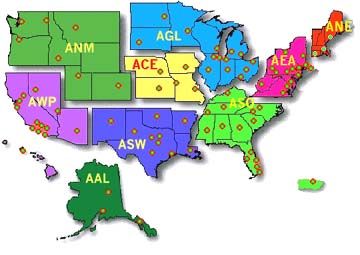 | |
| FAA’s regional structure. |
My pet peeves with Flight Standards are the training of inspectors and the lackof standardization in the field. We’ve got ten regions and a hundred FSDOs, andCMOs [Certificate Management Offices] and CMUs [Certificate Management Units]and about 3,500 inspectors, some with their own agendas. You’ll see someone getworked up over the corner of a placard that may be curling, or a burned-out maplight, while they’re ignoring something that really does effect safety offlight. Some inspectors aren’t reading the handbooks they’re supposed to beusing. And all three handbooks – GA, Air Carrier and maintenance – arewoefully out-of-date. We still have inspectors telling people that they have todo something or they can’t do something based on incorrect information.
For example, the brake pedals on an airplane used for instruction. The issuecame up, AOPA had to holler at legal, legal had to issue an interpretation, andall this started when a FSDO inspector went to a flight school and told themthey had to have brakes in the right seat. Flight Standards has started theprocess of updating the handbooks and it’s getting better, but it’ll take time.
Another subject that got a lot of discussion online was what happened toBob Hoover.
I watched the discussion on Hoover but because it was in litigation and partof an ongoing enforcement procedure, I didn’t think it was appropriate for me tomouth an opinion.
Now that it’s over would you like to mouth your opinion?
I read the transcripts of the hearings and articles in the various magazinesand I think it could’ve been handled differently. I knew one of the inspectorsinvolved – I had flown with him when I was a student in Oklahoma City – andfrom my perspective an emergency revocation was a little severe. I wouldn’t havedone it.
If an inspector decides that somebody’s in violation of a regulation anddocuments it properly, it just moves up through the system – through themanager, through legal, through the region – and off it goes. Again I don’tthink there’s enough standardization across the system. Some inspectors have toomuch leeway and too much power. When I was in the field I tried to give theconsumer the benefit of the doubt and wrote more letters of correction andwarning notices than enforcement reports. Some inspectors just need to lightenup.
In the literature we put out for the PACE program – the Pilot AircraftCourtesy Evaluation program – we said that the programs won’t be used forenforcement purposes, but if you show up with an airplane that’s unairworthy,you’re stuck. So some poor guy that flies his airplane 100 miles for a courtesyevaluation gets grounded because of a curling placard or something that makes ittechnically unairworthy – but not necessarily unsafe – and winds up getting aferry permit but can’t take his family back home. It ought to be more like theway they handle a car – you get a notice and you get it taken care of – butyou don’t have to leave your wife and kid on the side of the road while you goto the nearest garage to get your car inspected. It’s just common sense.
Tell us about your retirement party.
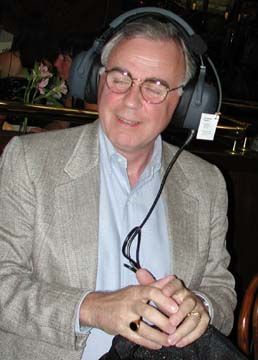 | |
| Rick and his new LightSPEEDs. |
It was wonderful. Tom Tyson was there, Anne Humphries, Doug and Sue Ritter, PeteMcWilliams and his wife, Dave Halperin, and Tony Broderick came back from Francea day early to be there. We met at a nice restaurant in northern Virginia, andstayed overnight at a hotel next to the restaurant. During dinner Pete told usthey had paid for our room. I got two headsets, one for flying which I haven’tused yet, and one for sport shooting which I have used. Some of the folks had tofly home, but some who stayed took a tour of the Smithsonian Silver Hillfacility, then went downtown to the Air & Space Museum.
It was a nice party, and that’s in contrast to when I walked out of the FAAon June 1st. After 28 years with the agency I didn’t even get a goodbyehandshake. But the important party was the CompuServe party. To get that kind ofsend off from those people meant a lot. Those are the people I want to stay intouch with.
How much flying did you get to do as part of your job?
Very little. Hangar 6 was kind of an on-again/off-again program. First thereweren’t enough people flying, then there were too many. I went for recurrentDC-9 training until the budget cutbacks in the early ’90s. I got a little timein airplanes that I’d rent, but I’ll have more time for that now.
What else will you be doing with your free time?
I’m hanging out my shingle as an aviation consultant. I’ve got a nice packageI’ve been sending to some of the aviation law firms in DC. And I’d like to dosome writing.
How about some media consulting? Maybe you could put Mary Schiavo out ofbusiness.
I’m exploring that, too.
Who took over your job as the FAA representative on CompuServe?
Right now there is no FAA representative on CompuServe. I’m still there, andyou don’t forget 33 years of stuff overnight, so I’ll still provide answers astime permits. The problem is now I can’t walk down the hall and get an answerright away. But I can tell people where to write or call to get an answer.
Rick’s recommended bookmarks for aviators
The Av-Info site in OKC. A wealth of information including airman testing, aircraft certification, and much more.
The Airman and Aircraft Registry site.
The Aircraft Certification Service site has aircraft certification information, type certificate data sheets, STCs, TSOs, etc.
Air Traffic has put a bunch of important publications on its Air Traffic Publications site. That includes the current AIM, Controller’s Handbook, NOTAMS, etc.