










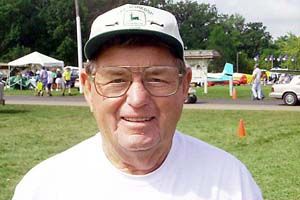
Marion Cole was born in 1924 near Peoria,Ill. He was one of nine brothers and a sister. Dad didn’t fly, but most of the brothersgot avgas in their blood early. Marion wasted no time getting his private, commercial andinstructor’s ratings, then joined his older brothers in the airshow business. Promoterswanted their money’s worth, so Marion often found himself flying a half-dozen differentshows including power-off aerobatics and just about every combination of car-to-planetransfers.
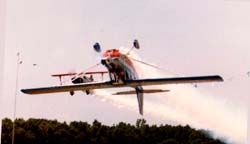
Many say the inverted ribbon cut is Marion’s trademark. And sometimes he’d miss theribbon at 15 feet AGL … by going under it. One day he was doing the invertedlimbo and he knew things weren’t quite right, but didn’t find out how close he came to afarm purchase until he landed. That day he cut the cut from his act, and a few years agogave up airshows altogether. These days, Marion and his wife Charlene travel the countryat about 4 feet AGL in a motorhome, stopping to visit friends and family and theoccasional airshow. One place you’re certain to find him is in Independence, Iowa, on theFourth of July. Marion is the airshow boss and announcer for that town’s annual barnstorm.
Who taught you how to fly?
I was a hangar brat in Peoria, Ill., at the old Mt. Hawley airport. I was willing to dojust about any odd job at the airport to get a ride or some flying time. In 1939 two olderbrothers and two other fellows had bought an airplane, and that’s what got me to theairport in the first place. I soloed as soon as I was old enough and got my commercial andinstructor’s ratings when I was 18. I joined the Navy’s reserve program and went toBloomington, Ill..
By the time I got out of the service in 1946 my brother Duane had started an airport inKewaunee, Ill., and he wanted an airshow for opening day. There weren’t six people in theUnited States putting on airshows in those days so we decided to put our own showtogether. That’s how I got into the airshow business. My first airshow airplane was a RyanPT-22, then I got a Stearman, which I modified every time I got a little money together.
I started flying airshows in 1946 and we were members of the original EAA in Milwaukee.My EAA number is 48 and we went to a lot of the first meetings because we lived innorthern Ill.. I flew in almost all the shows here at Oshkosh. I missed ’94 and ’95because my wife and I were travelling in Alaska and Canada. By that time I had retiredfrom flying, and now I’m doing some announcing and commentary.
 Do you remember any of the airshow performers from the ’40s?
There weren’t that many, but I’d have to say Johnny Vasey out of Austin, Minn. I sawhim in Moline, Ill.. He had one of the first 450 Stearmans that I’d ever seen. I was about20 years old and Johnny had flown B-29s in the service and I admired him and the way heflew that Stearman. He came off like a real hardnose, but later I found that he was a goodguy.
Originally the Stearman didn’t have an inverted fuel and oil system, and Johnny hadcome up with something. We put a tank in the bottom of the airplane and filled it from thetop through the main tank. Whenever I flew upside down, the bottom tank would run dry.Well, a three-year-old kid could figure this out, but I couldn’t. I called Johnny and andsaid, "What am I doing wrong?" and he said, "You fill it from the bottom,not the top." So I’d say Johnny was one of my favorites.
I’ve met a lot of people, but one hero I’ve got is Curtis Pitts. I’ve known him since1945. I was his first dealer. He’s a great man, in his middle eighties, still helpseverybody, still interested in improving his designs.
How have the airshows changed since the ’50s?
The performance of the airplanes has just gone wild. I’d say that’s the biggest change.The other thing is back when I started, I’d fly a bunch — six or eight — of differentacts, in different airplanes. I’d do a comedy act, a cartop landing act, the car-to-planetransfer, the wing act, a solo act, and maybe a formation act. These days if they do twoacts, it’s a lot. Most do just one. But there are so many more people in it now, and it’smore competitive than it used to be.
Do you have a favorite of the current performers?
I enjoy watching them all, but Bobby Younkin’s Samson and Jim Franklin’s Waco are morelike the old airshows to me. Wayne Handley and the turbine-powered airplane, that’s awhole new dimension. Backing the airplane up and going straight up was never something weconsidered when I was flying.
What was your favorite airplane for the inverted ribbon cut?
I started doing the inverted ribbon cut in a clipped-wing Cub in Panama City, Fla., inabout 1950. I had done it through the years in a lot of different types of airplanes. Hadeven done it in my Stearman with a man out on the wing. Of all the airplanes, the SuperDecathlon was probably the easiest because it would trim out so well and you had goodvisibility. Probably the worst was the aerobatic Bonanza.
I had Bonanza serial number CJ-13 and I taught some aerobatics in it. I’d teach Bonanzaand Baron pilots spin recovery. Some of them had done aerobatics, but not in ahigh-performance airplane.
Back to airshows … let’s face it, things do go wrong, and as I got older I felt likemy judgement wasn’t right on it and I’d be a little low and had to be extra careful. Oneparticular day I had done an act in some other airplane and it was time to fly theDecathlon. Turning my nav lights on also activated my smoke generators on the wingtips.Normally I’d start that after I got into the air, but this particular day when I did myrunup and checked the mags, I hit the nav light switch. So now I’ve got to get moving,because the smoke generators are hot. From then on everything sort of went downhill, andduring the inverted ribbon pickup I rolled inverted too far back and I knew I was low butI didn’t know how low until I landed. Several people scolded me and said, "We weresure you were going in." So I said, "Well, that’s it, I’ll just leave theinverted ribbon pickup out of my routine from now on."
 When did you first get into competive aerobatics?
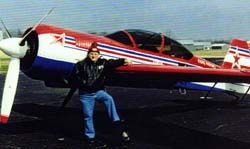
I competed from 1949 to 1952, and in 1952 I won the National Championships in Miami.Those contests were sanctioned by the NAA, then they didn’t hold a "sanctioned"contest for 10 years … which is how I became champion for 10 years in a row. I skippedthe early ’60s and got back into it in ’67 in Reno. I was on a team of five that went toEast Germany to compete in the international competition that year.
There were five men and five women on that team. Of the five men, I’m the only onestill around. Art Scholl, Harold Krier, Charlie Hilliard, Bob Herendeen … all of them,were killed flying. So we’ve made the airshow business about as safe as we can make it,and the airplane maintenance is about as good as it gets, but things can still go wrong.
What kind of training did you do for a show or a competition?
I was flying for a corporation, so every once in a while I’d take a little time off topractice. It went from being able to practice for about 30 days and make the team topracticing every day and probably not make the team, so I just didn’t have the timeto give it. It’s a young man’s game, really. It’s demanding on your body, your time andyour pocketbook.
I stopped because at one time I was pretty good, so people naturally expect you to bethat good or better. I decided I couldn’t do it. I don’t have the reflexes. My body won’ttake it. When I flew, about half my show was outside maneuvers, pulling negative g’s. Istill love to fly, but when I turned 70 I decided the good Lord’s been good enough to meand I shouldn’t be pressing my luck.
Speaking of pocketbook, what was the sponsorship like in those days?
I did have an engine sponsor that covered me 100%. High Performance in Mena, Ark. Theywere fantastic. I flew corporate, taught primary, taught advanced, taught aerobatics, flewcompetitions. If you worked about 17 hours a day, you could make enough to support afamily. Aviation is filled with wonderful people and I wouldn’t change a thing about that,but as far as I’ve seen, aviation is a place to spend money, not make money.
How did you prepare mentally?
You may have a thousand things on your mind that day, but when but you strap yourselfin the cockpit you can only have one thing on your mind. You have to know what you’regoing to do every second. Now something may change and you have to or want to alter theact, but you can’t allow any outside pressures to interfere. You’ve got to stay focused.
That’s what’s going on inside your head. Then there’s the weather factors, too. Theycalculate performance based on a standard day of 59F and sea level. That doesn’t happen atairshows in the summertime. It may be 100F, probably 110 on the runway, and the airplanemay not behave just the way you want it to.
You said the Decathlon was your favorite for the inverted ribbon cut. Do you have afavorite airplane in general?
I managed to log over 30,000 hours during 59 years of flying. I have 32 logbooks. I’veflown airshows in 25 or 30 different airplanes. Some are easier to fly than others. DelmarBenjamin says that the first dozen times he flew the GeeBee, he had to keep flying itbecause he was so far in debt, but now he loves to fly it. So it started out as anairplane with a bad reputation but either he has it tamed or it tamed him. Some designsare more forgiving than others, but in skillful hands you can usually get them to do whatyou want.
My favorite airplane, I guess, would be OPA [other people’s airplanes]. (Laughs.) Istill like the Bellanca Decathlon. I like the aerobatic Bonanza and the Baron. I sold aPitts to a guy with a P-51 and he let me fly that for 30 days when he was travelling. Iflew it from Lafayette to Shreveport, La., and everybody that could by 50 gallons of gasfor the next 30 days got a ride in a P-51.
In my corporate flying I flew a North American Sabreliner and I liked how you couldroll down the runway, shut down one engine, and just keep going right on up. Of coursethere were a lot of airplanes you could do that with, but I hadn’t been in them and Ithought that was pretty neat.
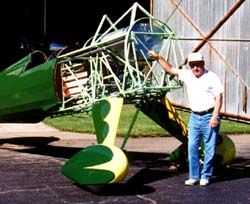 The Bucher Yungmann that I flew in world competition was great to fly. My 450Stearman was great after I got some of those mods on it.
There’s a story about you that goes like this. One night after a show everybody goesout for a little refreshment, and by the next morning’s airshow, all the pilots but youare still wiped out, and you went out and flew all their shows for them. Is that true?
Not exactly, but that isn’t too far off. That was a long time ago. I was never much ofa party animal. I figured I needed all my senses to make up for my lack of talent.
Is there anybody in the Cole family that doesn’t fly?
My dad was never in an airplane in his life. He died when I was quite young. I was oneof nine boys. I had eight brothers and a sister. I just lost my oldest brother who was 94.Duane is 85, he’s active in promoting shows and selling his books and videos. He’ll be inthis as long as he can. Lester is 80 and lives in Phoenix. He flew for Franklin Electricand retired at 60, and that gave him more time for motorcycles which he’s been into allhis life. Lester’s son flies, but Lester’s flying days are over. If fact, he had anaccident recently and his motorcycle days may be over, too. I have four sons, and three ofthem fly for a living.
Some of your former students gave you the name "Master." What does it taketo be a good flight instructor?
First thing is to know whatever airplane you’re teaching in very very well. There are alot of cases where the instructor knew not much more than the student, and that’s notgood.
After that requirement, you have to confidence in the instructor. Then you have to haveconfidence in the airplane that they’re using. Finally, the student has to really want todo it. If they just show up to see what it’s like and try something new, they can be hardto teach because it’s hard to get their attention. If the student has that confidence inthe teacher and the airplane, they can relax enough to learn what they have to learn.Someone can be a good pilot but may not be a good teacher in that airplane.
 When you were travelling the circuit did you have a favorite town?
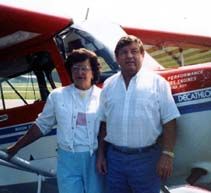
I have one now. Independence, Iowa, about 30 miles east of Waterloo. This past Fourthof July was our 18th consecutive year. I flew in their airshow for 14 consecutive yearsand now I’m their airshow boss and announcer. It’s a small town full of great people andit’s what I call a country airshow. It’s not a big budget but it’s a nice show every yearand it’s free.
What keeps you busy since you’ve retired?
I’m doing a little bit of instructing in Shreveport, La. Little to no basic aerobaticteaching, but mostly people working towards the private or the commercial. Somemultiengine and instrument instruction, too. I’m flying about 150 hours a year. My wifeand I are now full-time in a motorhome, so I suppose you could call us"homeless" or "gypsies" and we go from place to place and visitfriends. The motorhome groups are like the pilot groups. We have gatherings and rallieshere and there, but we make sure to hit Sun ‘n Fun and Oshkosh and a few of the smallershows each year.
Marion’s brother Duane has several books on the flight dynamics of aerobatic flying.They’re available from Sporty’s.
The aerobatic newsgroupis also a good source for information.
