























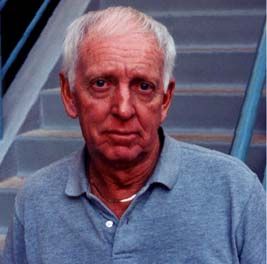
Al Haynes was born in Dallas, Texas, in1932. After four years in the Navy he joined United Airlines, where he rose through theranks for the next 35 years. He never aspired to be a test pilot, but he became one onJuly 19, 1989, enroute from Denver to Chicago. That’s when a 12″ pie-shaped sectionof fanblade cut all three independent hydraulic systems on a DC-10 with 296 souls onboard. They don’t cover that in recurrent simulator training because it’s mathematicallyimpossible. After it happened, the NTSB replicated the data of Flight 232 and not one ofthe 57 crews they tested in the simulator could control the airplane all the way to theground.
As one of the 184 survivors Al came face-to-face with post-traumatic stress andsurvivor guilt, which he once thought was just so much psychobabble. He decided that notonly did he want to talk about Flight 232, he needed to talk about it, so he puttogether an 80-minute presentation about preparation, communication, execution andattitude that he gives to pilots, emergency response teams, corporations and serviceclubs. It’s chilling, informative and inspirational and it’s one way he honors the memoryof the 112 who didn’t live through the crash. He’s done about a thousand presentationsover the last ten years. Al books appearances through The Aviation Speakers Bureau and United Airlines makes sure he gets where he needs to go.
NOTE: Years later, NASA pilots Bill Burcham and Gordon Fullertonsimulated complete hydraulic failure in an MD-11 and landed using throttles only. You canread more about this Propulsion Controlled Aircraft (PCA) research at http://www.dfrc.nasa.gov/PAO/PAIS/HTML/FS-041-DFRC.html.
How did you get started in flying?
I was a student at Texas A&M, deferred in the draft because I was in the corps ofcadets. They asked me to take a semester off and I was immediately classified 1A, and theKorean War was on, and my brother, who had been in the service in Korea, advised me’whatever you do don’t get into the infantry.’ I ran into a high school friend who was onhis way to the Naval aviation cadet training program and I thought ‘Well, that soundsinteresting.’ I didn’t know anything about flying other than what my brother did. He’s acareer Air Force pilot. Luckily, I was accepted in the program and started flying.
Your first solo was in a military trainer?
The first airplane I was ever in in my life I was in the front seat of an SNJ intraining. I’d never been in an airplane before. I did four years there and when I got out,the airline was looking for pilots. That’s the only thing I knew how to do, since I didn’tfinish college, and figured ‘Okay, I’ll try that,’ and just fell into this great big holeand came up smelling like a rose.
You went right to United?
Right. I got out of school and was sent to Seattle as a domicile. Seattle is anextremely senior base. Just a couple of months after I was hired the hiring ceased andeverything very stagnant for many years. We merged with Capitol Airlines and things beganto grow then and the promotions came, and I was a flight engineer on the pistons for abouteight years, then I served on the DC-8 as an engineer for a year, and then I got a copilotbid in Seattle in the pistons. I flew that for three years and then I got a 727 copilotbid, all in Seattle.
Flew that for eight years, then I got a DC-10 copilot bid. Flew that for nine years,keeping my seniority. I passed up promotions because, first of all, it couldn’t happen inSeattle and I didn’t want to commute and didn’t want to move. I was making a comfortableliving and enjoying the choice schedules and choice days off and vacations, and finally in1985 I figured it was time to do something because I’m now in my last five or six years offlying and your retirement is based on the highest three of your last five. A good friendof mine passed away prematurely of brain cancer and it made me wake up and think ‘Youdon’t know when your last three years are, so it’s time to get off your duff and dosomething.’ So I was able to bid 727 in Seattle to captain, but it came time now to go tothe ’10. I just had to get up and start making bigger money and I had to commute to dothat, and I commuted to San Francisco for seven months, and then was able to get the bidback in Seattle, so my entire 35 years, except for the 7-month commute, was in Seattle.
Never wanted to be a check airman?
I was asked at one time if I would like to go back to the training center instructingand I had my share of instructing in the service. People often asked me, “What doesit take to be a good instructor?” and I said, “Patience…that I don’thave.”
What were some of your interesting routes on the line?
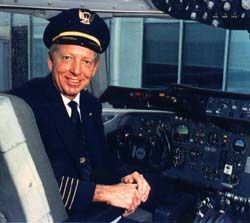 We flew basically domestic. As a brand-new engineer, you’re onreserve and you’ve got all the garbage runs mostly. We had a shuttle that every night wentfrom Seattle to Vancouver, laid overnight, and came back, and we had one that went fromSeattle to Portland every night, laid over, and came back. Once in a while I’d draw aroutine run, mostly up and down the coast. As far east as we went on a regular basis wasDenver and as far south as Los Angeles. Every once in awhile you’d get on a Chicagonon-stop or you’d get on a New York non-stop. We had one New York non-stop a day, butthose went to the very senior pilots and only when they were sick or unable would areserve draw it, so I didn’t draw very many of those until I got some seniority. We had aPhiladelphia run that I liked. We went Seattle-Kansas City-Philadelphia in a 727, and thePhiladelphia layover was fun. Los Angeles layovers I liked. I always enjoyed Chicagolayovers, and we had a lot of those at all levels.
I flew the Hong Kong route out of Seattle for awhile. That and Tokyo were the first twointernational runs that United had, other than Canada. We were basically a domesticairline, and after flying Hong Kong for several months in a DC-10, which is a 14-hournon-stop over and a 12-hour, non-stop back, I said ‘That’s enough of that,’ and Ipreferred domestic flying and the several years I flew Seattle to Honolulu.
That’s a nice layover.
That would have to be my favorite flight because you had 24 hours each time you goover, so you’d have two full days a week in Honolulu every seven or eight days.
Is the DC-10 the fastest airplane you ever flew?
Yeah, the 10. It was designed to cruise at Mach .85. Of course, so was the 727. I haveflown an F-16 but that was just an hour for the tour. The fastest thing I’ve ever been inwas the Space Shuttle simulator except it’s not moving.
Was there any airplane that you wanted to fly?
Not any commercial. I did want to fly the Corsair. Our marine squadron had 12 AUs,which is the attack version of the F4-U Corsair, and twelve Sky Raiders, but they wouldn’tlet us fly them because they were phasing them out. I would have liked to fly a P-51 but,other than that, I’m happy with what I’ve been flying. I never flew jets in the service atall, all pistons. I think maybe the F-18 would be a fun thing to fly . . . when I wasyounger. I don’t want to do it at age 67.
What’s the trick to finding a good job flying the line?
What you need is multiengine time. When I was hired I had 1200 hours and three years ofcollege and that met the requirement, but right now I think you have to have type ratingsand a lot more time. If you can’t get with the major airlines, get with a charter outfitor something like that to build some time. I came over from Chicago yesterday with a linecheck airman who told me there are about 9,500 applicants on file with United Airlines.They’re going to start hiring again soon so if you’re in college, try to get into anintern program with any airline, and if you get a chance to go with any airline, take it.
Throughout the tape of Flight 232 air-to-groundcommunications, there’s a calm sense of professionalism from both you and KevinBachman, in spite of your long odds. What advice do you give to a pilot who’s facing anemergency that “can’t happen”?
I give credit to Kevin Bachman. He was SO calm and SO cool. The controller is thepredominant factor and I’ve never heard a controller explain how they do it, so I don’tknow. Somebody said, ‘Well, they’re not there,’ and I said, ‘No, no, they’re sitting rightthere with you’; they are right beside you in that airplane and going through everythingyou’re going through.
What did you tell the passengers about the situation?
When the engine failed — and I wasn’t even aware he did this — Dudley, our secondofficer, said he told them that an engine had failed and we’d just take longer to get into Chicago because you can’t fly as fast on two as you can on three. We had a bigexplosion and some vibration that followed it, so everybody on the plane knows there’ssomething wrong so he picked up the phone and told them what happened. So they thought wewere going to Chicago. Then very shortly we realized we’re not going to Chicago, we’regoing wherever we go, and until we can find out exactly what we’re going to do, we didn’tsay anything and the very experienced passengers may have picked up that the engines aregoing up and down and up and down.
They weren’t even aware of it until the last fifteen minutes; that’s when I made thefinal announcement, and none of us are sure what we said. Unfortunately, it didn’t come upon the cockpit voice recorder, just parts of it, but putting together what the passengersrecall with what I recall and what everybody else recalls, I told them we had a problem,we’re not going to Chicago, we’re going to make an emergency landing in Sioux City, Iowa,that it would probably be a very hard landing. I thought the passengers had already hadtheir safety demonstration, their preparation for the flight, and that was a big mistakenot to ask before I made the announcement. It actually turned out better because now they reallypaid attention to what she had to say because now they knew that the situation was real. Isaid, ‘You heard about the two different brace positions; you take the one that’s mostcomfortable for you and we’ll tell you what the brace signal is,’ and I told them what itwould be and we’d give it to them, and that was about the size of it. That’s all we couldtell them.
In your presentation you discuss what you call luck. Has your definition of luckchanged since the accident?
I’m not a very religious individual, but so many things fell into place for us that alot of people do credit it to luck, and some would call it God’s will, some would call itthe will of Allah, some would call it something else. . . so whatever anybody wants tocall it is fine, that’s why I call it luck. I don’t want to step on anybody’s toes.
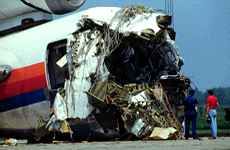 Something got thatairplane to Sioux City and determined the fate of the people on board. We just helped. Iwant everybody to define for themselves what that something was. You look at the locationand the weather and the preparation of everybody on the ground and how all those thingsfell into place. We had good VFR weather, none of the thunderstorms that are typical on aJuly afternoon in the midwest, it was daylight which helped the rescuers, it was over theflatlands of the upper midwest, the corn was high, which helped absorb the impact and keepthe fire down, it was shift change time at the medical centers so we had two full shiftsof doctors and nurses. Two years earlier Sioux City had staged a drill to test theirresponse procedures to a widebody aircraft crashing at the airport. We had Denny Fitch onboard, who’s one of United’s DC-10 instructors. You look at all that, then you look atthis poor group up in Nova Scotia on the Swissair flight. Nothing went right. They wereflying at night, they were over the water, in a strange area. Nothing went rightfor them and just about everything that possibly could went right for us, for most of us,so I just call it luck.
Initially you were a skeptic of Post-Traumatic Stress Disorder. What made you abeliever?
I first heard of post-traumatic stress following the Korean War. That’s the first timeI really heard much about it, and I saw the movie “Born on the Fourth of July”with Tom Cruise and I thought it was overreacting by the writers and the actors becauseI’d never had a trauma. People in my family had died, but that happens in the sequence ofthings, so it isn’t a sudden big shock. Then you have something like this happen and yourealize there is post-traumatic stress, and I learned that more people are affectedthan you might think.
Not only did the passengers and crew of Flight 232 and their families suffer a shock,but it was also the National Guardsmen who began to walk the fields, it was the ambulanceservice people who see this all the time, it was the fire department who had to fight thisfire, everybody: people who had been on the flight the day before or scheduled to go onthe flight the next day, or just missed the plane; they’re all traumatized by what almosthappened, or could have happened. There’s no cure for it. You deal with it by talkingabout it. You have to talk about it, and people sometimes aren’t comfortable listening. Soyou lock it up inside of you and then you end up in a tower with a rifle, or the guy downhere in San Diego at McDonald’s or the postman who locks up all his bitterness and hurtinside of him and one day goes on a rampage.
If you sit down and talk it out, if people will listen to you, then you can maybedeal with it. You have to learn to accept it, and you can only accept whatever hashappened by talking it out. Explain it, no, but accept it, yes, and it’s a lot easier forthose of us who survive to accept it than those with family members of those who didn’t.The biggest problem I had in dealing with the whole thing is after I finally accepted thefact that it’s happened, you can’t do anything, is why would it work for 184 and not 296,and that’s where the psychiatrist says, ‘You will never be able to answer that. You’rejust going to have to accept it.’
 The airlines havestarted putting people together to do critical incident stress debriefing, CISD. Allemergency response people I’ve talked to now have peer groups. It’s not doctors andpsychiatrists, it’s peers, who have been trained to get you talking about what’shappening. The sooner you start talking, the better. In the past, fire departments, policedepartments, NTSB investigators who have seen terrible, terrible things on the job neverhad any counseling. The attitude was, ‘You deal with this every day, you have to acceptthis as part of your job,’ and that’s absolute nonsense. It’s not part of anybody’s job tosee and go through what these people go through, and the NTSB learned that theircounselors and investigators certainly need counseling of some sort, even if it’s justtalking to each other.
That’s something good that came out of not only 232 but the three accidents thatoccurred around that time—the Aloha flight, United Flight 811, and 232; they happenedwithin twelve months of each other, and all showed reasonably good cockpit resourcemanagement training; they showed ground preparation training; and 232 especially showedpost-traumatic stress response. On the day of the Oklahoma City bombing a reporter said,’They have already started counseling the survivors and the rescue operating people,’ soafter 232 it really got into the forefront. One of the passengers on 232 was NBA announcerJerry Schemmel and I’d like to put in a plug for his book “Chosen To Live.”
What was your flashback?
I went back for recurrent training to fly the modified system. We were using the LOFTprogram where the autopilot flies the approach and the copilot sets it up and monitors it.The captain monitors altitudes and so forth, and when you get down to VFR conditions thecaptain will make the transition and land the aircraft, or begin the go-around. In theLOFT program everything is done actual time, and once you pass the outer marker if theground proximity warning goes off, you initiate immediate go-around and you’re on thegauges.
We had just passed the outer marker and the “whoop-whoop pull up” came on. Weweren’t doing anything to cause it; it was a glitch in the simulator, but you don’t playwith glitches. My first officer pushed the button and I called the go-around to the’controller,’ who’s the guy sitting behind us. We go all the way out, come back in and weland.
On our way to have a cup of coffee, the controller says, ‘Al, on that go-around, yousaid, ‘United 232, going around’ and both the copilot and I insisted I didn’t. Well, weplayed the tape and that’s exactly what I said, so evidently the trigger for my flashbackwas the ground proximity warning. When it went off, I was mentally back on 232, becausethat’s the last thing we heard before we hit the ground, and that’s the closest I’ve beento a flashback.
Statistics for the crash of |
|
Let’s talk baseball. How did you get involved with the Little League?
When my two boys were younger they got involved in Little League baseball. A friend of mine wassupposed to umpire but he got stuck on assigment at McChord Air Force Base. I didn’t knowanything about baseball; I didn’t even like baseball. Next thing I knew I had two hours tolearn the rule book and I umpired a game. I had a lot of fun and they were short onumpires so I said I’d do the next one and pretty soon I’m in it full time. I’ve been in itnow for thirty years.
Have you ever umped one of the championship games?
I’ve umpired all levels of tournament play, including the Little League World Series in1978, and the Senior League World Series. These days I just do local tournaments and Idon’t do those very much. Basically I’m rules interpreter for the state and for thedistrict and I teach rule interpretation clinics.
Then my middle son also got into football, the junior football program, and his coachwas one of our crew schedulers and he asked me if I would announce the jamboree because hecouldn’t find anybody who wanted to talk in a microphone and he said, ‘You’ve got onestuck in your face all day,’ so I thought, well, I didn’t know anything about that either,said, ‘Okay, I’ll do that.’ Well, now I went from junior football to high school footballand I’ve been doing that for about 26 years now, and when I’m not announcing I work downin the field on the chain crew.
The ten year anniversary of Flight 232 is coming up. Any special plans for that day?
We have a crew reunion every year. Last year we had it in Denver and this year it’ll bein Sioux City. We won’t try and do too much, it’s just a chance to get together and talk.There’s a bond that forms after something like that happens and we don’t want to lose it.