
















 It’s probably no coincidence that the publishers of the new nonfiction aviation book, Free Flight: From Airline Hell to a New Age of Travel, chose to release it at the beginning of the peak airline travel season. The book is written by James Fallows, and may become the book of choice this summer for frustrated airline passengers waiting for delayed flights. After two previous summers of record flight delays and cancellations in the U.S. skies, the DOT, FAA and airlines are trying to tweak the already-saturated air traffic system in an effort to prevent another “summer of discontent” for commercial air passengers. (So far, it may be working, since the strident hue and cry so prevalent last summer hasn’t been seen yet this year.— Ed.) In fallows’s book, the reader is presented with an intriguing look into how future developments in general aviation may offer a possible solution to air traffic gridlock in the U.S.
 Fallows is national correspondent for The Atlantic Monthly magazine, and came to aviation later in his life. In a story familiar to many pilots, Fallows was always interested in aviation while growing up, but it wasn’t until his kids were grown and he had more free time and money that he earned his Private Certificate and Instrument Rating in the latter part of the ’90s. It just so happened that while he was learning to fly, negative changes were occurring in commercial airline travel, while new developments in general aviation technology were emerging that just might offer some relief to the traveling public. The concurrence of these two aviation events at the end of the last century led Fallows to investigate how these GA developments — some evolutionary, some revolutionary — could change the way we travel in the early part of this new century.
Fallows begins his book by explaining the differences between two cultures of the aviation world, the enthusiasts and the civilians. Enthusiasts are pilots, wannabe pilots, and those who enjoy anything to do with aviation. Fallows relates that, even though light aircraft are not inexpensive or necessarily very practical — compared to the automobile — the enthusiasts have kept general aviation alive, though not necessarily thriving, through their sheer love of flying and anything associated with it. Civilians, on the other hand, view airplanes as just another form of transportation, albeit the fastest type compared with trains, cars and boats. And for most civilians, the only serious type of air travel is in big, commercial airliners. According to Fallows, civilians usually think of small planes as dangerous toys flown only by the rich and not to be taken seriously as an efficient means of transportation.
In a way, Free Flight is written more for the aviation civilian than the enthusiast, in that it attempts to make a convincing argument that GA flying could become more efficient for travel than airliners for trips up to 1,000 miles. The 242-page book is a relatively quick read, and Fallows keeps the aviation technical jargon to a minimum in the main body of the book. When there is a need for more explanation on a specific aviation term or topic, Fallows has included convenient notes for each chapter at the back of the book. Many of the notes include web links if the reader wants to learn even more details than the book offers, including links to AVweb articles by Special Projects Editor Dave Higdon and columnist Rick Durden.
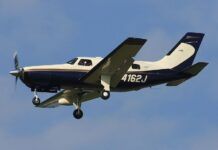
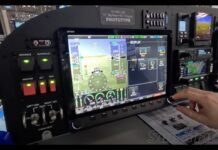
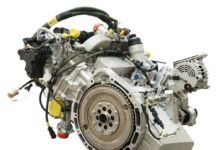
Though the book includes an interesting overview of the history of general aviation in the U.S. and how we got to where we are today, the bulk of Free Flight describes GA developments in government and private industry over the last ten years that could produce dramatic changes in air travel in the next ten years. Fallows presents his case for how future GA planes could make point-to-point travel to smaller airports in the U.S. as fast, as safe and almost as inexpensive as flights on commercial flights, and not just for the pilot aviation enthusiast, but also for the civilians traveling as passengers on light jets operated as “air taxis.” Fallows describes the long and tortuous development of one of the new-generation light planes, the SR-20, by Cirrus Design Corp., the tireless efforts of Bruce Holmes of NASA to initiate and sustain the AGATE (Advanced General Aviation Transportation Experiments) program that is pushing the envelope on new GA technologies, and the ongoing development of the revolutionary Eclipse Aviation light jet. All three of these subjects should be familiar to regular AVweb readers , but what the book adds is interesting insight into the principals involved in trying to make these programs successful. Fallows interviewed all the major players, including the Klapmeier brothers of Cirrus, Bruce Holmes of NASA Langley, Eclipse CEO Vern Raburn, and normally reclusive Sam Williams of Williams International, whose light turbofan FJX engine will either make or break the Eclipse jet.
 While Fallows presents an optimistic look at how these GA developments may change the face of air travel in the future, he also cautions how none of this is a done deal, and lists the numerous obstacles that remain to be overcome to make general aviation “free flight” a reality in the U.S. And if you look closely at the numbers Fallows presents for air taxi services using a Eclipse-type light jet, you can see that most people would still be paying more for the privilege of flying closer to their final destination in a light jet than if they were on a commercial flight. I suspect that readers familiar with the history of general aviation might be a little more skeptical than the average person about fallows’s predictions, knowing that the past is filled with many unfulfilled promises to make personal flying much easier and cheaper for the average citizen.
Overall though, fallows’s book gives a well-researched and tantalizing view of what GA can do to improve the plight of the average traveler in the U.S. Aviation enthusiasts, such as AVweb readers, will enjoy the book for fallows’s descriptions of the joys and frustrations of learning to fly, the wonder of his first transcontinental flight in a light aircraft, plus the detailed descriptions of what it takes to certify a new aircraft design in the U.S. But probably the best thing you can do when you finish the book is to pass it along to your “civilian” friends to read. It will not only give them a better understanding of the fraternity of general aviation enthusiasts that you have chosen to be a member of, it can also teach them that light airplanes can indeed be much more than just a frivolous “toy” — they can be part of the solution to our future transportation needs.
| Free Flight: From Airline Hell to a New Age of Travel, is published by PublicAffairs and is priced at $25.00 U.S./37.95 Canadian. More information about the book and its author is available on James Fallows’s web site. To purchase the book, try Amazon.com. |
