





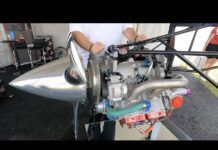

























The 0-470 is a rugged engine that’s capable of producing solidand dependable power. It distinguishes itself from other six-cylindercarbureted engines by its characteristic lope at idle and throatyexhaust stack burp. When balanced, an O-470 will run at cruisepower without the least bit of burble or vibration.
There are 15 models of the O-470 engine flying around in BeechDebonairs, Bellancas and Cessna 180s, 182s, 310s and various AGmodels. The single common denominator in all models is the bore(five inches in diameter) and stroke (four inches in length).Cylinder and crankcase castings are the main differences betweenthe various models. Other than these, the basic engine has remainedthe same with only minor changes made to accessories and peripheralequipment. To its credit, the engine’s magnetos, carburetor, starterand charging system have all been upgraded and improved over theyears.
The predecessor to the O-470 was TCM’s old E-225 series. And thoughthe E-225 enjoyed a successful career with Bonanzas and some modelsof the Navion, an engine that had a better weight-to-power ratiowith a simplified carburetion and lubrication system was needed.The E-225 had a separate accessory case, dry oil sump and datedaccessory configuration that became a liability to the designrequirements of newer, more streamlined planes. In 1952 that needwas satisfied when the 0-470-A was given its birth certificate:Type Certificate E-273. The subsequent 14 additions to this TCinclude five models which are eligible for an upgrade to a fuel-injectionsystem in place of the original equipment Bendix pressure carburetor.
Of the 15 originally certificated, only eight models, the O-470-G,-J, -K, -L, -M, -R, -S, and -U, remain in the current TCM enginespecification list. The most popular of the eight are the 0-470-L,-R, -S and -U models which power Cessna 180s and 182s. There wereover 21,700 of these planes built between 1953 and 1986, so itstands to reason that these last four models would comprise thebulk of the O-470s flying today.
Cases & Cylinders
There are few issues concerning 0-470 crankcases because thisengine is not under the same kinds of stress an I0-520 or turbochargedengine is. And while all crankcases crack, the O-470’s case isremarkable because TCM’s SB #M90-17 — which recommends the replacementof engine crankcases with newer and stronger styles during overhaul — willaccept any part number and casting number assigned to the O-470engine without requiring an upgrade. In contrast, larger, higherhorsepower engines have had to change their case design in anongoing effort to eliminate deck cracking, (with limited success).Thankfully, replacement-before- TBO type of crankcase cracksare somewhat rare on O-470s.
However, while this engine may not need upgraded cases, factoryremans are currently using a reinforced casting which, in largepart, appears identical to the sand-cast 520 case.
Cylinder castings for this engine have changed in style and structureeight times since the late 60’s. Beefed up spark plug bosses,improved exhaust port walls, combustion chamber profile changesand threaded barrel engagement areas have all been altered bysubsequent cylinder improvements.
The basic 0-470 engine consisted of two separate configurationsidentified by the shape and style of the cylinder head. Models-A, -E and -J all incorporated a parallel valve (also known asa straight valve) cylinder head which is easily recognized bythe small rocker box cover and short, thick cylinder fin castings.Characteristic of these models is the large, round intake portand the small, two-bolt, exhaust port and stack assembly. Theseengines are still seen today on Beechcraft Debonair and very earlyCessna 180 models.
The angle valve cylinder used on all other models is the presentstandard issue for O-470 engines. This style cylinder’s fin areais 75% greater than the parallel valve type and the inductionand exhaust ports are standardized with a four bolt pattern. Dueto differences in the deck hold down stud configuration, anglevalve cylinders can’t be fitted onto parallel valve cylindercrankcases.
Cylinders are also classified as light or heavy. A light cylinderis one that depicts a casting manufactured in the late 60’s andearly 70’s and is similar to the old E-225’s cylinders. Latermodels of 470 engines use the heavy style casting made availablearound 1978 and subsequent cylinder part numbers are an improvementon that design. Heavy cylinders are physically identified by athicker fin just below the top spark plug hole and a verticalbridge below the bottom spark plug hole. While these are not theonly identifiers, they serve to assist in a definitive assessmentof cylinder and casting age. You may consider upgrading at overhaulto a heavy cylinder appropriate for your engine if you are currentlyrunning light cylinders on their second run.
Valve Guides
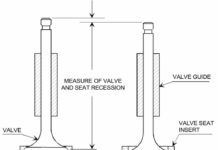
Older O-470 cylinders were equipped with aluminum-bronze intakeand exhaust valve guides. And while the intake guide performedwell and is, in fact, still used today, the exhaust guide didn’thold up to the heat created in the exhaust port. When 100LL fuelwas used, the exhaust guides failed even faster due to the prolongedburning process of higher octane fuels. The exhaust valve guidewas then changed to a Ni-Resist steel guide which is better suitedto the higher temperatures encountered. After some years of successwith the Nitralloy guide in the 520 series engines, the 0-470was given the option of using the same top end parts as the 520.As a result, the use of the pre-sized Nitralloy guide, pre-sizedaluminum-bronze intake guide (with seal) and improved four-ringpistons became the standard at engine overhaul.
In recent years, the Nitralloy guide has been replaced with anew version of the old Ni-Resist guide due to some concerns aboutaccelerated stem wear and isolated cases of valve sticking dueto corrosion in the guides of inactive engines. TCM’s SB #M90-13talks about the corrosive environment in which exhaust valvesmust operate and states that accelerated stem wear is caused bythese elements. More to the point would be the elevated temperaturethe working Nitralloy guide creates by virtue of the nitridedsurface on the guide’s inside diameter. This higher temperaturetends to flash (carbonize) the lubricating oil — especially atshutdown — and can cause immediate and permanent valve seizure inthe guide.
Current issues of TCM’s SB #M85-8 and #M85-19 define the optionsfor superseded piston assemblies and valve guide combinations.It’s important to be aware that older, outdated parts can stillbe purchased but they are probably not the best option given theexpectations put on our engines today.
Pistons And Rings
The biggest change in pistons occurred with the issuance of thefour-ring piston with semi-keystone (half-wedge) compression rings.This affected most of the 470 series with the exception of the0-470-U. The -U model uses a cam-ground, steel-inserted piston.Clearance between piston and barrel became a serious concern withthis cam-ground piston and SB #M90-5 R1 was issued to clarifyconcerns for skirt clearance on affected engines. Field experiencefound that these cam-ground pistons would vary on skirt diameteras much as 0.0015 of an inch. This caused problems when settingup clearances during reassembly. If skirt-to-barrel clearanceon a steel barrel drops below 0.008 of an inch, the piston willrub in the bore causing scoring, metal contamination and a numberof other unpleasant things. (Burnt paint on the barrel is sometimesan outward indication of the piston rubbing in the bore.) Theold, all-aluminum piston used in all other O-470 engines doesn’thave the same close-skirt clearance and thus, isn’t susceptibleto this problem to the same degree.
Another problem associated with older cylinder castings is discussedin SB #M85-9 R1. (This SB identifies cylinder combustion chambersthat are not compatible with newer, high profile pistons.) Thepiston’s outer circumference contacts the cylinder head’s innerbore when at top-dead-center (TDC) on some 470 models. This isa particular concern for the 0-470-U which uses a tall, high compressionsteel-insert piston rather than the domed, low compression style.If you change your cylinder or piston model during overhaul, besure to check component compatibility.
As with many Continental engines, TCM SB #M85-15 should be usedto establish acceptable criteria for cylinder compression checksand this is particularly true for the O-470-U engine. The -U engineis a low RPM, high compression ratio (8.6:1) engine which develops230 HP at only 2400 RPM. This added stress on the ring and barrelhas accelerated a wear pattern commonly found in all 47Os andresults in sagging compressions much like those found in the IOand TSIO-520 engines. As always, if valve leakage is present,repairs must be made, but if ring blowby is experienced and fallswithin the guidelines of the Service Bulletin, then the cylinderis considered a serviceable part.
It should be noted that the steel-insert piston allows for a steelring to ride in a steel ring land. This combination stays amazinglyfree from any real carbon buildup and allows the ring to floatfreely in the ring land. However, because of this condition, compressionchecks on the -U engine will be somewhat erratic and can varysubstantially from previously recorded compressions. 470 enginesusing the all-aluminum piston don’t seem to have this problemand compression results are generally higher and more consistent.The lower compression and stability of the piston ring in thering land due to normal carbon buildup around the ring also probablycontributes to the higher results.
Accessories, Coolers And Pumps
Oil cooler configurations have allowed for the installation ofa variety of oil coolers. There are five manufacturers of oilcoolers for the 0-470 and four different styles to choose from.Originally, a small, congealing cooler was installed for early-L models. The subsequent need for additional cooling broughtabout a large capacity short cooler, then a large capacity, tallcooler and finally, a large style, short and long non-congealingcooler.
It’s rather confusing but the easiest way to order a cooler isby engine specification number — i.e. 0-470-R spec (1) — or just callyour local oil cooler facility and explain to them what you haveand what you want by bolt configuration and cooler dimensions.
Oil pump assemblies have also made some advancements in the O-470engine. Early model -L and some -R engines were produced withoil pumps supporting an acorn-style relief valve which didn’tallow for oil pressure adjustment. Later versions incorporatedan oil pressure plunger and jack screw arrangement which allowedfor easy oil pressure adjustment.
Current production offers as optional equipment a new one-piecepump assembly which, in addition to an adjustable oil pressurerelief valve, houses an oil filter pad as an integral part ofthe casting. During overhaul, we recommended that either of theseoil pumps be used in place of the older nonadjustable style.
When Continental purchased the Bendix line of magneto ignitionsystems, it became necessary to request which magneto type youwanted when purchasing an engine. Both Bendix and Slick magnetoswork well with the engine, however, in our opinion, you’re betteroff going with Slicks. Bendix mag ADs have been coming out withannoying regularity over the years and there’s no reason to believewe’ve seen the last of them.
The ignition timing indicator plate attached to the starter adaptershould be removed in accordance with SB #M84-8 and setting themagneto timing should be accomplished per SB #M88-8 R1. (Thisuses a timing degree wheel to verify piston position and can bemuch more accurate than the plate and starter adapter pulley marking.)
SB #M87-15 requires the use of a ground strap on alternators thatare shock-mounted to the engine.
There are several bulletins regarding Marvel-Schebler carburetorsand part throttle mixture control. Service Bulletin #M90-18 discussesreplacing the composite float installed in the early 80’s witha newer metal version.
Also, some Cessna 180s and 182s are experiencing a greater thannormal amount of automatic leaning after the engine comes offof full power. Some owners are finding cruise conditions thatwill not allow for any leaning at all. This problem surfaced inthe early 70’s and Service Bulletin #M74-15 revised the economizersetting for the carb. However, the problem began resurfacing overthe last two or three years. Some in the industry believe thatchanges in 100LL are the cause. (If you think it may be the venturi,forget it. The O-470’s MA4-5 carb has had a one-piece venturifor over eight years.)
Operation and TBO
Graphic engine monitors, EGT/CHT analyzers, fuel-flow transducersand digital tachometers give exact readings for every engine parametermeasured and can be great aids when trying to troubleshoot engineproblems. However, a single-point EGT is the only tool neededto sufficiently lean your carbureted 0-470 engine. This is becausefuel and air distribution in the engine’s induction system isgrossly inefficient and monitoring of single-degree changes andmeasuring fuel in ounces rather than gallons is unnecessary. Adjustingthe fuel mixture for a particular power setting can be easilyaccomplished with a single-point EGT using TCM Service Bulletin#M89-18 as a guideline. Percent power and knowing where you arein relation to peak EGT is then all that’s necessary for adjustingthe mixture on an 0-470 engine. (Keep in mind that too much fuelis as destructive as too little fuel.)
As one would expect when such a large displacement engine drawsits air through a carburetor, O-470s have a propensity for carbice. The large volume of air that passes through the carb’s venturicauses a significant temperature drop along with the desired pressuredrop. In fact, many owners install a kit to read direct carb venturitemps in an effort to keep the icing condition down to a minimum.Chief Aircraft (800-447-3408) has an OAT/Carb Temp gauge kit forabout $330. San-Val (800-423-3281) has two Carb Ice Detectorsavailable, both are around $280. Give them or the other dealersin Trade-A-Plane a call for more information.
Another design drawback of the O-470 is that the front two cylinderstend to run excessively rich. This is due to residual fuel thatcollects in the balance tube located across the front of the engine.In the late 70’s, a Cessna kit, now discontinued, was made availablewhich wrapped this tube in insulation for winter use. The kitusually helped to alleviate the problem somewhat. (If you planon installing a kit of your own design, be sure to use insulationthat’s fireproof!)
All 0-470 engines carry a TBO of 1500 hours except for many 0-470-Umodels. TCM SB #M89-13 (note four) is very specific about which-U engines hold a 2000-hour TBO and what requirements must bemet to allow for the extension on other -U engines. This meansthat the -L,-R, -S and any other models you choose to list willalways be 1500-hour engines. Period.
Also note: The 2000-hour TBO extension is only allowed for enginesusing cylinders equipped with steel barrels, not chrome. If yourengine was originally manufactured at Continental as a 2000-hourengine, then, presumably, chroming of those cylinders would beconsidered acceptable. But plan to use new steel cylinders ifmaking the change up to the 2000-hour TBO with an originally 1500-hourTBO -U engine.
And Now The Problem Areas
Probably the deterioration most expected with the 0-470 wouldinvolve sagging cylinder compression and high oil consumption.Exhaust valve deterioration, exhaust guide wear and piston ringand barrel wear contribute to high crankcase pressure, oil blowingfrom the breather tube, fouled plugs and high oil consumption.Continental has changed a variety of cylinder parts in an effortto keep these calculated wear patterns to a minimum but the averageengine will face a certain amount of deterioration. Enough, inmany cases, to require top end attention between 900-1100 hours,especially for those engines which take many years to acquirethat much time in service.
Oil consumption in O-470s can be particularly annoying, and inour opinion, especially for engines fitted with channel chromecylinders, with a quart every three or four hours being common.Cermichrome, Nu-Chrome or any of the silica-carbide processesseem to perform well from the standpoint of oil consumption. Aquart every 12-20 hours is not out of the ordinary, at least inthe initial hours after overhaul. However, after accruing 600-800hours, many times these chrome barrels see an oil consumptionincrease of as much as 50% or greater, depending on engine model.The -U engine, for instance, with the higher compression piston,has a better-than-average potential to wipe the barrel clean ofthe impregnated silica-carbide, thus increasing oil consumptionand decreasing compressions. Generally speaking, the -L, -R and-S engines do fine with silica barrels and have much less of apotential for silica failure.
If the option is there, steel cylinders are preferred over anychrome process. Oil consumption will run one quart in 18-25 hoursuntil midway through TBO at which point consumption might deteriorateto one quart each eight to twelve hours.
In contrast to a Lycoming engine, camshaft failure is not expectedbut it happens with at least some frequency. The 470 has no greaterpotential for this kind of failure than does any other Continentaland in most cases, the 470 engine will continue in normal servicewithout recognizing cam profile loss due to the slow rate of wearand the very small particulate produced. When cam failure doesoccur, the front shared lobe between the number five and six cylinderis usually the culprit. More often than not, this wear patternbegins with minor pitting of the cam and follower due to corrosion.This degradation of the hardened surface continues until the softlayer beneath the hardening is breached. At this point, spallingoccurs and material removal accelerates in rate of wear and particulatesize.
Some speculate that the front cam lobes are affected because ofthe proximity of the breather tube to this area of the cam. Whateverthe cause, the cam can be checked by removing the pushrods andcam followers and visually inspecting it for wear.
What’s New For the O-470 Engine?
Aside from changes to some accessories and the possible installationof some form of electronic ignition, the basic O-470 will probablyremain the same for many years. And I, for one, hope that thechanges that do come are minimal. You see, my first airplane rideas a kid was in a barn-stored Cessna 180B that roared as it took-offfrom a small grass strip less than five miles from my home. It’san adventure I relive each time I hear that high, throaty rumblefrom a passing Cessna powered by the venerable 0-470.