
















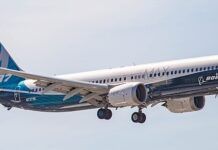

 When Bose introduced thefirst active noise reduction (ANR) headset to the aviation community at Oshkoshin 1989, pilots who visited Bose’s big black trailer and tried the headsethad two distinct reactions to it:
Reaction A: “I just can’t believe how quiet and comfortable this headsetis! I’ve simply gotta have one!!! I don’t care what it costs.”
Reaction B: “How much did you say this headset costs?A thousand bucks??? Be serious! They’ll never get awaywith pricing it that high! The price has got to come down!I’ll just wait until it does. No way that I’m going to spend a grand on anyheadset!”
AVweb’s publisher Carl Marbach and I make a good case study. He’san “A” and I’m a “B”. Carl bought his first Bose headset at that 1989 Oshkoshtrailer and has simply refused to use any lesser headset since. I, on theother hand, have lots of hours wearing other peoples’ Bose headsets and Iagree that they’re absolutely marvelous — but I simply have never been ableto bring myself to spend a kilobuck on a headset. For eight years, I’ve beenwaiting for the price to come down. And for eight years, Bose has stubbornlyheld it firm. The nerve of those people!
Where’s the competition?
Meanwhile, the other major players in the aviation headset business introducedtheir own ANR headsets, all at prices somewhat lower than Bose. And I’vetried them all. Telex was the first to field a competitive active headset.I flew with it but didn’t like it at all, which didn’t surprise me becauseI’ve never much cared for Telex headsets.
Next, David Clark entered the ANR competition. This time, I really had myhopes up because I’ve always been a big-time DC fan and my headsets havealways been green (as opposed to my wallet). But again I was disappointed:DC’s ANR offerings were just DC passives with some ANR circuitry added…andnot terribly good ANR circuitry at that. They didn’t come close to offeringthe comfort of the Bose, and I still couldn’t wait to get the darned thingsoff toward the end of a long flight. Okay, they’re incrementally better thanmy faithful old DC passive headsets…but they sure aren’t worth $700 inmy book!
Call me frugal. Call me a cheapskate. I’m guilty as charged…and I’ve beencalled a lot worse.
I tried the Peltors and the Sennheisers and a couple of the off-brand ANRstoo. But none of them were comfortable enough or quiet enough or cheap enoughto persuade me to forsake my trusty DC green-earcup head-in-a-vise passives.
But that just changed! A small audio company in Oregon that nobody ever heardof is about to stand the aviation headset market right on its proverbialear. The comfortable, quiet and cheap ANR headset that I’vebeen waiting eight years to purchase is now here! Good thingsdo come to those who wait…but sometimes you’ve got to beincredibly patient.
So who the heck is LightSPEED?
 LightSPEED Technologies in Lake Oswego, Oregon, was founded a fewyears back by some engineering, manufacturing and marketing people who formerlyworked for Tektronix, the giant electronics and instrumentation company.LightSPEED manufactures a variety of precision audio products including wirelessmicrophones, hearing aids, and classroom amplification systems. About a yearago, they stuck their corporate toe into the aviation headset market byintroducing the LightSPEED model “15K” ANR headset at Oshkosh ’96, pricedat $299. (More about the “15K” later in this article.)
Recently, LightSPEED introduced their second-generation “20K” aviation headset,priced at $439. That’s the one I’m all excited about. They’re showing the”20K” for the first time at Oshkosh ’97, and my guess is that once the word’sout they’ll have trouble keeping up with the demand. I’ve already orderedtwo of the 20K’s for my airplane…just to make sure I beat the rush.
Look and feel
The LightSPEED headset looks, well, different. It appears to be made entirelyof gray plastic, and has a sort of extra-terrestrial look (as if designedby aliens from Roswell, NM). It turns out that the headband actually hasa metal core, but it’s totally sheathed in plastic. The yokes, earcups, andadjusting mechanism are all plastic, too. So I imagine that this headsetwon’t take the kind of physical abuse that a David Clark headset will. Butthen neither will a Bose.
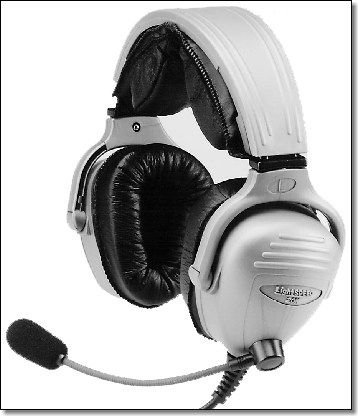 The earcups have a distinctive triangular shape, andare fitted with ultra-deep (inch-and-a-half thick) earseals that containthree layers of temperature-sensitive foam, each layer having a differentdensity than its neighbor. The earseals remind me of the aftermarket OregonAero “Soft-Seal” cushions that I use on my DCs for increased comfort; theyuse the same sort of temperature-sensitive foam construction. (Hmm, LightSPEEDis in Oregon, too.) The foam softens where it touches warm skin, making itcapable of accomodating the head shape perfectly with minimal clamping force.It also seals exceptionally well around the temple pieces of eyeglasses orsunglasses. (But don’t leave this headset in the plane overnight when it’sbelow freezing outside, or the earseals will be rock-hard when you firsttry to don the headset.)
The headband is also padded with one-inch-thick soft foam pillows, and isadjustable over a wide range by means of “ratchety” sliding rails that connectthe headband to the earcup yokes. Unlike my DCs, there are no tools requiredto loosen the headband adjustment (which is good) and no way to lock theadjustment in place (which could be a disadvantage if you carry the headsetaround in a carrying bag rather than leaving it in the airplane like I do).I have a wide head (some say swelled) and the headset fit me fine withoutgoing to max extension. LightSPEED claims that the low end of the adjustmentrange accomodates children, and it certainly looked that way to me althoughI didn’t actually try it out on a kid.
The microphone uses an electret element (the best kind) with an integralfoam blast shield. It mounts on a thin flexible “gooseneck” boom with aratcheting plastic elevation adjustment where it attaches to the left earcup.It seems like a good arrangement. My only complaint is that the headset ispermanently a “lefty.” When I’m flying in the right seat, I usually liketo turn my headset around so that the mic boom is on the right side. I cando this with my DC, but not with the LightSPEED because its triangular earcupsare canted for optimum fit and distinctively left- and right-handed. Thisis only a minor drawback, though..
Comfort is a very subjective thing, but I found the LightSPEED to be everybit as comfortable as the Bose. In some ways, I liked it better: it weighsless (16 ounces) and the earseals don’t have that strange “breast-implantfeel” of the Bose gel-filled seals. Certainly, the LightSPEED is as comfortableas any headset I’ve tried.
ANR performance
 Let’s cut to the chase. The activenoise reduction capabilities of the LightSPEED “20K” are simply outstanding.Flip on the switch and it “sucks the noise right out of your head” just likethe Bose does.
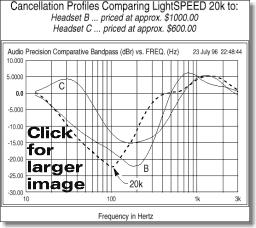
Lab tests indicate that the LightSPEED “20K” ANR system provides exactlythe same number of decibels of active noise reduction as the Bose SeriesII…about 20dB maximum. The LightSPEED’s achieves maximum reduction at about110 Hz while the Bose’s notch is centered at about 180 Hz. Is the differencesignificant? Let’s see.
Suppose you fly a propeller-driven airplane with a constant-speed prop, andsuppose your normal cruise is at 2400 RPM. Divide by 60 and you get 40revolutions-per-second. Now, the biggest low-frequency noise source in yourcockpit is power pulses from the propeller. If you have a two-bladed prop,your noise peak will occur at about twice engine RPM or 80 Hz; if your propis three-bladed, it’s three times engine RPM or 120 Hz. Either way, theLightSPEED’s 110 Hz notch frequency is pretty close to optimum.
Another major noise source is exhaust noise. If you have a four-cylinderengine, your exhaust noise occurs at twice engine RPM (because each cylinderfires once per two crankshaft revolutions) or about 80 Hz. With a six-cylinderpowerplant, it’s more like 120 Hz. So theoretically, the LightSPEED’s 110Hz notch might be a tad better at eliminating exhaust noise than the Bose’s180 Hz notch.
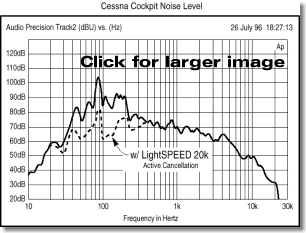 But subjectively, to be perfectlyhonest, it’s hard to tell the difference. Both headsets do a first-classjob of cancelling low-frequency noise characteristic of piston-poweredpropeller-driven aircraft. As far as I can see, the primary difference isthat the Bose costs more than twice as much.
If you’re into such stuff, check out the noise graph at right. It shows aspectrum analysis inside the cockpit of a Cessna 172 with a four-cylinderengine and two-bladed prop. You can clearly see the prop- and exhaust-noisepeak around 80 Hz, as theory predicts. And you can see that the “20K” knocksit down by 20 dB (from slightly over 100 dB to slightly over 80 dB), justas advertised. But you can also see that there’s plenty of low-frequencynoise throughout the 50-200 Hz spectrum where ANR circuitry does most ofits magic.
Audio quality
The speakers in the LightSPEED “20K” earcups offer excellent commintelligibility, but if you’re heavily into listening to CDs in-flight (insteadof Rush Limbaugh or ballgames or news), the fidelity of the Bose transducersis somewhat better. However, the LightSPEED is certainly acceptable for musicand offers stereo as well as monaural modes (manually switched, not automaticas in the Bose Series II).
Microphone audio quality and noise cancellation is excellent, as you mightexpect from a company that built its reputation manufacturing high-qualitywireless microphones before getting into the aviation headset business.
Hookup
All active headets are at a disadvantage to passives when it comes time tohook them up, because of the need for a power module for the ANR circuitry.Bose offers its Series II headset in two different models: apermanently-installed model in which the power module is mounted behind theinstrument panel, and a portable model with an external power module thatcontains a battery pack.
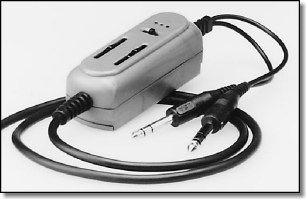 The LightSPEED comes in only one flavor: battery-powered. Theheadset is connected to a small power module via a four-and-a-half foot cord.The power module contains two AA-size alkaline batteries (which are good forat least 20 hours of use), two slider-typevolume controls, a stero/mono switch, an on/off switch, a battery-checkswitch, and three battery-level LEDs. The power module is also connected to a pair of standard mic andphone plugs via foot-long pigtails.
The question is: what to do with the power module in-flight?
In my airplane, the headset jacks are located at the extreme lower outsidecorners of the instrument panel, so the LightSPEED power module simply hangsdown by the lower cockpit sidewall out of harm’s way. On the other hand,if your jacks are located high on the instrument panel or, worse yet, onthe cockpit ceiling, the dangling power module could definitely get in theway…in which case, you might have to relocate your jacks, use an extensioncord, or secure the power module with Velcro.
Another related hassle is that the on/off switch on the LightSPEED powermodule is unguarded. This isn’t a problem if you normally leave the headsetin the airplane as I do…you simply have to remember to turn the thing offwhen you power down the airplane. But if you carry the headset around withyou, it’s awfully easy to bump the button accidentally and turn the thingon…resulting in dead batteries next time you try to use the headset. I’dlike to see LightSPEED change the switch design to one that’s harder to actuateinadvertantly. Meantime, either be careful or pop out the batteries beforeyou store the headset.
The lower-priced spread
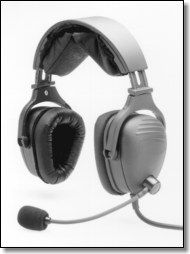 As mentioned earlier, LightSPEED also offers an even-lower-pricedANR headset: the “15K”. Physically, it’s virtually identical to the “20K”except that it uses earseals that aren’t quite as deep and contain two layersof thermal foam padding (instead of three).
The big difference is that the “15K” uses older and less-effective ANR circuitry,and offers about 5 dB less low-frequency noise reduction. The decibel scaleis logarithmic, and 5 dB is a lot! So the “15K” is simply not as quiet asthe “20K”, but it’s equally comfortable and sells for $150 less. The “15K”also comes with a two-year warranty, compared with three years for the “20K”.
The “15K” doesn’t offer Bose-quality noise reduction, but it’s on a par withother ANR sets (like the DC and Telex), and it’s more comfortable and a wholelot cheaper. It’s also a significant improvement in both quiet and comfortcompared to passive headsets at a price ($299) that’s not much higher.
We’d definitely opt for the “20K” for crewmembers of a piston-poweredaircraft…its superior noise cancellation is worth the extra $150. But forpassengers, or for quieter aircraft (jets, turboprops, and airplanes withgeared engines like the Cessna 421), the “15K” would do justfine.
Where to get them
 Avionics Westhas th LightSPEED “20K” on-sale at just $425 each, $20 below list. This isa remarkable bargain when you consider that the Bose Series II battery-poweredmodel costs $1,075 and that most “low cost” ANRs are priced in the $600-$700range! Avionics West also carries LightSPEED’s “15K”ANR model priced at $295.
You can orderboth models on-line and help support continued free access toAVweb and AVflash in the process.
LightSPEED is presently building its dealer network, although they tell usthat most of their present dealers are concentrated on the east coast forsome strange reason. LightSPEED will also be at Oshkosh ’97, but we wouldn’tadvise waiting until then because we expect their supply to sell-out almostimmediately, just as happened with Garmin’s GPSMAP-195 last year, and a lotof folks will wind up going home empty-handed.
Once the word gets out (and I suppose the fact you’re reading this meansit already has), I predict that LightSPEED will have a difficult time keepingup with demand for these headsets. I wouldn’t be surprised to see a substantialbackorder situation to develop over the next month or two while LightSPEEDramps up to meet the demand for these headsets.
I’m not worried one bit. I’ve already ordered mine!
Read what one AVweb member had to say abouthis LightSPEED “20K”.
Order Your  On-Line!
QUESTIONS? Contact Avionics West, Inc., by e-mail at[email protected], by FAX at1-805-928-3603, or by telephone at 1-805-928-3601.
