












 I don’t really believe in foreshadowing, but I must admit it was odd that a Ken Hamblin column in the local newspaper sparked a spirited breakfast chat with my husband the Sunday morning of my forced landing. Hamblin, a radio talk-show host, syndicated columnist and pilot, had written about a conversation he overheard between ATC and a pilot flying over southern California. Hamblin listened as the pilot, who was in trouble, asked the controller for help. The situation went from bad to worse quickly, and the end result was a downed plane, a dead pilot, and four injuries on the ground, none of which had to be. The local paper headlined Hamblin’s column, “How not to kill yourself when piloting a small aircraft.” My husband Steve and I talked about the column, and agreed again that we thought it was irresponsible of pilots to put motorists’ lives in danger. Steve then repeated a tip aerobatics legend Marion Cole used to tell him. “If your engine quits and you need a place to land, look straight down.” Pretty basic stuff, that. Did I mention I don’t believe in foreshadowing?
|
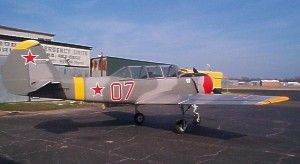
I met Steve and some flying buddies for lunch later that day and afterwards, we headed for the airport, our normal Sunday afternoon hangout. It was so hot on the ground I thought chances were good I would spontaneously combust, so I left Steve with his work and set off to find some cooler air at six or seven thousand feet. I pulled our Yak-52 out of the hangar, performed a relatively uneventful pre-flight and jumped aboard for the equally uneventful run-up. Getting the temps into the green didn’t take too long since the Shreveport Downtown Airport (DTN) ASOS was reporting a blistering 39 degrees C at 2:00 p.m. I made my radio call, checked for traffic one more time, pulled 207YK out onto the wind-favored Runway 14, pushed the throttle and prop forward, and headed for heaven.
Everything Seemed Normal, Until…
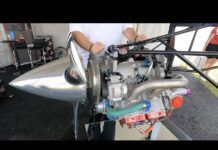
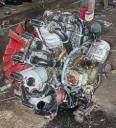
Several miles north of DTN is an oxbow lake called Gold Point, which is where pilots can begin their climb upstairs from 1,500 feet. Gold Point appeared none too soon, and as soon as I crossed the south bank of the lake, I pointed the Yak’s nose up, pushed the throttle forward and started heading for cooler temperatures. I really don’t remember what I was thinking at that point, but I definitely DO remember what happened next. “THUNK!” That’s it, just “THUNK.” No grinding, no “chunka-chunka,” no teeth-rattling vibrations, no oil on the windscreen, just “THUNK” … and suddenly my Yak was nothing more than a big ol’ Romanian glider. The engine had seized so quickly and so violently that the prop was frozen in the horizontal position. You know what people say about everything getting quiet? It doesn’t. The sound of wind whistling past is loud. So is the pounding of your heart.
I’ve always heard that time does weird things in situations like this, and I’m here to report that is true. I don’t know if this makes sense to you, but time seemed compressed and at the same time, things were moving very slowly. With less than 2,500 feet under me, I didn’t have much time or terribly many options. Random bits of information started zinging off the sides of my brain: “DID I HIT SOMETHING?” “PUSH THE NOSE OVER!” “CALM DOWN … now, breathe.” “Engine’s gone, not a fuel problem. Forget throttle, prop.” “I’m losing altitude quickly.” “Over a field.” “AIRSPEED INDICATOR, WHERE’S THE AIRSPEED INDICATOR?” “There it is. 150 clicks … above stall. Good.” All that had taken place in a matter of seconds.
|
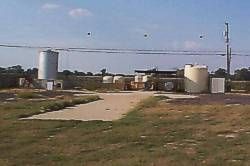
I pulled my head up, looked around, and saw a crop duster strip that I had flown over hundreds of times before … GOT IT! The Yak was coming down fast and the wind was whistling; there was lots of wind. I could make the duster field, but realized I had too much altitude and airspeed. The grass duster strip was roughly a 14-32 orientation. Though the wind was likely favoring Runway 14 (it had been at DTN), I made the split-second decision to land on Runway 32. Runway 32 was closer, and sitting at the threshold of Runway 14 was a road, a fence, a ditch, a power line, an old hangar and three silos likely filled with fuel and chemicals. Coming in short to Runway 14 and running into any of those things was not an option … neither was landing long on 32.
I pushed the nose over some more, turned for a wide right base, but I felt too fast and I was definitely too high. I knew I had the field made, so I dropped the gear (“Does the gear’s air system work with no engine?” “YES!”). I dumped the flaps, something I rarely do flying with power, and put the Yak into a HARD slip – left rudder and right stick jammed – and lined up on the center of the grass strip. Thoughts were still pinging around in my head: “How long is this strip?” “How fast am I going?” “I feel fast!” I realized at that moment how much I have depended on the sound of the engine to guide me. With no auditory input, it was all flying by feel. “Don’t want to make the landing, then run off the end of the runway.” “Don’t want to flare and float, PLANT THIS BABY!”
|
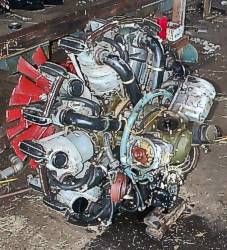
CONTACT! The feel of rough sod washed over me. I hit the brakes, “not too hard, don’t nose her over,” hit them again, released them. The Yak and I coasted to an easy stop a few feet away from an abandoned hangar. I didn’t do much reflecting – no crying, no rejoicing – I just turned off the air system, the engine instruments, the mags, my headset, and climbed out to walk to a house down the country road to call my husband to come get me.
All I Needed To Know I Knew
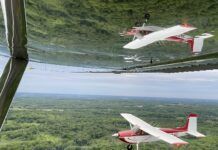
I learned many things from my forced landing, but these bits are the most interesting, and maybe the most lifesaving. After the “THUNK!” I didn’t spend much time thinking; I just started doing. I can thank good training for that. I discovered it was pretty easy to become fixated on a landing spot and not see a better one close by. I realized it’s darn hard not to continue hauling back on the stick even when your brain is trying to override your hand. I was proud that I not even once considered using the stupid radio to ask for help. (What could someone do? Tell me to avoid the cows?) I flew the airplane. My biggest regret is that when I slid the cockpit full open while coming in for the landing, (in case of fire, for faster escape) my favorite ball cap flew off. I loved that cap. It’s the one I was wearing in the EAA AirVenture Oshkosh 2000 AVweb group photo.
|
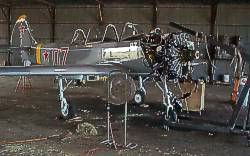
The really spooky part of this story is that a few years ago a friend of mine flying less than a mile away lost the engine in his Nanchang CJ-6. He was a much higher-time pilot than me, a CFI working toward a career in aviation. When his plane began losing power, he began talking to his Dad who was flying alongside, who tried to help him troubleshoot. He continued to pull on the stick, and when the CJ wouldn’t fly anymore, it stalled and fell to the ground, where it burned. Within just yards of where he crashed was a river, two fields, and a lightly traveled country road. Both the pilot and his passenger, who was flying in a small plane for the first time, were killed.
I’m extremely lucky. My engine could have locked in any number of worse places. But I’m also lucky and thankful that I had good training to fall back on. I don’t know how I’m going to feel climbing back into that Yak again, but I can tell you, I’ll be taking short-field landings and engine-out practice a lot more seriously. I hope you will, too. Let’s all be careful up there.