


























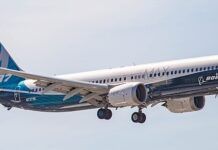

Extended-RangeTwin-Engine Operations (ETOPS) is a rating granted to airlines by internationalaviation regulatory authorities that allows those airlines to operate applicabletwo-engine aircraft over routes where the time to reach a suitable diversionairport in the case of an engine failure is greater than 60 minutes. Up untilrecently, according to strict compliance conditions, airlines could obtain ETOPSapprovals of up to 180 minutes. However, recently the Federal AviationAdministration (FAA) has extended this approval by 15%, to 207 minutes, on aprovisional basis; there is little doubt in the author’s mind, that as long asnothing unforeseen occurs in the next year or two, FAA approval for ETOPSextension to 240 minutes is a matter of course.
 Much of the impetus to extend ETOPS to 240 minutes is being led by Boeing,which plans to develop the Boeing 777 series aircraft into a viable replacementfor aging Boeing 747-100 and 200 series aircraft. Proponents of extending ETOPSto 240 minutes include powerful forces within the aviation industry, such as theATA (Air Transport Association) and ALPA (Air Line Pilots Association). However,other forces within the aviation industry, namely Airbus Industrie and the APA(Allied Pilots Association), remain unconvinced that operating two-engineaircraft on certain routes, such as those in the North Pacific, would maintainthe excellent safety record that ETOPS aircraft have achieved over the last tenyears. Dissenters claim that ETOPS extension by the FAA has become an ad hocprocedure that effectively regulates via policy letters and draft advisorymaterial rather than a public notice, comment and rule-making process. It istime, they say, to pause and take a long look at all long-range aircraftsafety and develop a consensus on improvements that may need to be regulated onan international basis.
Airbus considers that ETOPS operation in the North Pacific during cold wintermonths is far different to ETOPS operation in the Atlantic region andairframe/engine combinations have not been tested under these conditions.
Arguments for ETOPS extension
Since 1989, when ETOPS was extended to 180 minutes, two-engine long-rangeaircraft, such as the Boeing 767 and A330, have proved that modern, high-bypassturbofan engines are reliable and increasingly less likely to suffer anin-flight failure. In fact, proponents of ETOPS extension to 240 minutes saythat simply as a function of having fewer engines to fail, two-engine aircraftare less likely to require an in-flight diversion than a three-engine orfour-engine aircraft. Therefore, the extension of ETOPS to 240 minutes is basedon improved technology, a proven track record of engine and airframecombinations and is the next logical step in the evolution of aviation.
Stringent operational and maintenance requirements placed on two-engine,ETOPS aircraft operators by international aviation regulatory authorities andextra safety precautions, such as additional fire suppression, make two-engineaircraft inherently safer than three-engine and four-engine aircraft. Therefore,rather than deteriorating, safety levels for the traveling public should beenhanced when older technology aircraft are gradually replaced by long-rangetwo-engine aircraft. Additionally, because modern, two-engine aircraft, such asthe Boeing 777, are more economical to operate than three-engine or four-engineaircraft, the traveling public will benefit from the containment and possiblereduction in air fares. The interim measure of allowing a 15% increase on the180 minutes ETOPS restriction to 207 minutes on an as needed basis willprove that extending ETOPS to 240 minutes in the near future will not degradesafety.
Arguments against ETOPS extension
Statistically, it is true that a two-engine long-range aircraft has a lowerlikelihood of an in-flight diversion due to an engine failure than athree-engine or four-engine aircraft equipped with similar technology-basedengines. However, if an engine failure occurs at the worst possible time– that is when the aircraft is farthest away from an emergency airport where asafe landing can be made – then there is an extra safety margin afforded byhaving more than one engine left operating. For example, a Boeing 747 or MD-11can lose two engines and still remain airborne. In contrast, in the samecircumstances, a Boeing 777 would have to fly to the diversion airport on oneengine. Flying up to 240 minutes on one engine to an emergency airport in mostcases would be safe; however, there is little doubt that a three-engine orfour-engine aircraft offers a higher redundancy safety factor under thisworst-case scenario.
Another factor that is problematic for all long-distance aircraft is volcanicash cloud encounters. In the last 20 years there have been over 80 reports ofaircraft entering volcanic ash clouds. For example, in 1989, a Boeing 747-400entered a volcanic ash cloud near Anchorage, Alaska, and suffered four enginefailures. Although the crew managed to restart all engines and land safely atAnchorage, the aircraft suffered $80 million of damage and all four engines weresubsequently changed. Some volcanic ash cloud encounters in the past haveoccurred in Indonesia, The Philippine Islands, Japan, Guatemala, Columbia,Chile, Alaska, Zaire, Russia and New Guinea. Despite improved advanced warnings,the number of volcanoes and their relation to air routes remains a threat toaviation. If an aircraft were to encounter a volcanic ash cloud and sufferengine damage as a consequence, then there would be a higher redundancy affordedby having three or four engines instead of two. That is, if two engines failedas a result of volcanic ash damage, then a three-engine or four-engine aircraftcould still remain airborne.
A very serious problem for all advanced aircraft is the human-technologyinterface and resultant loss of pilot operating skills. In the authorsopinion, safety has also been eroded on advanced-technology aircraft by theincreased workload placed on the two pilots in emergency situations due to thedeletion of the flight engineer position. Disaster can occur when workloads areincreased to the point where human error is more likely to occur. For example,if multiple or complex automated systems fail, if data from instruments aremisread by pilots under duress or if checklists are mishandled during criticalsteps, then situations like the following description are possible.
In 1989, a Boeing 737-400 operated by British Midland crashed near the M1motorway while on approach to East Midlands Airport. While the aircraft had beenen route from London to Belfast, the number one engine suffered a series ofsevere compressor stalls after a fan blade had become detached. Airframeshuddering and smoke infusion into the cockpit occurred as a result of theengine damage. The two-pilot crew mistakenly identified which engine hadsuffered damage and shut down the number two engine which up until that time hadbeen operating normally. A diversion was initiated to runway 27 at East MidlandsAirport; however, the severely damaged number one engine gave out on approach.Hasty attempts to restart the number two engine failed and the aircraftsubsequently crashed short of the airfield. This flight could have landed safelyhad the correct engine been identified and shut down; however, as this incidentdemonstrates, when problems occur the ensuing workload can stretch the limits oftwo crew members.
Crew fatigue and its effect on the safe operation of aircraft is a subject ofstudy by agencies such as NASA. In most cases, a two-man crew can be scheduledto operate a flight where the flight time does not exceed nine hours. While thisdoes not seem excessive, fatigue of crew members is cumulative and a crew thatis on the tail end of a multi-day pattern might begin a flight already feelingtired. If a two-man crew scheduled flight departs under these circumstances,then judgment, reaction time and motor skills are going to be severely degraded.Such a condition has been mentioned as a possible influencing factor in therecent American Airlines MD-82 accident in Little Rock, Ark.
Serious safety issue, or just nit-picking?
Some economists argue that the point of diminishing returns is beingapproached in regard to improving airline safety. The public, they say, isexpecting too much safety assurance from a transport means that is alreadyastronomically safe by any standard. For example, the traveling public acceptsthe fact that approximately 42,000 people are killed in road accidents everyyear in the United States. Yet, if the same accident rate were applicable to theairline industry, that would be equivalent to approximately twelve 300-seataircraft crashes a month with an ensuing total loss of life. Last year in theUnited States there were zero fatalities in an industry that experiencedapproximately 5 billion passenger enplanements in domestic operations alone.
A person has more chance of being killed in his or her own home than in anairline crash and yet demands for increased safety in airline travel continue.At some point the public will have to accept that a zero accident rate in theairline industry is unattainable and the risk factor involved with air travel isabout as good as it is going to get. What they do not have to accept,however, is an erosion of existing safety levels purely as a function of airlineand aircraft manufacturer economic interests. In the authors opinion,extension of ETOPS to 240 minutes will seriously challenge existing safetylevels of long-distance air travel.
Boeing and Airbus are divergent in their opinions once again. The obviousbenefit for Boeing is the prospective large market for its Boeing 777X aircraftand the possible replacement of aging Boeing 747-100 and 200 series aircraft. Inaddition, ETOPS extension to 240 minutes would enable some emergency airports,such as Midway Island (used for an emergency airport in the Southern Pacificregion) that are currently subsidized by Boeing, to be closed. However, suchclosures, if they occur, would seriously affect all long-distanceflights, whether they be two-engine, three-engine or four-engine aircraft thatcurrently use these airports as emergency diversion points. Boeing denies thatthe approved ETOPS extension to 207 minutes on a provisional basis will be usedas justification for Midway Island and other emergency airport closures.However, future financing of emergency airports might be subject to debate amongairlines, aircraft manufacturers and aviation industry regulators if they are tobe kept operational.
Airbus has decided not to pursue a competing aircraft to the Boeing 777Xother than the A340; therefore, both of these companies have a vested interestin the extension or containment of the existing ETOPS limit of 180 minutes.Combined with Airbus Industries possible development of the A3XX and Boeingscontention that a market will not exist for VLTA (Very Large TransportAircraft), the future of these companies will depend largely on which one ofthem is correct in its estimation of industry developments. Therefore, thearguments for and against ETOPS extension to 240 minutes appears to be largelybased on economic interests rather than reality-based issues.
In an era when airlines, aircraft manufacturers and aviation regulatoryauthorities profess to being focused on reducing airline accidents by 50% in thenext ten years, it seems odd that the impetus to extend ETOPS to 240 minutes isgathering steam without unanimous support within the industry. This contentiousissue is one that will be profound in its effect on the future of commercialaviation. One can only hope that human lives are not lost in proving thatoperating two-man crew, two-engine aircraft over distances that require ETOPS of240 minutes is a viable option. However, the author is left wondering, why thehurry?