











| NOTE: This narrative was compiled from interviews with the pilot, Jim Hawley, and one passenger who played a key role in the incident, Jens Lundy. All times are local; Loreto, Mexico is one hour ahead of Phoenix, Arizona. |
It was supposed to be just a fun father and son weekend, fishing off the coast of Baja,Mexico. It ended up a bigger challenge.
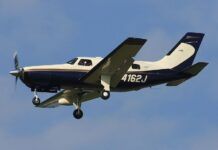
Jim Hawley, of Phoenix, AZ (age 27) and his friend Jens Lundy (age 26), together withJim’s dad John (age 58) and Jens’ dad Bill (age 55) got out to Falcon Field in Mesa at5:00 am on Sept. 5, 1997. Jim, with Jens tagging along trying to learn what he could,pre-flighted the rented Mooney M-20E that they would fly. Then they stowed their gear. Jimtold Jens to make sure the life vests were on top and Jens put them on the “hatshelf” at the back of the luggage area.
They took-off at 5:30, with the part-time tower still closed, for what Jim expected tobe about a 3 1/4 hour flight to Loreto on the east coast of Baja. Jim had filed his VFRflight plan earlier and once in the air he attempted to open it with Flight Service. Hecouldn’t raise them, or anyone else, so he set his transponder to 7600 (indicating a radiofailure) and decided to stop off at Ryan Field, a small airport west of Tucson, to seewhat was wrong and if it could be fixed. It was not an auspicious way to start the day.
The avionics shop at Ryan didn’t open until 8:00, so they waited. The technician sortedout the problem and it was an easy fix, but by the time all was done, it was 12:30 beforethey took-off. Jim opened his flight plan with Flight Service, who advised Mexican Customsat Loreto of their expected arrival time.
Climbing to 9,500 ft., the four headed south, direct for Loreto, crossing over thecoast just north of Guaymas. Along the way Jim checked with Hermosillo on weather, sinceconvective activity is common during summer afternoons, but they reported no problems orPIREPs along their route or at their destination, the altimeter was 29.92. The weathercontinued to hold with just “scattered puffy clouds” at his altitude. Jimdescended to 7,500 to stay clear of any clouds.
The crossing over the Sea of Cortez (Gulf of California) was proceeding smoothly andJim contacted Loreto tower 50 miles out and received a report of light winds and 20 milesvisibility, “5,000 broken, altimeter 29.92.” He still couldn’t see the coastbecause of a bank of clouds up ahead. The clouds didn’t show any signs of convectiveactivity, no lighting or thunder heads, and “appeared to only go down to about 3,000feet.”
All Hell Broke Loose
Jim started descending for landing and he switched the fuel boost pump on as he beganhis decent, “per the POH.” At about 30 miles out and 3,000 ft. the cloud bankstill obscured the shore. Suddenly the plane started to bounce around”violently” in “extreme turbulence,” shaking everyone up, and the skyahead seemed to be getting darker by the second. Jim leveled out to bleed off airspeed toget below the yellow arc. A call to Loreto confirmed that conditions at the field werestill benign. Jim kept checking his airspeed and noticed that the GPS readout was showingonly 115 mph ground speed, a far cry from the airspeed indicator’s 160 mph true. He wasnow fighting a hell of a headwind.
Suddenly there were flashes of lightning ahead and rain began to hit the windscreen andhe could see now that the sky was obscured all the way down to the water’s surface. Jimhad no problem deciding it was time to execute an immediate 180 degree turn to get back toclear skies. Jim advised the tower that he’d made a 180 and “would either proceed toan alternate up the coast, Santa Rosalia or circumnavigate around the storm cell.”Loreto confirmed that conditions at the field were still fine.
He descended further in the turn to maintain visual conditions. Exiting the rain atabout 1,000 ft. above the water’s surface on a reciprocal heading, there was blue skyabove and ahead. Jim richened the mixture, pushed the prop in for climb and applied fullpower. The Mooney started to climb out at about 1,000 fpm and Jim started to consider hisnext move. Approximately thirty seconds later, at about 1,500 ft., the engine abruptlybegan to cough and sputter and die.
We’re Going For A Swim
Jim lowered the nose to maintain best glide airspeed and quickly went though the engineout drill (though he didn’t switch tanks “because I had been switching them every 15minutes or so” and didn’t open the alternate air), but with little altitude and noresponse he quickly came to the conclusion that they were going for a swim.
Jim told his passengers, “Sorry, but we’re going down,” and to get ready.”First thing that went through mind was don’t hit the water with a forty mile an hourtailwind.” Jim commenced a shallow turn back toward shore, and back towards thestorm. Jim told his father to unlatch and open the door and then concentrated his fullattention on flying.
Meanwhile Jens, seated behind Jim, unbuckled his seat belt and reached back for thelife vests they had stowed on top of the luggage behind him. He passed one to his fathersitting next to him, who immediately slipped it over his head, and one to John and keptthe other two himself. There was no room or time to put on the bulky marine vests.
| Editor’s Note: Hawley had purchased the marine vests at Wal-Mart just before the flight in the mistaken belief that FAA regulations required him to carry such flotation on board for overwater flights. In fact, for Part 91 private flights in light aircraft, there is no such requirement. Further, the regulations for Part 91 Subpart F – Large and Turbine Powered Multiengine Airplanes (Part 91.509 – Survival equipment for overwater operations) and for commercial operations that do require carriage of life vests also require that they be FAA TSO approved aviation life vests. Hawley purchased three bulky, orange marine “horse shoe” style Type II PFDs (“Near-Shore Buoyancy Vest” suitable for use in “calm, inland water or where there is a good chance of quick rescue” USCG) which will not necessarily right an unconscious person and one water skiing style Type III PFD (“Flotation Aid” suitable for use in “calm, inland water or where there is a good chance of quick rescue” USCG) that will not maintain a person face-up in the water without active participation of the wearer. |
Call Mayday, Ditch, Get Out
Radio traffic was heavy, Jim was getting very frustrated that he couldn’t break in witha Mayday call when suddenly there was a lull and he made the call, giving his estimatedposition as 25 miles at 350 degrees, the handheld GPS with lat/lon having been lostsomewhere in the cockpit as a result of the turbulence. There was no time for a responsebefore they hit the water.
Jim had leveled the wings from his 180 degree turn into the wind only about 150 feetabove the water, the rain now sheeting down with no forward visibility. He could see thesurface of the sea straight down, but not ahead. Jens, realizing that there was no time toget his seat belt back on, bent down behind the pilot’s seat and braced against it. Jiminstinctively started to lower the gear, then remembered that was not proper ditchingprocedure and raised it – and then reversed himself, deciding it might help slow themdown when they hit the water, hitting the peaks of the whitecaps before the fuselagestruck the surface. Jim began his flare and as the stall horn sounded, felt the gear skipover the top of a wave with a loud “thump” and “bang,” then another,then one more and suddenly the plane nosed down into the dark water.
The impact was surprisingly low, not at all what he’d expected. The strong headwindobviously made a significant difference in the speed at which they hit the water. Theplane bobbed back up to the surface. John sustained the only “injury” a minorbump from his knee hitting the Mooney’s lower panel. John immediately opened the door andstepped out on the wing, Jens dove over his father from the back left seat and then helpedpull him out with Jim bringing up the rear. Jim estimates it “took only 10 to 15seconds” for all to egress from the cabin to the wing. As Jim exited, Jens, who hadalready donned his vest, handed Jim the remaining life vest while the others tried to dontheirs as the plane rocked in the heavy seas.
Jens suggested they ought to grab what they could from the plane, “I knew we coulduse whatever we could get out.” He opened the baggage door and grabbed at the firstthings at hand, his small duffel, his father’s bag of fishing gear and some fishing rodsin tubes, “seems silly, but I was thinking if we were out there for long, we couldfish for food.” He next grabbed a molded plastic ice chest. It stuck coming out. Billreached over to help and heaved. The top ripped off as it came out through the hatch. Withthe gear laying on the wing, Jens grabbed his duffel and his father’s bag and he steppedoff the wing into the water to get out of the way when the plane sank, “I figured itwas a heavy piece of metal, it was only a matter of time.” The world dropped out fromunder the rest of the survivors as the plane nosed over. They were thrown into the waterand the Mooney hung there with it’s tail sticking straight up for “about four or fiveseconds” before it plunged beneath the waves, the strobes still flashing until itdisappeared into the water.
Survival Phase Begins
All but Bill had managed to get their vests on before the plane sank. He had his overone shoulder with his arm through the yoke. Bill is a big man and the vest was a bit smallfor him and he simply couldn’t don it easily enough to get into it quickly, despite theurgency. The rain and wind beat down on them and it was black as night, even though it wasonly 3:45 in the afternoon.
The breaking waves (estimated at about 8-10 ft. in height) doused them with salt waterand spray. John had swallowed a lot of sea water as he entered the water and now, hangingon to one end of the ice chest, he was vomiting violently. Between fits of vomiting, Johnstruggled to get his vest on, finally succeeding.
Jim expected the cell to move on quickly, but it continued to rain buckets andlightning and thunder overhead, the lightning providing the only illumination in theotherwise dark seascape. John continued to vomit and the others were seriously worriedabout his condition. Jim realized that losing all that water was not likely to be good forhis dad’s long term prospects. Jens had gone through survival and battlefield lifesavingcourses in the Army and really worried about John.
As they gathered around the ice chest, the two older men hung on to the handles at theends. The collar of the vest helped to keep their head out of the water and they couldrelax somewhat as a result. Jens also was able to relax a bit, but Jim, with the ski vest,had to continually fight to stay upright and to keep his head up. His mouth was aboutlevel with the water and if he relaxed at all he would tip either forward or backward intothe water, just depending upon where his balance was at the moment. It was tiring.
Inside the ice chest were two pairs of swim fins and a snorkel and mask. The twoyounger men slipped the fins on, making it easier for them to stay in place near theothers hanging onto the ice chest.
The water was warm, but the wind and spray were cool. As they floated they talked tokeep each others spirits up. Jim figured that since he had been in communication with thetower, they must have heard his Mayday and would send rescuers as soon as the stormabated.
After nearly two hours the storm started to let up and visibility improved to aboutfive miles. The swells were still large, but smooth, and there were no whitecaps breakingover them. Soon they could see a helicopter flying low over the water, but it never gotvery close, flying back and forth a couple miles from their position, they supposed mostlikely where the plane when down and left a slick. They had drifted quite a bit in thestorm due to the wind. The four signaled wildly with their arms and using the pair of neongreen swim fins like flags, but to no avail. They tried to signal using the Mini-MagLitefrom Jens’ duffel, but with the now brighter ambient light, it was ineffective. They hadno other signaling equipment with which to attract the attention of the searchers. Afterabout 15-20 minutes the helicopter disappeared.
Jens Swims For Help
To the west they could just make out land, but could not see the shore. Floating justout of earshot of the older men, the two sons discussed their options. It appeared theymight be on their own and couldn’t depend on anyone else for rescue. “We could seeland, though it was obviously quite a ways away, but we could also tell we were beingblown in the opposite direction, out to sea,” recalled Jim. Jens had already made uphis own mind that he was going to swim for shore to get help and was glad to see that Jimhad come to the same conclusion. Jens didn’t want to be the one left to deal with theolder men and was confident he could do it, knowing he always did best looking out forhimself. He recalled thinking, “this was my turn to do something for everyone else,they had always been there for me in the past.” They swapped fins, giving Jens thegood ones. In the process they lost one of the remaining fins.
Jim wished Jens good luck and Jens took off, swimming madly to put some distancebetween himself and the group before his father figured out what had happened. It wasexactly 7:30 pm, just a bit under four hours since they ditched. Jim swam over the othersand explained what was going on. Jens hadn’t wanted to let them in on it because he fearedhis father would not want him to depart. He was probably right, but with the departure adone deal, his father just acknowledged that Jens would be able to make it and bring backrescue. The three settled in as best they could to wait.
The sun went down at and it grew noticeably cooler. Jim still had to work to keepupright, now holding on to one end of the ice chest. John had stopped vomiting once thestorm quieted down and was now feeling, and looking, much better, floating on his back,gripping the ice chest with both hands, while Bill held on to the other end.
Getting Through The Night
Through the night they talked on and off, with long periods of silence. Jim recalled,”about three or four in the morning I made a joke, saying anybody ever seen Jaws?’ Mydad said let’s not even talk about that and that was the end of that subject.” Theymade a concerted effort to try and move in the direction of land, hoping to offset thedrift caused by the wind and current and not be taken any further out, away from theshore. The sky alternately clouded over and cleared some and then about 3:00 am it becamebrilliantly clear and the stars were bright.
Just after midnight they heard a boat and a little later saw a searchlight in thedistance, “several miles away.” They tried to signal with the Mini-MagLite, butit was dead, water having gotten in somehow and shorted it out. The three whistled as loudand long as they could, but there was no response. All they could do was watch helplesslyas the vessel motor back and forth in an obvious search pattern of some sort. Then thelight went out and the sound of the engine diminished as it moved away. About 3:00 theysaw the searchlight again, in a different location, due north, but they had no better luckthis time.
They went back to waiting. Jim was getting colder and shivering as the night wore on.While the water was still warm, the cool air and light breeze was causing him to chill andenter the first stages of hypothermia. To rest, he would loosen the vest and hike it up sohis head was supported, but this put his mouth at virtually the level of the water, so itwas not the best of arrangements, but he desperately needed some rest and stability. Theolder men were starting to get chilled a bit as well and John was becoming a bitdisheartened. The others talked to him to encourage him. About 3:00 Jim got a “secondwind” and felt much better and “just started frog kicking and paddling until thesun came up.”
Jens Looks For Help
Meanwhile, Jens swam steadily towards shore. Along the way he got an occasional crampand he stopped frequently to rest, dozing off a few times, but the motion of the wavesquickly awakened him and he continued on. He used the stars to maintain his course andwould alternate swimming face down and on his back. He discovered it was easier to swim ifhe took off the vest and moved it around underneath him for better balance. When hestopped, he’d often sit upon it. As he grew tired and thirsty he kept talking to himself,motivating himself to continue, “this time I’ll just swim 20 strokes, or 25 strokes,that sort of thing.” To keep his mind away from negative thoughts he’d play classicalmusic in his head and recall favorite TV shows. He particularly didn’t want to think muchabout John, who he feared might well be dead, he had looked to be in such poor shape whenhe left the group.
Eventually, he could hear the sound of the surf as the waves hit the shore. At about1:45 am he suddenly hit a reef and got numerous sea urchins spines in his hands and feet.He turned aside and swam painfully down the coast, looking for a way through the reef. Allof a sudden he saw what looked like a flashlight on the shore and he instinctively turnedtowards it. While he didn’t realize it at the time, the reef was still there, he just hadbetter luck this time around and crossed over it without any problems. As he neared theshore he stopped and yelled for help. The light immediately went out! With no other choicehe continued, wading ashore over the slippery rocks and abalone shells, no sandy beachhere. As he came up on the shore he smelled a small fire. Stopping to take his flippersoff, he now had to crawl up the rocky beach because the sea urchin spines made walking toopainful. Finally he saw the fire and the fishermen hiding there realized that Jens was nothreat and came to help him. The time was about 2:30 am, seven hours since he started hisswim to shore.
The fishermen helped Jens to the fire, wrapped him in a blanket and gave him sometortillas and water, “I was so thirsty and so glad to see that five gallon jug ofwater, I could have cared less whether it was out of the tap or what.” Jens knew heshould first take small sips, but couldn’t help himself, “I just drank is down.”They spoke virtually no English and Jens spoke virtually no Spanish, “just what youpick up from Sesame Street when you’re a kid.” Still, they managed to communicate.The fishermen explained that they could not cross the reef until morning without damagingtheir ponga, a flat bottomed boat, so Jens settled in. He pulled out the sea urchin spinesas best he could and then lay down on the rocks and was soon fast asleep.
Jens was awakened before dawn and they left the fishing spot and traveled about a miledown the coast, stopping at a dilapidated abandoned house. The elderly gentleman whocalled this place home spoke English very well. He knew who Jens was, having heard thenews on the radio. The fishermen explained they didn’t have enough gas to get to town andback, that Jens would have to get there on his own. Jens pleaded and promised he’d pay forthe gas, even if he had to get money wired in. Eventually, they agreed to take him andthey arrived at the Loreto dock about 7:45 am.
Jens saw a police officer and headed towards him, but the fishermen were insistent thathe go get their money first. Ignoring them, he approached the officer who instantlyrecognized that he must have been one of those who were in the lost aircraft, “Ilooked like Hell by then,” Jens recalled. Jens was helped into the officer’s policevan and off they went to the police station where Jens explained where they had gone down,repeating the general distance and course that Jim had originally broadcast. Knowing nowthat there were survivors out there, the police called out the Army helicopter to gosearch and Jens was then transported to the hospital. While there he heard the helicopterpass over on its way to conduct the search.
Daybreak At Sea
Meanwhile, pre-dawn came upon the survivors still floating in the water and by 6:00 amthe sun was up and Jim figured they should start seeing some signs of searchers real soon.The sun quickly warmed Jim and the rest. Their spirits picked up, they had made it thisfar, they were certain they could last until they were rescued. Still, the hours came andwent with no sign of any searchers. Finally, about 8:00 am they began to more seriouslyconsider the possibility that they would have to save themselves or perish. The decisionwas made to make a real effort to swim to shore, rather than just try to maintain theirposition and make whatever forward progress as they may.
After a short while Jim suggested that the ice chest was slowing them down and thatthey should abandon it, “I could let go of the chest and easily pull away from themwith just easy frog-kicking so it was obvious it was dragging them down.” That ideadidn’t go over very well, but after further argument he convinced them they had adequateflotation and what they really needed to do was to get to shore as quickly as possible.
By now they were all feeling the effects of dehydration. Their mouths were bone dry,their tongues felt like they were shriveled up and their lips were white. Jim considereddiving for the kelp he could see clearly below them, but then told himself that he wasdehydrated and probably not thinking clearly and to just concentrate on swimming towardsshore.
Leaving the ice chest behind, they started to make better time. John pulled a bit aheadwhile Bill trailed, still clutching his fishing rod case, which slowed him down some andalso because he was getting tired. Every once in a while they’d slow to let Bill catch up,with Jim having to call to him to encourage him to continue and catch up. Still, they werecareful to never lose sight of each other and they were making progress.
Search and Rescue
By about 10:00 am they were close enough to make out the shoreline, about five milesaway. The water was calm and sky clear and they were making good progress. Then they hearda helicopter which they soon were able to see, flying parallel to the shore a couple milesout at about 200 to 300 feet and once again they waved wildly, Jim using a shirt which hehad taken from Jens’ duffel earlier. The copter made one run along the shore and thenshortly after passing abeam them, banked away in the direction of the airport,disappearing over the horizon. “We thought he must have seen us or he would have mademore of an effort than that,” Jim remembers them discussing, but he also wondered whythey wouldn’t have at least come out a little further to make sure.
About 15 minutes later Jim noticed a big black plume of smoke on the horizon and it wassoon evident that it was headed in their direction. Before long they could make out theshape of a large cutter, obviously headed straight towards them. It was almost a half hourbefore the Mexican Naval vessel pulled alongside and put a small boat over the side tocome pick them up. The three exhausted survivors were pulled into the small boat and givensmall sips of water before being taken over to the ship and helped up a ladder hangingdown the side of the ship. It was 11:00 am, they had been in the water 19 hours and 15minutes. They were rescued, but it wasn’t quite over.
None of the seamen spoke English, but Jim spoke some Spanish. Jim was almost afraid toask about Jens, worrying that he didn’t make it, since they were so late being rescued.But, when he finally asked, once everyone was pulled from the water, they immediatelyassured him that his friend was fine and had, in fact, sent them. Jim and the othersfinally relaxed. Everyone was OK.
Once on deck, they were given more water and the captain welcomed them aboard. He toldthem that they were the first ever survivors of a ditching in the area, that they hadnever before rescued anyone! He then led them down to the officer’s mess for some food.
Back in town, Jens was no less worried about his companions and had come to accept, inhis own mind, that John was probably dead. He just hoped Jim and his dad were OK and foundsoon. When the Navy ship positively identified the three survivors, they radioed shore andJens, too, finally relaxed.
Analysis by Douglas Ritter
Hawley learned a number of important lesson from his experience and we can findadditional lessons to take away from these survivors’ adventure. Hawley made a number ofgood decisions, as well as a few he might be faulted on, but luck was on his side as well.We cannot always count on being lucky, so it’s safer in the long run to be prepared.
Hawley said that perhaps the most important lesson he learned was that mechanicalfailure can happen to you. It isn’t always the other guy. “I don’t care how manyhours of flying you have, it could happen the next time you go up,” he remarked.
Be Prepared
Next on his list of lessons learned was that it makes sense to be prepared, “if wehad any sort of signalling equipment, flares or what have you, any at all, we would havebeen picked up within a few hours.” Few things are as frustrating and depressing to asurvivor as to see searchers nearby, but not be able to attract their attention. Hawleycommented, “I checked in a marine supply store when we got back and a reasonablycomplete and compact emergency signal kit costs only about $30. I would have paidthousands of dollars, almost anything, to have had that kit that night in the water!”
Jens Lundy’s Mini-MagLite would be an effective night signaling device, if it hadworked. Unfortunately, it failed, a not uncommon occurrence. A flashlight designedexpressly for use in water, such as those offered by Underwater Kinetics or Pelican Products,would be a far better choice.
Hawley continued, “if I’d had a handheld radio with us, there would have been noproblem.” Of course, the handheld wouldn’t have lasted a minute in the salt water, agood reason to purchase a purpose made waterproof pouch designed especially for thispurpose for use when flying over water. Most handheld manufacturers offer one or they canbe purchased at any good marine supply house.
The plane’s ELT (Emergency Locator Transmitter) went down with the plane. If thesurvivors had a personal size ELT or EPIRB (Emergency Position Indicating Radio Beacon)they would have been much more easily and quickly located. Moreover, the transmission fromthe emergency beacon would have alerted search and rescue forces that they were likelystill alive, waiting to be rescued. While not inexpensive, especially the better 406 MHzbeacons, they can be rented for nominal rates for infrequent trips.
While they had flotation gear that kept them alive, Hawley noted it probably wasn’t thebest choice, “I realize now that real inflatable aviation vests could have been wornin the plane, so we wouldn’t have to put them on after we got out.” That could havebeen a disaster, as John Lundy very nearly discovered. He likely would not have swallowedso much water if he had been wearing his vest when he was dumped into the sea, nor wouldhe have had to fight to get it on in the water, a difficult and tiring chore at best. Theywere lucky.
It is interesting to contemplate the justification Hawley gave for procuring the lifevest. Not so much because it was prudent, but, rather because he believed it was”required by law,” as he put it. As we have seen, the regulations didn’t requirelife vests, but this is just more evidence that regulations don’t protect us, good senseand prudent preparations do.
The decision to stow the vests on top where they were accessible was a good one, neverbury emergency equipment that you might need in a hurry. On the other hand, back on thehat shelf probably wasn’t the best possible location. It would have been better if theycould have been retrieved without requiring Jens to unbuckle his seat belt.
None of the life vests provided were designed for use in open or rough water. Nonewould reliably keep an unconscious person’s face out of the water and Hawley’s vestrequired active effort on the part of the wearer to maintain stability. Hawley alsoidentified the importance of have adequate neck support, which his vest did not provide.
A double cell inflatable aviation vest not only provides good support for your head, italso holds the body at a comfortable angle in the water and will right an unconsciousperson. The large chambers also give your face protection from the water and spray. Pouchstyle aviation life vests are affordable, provide excellent protection, can be worn duringflight without fear of damaging them and are quickly donned by just pulling them up overyour head.
Hawley also considers a life raft more than just a passing thought now, “If we’dhad a raft, it would have made all the difference in the world.” If the water hadbeen only a little colder, hypothermia could easily have taken its toll and killed thembefore they were rescued. They were very lucky the water was warm and that the stormpassed relatively quickly. The best defense against hypothermia is a life raft.
Get The Important Stuff Out
Dehydration was starting to adversely affect them all by the time they were rescued.Hawley recalls thinking wistfully of the large bottle of Gatorade he left in the plane,beside his seat. Water is a precious commodity when stuck in the ocean, or on land forthat matter. Always carry some water with you.
It also helps to take it, and the rest of your survival supplies, with you when youegress. Without careful preparation it is easy to forget. Hawley didn’t give hispassengers a formal safety briefing before departure, but he did discuss briefly the needto get the vests and exit as quickly as possible if they ditched. Passengers should alwaysbe well briefed on emergency procedures and their responsibilities in case of anemergency. This is doubly important when flying over water with the possibility ofditching.
In this same vein, it is best to carry some vital emergency gear on your person, incase you only manage to get yourself out. Some life vests include storage compartments oryou can utilize a separate survival vest. Even a belt pouch filled with signaling aidscould make the difference between being rescued or not.
Ditching The Aircraft
Hawley did an excellent job flying the aircraft to a stop during the ditching.Maintaining control and keeping the wings level is a key ingredient of a successfulditching.
Hawley made a superb decision to turn back into the wind for the ditching. The strongheadwind helped compensate for a number of potentially poor decisions and circumstances. A40 – 45 mph reduction resulted in the plane hitting the water at only 20 – 25 mph(estimated), a remarkably slow speed. Since the force of impact increases exponentiallywith speed, in this case the forces were approximately 80% less than what they might havebeen at normal landing speed! That reduction of impact forces represents a huge increasein survivablity. The overall salutary effect on the outcome of this ditching of impactingthe water at such low speed cannot be stressed enough.
In the end Hawley decided to put the gear down, but experience teaches us that it isbest to leave the gear up in a retractable aircraft. There are a number of possibleproblems that can occur with the gear down. At normal touchdown speeds and greater loads,the gear could be ripped off, opening the wings to flooding and hastening the plane’ssinking. If they don’t both hit the water at the same time, it is more likely to catch awing and spin the aircraft causing it to tumble or cartwheel out of control, resulting inmore damage, greater forces on the occupants and a much more likely chance of notsurviving. The gear catching the water first can also impart a pitch down motion that cancause the plane to nose in prematurely. At higher speeds this can cause the windscreen tofail and the cabin to flood quickly, hindering egress and cutting down the time the planestays afloat. The low impact speed probably made the difference in this case, the aircraftsimply wasn’t going fast enough for any of these more typical scenarios to play out.
Jens’ failure to remain buckled in or to rebuckle his seat belt was also mitigated bythe low speed impact. He would likely have been seriously injured if the ditching had beenat normal speeds. As he was thrown forward by inertia in such a scenario, he might wellhave cause injury to Jim or the others as well.
Go For Help, Or Stay Put?
Under the circumstances, Jens’ decision to go for help was reasonably sound. Land wasvisible, the weather had cleared and the seas were not bad, he had adequate flotation andhe was in excellent shape and strongly motivated, but the kicker was the fins whichallowed him to move faster and with much less effort. Swimming in the sea through swellsis difficult at best without such assistance. Jens realized shortly after the departedthat it might have been a good idea to also take the mask and snorkel from the ice chest.This would have enabled him to make even better time by swimming face down for extendedperiods. He might also avoided injury on the reef. It might also have been wiser to waituntil the sun came up, but it is hard to fault success.
The rest of the group’s decision to attempt to reach land as a group was sound. Youcould argue that it would have been better if Jens stayed with the group and they all wenttogether. It would have been better if the three remaining had stayed together as a group,instead of allowing themselves to become strung out. Bill should have left the fishingrod. It served no useful purpose for the survivors and was an impediment to progress. Thedecision to leave the ice chest was probably a good one in this instance, though you couldargue either way. With the flotation they had, it served as only a supplement and helpedmake them a bigger target from the air, it wasn’t critical to their survival with land inview and apparently reachable. Of course, everything is not always as it appears and stuffhappens that might have precluded them reaching land, in which case having the ice chestmay have become more important again. In some other circumstances, further out to seawhere land was not in view, for example, it would be better to hang on to it.
Overwater Flight
In planning his flight, Hawley chose a direct route that gave him an overwater leg ofapproximately 130 nautical miles. There were a number of alternate routes that he couldhave taken that would have reduced his exposure time over water significantly. While thesewould have added a small amount of time to the flight, most prudent pilots, especiallythose lacking a complete compliment of survival equipment, would have traded the extratime aloft for the lessened time over water. There are exceptions, such as when you canfly high enough to be able to glide to land from any point along the route, but thisdoesn’t appear to be one of them.
Some extremely cautious pilots might fault Hawley for beginning his decent while overwater, preferring to wait until over land, even if that added to the flight time. When anairport is on the coast, it can be enticing to start the decent over water, more so in anaircraft like a Mooney which doesn’t come down as fast as others because it is so slick.There are many advantages to having more altitude in case of a loss of power.
Pilot Actions
Hawley’s failure to switch tanks or try the alternate air when the engine lost powercould be faulted. Hawley noted that there was no evidence of any catastrophic failure,that the engine just quit producing power and was “coughing and sputtering.”Fuel contamination could cause that. He had just emerged from a severe downpour that couldhave conceivably put water into one of the fuel tanks, leaking in past a bad fuel cap sealin the recessed caps on the Mooney. Certainly, nothing would be lost by changing tanks,though admittedly in the Mooney it is awkward to reach the fuel valve and Jim felt rushedwith the water so close. While he remarked on the matter of the alternate air in theinterview that “there was no visible moisture,” carburetor icing is not normallya problem for a fuel injected engine and the alternate air door isn’t treated in the samemanner as is carb heat on a carburatted engine. If something occurred to block the aircoming through the normal induction path, such as an air filter failure or hose collapse,then alternate air might well have remedied that, allowing the flight to continue.
Hawley also reflected upon his choice to continue that resulted in his entering theedges of a thunderstorm, “I’ll be much more cautious in the future about anythingthat remotely looks like it might be a thunderstorm.” While all the weather reportslooked fine, it is easy to be lulled into a false sense of security. Adverse weather,particularly convective activity, can be isolated. In areas where there is the likelihoodof convective activity, and this was certainly such an area, as he acknowledged, it paysto be a little extra conservative when it comes to any weather that doesn’t look entirelybenign. While the weather may or may not have contributed to this incident, it is a goodlesson to take away from the experience.
NOTE: The following articles related to this subject can be found onthe author’s Equipped to Survive web site: