

































Part of my job as an aircraftappraiser is to research the logbooks of each aircraft I inspect. It’s amazing how much,or how little, you can tell about a particular airplane by what’s in the maintenance logs.Some airplane records detail every nut and bolt that has ever been tightened, while otherstell little or nothing about the maintenance that has been done over the years.
Should the lack of information in an aircraft’s logbooks make a potential buyersuspicious that perhaps it has not received the care that is required to keep it in a safeand airworthy condition? Before I answer that question lets discuss what should or shouldnot be in a set of logbooks when you look at them.
What must be logged? Not much!
 Each light aircraft used for non-commercial civilpurposes must be inspected annually unless it is on an alternative approved inspectionprogram. Some manufacturers offer FAA-approved “progressive” inspectionprograms, usually tied to the number of hours an airplane flies. Such programs generallymake sense only for aircraft that fly at least several hundred hours a year, and consistof a series of phased inspections to be performed usually in increments of 25, 50, or 100hours.
When you look through a set of logbooks, you should see an annual inspection signofffor each year (or an entry for each phase inspection if the airplane is on a progressiveinspection program). The problem with such entries is that many mechanics don’t take thetime to include a summary of the work that was completed. They will stamp the next page inthe airframe or engine log with an entry saying that they have completed the annual orphase inspection, sign it, but offer little detail about what preventative or correctivemaintenance was done.
There’s nothing illegal about such de-minimus logbook entries, by the way. The FARsdon’t say anything about how long-winded an A&P must be when logging his work.
Sometimes there will be an accompanying entry that refers the reader to a work ordernumber that is on file at the shop that did the work. But those records are not alwayseasily located, especially if the shop has gone out of business or enough time has passedthat the records have been relegated to the company’s “archives.” FAA-approvedrepair stations are required to retain such records for only two years, and other shopsdon’t even have that requirement.
Telling the full story
Other mechanics write down every little detail of the work they did on the aircraft.Though it takes time to read through these entries, you can often get a good feel for howthe aircraft has been maintained. The entries themselves can tell an interesting story,though most pilots looking to buy an airplane don’t understand the implications ofeverything that is written down, and often skip over much of the detail. They figure thatbecause there is a lot of detail in the logbooks, the airplane must have been well caredfor. That’s sometimes true, but not always.
The devil is often in the details. Recently I was looking through the books of a Dakotathat had come back to the U.S. from Canada. In a 1983 entry there was a one liner. Itsimply said, “repairs made to aircraft.” After a lengthy research period itturned out that the airplane had been severely damaged in a landing accident. The Canadianequivalent of the FAA Form 337 (Major Repair or Alteration) had been removed from theaircraft maintenance records, and anyone who did not take the time to study the bookscarefully would have missed the reference to the damage altogether.
Logbooks that have more detail in them can give a buyer a clue as to how thorough themaintenance on the aircraft has been. But the lack of detail does not necessarily mean theaircraft was neglected. Some FAA-certified repair stations that are known for theirthoroughness put little detail in the books. They prefer to keep the original inspectionforms in their files and don’t take the time (for which they would have to charge thecustomer) to transcribe the detail in the logbooks.
Unfortunately, some mechanics who want to cover up a cursory annual inspection make thesame kind of minimal logbook entry. That makes it tough on a prospective buyer of anairplane with skimpy logbook entries, who has no recourse but to do a very thoroughpre-purchase inspection to make up for the lack of detailed maintenance records.
The case of the missing logbook
Every so often someone will hand me only the “current” logbooks for theairplane I am to look at when I have specifically requested that all logs andrecords be present. Of course, it is impossible to get a good feel for the airplanewithout having all the logbooks, and sometimes it turns out that part or all of therecords have been lost.
Do lost logbooks impact the value of an airplane? Yes, but not necessarily to theextent you might expect.
Several years ago I received a call from a gentleman who said that his local FBO hadlost one of his airframe logbooks during the recently completed annual inspection of hisPiper Cherokee. The FBO agreed to pay for an objective appraisal so that the amount ofdiminished value could be determined. I looked at the airplane and examined the remaininglogbooks. The owner and the mechanic both knew that the aircraft had never been damaged,and the engine log verified the airframe time for the few years that had been lost. Idetermined that the diminished value for the loss of one airframe log came to $1,700.
The aircraft owner was perplexed because someone had told him that a missing logbookcould reduce the value of his aircraft by 50%, and he’d asked for my appraisal in theexpectation that he’d get a check for half the value of his airplane. But in this case,there were other ways of arriving at most of the information contained in the lostlogbook, so the impact on value was minor. As it turned out, the whole problem became moota year later when the mechanic found the missing logbook in the folder of another airplanehe had worked on at the same time.
Lost or missing logbooks result in a much higher diminished value claim when what isleft does not provide sufficient information to verify the airframe time, engine timesince major overhaul, or the status of AD compliance and other important components thatare subject to time or life limitations. If those times can be verified independently bygoing back to the shop that overhauled the engine, or by recreating events from therecords kept by a shop that did the majority of the maintenance on the aircraft, the lossis not as great.
 If there are no logbooks, as there might be in the case of anaircraft that is repossessed or seized by a government agency, there is a considerableloss of value. I remember an old Cessna 172 that was seized by the IRS due to the owner’sfailure to pay his income taxes. The agency auctioned off the airplane amidst rumors thatthe former owner was offering to sell the logbooks to the new owner. In another case anEast Coast bank repossessed a Cessna 402 many years ago only to find that most of theremote mounted avionics were missing. The former owner’s pilot told the bank that he wouldsell them back the equipment for the amount of money he was owed for his services.Eventually some kind of agreement was reached and the gear was returned to the bank. So,if you are interested in a repossessed or seized airplane be sure you know the status ofall the equipment and records of the airplane before you bid on it.
Damage history and FAA 337 forms
One problem with our system of record keeping is that some mechanics feel they do notneed to make a logbook entry when an FAA Form 337 has been filled out and added to theaircraft’s paperwork. What they don’t realize (or perhaps some do) is that it is very easyto remove that piece of paper from the aircraft records. If that is done, as was in thecase of the Canadian Dakota, the aircraft can be represented by the seller as undamagedwhile in fact it may have a considerable damage history. Some repairs are done so wellthat it is difficult to tell the airplane has been damaged during a pre-purchaseinspection, while other repairs are done so poorly they are obvious from half way acrossthe hangar.
If the repairs were so well done as to be difficult to detect, why should it matter?Well, perhaps it shouldn’t, but it does! The problem with damaged airplanes is not thequality of the repair work (unless it is poor), it’s the psychology of the market. Somebuyers simply won’t buy a damaged airplane at all, while others will insist on asubstantial price adjustment. It’s just a fact of life.
Sellers know this, and all too often they remove the FAA 337 forms from the aircraftrecords in an effort to cover up damage history. However, copies of each 337 are kept onfile at the FAA Aircraft Registry in Oklahoma City and are not difficult to obtain. Youmay order them from the firm that does your title search, or you can call the AircraftRegistry (405-954-3116) and order them yourself.
Logging engine overhauls
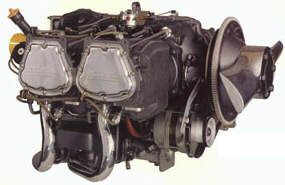 Engine overhaul shops often issue a new logbook for anoverhauled engine, and the lack of old logs confuses some purchasers. Several years ago Ihad a Cherokee 160 for sale, and its engine had been overhauled by a very well-known shop.That shop retained the old logbooks and issued a new one that carried forward the engine’stotal time with the first entry showing the current engine time as 0 hours since majoroverhaul.
Two foreign pilots who were living in the United States came to look at the airplane.They had with them a book on how to buy airplanes that insisted that all aircraft andengine logs had to be present. I tried to explain to them that all that was required ofthe engine shop was that they carry forward the engine’s total time in the new book, butthey kept referring to the paragraph in the book they had with them. They thought I wastrying to cover something up by not showing them the rest of the logbooks, and finallythey went away thinking I was some kind of shyster salesman.
The logbook entry for a major engine overhaul should include a list of the parts thatwere replaced, and there should be yellow tags for various engine components that indicatethat they have been inspected and certified. A handwritten entry that does not detail thecomplete overhaul, but merely states that it was done in accordance with themanufacturer’s overhaul manual, might well mean that the engine received an el-cheaposervice-limits overhaul that has little chance of making it through another TBO period.
Logbooks and other maintenance records are much more important than most people who arelooking to buy airplanes realize. The entries in those logbooks constitute a history ofwhere the aircraft has been and how it has been maintained. Sometimes they are not clearand easy to read, but as a prospective buyer you must try your best to decipher them(possibly with the help of a trusted mechanic or appraiser) in order to assure yourselfthat you’re paying a fair price for the aircraft and that there won’t be any nastysurprises down the road.