
















Buyinga first airplane is every bit as much of a thrill for most people as buying a first car.Unfortunately, most first-time airplane buyers approach their purchase very much the sameway as they do when shopping for an automobile. Typically, they first decide how much theycan afford to spend on an airplane – it might be $20,000 or $200,000, depending on theirincome, obligations and priorities – and then they start scanning Trade-A-Planelooking to find how much airplane that much money will buy.
Such an approach is almost a sure prescription for an unhappy ownership experience, andlikely a fast track to the poorhouse. Why? Because there’s virtually no correlationwhatsoever between the purchase price of an airplane and what it will cost to own.
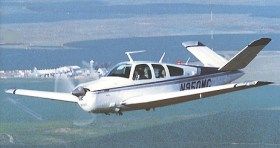 In today’s market, $50,000 will buy anything from alike-new Skyhawk to a middle-aged Skylane to an old-but-sound Bonanza to a runout Aztec toa clapped-out Duke or Queen Air or DC-3, and just about anything in between. The directoperating cost of your $50,000 airplane might be anything from $25/hour to $500/hour. Thecost of the first annual inspection might be $500 or $5,000 or $50,000 (or more).
Even if “money is no object” and you can afford to operate your acquisition,your ownership experience might be a real disappointment. You might discover that nobodywill sell you insurance, or that the airplane is plagued with mechanical problems andspends all its time in the shop, or that it isn’t well-suited to your requirements, orthat it just isn’t fun to fly.
Define Your Mission
Before you even think about pricing an airplane, you need to think carefullyabout how you will be using it:
Will you be using the aircraft mostly for short trips or for long ones? How short or how long? (Hint: most lightplane owners take the airlines when they fly transcontinental distances.)
How many people will you typically be carrying? (Hint: the typical occupancy of light planes is similar to what it is in automobiles: somewhere between one and two people.)
How much cargo will you typically be carrying? (Hint: it’s hard to beat the cost of shipping by UPS or FedEx.)
How fast do you need to cruise? (Hint: a turbocharged retractable-gear airplane might cost twice as much to fly as a normally-aspirated fixed-gear one, yet cut only 15 minutes off the typical trip time.)
A Case In Point
A couple whose primary mission is to visit their kids (or their weekend cabin at thelake) needs to make very different choices from a bush pilot who needs to haul hunters andtheir trophies into and out of gravel strips, or a salesman who needs to visit customersthroughout an eight state area in all kinds of weather.
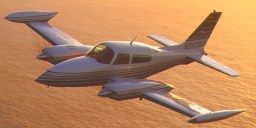 Lookat my situation, for example. I fly at least two or three transcontinental trips a year inmy airplane. In June, I flew from my California home base to the
On the other hand, the six-seat capacity of my airplane is really a waste. I veryseldom carry more that two people (myself and my wife, or myself and a colleague). Norhave I found the extra engine to be an essential. (See my article “
So why don’t I sell the twin and buy a single? (Deep sigh.) Well, you see, I’ve owned’38X for more than a decade now, and I know its systems so thoroughly that I can do all myown maintenance, and it was on the cover of AOPA PILOT in 1995, and I really do love thatairplane, and…what?…oh!…and I decline to answer further on advice of counsel.
I’m embarrassed to say that his is a perfect illustration of why it makes a lot moresense to buy the airplane you need rather than the one you want. It’s alsoan excellent illustration of the well-known aeronautical principle “do as I say, notas I do.”
Figuring Your Costs
One of the most useful exercises you can perform before starting to shop for anairplane is to do a detailed analysis of what the airplane is likely to cost you to own.To do this, you need first to calculate the hourly direct operating costs such asfuel, oil, 50- and 100-hour inspections. Here are some sample figures I worked up forthree different airplanes:
| Direct Hourly Costs | |||
|---|---|---|---|
| Fixed-gear single | Retractable single | Light twin | |
| Fuel @ $2.00/gal | $26 | $32 | $60 |
| Oil @ $4.00/qt | 1 | 1 | 2 |
| Scheduled 50-hour maintenance | 4 | 6 | 10 |
| Unscheduled maintenance | 4 | 6 | 10 |
| Total direct hourly costs: | $35 | $45 | $82 |
You’ll also have to figure the hourly indirect operating costs such as reservesfor engine overhaul, based on the anticipated cost of overhaul and the published engineTBO. Even if you don’t plan on owning your airplane long enough to have to overhaul theengine, you need to figure this cost because the resale value of your airplane directlyreflects hours on the engine. (This is aviation’s answer to the “depletionallowance.”) For example:
| Indirect Hourly Costs | |||
|---|---|---|---|
| Fixed-gear single | Retractable single | Light twin | |
| Engine overhaul | $10 | $14 | $28 |
| Miscellaneous engine maintenance | 3 | 4 | 7 |
| Vacuum pumps | 1 | 1 | 3 |
| Total indirect hourly costs: | $14 | $19 | $38 |
| Total hourly costs (direct+indirect): | $49 | $64 | $120 |
In addition, you’ll have to come up with estimates for all the fixed yearly costsassociated with aircraft ownership: annual inspection, insurance, taxes, hangar rent,reserves for prop overhaul, paint and interior, and recurrent training. You’ll discoverthat fixed costs are a major (often dominant) part of the cost of airplane ownership. Forexample, a light twin like mine may cost more than $20,000 a year to own even if younever take it out of the hangar! Take a look:
| Annual Fixed Costs | |||
|---|---|---|---|
| Fixed-gear single | Retractable single | Light twin | |
| Annual inspection | $2,000 | $3,000 | $6,000 |
| Insurance | 1,500 | 2,000 | 3,000 |
| Propeller overhaul @ 5 years | 300 | 500 | 1,600 |
| Paint and interior @ 5 years | 1,600 | 2,000 | 2,400 |
| Avionics maintenance, gyro OH | 800 | 1,000 | 1,200 |
| Hangar | 1,800 | 1,800 | 3,000 |
| Recurrent training | 1,000 | 2,000 | 5,000 |
| Total annual fixed costs: | $9,000 | $12,300 | $22,200 |
If you’re financing the purchase of your airplane, you should include interest expensein the annual fixed cost calculation. If you’re buying a new or very late model airplane,you should also include depreciation…but for most used aircraft in today’s market, youcan probably ignore this because the aircraft will probably hold its value and might even appreciateover time.
Finally, you need to estimate how many hours per year you will be flying the airplane.Warning: most new owners overestimate here. The average owner-flown airplane is usedbetween 50 and 100 hours a year, and only a tiny percentage of owners fly as much as 300hours a year.
To come up with a total hourly operating cost, divide the annual fixed costs by yourestimated number of flying hours per year, then add the result to the hourly direct andindirect costs you calculated earlier:
| Total Cost/Hour | |||
|---|---|---|---|
| Fixed-gear single | Retractable single | Light twin | |
| at 100 hours/year | $139 | $187 | $342 |
| at 200 hours/year | 94 | 126 | 231 |
| at 300 hours/year | 79 | 105 | 194 |
Many experienced aircraft owners report that it’s a good idea to keep thesecalculations in a safe place where your spouse or significant other will not see them.
Can You Get Insurance?
Okay, so you’ve narrowed down the field to aircraft that meet your needs and aircraftthat you can afford. But wait! You’re not ready to start telephoning on Trade-A-Plane ads quite yet. There’s still some more importanthomework to be done.
For one thing, you need to research the insurance situation. Call an aircraft insurancebroker (or three), tell them what you’re looking to buy, describe your aviationexperience, specify what kind of coverage you need (both hull insurance and liabilitycoverage), and find out (1) if you can even get insurance, and (2) what it’slikely to cost.
It’s not hard to get an unpleasant surprise here. I remember when I first bought ’38Xten years ago. I’d owned aircraft for the past 15 years, had 4,000 accident-free flyinghours, Commercial ticket, CFIA, CFII, and had never had an insurance claim, much less anaccident. It never dawned on me that I’d have trouble getting insurance.
But I had only 20 hours of multi-time, having just gotten my MEL rating. “We can’tinsure you to fly your airplane solo until you have 50 hours in type,” I was told.Even then, my first year hull-insurance premium quote was totally outrageous (close to 10%of the hull value). After discussing the situation at length with my broker, I decided toself-insure against flight risks for the first year (something I was permitted to do onlybecause I’d paid for the airplane in cash…no lending institution would approve this),and I was able to get my premiums down to something I could afford. By renewal time, I hadwell over 100-hours in type and could obtain all-risks coverage at reasonable cost.
A good friend of mine who had nearly 20,000 hours after retiring from a career as anAlaskan bush pilot ran into a similar situation when he tried getting insurance on hisBonanza. The underwriters said he didn’t have enough retractable-gear time! He finallypersuaded them to insure his airplane after he went through an expensive training programat FlightSafety International.
The Fine Art of Lemon-Avoidance
You’d also be wise to research the “pedigree” of the particular aircraftmodels that interest you. Some models and model-years have a reputation for being problemchildren, while others are usually a real pleasure to own. For example, in the Cessnafleet, the Skylane has a reputation as a “bulletproof” airplane, while thePressurized Skymaster is probably the most problem-plagued and maintenance-intensiveairplane that Cessna ever built. Among Beechcraft, the Duke and P-Barons have a badreputation, while Bonanzas and King Airs have good ones. And so forth.
An excellent way to learn about the reputation of the particular model that interestsyou is to contact the owner association for that type. Two of the largest are theCessna Pilots Association and theAmerican Bonanza Society, but there aredozens of other type clubs (many specialized to aparticular model). You can often obtain buyer’s guides, model histories, and otherinvaluable information from these associations.
If you’re a first-time buyer, you’d be well advised to focus on a relatively simpleaircraft and stick with models and model-years that have a sterling reputation by allaccounts. As a new aircraft owner, you have a daunting learning curve ahead of you…somake sure you can afford the tuition. Wait until you have a few years of aircraftownership under your belt before you look at more complex and high-strung machines. Ahigh-performance single is almost never a good choice for a first-time buyer, and atwin is usually a total disaster.
Watch Out For Older Airplanes
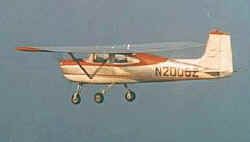 Inexperienced buyers should be especially wary of olderairplanes, particularly older complex airplanes. You’ll often see these advertised forsale at enticingly low prices. There’s a good reason for this: an older airplane caneasily turn into a money pit.
You may figure that if the selling price is cheap enough, you can afford to spend themoney to refurbish that older airplane into something really nice. Take an old,clapped-out 1960-model Cessna 210, for example, that you see in Trade-A-Plane for only$30,000. Add $15,000 for a zero-time engine, $10,000 for new paint and interior, and maybeanother $5,000 to replace those old tube radios with a modern comm and GPS. So for $60,000you’ll wind up with a first-class speed merchant, right?
But unfortunately, your “better than new” refurbished airplane won’t be worthanything close to the $60,000 you have invested in it. It might appraise at $40,000 atbest, so you’ll be in a world of hurt if you have to sell it. (See Bill Hemmel’s article”What’s It Really Worth“.) It’s generallywise to avoid aircraft purchases that involve spending substantially more than fair marketvalue for the aircraft.
What’s worse, 1960 was the first year that Cessna produced the 210, and that yearturned out to be one of those “lemons” that you might want to avoid: theaircraft is saddled with expensive Airworthiness Directives and maintenance problems.(Cessna learned a lot from building that aircraft, and later models of the 210 areoutstanding airplanes.)
If you’re an experienced 210 buff with an A&P certificate, this might make anexcellent project airplane. The rest of us would probably do a lot better spending that$60,000 on a pristine ’70s-vintage Skylane.
