










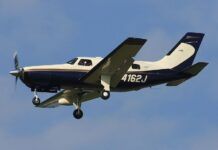











 In the search for your dream plane, one of the foremost considerations is value!If you’re like most of us, you don’t mind paying a fair price for anything you purchase.But in the case of an aircraft, it’s often difficult to determine exactly what that fairprice might be. Is the Skyhawk advertised above really worth $33,500? Fortunately, thereis a logical, step-by-step method of determining aircraft value.
For any given make and model of aircraft, there are nine "value factors" thatare the most influential in affecting the worth of any used piston engine aircraft:
Production Year
Total Airframe Time
Engine Time
Avionics (and other equipment)
Interior: Appearance and Condition
Exterior: Appearance and Condition
Damage History
Logbook Status
Annual Inspection Status
Let’s examine the Skyhawk in the classified ad with respect to each of these factors,and determine if the seller’s price is in the ballpark. Let’s assume that we’ve talked tothe owner, and had a chance to examine both the aircraft and the logs. We’ll analyze thevalue factors in the order that they would be entered if you were using our Aeroprice Software, but the basic principles discussed hereapply to any market analysis.
Start With The "Average" Aircraft
The first step in the process of appraising an aircraft is to establish a baseline fromwhich other component values may be added or subtracted. This is called the"Base" or "Average Retail Value", and fortunately an industry standardexists. The Average Retail specification allows for normal usage and average equipment.Differences between your aircraft and the "average" can then be easilycalculated.
You can obtain Average Retail by consulting the bluebook, by using Aeroprice Software (which includes its own pricingdatabase), or by using our on-line QuickQuote pricingservice. If you don’t have access to one of these, you can ask your broker or dealer orowners’ association (such as AOPA or EAA) to look it up for you.
Average retail value is considered to include average airframe time, all original logs,good paint and interior, no damage history, an annual inspection six months old, and allAD notes in compliance. Since the value of an engine is a high percentage of the overallaircraft value , the standard also assumes "average" engine time (more on thislater).
Some pricing guides assume an "average" avionics package, but experienceshows that this is definitely not the best approach. As the fleet ages, and older aircraftare equipped with the latest avionics, the "average" package has become theexception rather than the rule. The modern avionics package now represents a significantpercentage of the aircraft value, and should be properly calculated as such.
Production Year
With most of the general aviation fleet over twenty-five years old, the distinction invalues between model years is less important than it used to be. Even so, a 1980 Warrioris worth more than a 1979. Once you have decided on a specific aircraft, do some furtherresearch to determine the differences between different models and production years.(There are many good books documenting all of these.) In most cases, the next year’s modelcarries a bit more, or goes a little faster, or was produced with a nicer interior.However, this is not always true, and some model years are more desirable than others.
 Using Aeroprice Software, or our price guide, we determine that theaverage retail value of a 1976 Cessna Skyhawk is $33,320. (NOTE: This is not a currentfigure, and is used for illustrative purposes only.) We also check the aircraft serialnumber against the production serial numbers to confirm that it is indeed a 1976 model.
Airframe Time
Just like a high-mileage car, an aircraft with high airframe time is worth less, andfor many of the same reasons. Total time on the airframe affects the value only in respectto the average time on similar models of the same year. For example, if the average 1979Skyhawk has 2,500 hours TTAF, one with 1,000 is more valuable, and one with 4,000 is lessso.
If you purchase a high-time aircraft, keep in mind that it will be a higher-timeaircraft when you sell and you will be forced to discount it accordingly. While yourinitial investment will be lower, your annual inspections will be more costly, and theaircraft is more likely to require expensive replacement parts as the airframe ages.Unless you’re an experienced aircraft owner or an A&P mechanic looking for a projectairplane, it’s best to avoid such high-time aircraft.
Determining just what "average" is may be difficult, as different aircrafttend to be flown more or less than others. Without access to a bluebook or pricingsoftware (both of which contain average airframe times), your best bet is to scan the adsin Trade-A-Plane. By listing the model year and TTAF (TotalTime, Airframe) for a number of planes, you can derive a rough average for the model youhave in mind.
While you should strive to locate (and be willing to pay a premium for) a"low-time" aircraft, there are cautions to be observed here also. Aircraft thatsit idle for long periods of time are more susceptible to corrosion, rubber rot, andpitting of the cylinder walls and camshaft than those which are flown on a regular basis.If you locate a "low-timer", find out why. Was the airplane flown only a fewhours per year on a regular basis, or did it sit idle for years (as in an estatesettlement)? Examine the logbooks…the airframe time is (almost) always entered at eachannual inspection. Simple subtraction will tell you how many hours this plane flew eachyear.
 Total time is one of the items you should specifically ask yourpre-purchase inspection mechanic to verify, as errors in addition are quite common inaircraft logs. Check the books for the installation of a new (or used) tachometer or hourmeter, and cross-check the engine log entries with the airframe log.
Our software tells us the average total time for a 1976 Skyhawk is 3,185 hours. Sincethe advertised Hawk is 15% above that average, the software automatically makes a $607deduction to compensate.
Engine Time
Your engine is the single most valuable part of your aircraft (in many ways). Forappraisal purposes it is assumed that a "mid-time" engine is one that hasachieved slightly less than half of its recommended time between overhauls. For a 2000hour TBO, this mid-point will be 900 hours, and its valuation will be zero. Hours abovethe mid-point will result in a deduction, and low time engines will add to the overallvalue of the aircraft. Additional value is awarded for new, factory overhauled andremanufactured engines, and for those engines overhauled by nationally recognizedfacilities (Penn Yan, Mattituck, RAM, Victor, etc.)
There are, however, other factors to be considered when examining engine time andvalue. For practical purposes, an engine approaching TBO is considered to be"runout" by most buyers. No matter how enthusiastic the seller is ("runsgreat, compression’s good, uses no oil," etc.), he is most likely the last person tobuy an aircraft with similar engine time. There is nothing wrong with buying an aircraftwith a "runout" engine, as long as some of the cost of a major overhaul isreflected in the purchase price. In fact, some people prefer to do it this way in order tostart with a "new" engine that they and they alone have operated. Additionalvalue is usually subtracted for a "runout", since having it overhauled involvesinconvenience, downtime, and some degree of financial risk..
At the other end of the engine spectrum are those that are "0 SMOH." Whilethis sounds like the ideal, remember that you will be the test pilot! The question to askhere is, "Who did the major overhaul?". Look for an overhaul by a shop with agood reputation; it’s your best guarantee against future engine and warranty problems, andwill make your aircraft easier to resell. If you are not familiar with overhauls andshops, ask your mechanic and/or other aircraft owners their opinions of the variouswell-known overhaul shops. You’ll find that there are a handful of shops that mostknowledgable people consider excellent, and some shops with less than sterlingreputations. Find out what the warranty is, and whether it is transferable to you as thenew owner. Additional financial value is often added for a "zeroed" or low timeengine, because it makes the aircraft more attractive to potential buyers.
Sometimes you will find an engine that has been done by an individual mechanic or asmall maintenance shop: "Mike from Mississippi" or such. While this is notgrounds for refusing the aircraft (especially if everything else meets your requirements),you should give special attention to the engine during the pre-purchase inspection. Findout if the engine was overhauled to "new limits" or "service limits"specifications. (Some mechanics and small shops are capable of doing a better job than themajor outfits, while some are just after a quick buck.) If you go with such an engine, youmay wish to choose one that has a few hundred hours on it, and have your mechanicscrutinize it and the appropriate logbook entry. Find out if the accessories wereoverhauled at the same time (i.e., starter, alternator, magnetos, fuel pump, etc.) Whilethere is no requirement to do so on a privately operated plane, it is frequently the signof a caring, careful owner, and will provide you with both peace of mind and (hopefully)lower maintenance costs in the future.
See if the engine was overhauled prematurely (well before reaching published TBO). Ifit was, look in the airframe log during the same time period for any major repairs thatcould indicate a hidden damage history.
If the aircraft you’re examining has a "first-run" engine that has never beenoverhauled, beware! Vital engine parts can corrode, and important seals dry out, when anengine isn’t operated on a regular basis. That 1400 hour TTA&E Skyhawk may not be sucha bargain when it needs a major overhaul 100 hours later!
 Our Skyhawk is listed at 1652 SFOH (Since Factory Overhaul).(Another common synonym is SFREM which means Since Factory-Remanufactured.) While aremanufactured engine is always considered to be worth more than a "field"overhaul, this engine is so close to being runout that the additional value isinsignificant. Keep in mind that if you buy this aircraft and fly it 75 hours per year, in4 years it will be close enough to TBO to be considered runout. You will have to investthe money to overhaul it, or sell it as is.
Our software tells us this engine is at 83% of TBO, and computes a deduction of $4,665.(This figure includes an hourly correction from mid-time as well as a small additionalvalue for the remanufacture history.)
Avionics and Equipment
As the fleet ages, and older aircraft are equipped with the latest avionics, the"average" package has become the exception rather than the rule. The modernavionics package now represents a significant percentage of the aircraft value, and shouldbe properly calculated as such. A good avionics package can add many thousands of dollarsto the value of any aircraft.
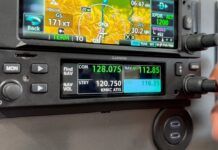
While Aeroprice starts with a "core" value that includes only a transponderand encoder, some price guides include an"average" avionics package in theaverage retail value. If you’re using such a guide, you’ll first have to determine exactlywhat that "average" package consists of. Then, if you’ve replaced that oldCessna nav/com with a new digital KX-155, you’ll need to first subtract the value of theold unit, then add for the 155. If the entire original package has been upgraded, it canbe quite difficult to get an accurate appraisal using the "average avionicspackage" method..
Most buyers are looking for an IFR radio package, even if they’re not instrument rated.If you’re one of these, avoid the temptation to buy a plane with VFR radios (for a lowerprice) and then add your own. Remember that the instant you install that brand new KX-165in the airplane, you now own a used KX-165. (It’s analogous to driving a new caroff the lot.) The person who eventually buys your plane will care little about the age ofthe radio…his major concern will be "does it work?". Be patient and keeplooking until you find what you want. It’ll save you money, and the airplane will beeasier to resell.
One note of caution in regard to GPS (and some LORAN) units. Many owners do notunderstand the difference between "certifiable" and "certified". Whenyou install that WhizBang 500 IFR Certifiable GPS in your aircraft, you may not use if forIFR flight until it is certified. This certification requires either an STC or FAA form337, as well as an FAA approved flight manual supplement specifically for this unit in aparticular aircraft (as designated by N-number in the supplement). The cost of doing thiscan run from $2,000 up, and adds considerable value to the panel. Don’t be fooled bypaying too much for an installed "certifiable" unit.
Airframe mods and other items can influence the value of an aircraft. Such things aslong range fuel. engine pre-heaters, speed brakes, air conditioning, intercoolers andthree-bladed props all add some value. Don’t be fooled by other items…a new battery ormagneto may be nice to have, but replacing these items is really only routine maintenance.A wise buyer might deduct value for a magneto that needs replacing, but would never addvalue for one that works: it’s supposed to!
If you’re faced with assigning a value to a mod or equipment item without a guide,here’s the acid value test. Picture two identical aircraft on the ramp. They have the sameairframe and engine times, avionics, paint and interior. The one without the widget ispriced at $35,000. How much extra would you pay for the one with the widget?
Our Skyhawk is equipped with the Cessna "NavPak", as well as a LORAN and DME.(With the proliferation of inexpensive GPS units and the threat of shutdown hanging overthe LORAN chains, the value of a LORAN has dropped dramatically!) A phone call to theseller confirms that it has dual Cessna 300 series LED nav/coms, one with glideslope, aCessna 300 ADF, King KN-64 DME and a Century 1 autopilot. In addition it has the 54 gallonfuel option, skylights, carb ice detector, standby vacuum and a Tanis engine heater.
 In real-life aircraft appraisal,avionics value adjustments do not reflect the cost of new units. More realistically, theyreflect the average additional premium a buyer is willing to pay for these itemspreviously installed in this year and model aircraft. Our software has automatically added$3,528 for the avionics. It has also added $1,504 for the extra fuel and equipment. Ifyou’re using another pricing guide at this point, you’re lost, as there are no"adds" listed for these items!
Exterior
 If you were buying a used car, you would hardly expect it to look like it didwhen it rolled off the assembly line. The same is true of a used aircraft. Keep in mind,however, that it can cost anywhere between $3,000 and $9,000 to repaint the averagefour-place plane. If you want one that looks like new, you’ll have to pay the price.
 One of the most common buyer’s blunders is to believe that theappearance of an aircraft is an indication of the overall care of the previous owner.While there are seemingly logical reasons to make this assumption and it might even betrue in certain cases, it ain’t necessarily so! Just as in the used car business, asmart seller will "puff up" his airplane for the sale…this may include a quickand cheap paint job for the purpose of covering up defects.
| EXTERIOR RATING SCALE New or Like New (10): Paint is shiny with high gloss. Looks like (or is) new. No scratches, chips or fading. Airframe has no dents or ripples. All glass is completely clear, with no crazing or scratches. Above Average (9): Shows minor chipping or wearing, but paint overall has high gloss. Small scratches apparent upon close inspection around high use areas. One or two small dents in acceptable places. Some scratches may be visible on windshield or side glass. Average (8): Paint is sound and solid, but with some wear and chipping evident, particularly around leading edges, cowling(s), and high use areas. Minor oxidation is evident, but can be brought to a shine with polish. A few small nicks or dents on leading edges or cowling(s), perhaps with minor visible repairs. Windshield or side glass may be slightly hazy or crazed along edges, but there are no visible stress cracks. Looks good from a short distance. Below Average (7): Paint is solid but oxidized and dull overall with many chips visible. Fiberglass wheel fairings and/or wingtips slightly crazed. A number of leading edge or other dents. Could be improved to average with touch-up and repainting in a few places. Some repairs or dents visible. Windshield or side glass milky around edges or has scratches or minor cracks. Poor (6 or below): Many dents, scratches. Large areas show bare aluminum. Aircraft leaves a trail of oxidized paint chips on takeoff. Most likely needs painting. |
Our base aircraft is assumed to be in average condition both inside and out."Average", as used here, means the aircraft will show the same signs of normalwear and tear that similar aircraft of its age and flight time will. Most individuals anddealers use a 1-10 scale to rate the paint and interior, with a "10" being theway it looked when it rolled out the factory door. Over the years, however, this scale hasbeen seriously corrupted. (When was the last time you saw a plane represented as a"5"?) In today’s market, an "8" is more likely to reflect the average.As with engine times, financial adjustments are made over or under this average condition.(See rating scale sidebar at right.)
While it is your own personal standards (and finances) that will determine yoursatisfaction with the look a particular plane, keep in mind that you will probably want toresell it without painting. Look for paint that is solid (if not shiny). Leading edges andcowlings are the first places to start chipping/peeling, and defects of this sort arecommon. Touching them up is relatively inexpensive, and will help preserve the exteriorfor resale later. Often mediocre overall appearance can be dramatically improved byrepainting just the trim stripes.
Older aircraft have often been repainted. Ask your mechanic to determine whether thecraft was stripped/painted or merely sanded/painted (what we call a Scratch-and-Paint).The former is obviously preferable, and will hold up better, but sand/paint can be equallypleasing and durable if it was done correctly on top of a good base. If it is a re-paint,look closely…did they paint over the screws because they were rusted? Did they removeall decals/nameplates, or just spray over them? Were all rubber seal strips masked off?Were the control surfaces rebalanced? And finally, is the paint job entered in thelogbooks, along with color samples and/or paint numbers? It is usually the exceptionrather than the rule, but a logbook painting entry shows conscientiousness on the part ofthe owner and the paint shop. Most aircraft are supposed to have the control surfacesrebalanced after painting, a step all too often skipped by cheap shops. Ask your mechanicif this rule applies to your potential purchase.
Finally, unless you’re buying an acrobatic or racing aircraft, avoid the custom paintscheme. An upgraded scheme is common and usually acceptable to most buyers, (A 1980 schemeon a 1970 airplane, for example), but the majority of aircraft buyers are veryconservative people. Even though the scheme may be striking and well executed, it maycause you grief and delay when reselling.
 Our Skyhawk has been freshly painted by a reputable shop, withcomplete stripping and control balance duly logged. There are no runs, drips, or"orange peels", and the paint surface is hard and shiny. All the screws havebeen replaced with stainless, and rubber seals masked off. The paint scheme is standard,as well as the colors, and overall it is a delight to see on the ramp. We select"New/Like New" for the exterior, and our software adds slightly more that halfof the cost of repainting to the value of our aircraft, or $4,028. Like a fresh engine, anew paint job adds some psychological value above and beyond the straight dollarcomputation.
Interior
| INTERIOR RATING SCALE New. Like New (10): Looks and smells new. Seats show no use or wear whatsoever. Headliner is immaculate, and rugs retain full pile with no apparent wear. Above Average (9): Near new condition. One or two small stains apparent upon close inspection. Colors bright, headliner clean with no cracks or stains. Signs of usage but not wear on rugs, kick plates, seat cushions. Average (8): Clean but obviously used. A few small rips or stains are obvious. Rug may be matted in high use areas, and kick plates show obvious signs of wear. Can be made attractive, but will never become impressive. Below Average (7): Seats have major stains or rips. Rugs matted, fabric frayed in high use areas. Headliner may have a few water stains or minor tears. Looks worn and used even after cleaning. Poor (6 or below): You wouldn’t put your mother-in-law in it. Small rodents are at home. Most likely needs a complete interior. |
Once again, consult the interior rating scale at right.
As with the paint, expect an average amount of wear. Inspect not only the seats, butthe carpet, side panels, and headliner. A typical rug replacement for a four seat aircraftwill cost around $3-500 without installation, and complete interiors can go as high as$4,000. Besides normal wear, look for fading — aircraft parked in sunny climates willfrequently show serious color discrepancies on one side of the interior. Look for waterstains on the headliner and rug — these could be a sign of a leaky window or door seal.While you’re inside looking out, check each of the windows, front and back, for hazing,crazing and cracks.
The condition of the avionics and instrument panel should also be closely inspected.While it is possible to replace avionics face plates and panel covers, it is expensive.Pay particular attention to the glare shield (it’s difficult to replace without removingthe windshield on most aircraft).
 Our Skyhawk interior is described as "fair." Uponinspection, the side panels, headliner, and rear seats are in fair-to-good condition, butit seriously needs both front seats reupholstered and a new rug. A substantial deductionof $903 is in order.
If you’re using Aeroprice Software, you can just select "Below Average"; thecalculations will be done for you.
Damage History
If you’ve been flying for long, you’ve learned that there are a wide variety ofinterpretations of the term "downwind". The term "damage history" isequally flexible…it seems to mean many different things to many people. Damage can referto anything from a wing tip dented in the hangar to wing replacement after the crash! Mostof the time, however, this refers to major damage history: gear-up landings and the like.
Damage history is probably the second most misrepresented item of an aircraft’sspecifications (airframe/engine hours are first). While you should make sure to ask theseller if his aircraft has ever been damaged, don’t count on getting a correct answer.Often the current owner may honestly not know of a previous accident, and his mechanic hasnever noticed the repair. And sometimes the repairs are "hidden" in technicalterms in the middle of a crudely scribbled annual inspection entry.
(Our favorite logbook entry said only: "Aircraft repaired as necessary afteroff-field landing". That was all. No parts listing, no form 337, no other log entry,no clues!)
Damage repairs are supposed to be entered in the airframe and/or engine logbooks, butit is a rare entry that reads as clearly as "Left wing leading edge repaired afterbird strike." The cause of the damage is usually not apparent, and an entry may sayas little as "R&R Piper part #28- 675732". Unless you know that this partnumber is the entire wing, and that "R&R" means Removed and Replaced, youmay unknowingly buy a damaged aircraft.
The repairs required to fix major damage, such as a serious landing accident, requiresthe filing of FAA form 337 ("Major alteration or repair") with the FAA. A copyof this form is supposed to be kept with the aircraft records. If you become aware of adamage history from the logs, look for the accompanying 337, as it will usually contain amore complete detailed description of the repairs involved. Not all 337s aredamage-related, however, as they are also required for avionics and many otherinstallations. Sometimes the 337s are missing entirely, but don’t despair: for a small feeand a phone call to the FAA Records Branch in Oklahoma City, the feds will send you amicrofiche copy of all records for any aircraft, usually within a few days.
Most first-time buyers are somewhat shy about damage history, and will insist on buyingan aircraft without it. However, if the airplane fulfills your requirements in all otherrespects, properly repaired damage should not be a deal-breaker. You should make sure thatrepairs were made with factory parts by a well- respected shop and well documented. Thereare always other aircraft available with no damage history, and the asking price should beadjusted accordingly.
 The amount of a damage deduction isdependant upon several factors, including the severity of the damage, the type of aircraft(it’s usually more important to an A36 owner than a Cherokee 140 owner), and the age ofthe incident/repair. As the years and airframe hours accumulate, the curse diminishes, butfor a major damage incident it never dissipates entirely.
Your mechanic should be looking for signs of damage when he examines the logs duringthe pre-purchase, and should examine the aircraft with this in mind as well, as there areoccasions when repairs are made with no entry.
Our Skyhawk seller tells us that a hangar door fell on the right side of his aircraftin 1987, and the outboard section of the wing was repaired in a factory jig. This isconsidered moderate (not major) damage, and we will enter it as such. Our softwarecalculates a deduction of $1,166.
Logbooks
So much of an aircraft’s value is contained in its logbooks that the courts have ruledthem to be an integral part of the aircraft! Unless you are a very sophisticated buyer,you should avoid like the plague any aircraft without logs that are original and complete.Beware the logbook that begins "Original logs lost, total time (or engine time)certified to be…", or "reconstructed from work orders." No matter howcomplete the records might be, they are still not original. Think long and hard beforebuying an aircraft without complete and original logs: no matter what price you pay, itwill take much longer to find a buyer later on.
If the aircraft logs are not complete, you can no longer be sure of the total time.Worse still, an aircraft with missing airframe logs may have been the victim of a majordamage accident. If the engine log is missing, you must assume the engine to be in need ofa major overhaul.
Have your mechanic examine the logs during the pre-purchase inspection: it’s what youpay him for. You will want to verify the airframe time, engine time, engine and airframeserial numbers, production year, and damage history (or lack thereof). In addition heshould check the annual date, static and/or transponder checks, and AirworthinessDirective compliance. Close examination can also reveal something of the aircraft’shistory: where it lived, whether or not it was used as a trainer, etc.
Our Skyhawk comes with complete, original logs, so we’ll continue to examine it.
Annual Inspection Status
Annual inspections are an unpleasant but unavoidable fact of life for an aircraftowner, and can sometimes be unbelievably expensive. Annual status usually falls into oneof three categories: "Fresh with sale," "Mid-time", or "Coming upshortly."
"Fresh with sale" — Dealers are most likely to include anannual inspection in the purchase price, as it is not uncommon for them to own an aircraftthat is currently out of license. It makes no financial sense for them to do a freshinspection, then watch it slowly expire as the aircraft sits in inventory. Since they arepaying for it, they will usually perform the annual in their own shop, or one where theydo a lot of business. In order to avoid the "Paper Annual", the wise buyer willinspect the shop where the annual is to be done, and check on their reputation with otherlocal aircraft owners. Make certain that all the discrepancies found during thepre-purchase inspection have been addressed. A fresh annual will relieve you of a greatdeal of worry (and expense) for the next twelve months, and give you a sense of securityabout the mechanical condition of your new aircraft.
"Mid-time" — Probably the most common status, and one thatusually provokes the least anxiety, particularly if the airplane has been actively flying.Our "average" aircraft assumes a 6 month old annual.
"Annual due" or "Out of annual" — If the annualis due within a month or two, you can sometimes get the seller to pay for a fresh one.Obviously this will be done at the shop of his choice. (See "fresh annual"above.) We do not normally recommend that you purchase an aircraft that is out of annual,as this may involve an FAA ferry permit, several days or weeks of downtime, and someexpensive surprises!
You may hear claims of a recent extensive (i.e., expensive) annual inspection. Althoughthis can be a sign that the present owner is finicky and meticulous, it may also indicatethat the aircraft was (or is) a mechanical disaster. It can often be the very reason hedecided to sell! Since it is difficult to know which of these is the case, try to beobjective — don’t let this claim influence you one way or the other. After all is saidand done, you will end up owning the aircraft in its present mechanical state. Evaluatethat status with an eye toward the future, not the past — those bills have been paid bythe present owner, and may or may not have added value to the airplane.
Because it is impossible to predict the cost of any annual inspection, even oursoftware can’t calculate the value. It’s something you and your mechanic (who does thepre-purchase inspection) will have to estimate. Luckily, our Skyhawk seller tells us thathis annual is due in seven months, which fits the mid-time profile.
Our Completed Appraisal
 Having accounted for all of theimportant "value factors," our Skyhawk appears to be worth slightly more than$35,000. The seller’s asking price of $33,500 is actually about 4% too low. The ownereither needs to sell, or (more likely) he hasn’t kept up with the latest market changes inthe value of his aircraft, and doesn’t realize he’s leaving money on the table. If thisaircraft gets a clean bill of health at the pre-purchase, you could feel very comfortablepaying even the full asking price of $33,500.
Keep in mind, however, that this isn’t always the case. Often you’ll find aircraftlisted with asking prices that are way to high or too low…sometimes by 25% or more.That’s why the prudent buyer will never make an offer on a used aircraft without goingthrough a detailed pricing analysis like the one we just did.
