














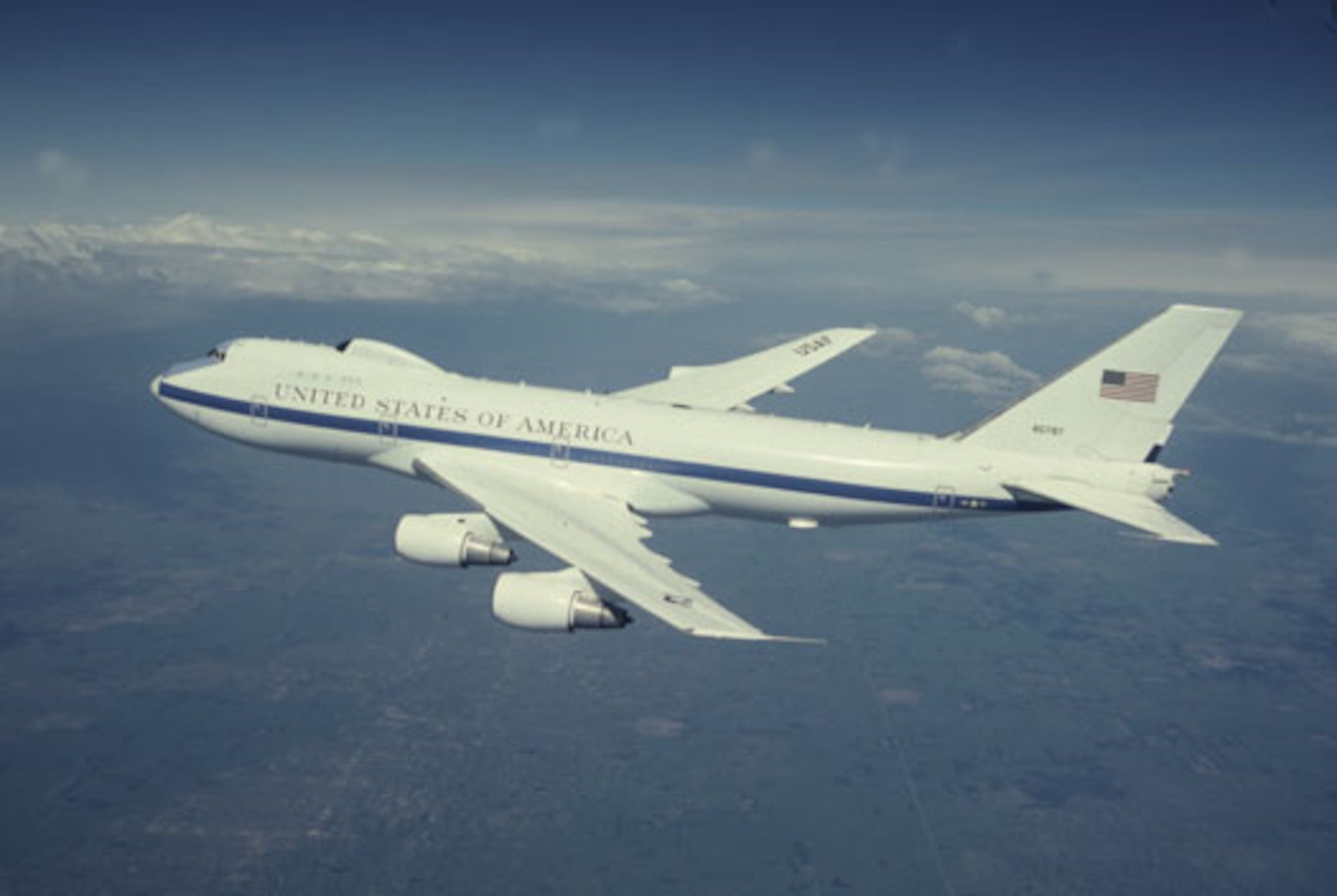

Boeing says it’s opting out of a multibillion-dollar competition to build the Air Force’s next “Doomsday Plane” because it can’t afford to risk losing money on it. Reuters reported that the company and the Air Force failed to come to terms because the Air Force insisted on a “fixed-price” contract for the planes. Boeing has lost billions of dollars on fixed-price deals to build Air Force One replacements for the Air Force and the problem-prone Starliner spacecraft for NASA. “We are approaching all new contract opportunities with added discipline to ensure we can meet our commitments and support the long-term health of our business,” Boeing said in a statement to Reuters.
That leaves Sierra Nevada Corporation as the only publicly known bidder for the contract to replace four 50-year-old Boeing 747-200s modified to serve as airborne command posts capable of maintaining communications during nuclear attacks. The company announced it was in the running in August but isn’t saying what it proposes. It has, however, built new hangars in Dayton, Ohio, designed to accommodate Boeing 787-8s. The Air Force wouldn’t tell Reuters whether there were any other bidders, nor would it discuss details of the contract. It wants the new airplanes by about 2030 because the existing ones are just about at the end of their service lives.
