















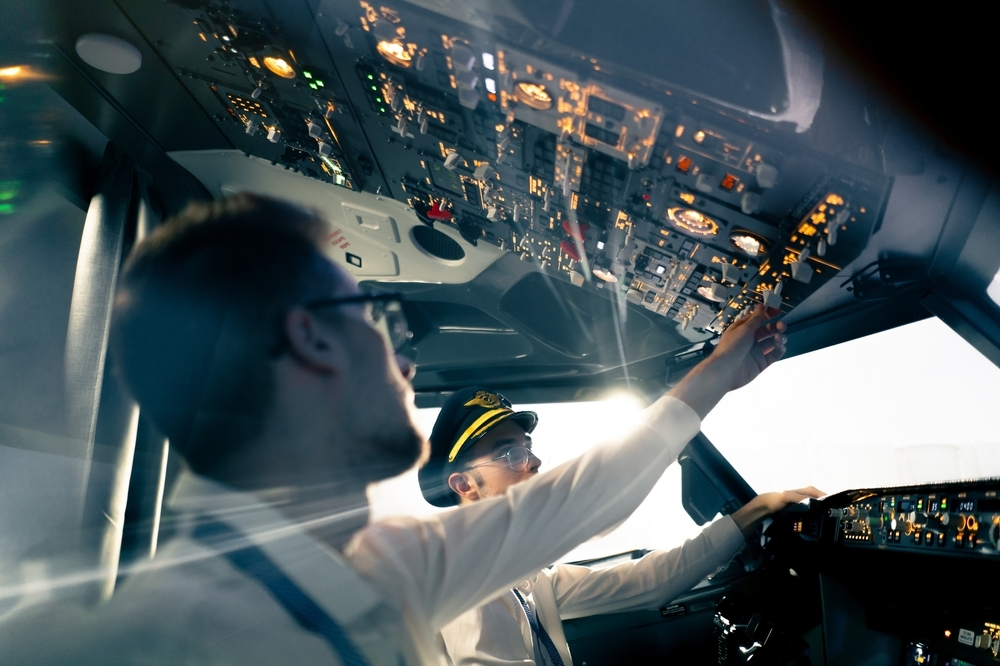

The FAA announced Wednesday it is reinstating its Flight Deck Training program, allowing air traffic controllers to observe cockpit operations aboard commercial, general aviation and military aircraft. The program, which was suspended at the beginning of the COVID-19 pandemic, gives controllers firsthand experience with pilot workload, cockpit procedures and the effects of ATC instructions on flight crews.
How the Program Works
According to the FAA announcement, controllers will be able to apply electronically for specific flights and identify a training objective. Each controller may participate in two commercial or general aviation flights and one military flight annually. Requests will require internal approval based on staffing and operational needs, and participants must submit reports detailing what they learned.
“There is no substitute for firsthand experience in the cockpit,” said National Air Traffic Controllers Association President Nick Daniels. “The Flight Deck Training program gives participants a unique perspective on the challenges pilots face and how their decisions and actions interact with the air traffic control system, ultimately strengthening their understanding of the National Airspace System.”
Improving Pilot-Controller Coordination
The FAA said early testing has already helped controllers better understand how certain instructions affect flight crews, particularly complex clearances and changes to landing runways. The program’s reinstatement follows the September introduction of bipartisan legislation seeking to establish flight deck observation opportunities for controllers.
The FAA worked with NATCA to restore the program and said all major U.S. airlines have agreed to participate. Controllers will undergo multiple stages of vetting before boarding participating aircraft. The agency expects formal operations to begin after Thanksgiving.


This program was a boondoggle for free flying for controllers, with little professional benefit. Perhaps the first flight was informative, but after that, it was nothing more than free trips for a sleeping controller. There were instances of a single controller taking over two dozen trips to Las Vegas. Pilots opposed it, because it resulted in a dozing controller taking a jumpseat from a company pilot trying to get to work.
I agree wholeheartedly with J Earnie. In thirty years of part 121 flying the controller slept in the jump seat while the wife and kids rode in the back for their vacation. More often than not, the controller wouldn’t even put on a headset. The initial introduction from the controller was usually deceptive, “I’m with the FAA” with no mention that they were with air traffic control.
ATC controllers must be recognized in the CASS system before gate agents grant a jump seat boarding pass that is used to account for souls on board and where. They must also present their DOT/FAA PIV ID card along with their FAA ATC credentials. Simply saying I’m with the “FAA” ain’t gonna cut it. FAA Aviation Safety Inspectors 1825 who also have jumpseat access possess and must present their 110A credentials and verified in CASS. Bryan Bedford, FAA’s Administrator, restored this program under the guise of familiarization for ATC personnel, my spidey sense suggests it is also a recruitment/retention incentive. For the few who showed real interest and abided by the “Sterile Cockpit” period it was of value, for the majority it was a free ride.