















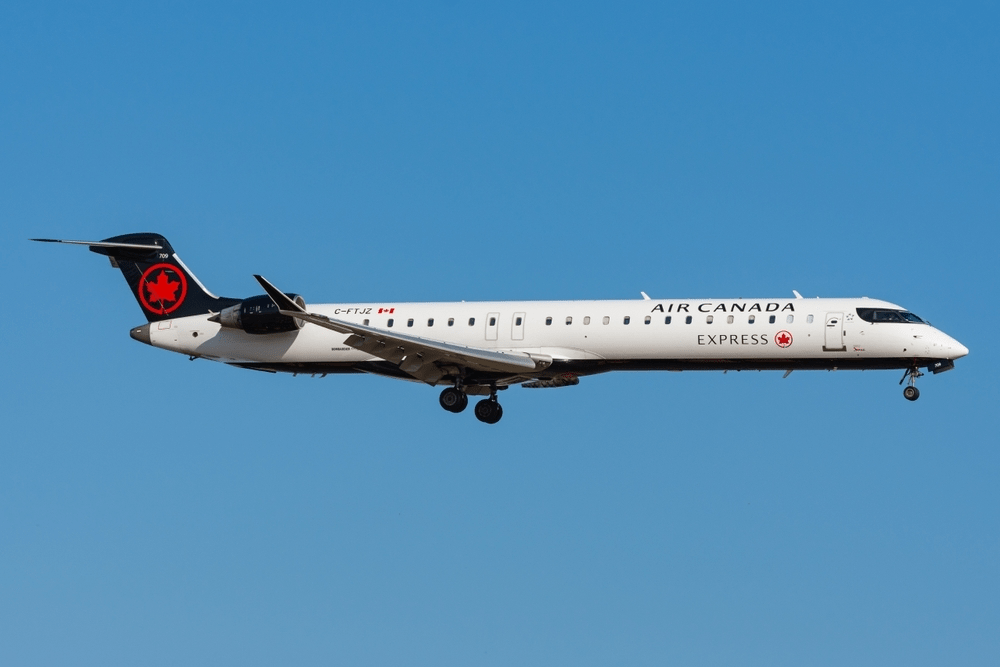

The FAA is moving to fire two air traffic controllers who left their shifts early at New York’s LaGuardia Airport on the night of the March 22 collision between an Air Canada Express regional jet and an airport fire truck.
The Wall Street Journal reported Thursday that the FAA determined the controllers departed about an hour before their shifts ended. CBS News reported that, according to an unnamed source, the FAA considers the alleged conduct timecard fraud.
Two Controllers Remained
The departures left two other controllers working in the tower without backup during a period that included heavy traffic. The practice of controllers informally leaving before the end of their scheduled shifts is sometimes referred to as an “early shove.”
NTSB Examining ATC Operations
The disciplinary action does not establish that the controllers’ early departures contributed to the accident. The NTSB investigation remains ongoing, and investigators are examining air traffic control operations and human performance as part of determining what led to the collision.
The NTSB’s preliminary report states that two controllers were on duty in the tower at the time of the accident, which was consistent with LaGuardia’s basic midnight-shift schedule. Both were qualified and current on all tower positions. One was working local control, while the other was handling ground control and serving as controller-in-charge.
The NTSB has not determined whether staffing, workload or the absence of the two controllers played a role in the accident, and a probable cause has not been issued.


But no discipline for anyone involved in the decision not to put a transponder on the multi million dollar fire truck. I’m sure we can find others too.
“ The NTSB states that two controllers were on duty in the tower at the time of the accident, which was consistent with LaGuardia’s basic midnight-shift schedule.”
“The departures left two other controllers working in the tower without backup during a period that included heavy traffic.”
Well, that’s about clear as mud.
If four controllers are typically on duty and two leave, ok-that leaves the other two “without backup”. But if two controllers are typically on duty and two additional controllers leave, then you still have two controllers on duty.
Seems clear to me. Every US taxpayer was paying these two controllers in question to be there. They left early and it appears they expected to be paid for the time that they were supposed to be there. My employer would be upset about it too. Where I work, time card fraud gets you escorted to the exit door. It also appears to be a common enough practice that it has a name.
When the fox is guarding the hen house and his back-up is the wolf, don’t act surprised to find dead chickens.
If the controllers who left did so without signing out at the time they actually left then their conduct might be subject to disciplinary action. However, it is more likely that they requested and were granted Annual Leave by the Supervisor in which case they would have signed out at the time they departed. Does that make the Supervisor subject to discipline for exercising “poor” judgement when this is reportedly common practice? In my opinion somebody up the chain of command is looking for a scapegoat because they let the emergency vehicles operate on the airfield without a transponder. RW
Just collateral damage from the investigation, though there MAY have been some causality.
Had nothing to do with the accident. They would have been in the break room anyway. They work hard and they deserve an early go when staffing is sufficient.
A transponder is not the panacea the NTSB has made it out to be. It has limitations that manifest when targets are in very close proximity to each other, like the fire truck and other vehicles were @La Guardia that night. The same happens with ATC’s secondary radar for airborne transponders… when targets (airplanes, ground vehicles) are close enough, their replies overlap and the result is a garbled digital stream similar to the squeal on comm frequencies when two entities transmit simultaneously on the same frequency. Sometimes the content from one responder can be extricated using filtering circuitry or logic, but the rest is lost and the multiple targets are displayed as a cluster. I doubt transponders would have prevented this collision.
To be sure, a transponder is not a cure-all.
But neither is 6 days, 60 hour weeks for a decade.
True, and yet the NTSB doesn’t seem to have noticed that only 50% of the staff that were scheduled to be on duty actually were. Step one of an investigation is supposed to be “determine the factual details.”
Were the ground vehicles equipped with a functioning transponder there would have been something, even a garbled mishmash of alphanumerics, for the controller to see. That might have been the difference between his clearance to cross decision vs a hold short decision.
The news is sketchy. Not knowing the working practice and norms and previous record on the manning of positions in the density of traffic encountered during the time of accident. Whether keeping at ideal position the two controllers in the anticipated traffic was considered surplus with no work to perform. As to whether they could have been accommodated for short leave when the manning in Tower was according as approved. Can we say that after heavy density of evening the two controller could have been be spared at times as has been the practice. The old saying goes " An Idle mind is the devil’s workshop"
Zahid Hussain Khan
Air traffic controller
The controller didn’t lose track of the fire trucks, so a transponder would have made no difference. Also, the ground surveillance system doesn’t require targets to have a transponder (which gives a target a unique identifier), targets do show up.