
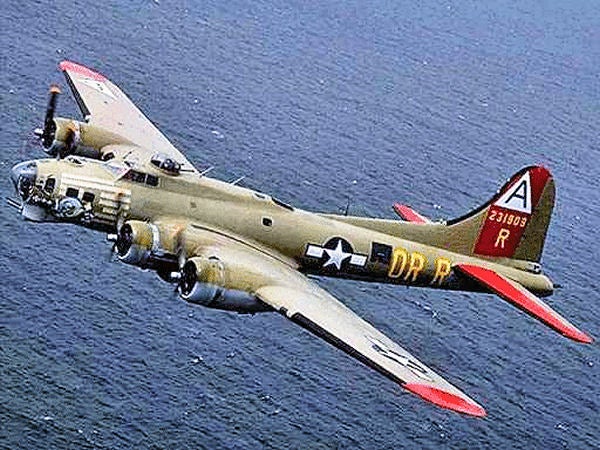

The NTSB has released its final report on the fatal crash of the Collings Foundation’s B-17 Nine-O-Nine and the board’s takeaway is no surprise to anyone who has been following the story. While the primary cause of the accident is reported as “the pilot’s failure to properly manage the airplane’s configuration and airspeed after he shut down the No. 4 engine following its partial loss of power during the initial climb,” the rest of the report tells the deeper story.
“Contributing to the accident was the pilot/maintenance director’s inadequate maintenance while the airplane was on tour, which resulted in the partial loss of power to the Nos. 3 and 4 engines.” So, the pilot, who also served as Collings’s maintenance director while on tour, was landing with two good engines on one side, and on the other side, one shut down and one with partial power.
The Flying Fortress was on a “living history flight experience” flight from Bradley International Airport in Hartford, Connecticut, with 10 paying passengers and four crew members. Shortly after takeoff, the pilot told the tower he was returning due to engine problems with the No. 4 engine, which the crew shut down and feathered. The landing went wrong when the bomber hit the ground before reaching the runway and veered to the right, hitting parked vehicles and a deicing tank. The airplane caught fire and seven onboard died, including the pilot and copilot.
The board attributed the loss of power in two engines to inadequate maintenance and inattention to the voluntary safety management system the foundation implemented two years before the accident, saying “the Collings Foundation’s ineffective safety management system (SMS), which failed to identify and mitigate safety risks; and the Federal Aviation Administration’s inadequate oversight [contributed to the accident].”
The board concluded in its summary of the report, “We have seen instances where operators may have voluntarily implemented an SMS, but its components are not actively functioning as an integrated system.”
The NTSB recently released recommendations that revenue-generating flights flown under Part 91, including living history flight experience sorties, face greater scrutiny and oversight, criticizing the FAA for inadequate supervision.