















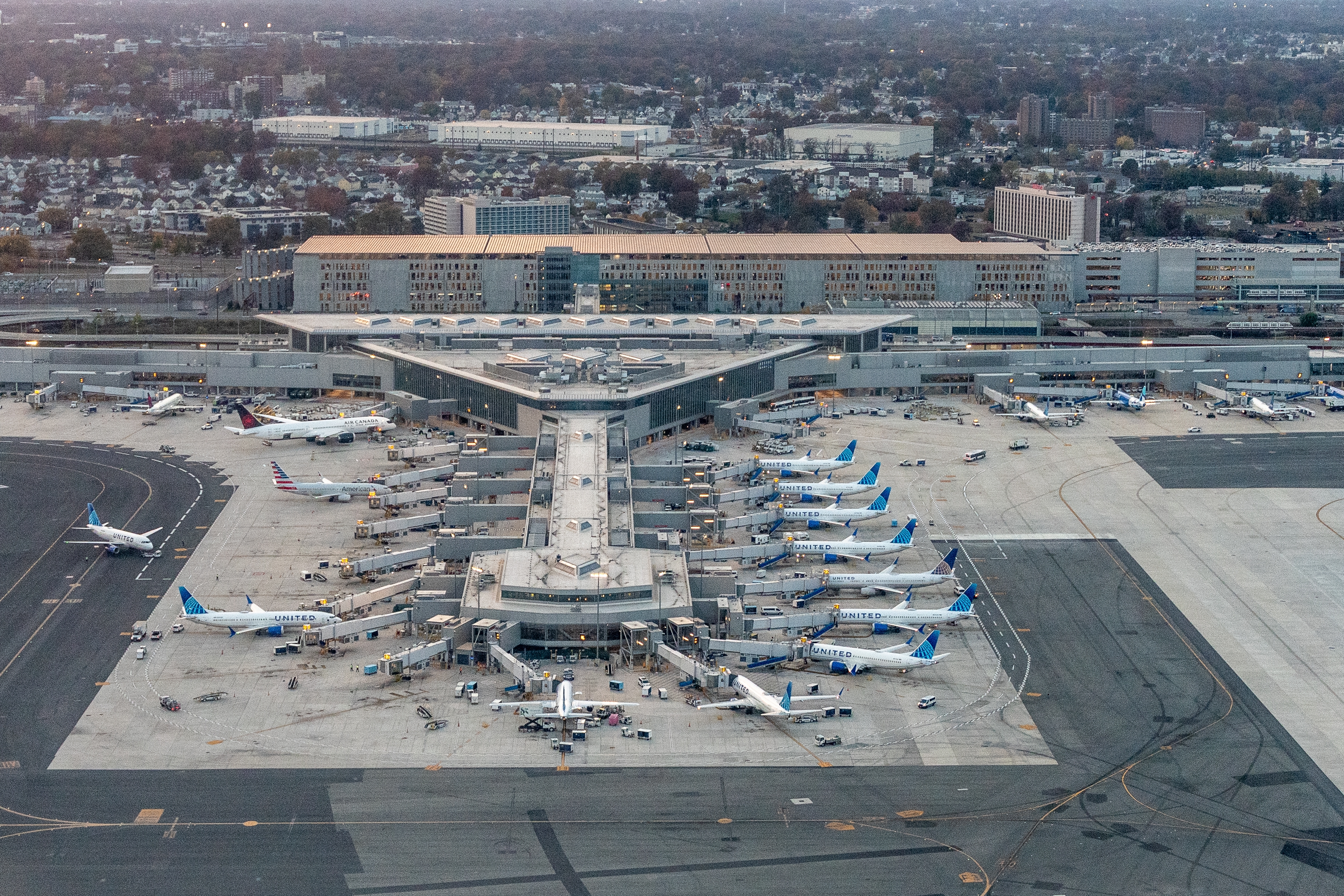

A telecommunications failure at the FAA’s Philadelphia Terminal Radar Approach Control facility on Monday disrupted flights throughout the Northeast, prompting ground stops at Philadelphia International, Newark Liberty and Teterboro before restrictions expanded to other airports in the New York area.
“The FAA is pausing flights into Philadelphia International, Teterboro and Newark Liberty International airports due to issues with some frequencies at Philadelphia TRACON,” an FAA spokesperson told CBS News.
The outage began after a primary circuit serving the Philadelphia facility failed Monday morning. The FAA then discovered that a backup fiber-optic line between New Brunswick and Newark, New Jersey, had been severed during unrelated construction.
Backup Line Also Down
FAA Administrator Bryan Bedford said the agency was installing a new circuit while crews worked to repair the damaged backup line.
“That fiber break is probably 13 hours to repair. It’s massive,” Bedford told reporters.
The FAA said it would not fully restart incoming traffic at affected airports until officials determined the airspace was safe.
The disruption eventually affected JFK and LaGuardia airports, while Boston temporarily stopped accepting flights due to additional traffic from diversions. By early afternoon, some operations were beginning to resume, although significant delays remained throughout the region.
Previous Newark Outages
The same Philadelphia facility was involved in another series of communications failures affecting Newark in 2025. The FAA later upgraded the telecommunications network between New York and Philadelphia TRACON, announcing in July 2025 that it transitioned to new fiber-optic connections using two separate communications paths and deployed a temporary satellite backup system. Congress also provided $12.5 billion toward a broader modernization of the nation’s air traffic control system, although cost estimates have since increased.


Having worked in telecom, I am continually amazed of the apparent lack of planning and redundancy in the FAAs ‘s systems.
I was always taught that back ups should be alternate vendors AND alternate physical routes (eg, you don’t want your Verizon lines going in the same trench as ATT, or go through the same telephone exchange buildings.) Additionally, backups should have active monitoring to alert network operations that they are down BEFORE they are needed.
In the case of critical communications like this, I’d go as far as triple redundancy, just in case.
There should never be a single point of failure, and if there is, at the very least a ‘warm spare’ should be in place to effect disaster recovery in minimal time.
This isn’t a Republican or democratic issue. It’s a systemic issue that has to be addressed. It’s been allowed to develop through multiple governments.
Incompetence in not monitoring the fiber optic link.
Note marking of cable location was inaccurate, a common problem with natural gas lines to buildings where I live - contractors route line around a boulder in ground but do not tell utility what they did. (These days last length of line is flexible.)
Can contractors tell where items are? Yes, ground penetrating radar but it takes interpretation.
(I’ve commented earlier on cases of duplicate telecomm cables and natural gas pipelines being too close to each other thus prone to both being damaged by equipment of land shift.)