


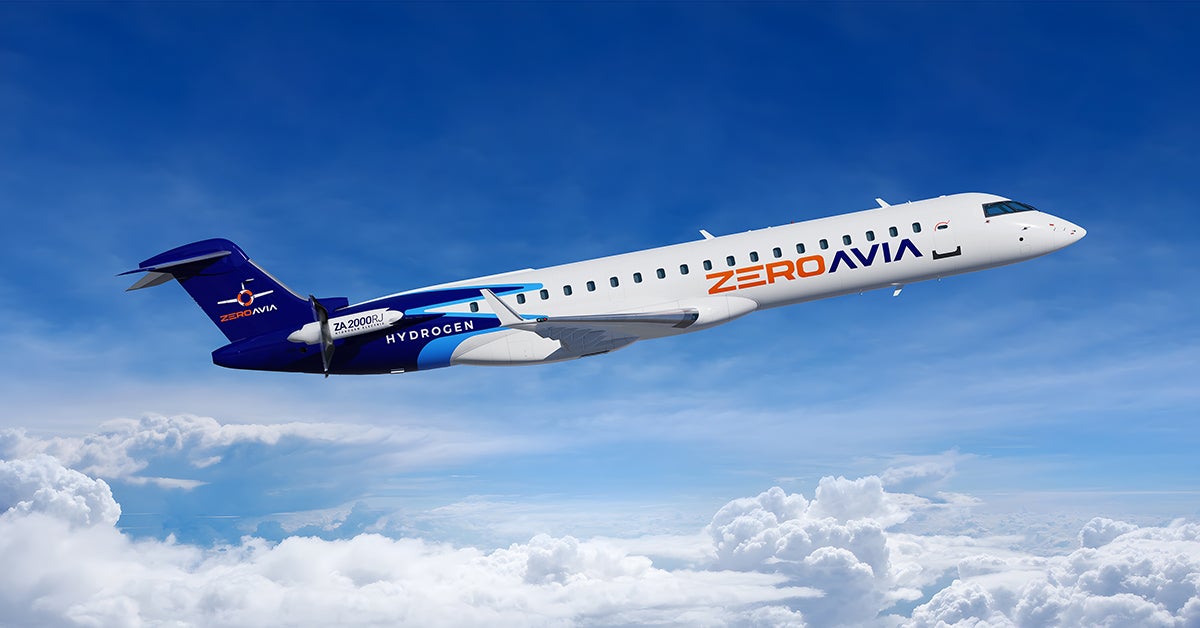

American Airlines is investing in in hydrogen-electric propulsion developer ZeroAvia, stating that the move is part of its path to reach its climate goals including achieving net-zero greenhouse gas (GHG) emissions by 2050. In addition, the companies have signed a memorandum of understanding that gives American the option to order up to 100 hydrogen-electric propulsion systems from ZeroAvia. According to the airline, the powertrains are “intended to power regional jet aircraft with zero emissions.”
“Our investment in ZeroAvia’s emerging hydrogen-electric engine technology has the potential to play a key role in the future of sustainable aviation,” said American Airlines Chief Financial Officer Derek Kerr. “We are excited to contribute to this industry development and look forward to exploring how these engines can support the future of our airline as we build American Airlines to thrive forever.”
ZeroAvia is aiming to have its ZA2000-RJ powertrain, which it says will be capable of powering 40- to 80-seat aircraft with a 1,000-NM range, in service on regional jets “as early as the late 2020s.” The company noted that American’s investment, the exact amount of which was not made public, brings its Series B funding round to over $150 million. As previously reported by AVweb, ZeroAvia completed the first hydrogen fuel cell powered flight of a “commercial-grade” aircraft in September 2020 using a Piper Malibu modified with a 250-kW hydrogen fuel cell powertrain.
The company has continued testing, reporting that its HyFlyer I flight test program accomplished all of its technical goals, although the Piper Malibu testbed suffered a power failure that resulted in an off-airport landing in April 2021. Last summer, ZeroAvia acquired two Dornier 228 twin turboprops to use as test beds for its Hyflyer II program, which will test a 600-kW hydrogen-electric powerplant.
