
Las Vegas International Identified As A Mixed-Traffic ‘Hotspot’

FAA reports TCAS advisories dropped 30% after mandating 'positive control' over helicopters.

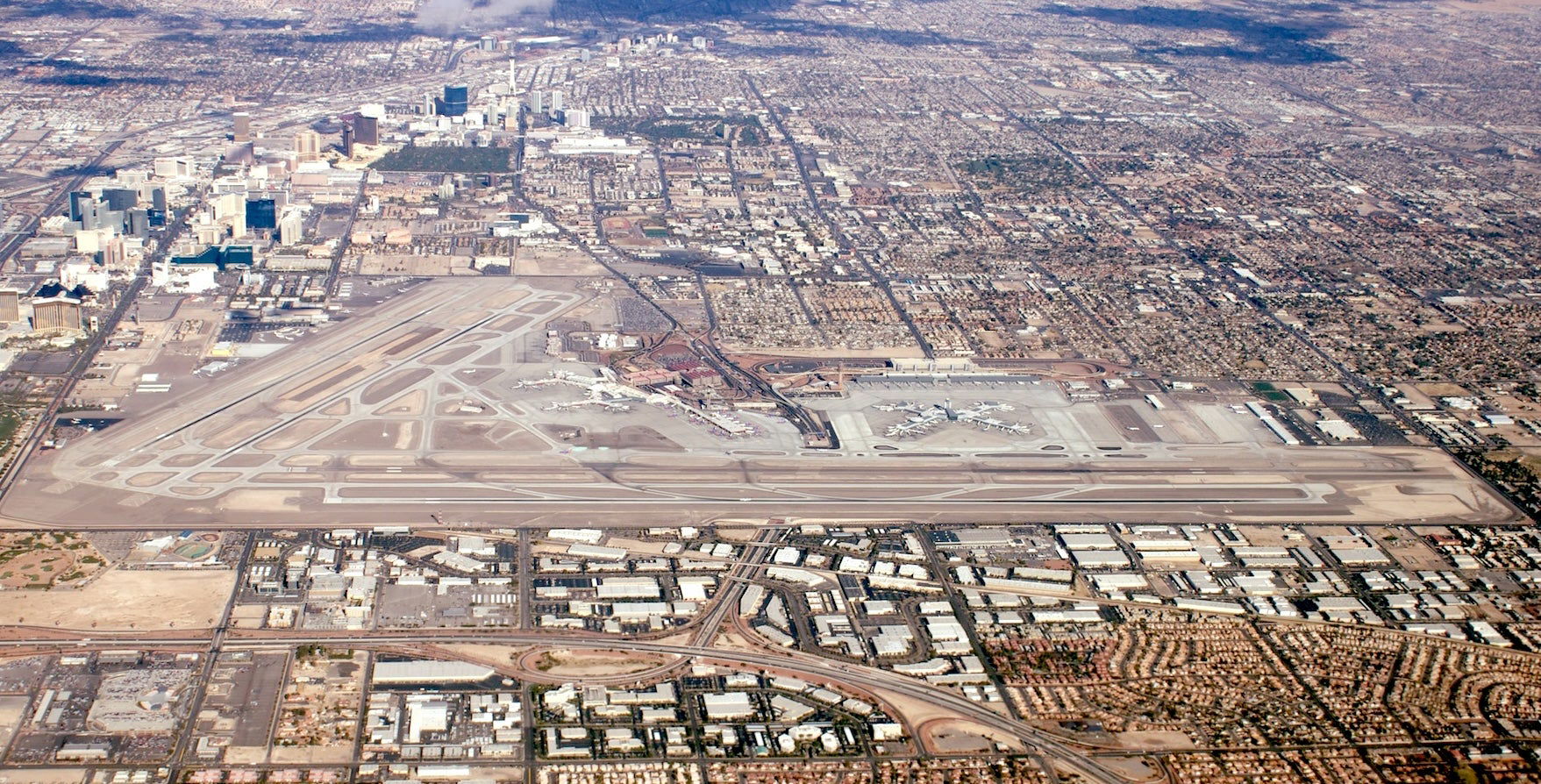
Las Vegas Harry Reid International Airport (LAS) is close by popular helicopter tour attractions such as the Hoover Dam, Lake Meade, and the Vegas Strip. Credit: Wikimedia
Gemini Sparkle

Key Takeaways:

  • A midair collision at another airport prompted the FAA to identify Las Vegas Harry Reid International Airport (KLAS) as a "hotspot" due to hazards created by mixed commercial and aerial tour traffic in congested airspace.
  • Previously, KLAS lacked specific safety mandates, with tour helicopters only instructed to avoid corridors, no mandatory ATC traffic advisories, and undefined fixed-wing approach/departure paths.
  • The FAA implemented rapid changes, including exercising "positive control" over helicopters and issuing more traffic advisories to pilots.
  • These interventions resulted in a 30% decrease in traffic alert and collision avoidance system (TCAS) reports at KLAS within just three weeks.
See a mistake? Contact us.

As part of the fallout from the tragic Reagan Washington National Airport midair collision between a regional jet and a military helicopter, the FAA launched a review of other airport “hotspots” where mixed traffic can create undue hazards in congested airspace. One such hotspot was identified at Las Vegas Harry Reid International Airport (KLAS) in Nevada. With the famous Las Vegas strip, nearby Lake Meade and Hoover Dam all located close together, aerial tours of Las Vegas are a popular attraction.

To date, tour helicopters have been simply instructed to avoid approach and departure corridors to and from KLAS. And air traffic controllers were not mandated to issue traffic advisories to either the helicopters or departing or arriving aircraft at KLAS. Also, the fixed-wing approach and departure corridors were not specifically defined by lateral or vertical measurements.

According to an NBC News report, Acting FAA Administrator Chris Rocheleau said, “We took quick action, including exercising positive control over the helicopters and issuing more traffic advisories to pilots. As a result, the number of traffic alert and collision avoidance system [TCAS] reports decreased by 30% in just three weeks.”

Mark Phelps

Mark Phelps is a senior editor at AVweb. He is an instrument rated private pilot and former owner of a Grumman American AA1B and a V-tail Bonanza.
Sign-up for newsletters & special offers!

Get the latest stories & special offers delivered directly to your inbox

SUBSCRIBE

Please support AVweb.

It looks like you’re using an ad blocker. Ads keep AVweb free and fund our reporting.
Please whitelist AVweb or continue with ads enabled.